Share
the Curb
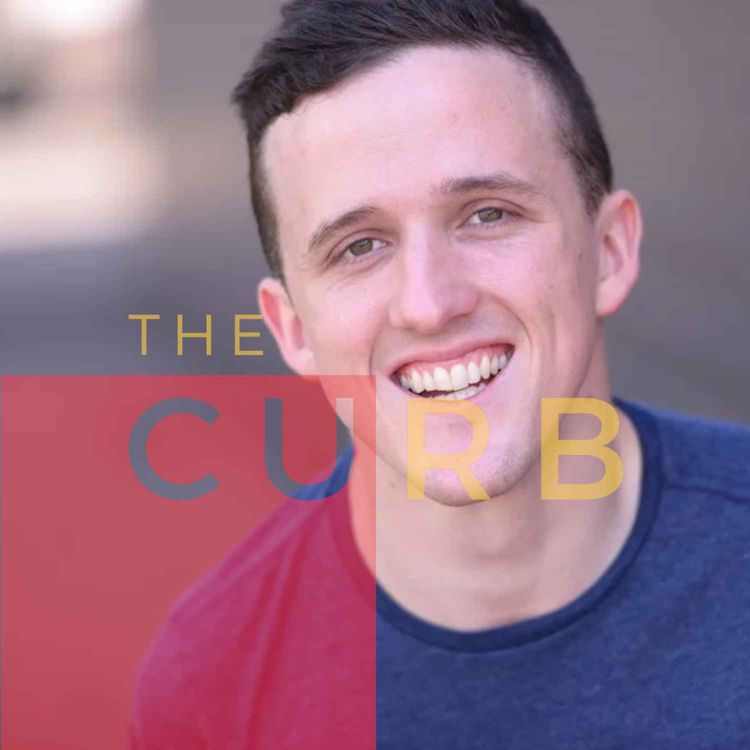
Daniel Monks Talks Through His Career From Pulse to In the Room Where He Waits in This Interview
Daniel Monks is an award winning theatre and film actor who hails from Perth, Western Australia. He received an AACTA nomination for Best Actor in a Leading Role for the feature film Pulse, a story about a disabled teen who undergoes radical surgery to turn into a beautiful woman in a bid to be loved and embraced. Daniel wrote the script and worked with his close friend, Stevie Cruz-Martin, as a director. It's a film that helped launch his career as an actor in both Australia and London, where he has performed opposite Emilia Clarke in The Seagull, and where he won the Best Performer in a Play award at The Stage Debut Awards for his turn in Teenage Dick, Michael Lew's darkly comedic retelling of Richard III.
When I first watched Pulse, I saw an actor who brought a complicated and conflicted character to life on screen with deep empathy and understanding. We open the discussion by talking about the origins of Pulse, leading Daniel to reflect on the almost ten-year journey between that film being shot and now. In that decade-long career path, Daniel has also starred in Australian films like Sissy, and Timothy Despina Marshall's new film, In the Room Where He Waits.
His place in the world of theatre and film as a gay, disabled actor has seen him become a leader in his field, forging a path for his fellow queer and disabled actors. We talk about the weight of responsibility that often comes with the role of being a leader, while also touching on the push for diversity on stage and on screen, and how Daniel navigates that when it's often driven by non-disabled, cisgender, straight, white people.
As you'll hear in the following interview, Daniel is a 'bucket list' interview guest I've been eager to talk with for years. I was fortunate to chat with Daniel's mum, Annie Murtagh-Monks, a few years ago about her work as a casting director, so it was quite wonderful to hear about the conversations that she has with Daniel about their work. Daniel also talks about the support that filmmakers like Stevie Cruz-Martin and Hannah Barlow have given him throughout his career.
I recorded this ahead of the world premier of In the Room Where He Waits at the QueerScreen Mardi Gras Film Festival, where it received Queer Screen Completion Funding. This stunning drama sees Daniel play the role of Tobin, an actor who slips back home to Australia for his father's funeral. As he waits out his two week quarantine period, he is haunted by the presence of the previous tenant in the room. This riveting film sees Daniel command the screen in a way that will have you leaning on the edge of your seat - not because of how tense the film is, but simply because of how compelling Daniel is to watch. The film will no doubt screen down the line at other festivals, so please keep an eye out for it.
This is a long, deep dive discussion which I'm proud to be able to share with you all. Make sure to seek out Pulse, Sissy, In the Room Where He Waits, and visit National Theatre At Home to view The Seagull.
Thank you for listening to this episode of The Curb podcast. To help keep the Curb independent, visit patreon.com/thecurbau to show your support from as little as $1 a month.
Sign up for the latest interviews, reviews, and more via https://www.thecurb.com.au/subscribe/
More episodes
View all episodes
6. Whose right to write? Kuba Dorabialski on Agata the Writer
26:02||Season 23, Ep. 6
5. Hell on Earth is here and now in The Glorious Dead
33:31||Season 23, Ep. 5
4. Arlo Dean Cook on capturing decades of one of Australia’s greatest bands on film with Jebediah: Are We OK?
01:08:07||Season 23, Ep. 4When I think of the sounds of Western Australia, the licks of Wide Open Road by the Triffids hits my mind, or maybe The Waifs yearning to be back in London, or occasionally it'll be a wistful memory of a cleaner dancers in a mental health facility pop up in my mind.But drowning all of those sounds out is the infectious licks of guitars and bass from Chris Daymond, Kevin Mitchell, Ness Thornton, and the thumping drums of Brett Mitchell, all of whom make up Jebediah. Soundtracks to growing up don't get much better than the one-two punch of Slightly Odway and Of Someday Shambles, tracks that spoke to my youthful boredom and the malaise of growing up in Perth. Here was a language that I understood.Thirty years on, and Jebediah are still going strong and still speaking a language many of us West Aussies - and the rest of Australia too, can't forget about them - speak. As a culmination of that longevity, filmmaker (and muso in his own right) Arlo Cook spent ten years following the band, interviewing them and capturing gigs, all the while combing through decades of archival material to pull together the brilliant doco Jebediah: Are We Ok?Arlo talks in depth about making Jebediah: Are We Ok? in the following interview, including discussions about his own music journey too.Jebediah: Are We Ok? has Q&A sessions running around Australia from 2 October 2026. Head over to Madman for all the details here:https://www.madman.com.au/jebediah-are-we-ok/the Curb... is a completely independent and ad free website that lives on the support of listeners and readers just like you. Visit thecurb.com.au/subscribe, where you can support our work from $2 a month. Paid subscribers get access to our monthly competitions, exclusive interviews and articles, and more.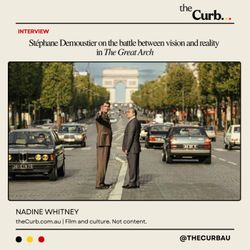
3. Stéphane Demoustier on the battle between vision and reality in The Great Arch
24:00||Season 23, Ep. 3In the early 1980s President François Mitterrand had a bold vision for Paris. It was his intention to create a new artistic epoch that would be as new and as hopeful as his election as the first left-wing leader of the Fifth Republic. Part of his vision was the Grandes Opérations d'Architecture et d'Urbanisme. Amongst these projects were the Louvre Pyramid, the Musée d'Orsay, Opéra Bastille, and La Grande Arche de la Défense — the building of which is the subject of Stéphane Demoustier’s partially fictional film The Great Arch.the Curb... is a completely independent and ad free website that lives on the support of listeners and readers just like you. Visit thecurb.com.au/subscribe, where you can support our work from $2 a month. Paid subscribers get access to our monthly competitions, exclusive interviews and articles, and more.
1. Meet the film festival programmers who want you to submit your film shot on a Honda Odyssey rear view camera
38:38||Season 23, Ep. 1As you'll hear in the below interview with festival programmers Parker Constantine and Flynn Boffo, I have a huge level of admiration for the work that The Collective of Underground Movie Lovers is doing in Sydney right now. This kind of grass roots, film enthusiast film collective is part of the changing face of Australian cinema. Through people like Parker and Flynn, creativity thrives, it grows, it survives. HOMEthe Curb... is a completely independent and ad free website that lives on the support of listeners and readers just like you. Visit thecurb.com.au/subscribe, where you can support our work from $2 a month. Paid subscribers get access to our monthly competitions, exclusive interviews and articles, and more.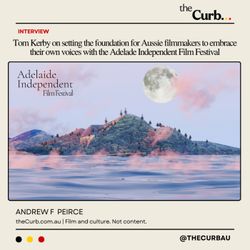
2. Tom Kerby on setting the foundation for Aussie filmmakers to embrace their own voices with the Adelaide Independent Film Festival
47:32||Season 23, Ep. 2There's something in the water in Adelaide that's forcing a major change within the Australian film industry. The Adelaide Film Festival exists and has continued their great financial support for establish and emerging filmmakers, helping nurture the budding ecosystem which has seen talent like the Philippou brothers explode into the world and change how modern Australian films and filmmakers are seen.Elsewhere in Adelaide is something that's equally nurturing the next generation of Australian filmmakers: the Adelaide Independent Film Festival. This festival provides foundational support to filmmakers of all kinds, established, emerging, otherwise, to present and share their stories on screens. The use of the word 'independent' is not an accident, it's a feature that enhances the position and purpose of supporting independent filmmakers in Australia.Tom Kerby is the Festival Director & Programmer, and it's with his shared vision alongside the many talented folks who bring the festival to life, that independent voices are supported through the festival. The fourth edition of the Adelaide Independent Film Festival kicks off from 3 - 4 October 2026 and features screenings, workshops, and a lot more. In the below interview, Tom talks through the purpose of the festival, what his vision is for the festival, and what attendees can expect for this years events.https://auteursforum.com/aiff26the Curb... is a completely independent and ad free website that lives on the support of listeners and readers just like you. Visit thecurb.com.au/subscribe, where you can support our work from $2 a month. Paid subscribers get access to our monthly competitions, exclusive interviews and articles, and more.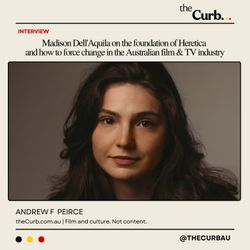
20. Madison Dell'Aquila on the foundation of Heretica and how to force change in the Australian film & TV industry
01:04:40||Season 22, Ep. 20Madison Dell'Aquila is, as her website proudly states, "constantly looking forward to challenging what people say can't be done." That mindset is strongly applied with the new platform Heretica, a website which aims to enhance the opportunities that women and gender diverse crew have on film and TV productions in Australia all the while dismantling the gender divide that exists in one of Australia's major cultural institutions. While Screen Australia has an initiative to address the gender divide in the screen industry - see the Gender Matters initiative - there's still minimal awareness of who is working within the industry who identifies as a women or non-binary. Heretica aims to address this by being a platform that provides people who wish to engage with women and non-binary crew the opportunity to make film and TV sets more reflective of real life. Having recently launched in August 2026, Heretica has already started to build an impressive array of names and creatives who are eager to start breaking down the gender division in the industry. In the last interview in our first Heretica Interviews series, and hopefully not the last, Andrew talks with Madison about the inspiration to force a change in an industry that has so often felt like it's resisted progressing into a better state of being. This is a deep interview, one that opens up both Madison and Andrew to the failings and the positive aspects of the Australian screen industry.It's been a genuine pleasure to be able to host these interviews and to share with you all just a few of the names who make up the platform of Heretica. the Curb... is a completely independent and ad free website that lives on the support of listeners and readers just like you. Visit thecurb.com.au/subscribe, where you can support our work from $2 a month. Paid subscribers get access to our monthly competitions, exclusive interviews and articles, and more.Read the other interviews in the Heretica series below:The Heretica Interviews: Sabrina Tan on their filmic journey from Singapore to Naarm-MelbourneSabrina Tan (Chinese: 陈姝颖) (she/her) is a Singaporean filmmaker based in Naarm-Melbourne. Sabrina is a multidisciplinary filmmaker who works in directing, production design, and graphic design. She is also the host of the award winning post-apocalyptic lifestyle series Wasteland Wonders, with Sabrina taking home the Outstanding EmergingThe Heretica Interviews: Téa Mancini on her journey into filmmaking through production designTéa Mancini (she/her) is a multi-hyphenate creative whose filmic body of work is growing in the realm of the art department and wardrobe, specialising in production design, while also building up a filmography as a writer and director. Téa holds a First Class Honours degree in Film, TelevisionThe Heretica Interviews: Keisha Slocomb on bringing her voice to life through filmmakingKeisha Slocomb is an emerging filmmaker who is looking to leave a mark on the world by utilising grounded performances alongside compelling visual storytelling. As a writer-director, Keisha is already hard at work on building a filmography that puts her voice front and centre while also maintaining a strong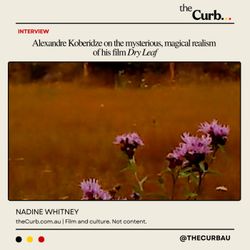
19. Alexandre Koberidze on the mysterious, magical realism of his film Dry Leaf
44:12||Season 22, Ep. 19
18. Ken Kwapis pays tribute to true originals with his delightful and genuine documentary We Are The Shaggs
31:50||Season 22, Ep. 18Ken Kwapis opens his delightful and genuine documentary We are the Shaggs by having a group of people listen and react to a song by The Shaggs. It’s almost a challenge asking if the audience can stick with the film after hearing the odd music created by three teens sisters — Dorothy, Betty, and Helen Wiggin from the mid to late 1960s.We Are The Shaggs screens at the Sydney Underground Film Festival on 13 September 2026. Tickets are available via https://www.suff.com.au/.the Curb... is a completely independent and ad free website that lives on the support of listeners and readers just like you. Visit thecurb.com.au/subscribe, where you can support our work from $2 a month. Paid subscribers get access to our monthly competitions, exclusive interviews and articles, and more.