Share
The Correspondent
Inside China’s AI-driven media revolution: one sentence prompts, AI content factories, what it means for Western media
Western media companies continue to wrestle with the ethics of utilising AI in the newsroom as concerns continue over how many human journalists will be left in charge. According to a report in Digiday, the Reuters newsroom is now using agentic AI, creating and processing video metadata to cut different edits of video coverage with a human overseeing the final edit and output.
Meanwhile, in mainland China: entire videos output using a one sentence AI prompt, from script to sound and video. A national AI content factory, delivering personalised AI video content for a nation of 1.4 billion people. Craig McCosker, Group Product Manager at the ABC in Australia, discusses his recent experiences at the Asia Pacific Broadcasting Union's Beijing AI Forum. He highlights the shift towards "one sentence production" of media in China, where AI systems can independently handle tasks like scriptwriting and dubbing.
McCosker also discusses his theory of the AI media ladder, detailing five levels of AI autonomy in media production, the Chinese focus on personalized broadcasts and the ethical considerations in AI content creation. You'll also hear of the global race for AI sovereignty, driven by language and cultural specificity, and the potential impact of AI on media ethics and regulation.
Read Craig McCosker's Digital Futures newsletter on LinkedIn: https://bit.ly/DigitalHorizons
Digiday story: Inside Reuters Agentic AI video experiment
Written and produced by Jarrod Watt
More episodes
View all episodes
2026 Hong Kong journalism conference: GenZ, AI, Substack, personal branding & mental health
47:43|The 10th annual journalism conference held by the Foreign Correspondents' Club of Hong Kong brought together an eclectic, intergenerational group of journalists and people working in media creation to hear panel discussions and participate in workshops on everything from practical AI usage in newsrooms to personal branding on Instagram, alternate business models via Substack and dealing with moral injury.FCC Hong Kong president Morgan Davis wraps this year's event and looks back on how it's changed over the past decade, while first-time attendees Samra Safalqr and Trista Kurniawan review what they saw and heard, and how this informs their experiences as GenZ journalists at the beginning of their careers. Produced and presented by Jarrod Watt Theme music composed and performed by Allen YoungbloodCatch up on previous episodes featuring FCC conference guest speakers:* How journalists can survive and thrive in the AI age: Diana Wu David on career resilience* Understanding moral injury in journalists: Dean Yates in conversation* Pekingnology, Trump in Beijing, Substack versus newsroom journalism: Zichen WangHow journalists can survive and thrive in the AI age: Diana Wu David on career resilience
32:19|What now for careers in journalism, with the onset of AI technology and an "age of abundance" of information? Karen Koh, veteran broadcast journalist and first vice president of the Foreign Correspondents' Club of Hong Kong speaks with Diana Wu David, a former FT executive and top 50 global influencer on the future of work, about career resilience in the age of AI. David, who is author of the book Future Proof: Reinventing Work in an Age of Acceleration and now Director of Futures at ServiceNow, discusses the importance of adapting to new technologies and channels in journalism, emphasizing the need for a portfolio career and personal branding. She highlights the value of curiosity, communication, and relationships in journalism, and advises young journalists to experiment and build networks while maintaining financial stability.Diana Wu David was one of the speakers at the 10th annual FCC Hong Kong Journalism Conference.Understanding moral injury in journalists: Dean Yates in conversation
31:05|FCC member governor Jing Yang in conversation with Dean Yates about moral injury, how it affects journalists, understanding how moral injury develops, and fostering a supportive organizational structure in newsrooms.Dean Yates knows what it means to live with the consequences of the stories you cover. His career in journalism includes years with Reuters as a journalist, editor and bureau chief, working across Asia including Jakarta, Jerusalem and Baghdad, bearing witness to acts of terrorism, the mass tragedy in the Boxing Day tsunami, as well as the incident infamously revealed by Wikileaks in 2010 - when the members of his Reuters team were machine-gunned to death by a US army helicopter while doing their job.He walked a long road in dealing with the moral injuries he’d sustained and put it all down in writing in his book published in 2023,Line in the Sand: A life-changing journey through a body and mind after traumaYates has become a leading voice on moral injury, helping not just journalists, but veterans, emergency and other frontline workers.In this conversation he outlines how moral injury is a concept similar to PTSD but distinct, affecting journalists who witness or experience ethical violations, and identifies three main reasons for journalists' vulnerability: reporting on morally troubling stories, being targeted for their work, and lack of organizational support.Pre-recorded and played as part of the 2026 FCC Journalism Conference.Find out more about Dean Yates' work at his website:https://www.deanyates.com.au/More information on his book Line in the Sand:https://www.panmacmillan.com.au/9781761264429/Produced by Jarrod WattMusic composed by Allen Youngblood2026 FCC journalism conference preview: cutting through the noise
30:12|FCC Clare Hollingsworth fellow Samra Zulfaqar previews this year's journalism conference, discussing the challenges and pressures for GenZ journalists, the need to embrace personal branding for journalists, how social media and the rise of influencers are changing how news organisations approach the delivery of news.This year's conference panels and presentations :* Ian Yee, investigative journalist, co-founder of The Fourthhttps://thefourth.media/* Tai Po Fire disaster coverage panel discussionJennifer Jett, Hans Tse, Anjali Tsui, Leopold Chen*The Art of SourcingJing Yang, Mithil Aggarwal*Navigating Hong Kong's legal environmentConnor Mycroft, Jonathan Man* Live reporting and bloggingDanny Vincent and Laura Westbrook* Notebook LM: news reporting assistantMike Raomanachai, Zela Chin* Alternative Media Careers: Building a Successful NewsletterAmanda Cua and Zichen Wang* Let's talk about moral injuryDean Yates, Jing Yang* Career resilience: earning a living, building a personal profileZichen Wang, Wei Du, Diana Wu David*Fireside chat: No love lost between Journalists and PR?Jay Qin, Jing Yang*AI empowered journalism: how SCMP connects tech in the newsroomZhou Xin, William Zheng* Keynote speakerHolmes Chan, AFPFCC Hong Kong website: https://www.fcchk.org/Produced by Jarrod Watt Music composed by Allen Youngblood
Hong Kong press freedom: what FCC member journalists say
37:21|What do the journalists and correspondents of the Foreign Correspondents' Club of Hong Kong have to say about press freedom?FCC correspondent member governor and bureau chief for The Information, Jing Yang discusses the results of the press freedom survey taken of FCC members, in which local journalists and foreign correspondents alike gave their response to questions over the working environment in Hong Kong, increased sensitivity among sources, concerns about digital and physical surveillance as well as perceptions of the economic health of newsrooms in Hong Kong.Survey answers are voiced using Elevenlabs AI.Read the FCC statement on World Press Freedom Day:https://www.fcchk.org/statement-on-results-of-fcc-press-freedom-survey-2025-2026/Read the online edition of the The Correspondent magazine:https://issuu.com/fcchk/docs/the_correspondent_april_2026?fr=xKAE9_zMzMwProduced by Jarrod Watt Music composed by Allen Youngblood
Pekingnology, Trump in Beijing, Substack versus newsroom journalism: Zichen Wang
51:27|As Donald Trump’s upcoming China visit draws global attention, what’s happening behind the scenes in Beijing? Zichen Wang, author of the Substack newsletter Pekingnology and former Xinhua correspondent is a guest speaker at the upcoming FCC Hong Kong journalism conference, and speaks in-depth about the breakdown in US-China relations, trade war risks, AI cooperation, and China’s geopolitical strategy—from rare earth dominance to the Strait of Hormuz and Middle East tensions.Hear him explain the shift from state media to "independent" journalism via Substack, the challenges of accessing reliable information in China, why newsletters are becoming essential for understanding global politics and how Substack continues to exist in mainland China without being blocked.(01:54) Speculation and expectations over Trump in Beijing(09:56) Evolution of US-China relations(18:24) Transition from newsroom to newsletter journalism(33:06) Impact of anti-spying raids on consulting firms(37:29) Substack's availability in China(43:12) Future trends in China's policyFind out more about the FCC journalism conference on May 16:https://www.fcchk.org/event/journalism-conference-2026/Produced and presented by Jarrod Watt Theme music composed by and performed by Allen Youngblood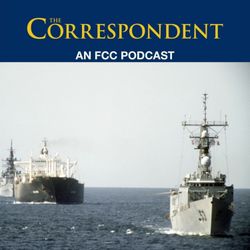
Beyond the Strait of Hormuz: Shipping, Insurance, the "Tehran Tollway" and Its Global Impact
42:00|Journalist Laura Westbrook speaks with Tim Huxley, CEO and director of Hong Kong-based shipowner Mandarin Shipping along with Mithun Varkey, editor-in-chief of Insurance Asia News, about the escalating conflict in the Strait of Hormuz and its global fallout. Since the Israel/US war upon Iran and Iran's subsequent attacks upon shipping and mining of the Strait of Hormuz blockade halting 20% of the world’s crude oil and LNG flows, shipping lanes have stalled and insurance premiums have surged by up to 1,000%. Over 800 stranded vessels and 10,000 crew members face mounting risk as fuel prices soar and inflation ripples through global trade. The conversation explores how the energy crisis, war risk coverage, and potential toll systems could reshape international shipping and supply chains for years to come.Follow Laura Westbrook's work for Al-Jazeera, CBC and more on Instagramhttps://www.instagram.com/laurawestynews/ Hear Mithun Varkey on the Between the Lines podcast for Insurance Asia News:https://shows.acast.com/between-the-lines-insurance-asiaFind out more abut the upcoming FCC panel discussion and lunch:Club Lunch – The Shipping Forecast: Holding The World To Ransomhttps://www.fcchk.org/event/club-lunch-the-shipping-forecast-holding-the-world-to-ransomProduced by Jarrod WattTheme music by Allen YoungbloodCover image: USS Hawes, USS William H. Standley and USS Guadalcanal escort a tanker in the Persian Gullf on 21 October 1987. National Archives. Public Domain.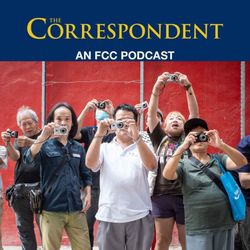
The First Night: homelessness, photography and stories from the streets of Hong Kong
01:03:32|FCC Hong Kong Vice President and veteran broadcaster Karen Koh sits down with photojournalist Ben Marans in the Hughes Room to talk about a powerful new exhibition at the FCC main bar this April. The show features images captured by individuals who learned photography through workshops run by ImpactHK, an FCC charity partner, and led by Marans.Through street photography, participants—many facing homelessness or economic hardship—share their personal perspectives on life in Hong Kong. Karen and Ben explore how the project gave them a platform to tell their own stories, build creative skills, and highlight the human side of social struggle.This podcast has used generative AI to give voice to the stories written by participants which accompany each photo.View the images of the exhibition at the FCC website as you listen: https://www.fcchk.org/event/wall-exhibition-the-first-night-by-impacthk-and-ben-marans/(15:50) Water - "I Never Thought I'd Be One of Them"(23:21) Rhoda - "I Had Applied With Hope But I Left With Anger"(29:09) Lee Jai - "Let It All Drift Away"(34:09) Yong - "Empty Pockets and a Heavy Heart"(40:17) Purple - "I Found Strength"(45:21) Poon - "Is This Place Safe?"(49:14) Hung Hung - "First Night at Mong Kok Civic Triangle"(53:07) Ah Choi - "The Turning Point"The exhibition, on display throughout April, invites the public to see Hong Kong and those dealing with homelessness - being unhoused - intense personal economic hardship - through new, compassionate eyes.ImpactHK is one of the FCC Hong Kong's charity partners- read more about their work here:https://www.fcchk.org/charity/Cover image by Ben Marans: https://www.instagram.com/benmaransphotography/FCC podcast theme music composed by Allen Youngblood Episode written, recorded and edited by Jarrod Watt
Inside Art Week, Hong Kong: Art Basel tips, must-see Hong Kong galleries and more with John Batten
44:22|Veteran art critic John Batten takes a fresh look at Art Basel Hong Kong, cutting through the usual headlines about record auction prices and celebrity artists. He explores the wider Hong Kong art scene—from the city’s evolving art market history and the rise of regional art fairs to how global trends are reshaping the market. Batten also shares insider tips on where to look beyond the Basel spotlight, including Tsuen Wan, Wong Chuk Hang, and Hong Kong’s growing network of public art spaces. Plus, practical advice for navigating art fairs like a pro—what to wear, how to connect, and where to explore.Cover image courtesy John BattenJohn Batten’s Art Week links:Art Basel: www.artbasel.com/hong-kongMagazines:Artomity: artomity.art/Art Asia Pacific: www.artasiapacific.com/Art in Tsuen Wan:CHAT (Centre for Heritage, Art & Textile): www.mill6chat.org/Art in Wong Chuk Hang:Rossi & Rossi: www.rossirossi.com/Blindspot Gallery: blindspotgallery.com/de Sarthe Gallery: www.desarthe.com/Gold: www.serakai.studio/goldArt in Tin Wan (Pokfulam side of Aberdeen)Empty Gallery: emptygallery.com/exhibitions/eg38-jutta-koether/Gallery Exit: www.galleryexit.com/Art in North Point: www.para-site.art/Written, produced and presented by Jarrod WattTheme music composed and performed by Allen Youngblood