Share

The Book Club
Jeffrey Winters: How Oligarchs Dominate Our Democracies
My guest on this week’s Book Club podcast is Jeffrey Winters, whose new book The Blind Spot: How Oligarchs Dominate Our Democracies makes the case that democracy as it functions now isn’t, as many of us imagine, the only thing keeping the robber barons in check – it is, in fact, the very system that has enabled them to thrive. He tells me how the wealth gap in the US is now many multiples of that in ancient Rome, how extreme wealth translates into political power, and how reforming campaign finance laws is only a tiny part of the solution we need.
Become a Spectator subscriber today to access this podcast without adverts. Go to spectator.co.uk/adfree to find out more.
For more Spectator podcasts, go to spectator.co.uk/podcasts
Contact us: podcast@spectator.co.uk
More episodes
View all episodes
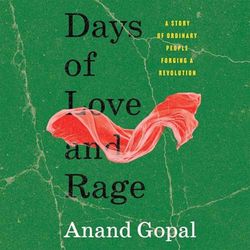
Anand Gopal: Days of Love and Rage
30:46|In this week's Book Club podcast, Sam Leith is joined by The New Yorker writer Anand Gopal, whose new book, long-listed for the Baillie Gifford Prize, is Days of Love and Rage: A Story of Revolution.What does freedom mean once the dictator has gone? Anand explains why he spent eight years reporting on Manbij, a city of 150,000 that pushed out the Assad regime and set about building a democracy from scratch – and how the argument over what came next split the revolution in two. They discuss the bubblegum seller who became a protest leader, the police chief who quietly stopped shooting at the crowds, how six outsiders talked their way into control of the city, and why the manuscript was handed in three days before Assad fell.Produced by Henry Lloyd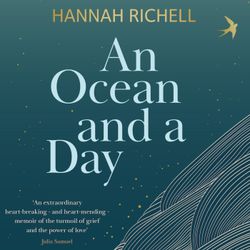
Hannah Richell: An Ocean and a Day
33:26|In this week’s Book Club podcast, Sam Leith is joined by bestselling novelist Hannah Richell to discuss her new memoir, An Ocean and a Day.When Hannah’s husband died in a surfing accident, her life in Australia was shattered. Suddenly, she was a single mother to two young children, navigating a grief she could never have imagined. Her memoir traces that journey from the moment of the accident, but, more uniquely, looks beyond those first years of loss – to what grief looks like with the benefit of time, distance and reflection.Sam and Hannah discuss the shame and embarrassment that can accompany grief, the physical effects of loss, how her experience has shaped her fiction, and what makes memoirs so powerful - to both writer and reader.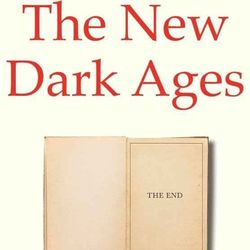
James Marriott: The Dawn of a Post-Literate Society
41:26|In this week’s Book Club podcast, Sam Leith is joined by The Times columnist James Marriott, whose new book is The New Dark Ages: The End of Reading and the Dawn of a Post-literate Society.Are we witnessing the end of the reading age? James explains why literacy has shaped not just our culture but the way we think – and why its decline could have profound consequences for politics, democracy and public life. They discuss how television, TikTok and short-form video have transformed our attention spans, whether AI will further erode the status of writing, and why the readers of the future may become a new cognitive elite.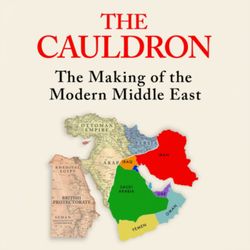
Simon Sebag Montefiore: The Cauldron
39:22|My guest on this week’s Book Club podcast is Simon Sebag Montefiore, the author of a number of fantastic books, including The Cauldron, which released this week. Simon and I talk about the making of the modern middle east, and how we forget some of the most fundamental groups who shaped this part of the world into the region that we know of today.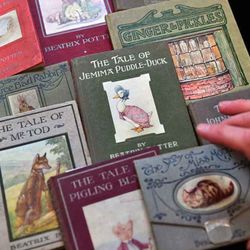
Celebrating 160 years of Beatrix Potter
46:16|This week marks the 160th anniversary of Beatrix Potter’s birth. In this week’s Book Club podcast, I’m joined by Penny Bradshaw, author of An A–Z of Beatrix Potter, and the historian and biographer Kathryn Hughes, whose books include Catland: Feline Enchantment and the Making of the Modern World, George Eliot and The Short Life and Long Times of Mrs Beeton.We plunge into the Potterverse. Does Potter get her due as a literary writer? How animal are her animals? And what went wrong for Ginger and Pickles?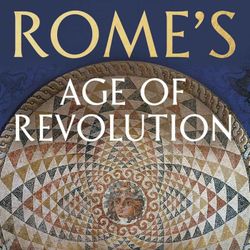
Tim Whitmarsh: Augustus, Empire and the Making of Christianity
42:29|My guest on this week’s Book Club podcast is Tim Whitmarsh, Regius Professor of Greek at Cambridge and author of Rome’s Age of Revolution: Augustus, Empire and the Making of Christianity. He tells me why, contrary to what we may have learnt at Sunday school, early Christianity flourished not despite the Roman empire, but because of it.
Dave Eggers: Contrapposto
38:19|My guest in this week’s Book Club podcast is the novelist Dave Eggers, talking about his new book Contrapposto. Dave tells me why, after years of writing tech-saturated satire, he returned to the world of art; how a novel 20 years in the making became a love story about talent, ambition and the mystery of making beauty; and why he thinks art ends when theory begins.
Ben Rhodes: A History of the United States in 15 Speeches
42:28|My guest in this week's Book Club podcast is the former Obama speechwriter Ben Rhodes, talking about his new book All We Say: A History of the United States in 15 Speeches. Ben tells me why a debate between two visions of what makes the US special has been playing out since the nation's conception, what Frederick Douglass has to say to the America of the 21st century, and why Ben Franklin didn't think the constitution was sacred.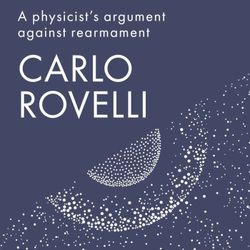
Carlo Rovelli: 85 Seconds to Midnight
46:29|In this week's Book Club podcast, I'm joined by the theoretical physicist and writer Carlo Rovelli to discuss his new book 85 Seconds to Midnight: A Physicist's Argument Against Rearmament, where in imitation of Einstein and Bertrand Russell, he uses his platform as a public intellectual to speak against the logic of nuclear escalation. He tells me what the Nazis got right and the US got wrong in the later years of the Second World War, why physicists have a bad conscience about the bomb – and why the threat to civilisation has never been greater.Produced by Oscar Edmondson. Edited by Ed Parker.