Share
The Black Doctors Podcast
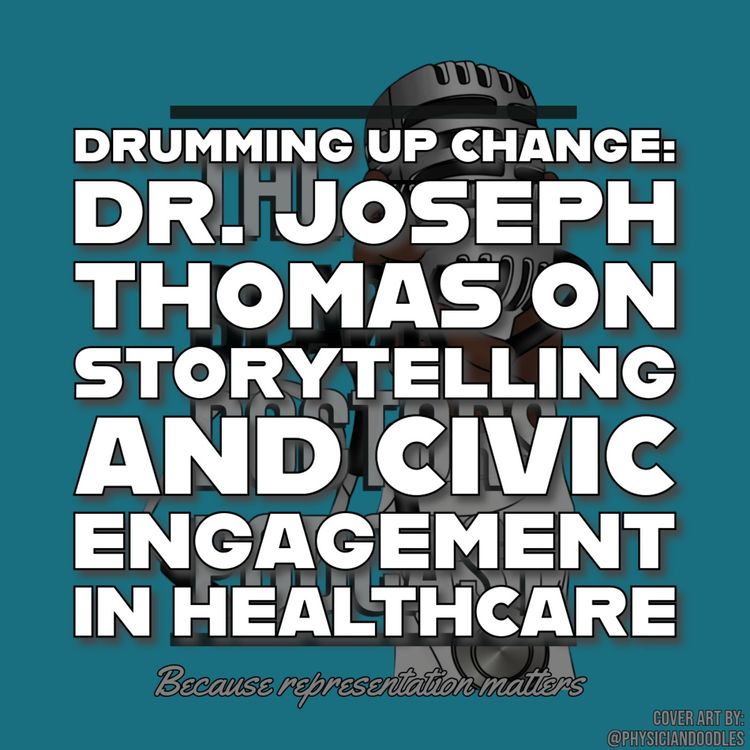
Drumming Up Change: Dr. Joseph Thomas on Storytelling and Civic Engagement in Healthcare
In this engaging episode of the Black Doctors Podcast, Dr. Steven Bradley interviews Dr. Joseph Thomas, a hospitalist and deputy editor of the Journal of Hospital Medicine. Dr. Thomas shares his unique journey of balancing a demanding medical career with his passion for music as the drummer for the classic rock band, Mayday Buffalo. He discusses how music served as a crucial outlet and means of connection during the COVID-19 pandemic, along with his deep-rooted ties to Buffalo, New York. Inspired by his pediatrician father, who was also a drummer, Dr. Thomas reflects on his educational path at the University of Buffalo and his decision to specialize in internal medicine, highlighting his gratifying experiences within Buffalo's diverse cultural landscape.
The conversation emphasizes Dr. Thomas's successful work-life balance achieved through a flexible private group practice, allowing him to engage in personal hobbies and teaching without the pressures of research mandates typically associated with academic roles. He elaborates on the importance of preoperative risk assessment and his editorial responsibilities, which include creating visual abstracts and producing digital educational content. This is particularly vital in countering medical misinformation that emerged during the pandemic. Dr. Thomas also highlights the significance of narrative medicine and the impact of storytelling in advocacy, urging greater civic engagement and the need for concise communication in both his op-eds and social media.
The episode concludes with a discussion on the importance of representation in medicine, as Dr. Thomas reflects on his contributions to the journal and his enjoyable experiences performing at Buffalo's largest 90s party. He encourages medical professionals to explore editorial and digital media fellowships, emphasizing the enriching blend of professional and personal fulfillment that can arise from pursuing diverse interests.
Check out this new podcast: Culture Shock Therapy: Your Health Equity Rx by Emergency Medicine Physician Dr. Katrina Gipson
Interested in starting a podcast? Check out Riverside for your remote recording needs: RIVERSIDE.FM
Use the discount code: BDPODCAST and save $25 off all USMLE, COMLEX and Residency Smartbanks.
Do you need help with relaxation and decreasing stress? Check out AmbientRx on YouTube for music therapy and sound baths.
If you enjoyed this episode, please share with a friend and leave a comment and rating on iTunes. TBDP is a volunteer passion project with the goal of inspiring all who listen.
In-house music and audio production, so any ideas for improvements or suggestions for future guests are welcome. Visit www.StevenBradleyMD.com to learn more about our host. He is available for consultations or speaking engagements regarding health equity and medical ethics.
More episodes
View all episodes

49. Medicine's Moral Compass: A Deep Dive into Ethics
17:42||Season 11, Ep. 49In this episode of The Black Doctors Podcast, Dr. Steven Bradley delves into the importance of medical ethics in daily medical practice. He shares his personal journey into this field and offers insights on how clinicians at all levels can get involved. The discussion emphasizes that medical ethics is not just abstract but deeply embedded in everyday medical decisions impacting patients and healthcare providers alike.-Key Takeaways: 1. Medical ethics helps clinicians navigate moral dilemmas and make more informed patient care decisions. Understanding and involving oneself in medical ethics can significantly impact patient outcomes and healthcare quality.2. Dr. Bradley shares his experiences in medical ethics, including his fellowship at the McLean Center for Clinical Medical Ethics, highlighting the real-world application and importance of this field.3. For medical students, residents, and attending physicians, there are numerous ways to get involved in ethics, from joining committees to pursuing formal training and finding mentors who question normative practices critically.Conclusion: Medical ethics is crucial in ensuring patient care goes beyond clinical duties to address moral and ethical considerations. Dr. Bradley encourages clinicians to engage in this field to provide better, more holistic patient care.Use the discount code: BDPODCAST and save $25 off all TrueLearn USMLE, COMLEX and Residency Smartbanks. Do you need help with relaxation and decreasing stress? Check out AmbientRx on YouTube for music therapy and sound baths or stream the NOISE-1 album on Spotify.Interviewing for the big attending job? Check out the Physician's Contract course developed by Michael Johnson Legal. Use this affiliate link to receive a discount! If you enjoyed this episode, please share with a friend and leave a comment and rating on iTunes. TBDP is a volunteer passion project with the goal of inspiring all who listen.In-house music and audio production, so any ideas for improvements or suggestions for future guests are welcome. Visit www.StevenBradleyMD.com to learn more about our host. He is available for consultations or speaking engagements regarding health equity and medical ethics.
48. Behind the Stethoscope: Lessons on Leadership, Humility, and Self-Discovery in Medicine
38:20||Season 11, Ep. 48Welcome to the final episode of Season 11 of the Black Doctors Podcast with Dr. Steven Bradley. As the year 2025 wraps up, Dr. Bradley reflects on his diverse career journey, sharing insights and lessons learned from his residency through his practice in military medicine and critical care anesthesiology. This transparent conversation provides valuable advice for current physicians on leadership, communication, and career transitions.Takeaways:-Career Growth and Leadership: Dr. Bradley discusses the importance of teamwork, humility, and leadership, learned from residency and military medical practice.- Decision-Making and Adaptability: Insight into critical decision-making processes and challenges in various phases of a medical career, including residency, military service, and academic practice.- Career Satisfaction and Work-Life Balance: Strategies for finding career satisfaction, including the benefits and challenges of locum tenens work, and the significance of adjusting work commitments for mental health and personal well-being.Conclusion:Dr. Bradley provides a candid look at his professional journey, emphasizing the importance of adaptability, continuous learning, and proactive career management. His experiences offer valuable lessons for physicians navigating their own career paths.Use the discount code: BDPODCAST and save $25 off all TrueLearn USMLE, COMLEX and Residency Smartbanks. Do you need help with relaxation and decreasing stress? Check out AmbientRx on YouTube for music therapy and sound baths or stream the NOISE-1 album on Spotify.Interviewing for the big attending job? Check out the Physician's Contract course developed by Michael Johnson Legal. Use this affiliate link to receive a discount! If you enjoyed this episode, please share with a friend and leave a comment and rating on iTunes. TBDP is a volunteer passion project with the goal of inspiring all who listen.In-house music and audio production, so any ideas for improvements or suggestions for future guests are welcome. Visit www.StevenBradleyMD.com to learn more about our host. He is available for consultations or speaking engagements regarding health equity and medical ethics.
47. How I Built This: My Pathway to Medicine
22:12||Season 11, Ep. 47In this episode of the Black Doctors Podcast, Dr. Steven Bradley shares his inspiring journey from growing up with humble beginnings to becoming a physician. His story highlights the challenges and triumphs along the way, including switching from a music major to pursuing medicine, the support systems that helped him succeed, and the significance of gratitude and humility in his career. Dr. Bradley also reflects on the changes in the medical field and outlines his plans for the future of the podcast and his personal projects.- Journey to Medicine: Dr. Bradley discusses his transition from a music major to pre-med, his experiences in a master's program, and his eventual acceptance to Howard University Medical School.- Support Systems: The importance of supportive friends and mentors throughout Dr. Bradley's education and career is emphasized, including significant figures and lifelong friends he met during his studies.- Gratitude and Humility: Dr. Bradley highlights the role of gratitude and humility in maintaining passion and perspective in the demanding field of medicine and advises aspiring physicians on the importance of these virtues.Conclusion: Dr. Bradley offers words of encouragement for those considering a career in medicine and shares his future plans for the podcast and his personal endeavors.Use the discount code: BDPODCAST and save $25 off all TrueLearn USMLE, COMLEX and Residency Smartbanks. Do you need help with relaxation and decreasing stress? Check out AmbientRx on YouTube for music therapy and sound baths or stream the NOISE-1 album on Spotify.Interviewing for the big attending job? Check out the Physician's Contract course developed by Michael Johnson Legal. Use this affiliate link to receive a discount! If you enjoyed this episode, please share with a friend and leave a comment and rating on iTunes. TBDP is a volunteer passion project with the goal of inspiring all who listen.In-house music and audio production, so any ideas for improvements or suggestions for future guests are welcome. Visit www.StevenBradleyMD.com to learn more about our host. He is available for consultations or speaking engagements regarding health equity and medical ethics.
46. Awareness Under Anesthesia: Separating Fact from Fiction
14:52||Season 11, Ep. 46Join Dr. Steven Bradley on the Black Doctors Podcast as he separates Hollywood myths from reality regarding awareness under anesthesia. Discover what anesthesia is, how common intraoperative awareness is, and the measures taken to prevent it. Equip yourself with knowledge for a safer, more confident surgical experience.- Understand the three main types of anesthesia: general, sedation, and regional, and their specific roles during medical procedures.- Learn about intraoperative awareness, its causes, and why it is extremely rare in modern medical practice.- Find out what patients can do to communicate concerns and help their anesthesia team ensure the highest level of safety during surgery.Dr. Bradley emphasizes that modern anesthesia is incredibly safe and invites listeners to transform their fears into confidence by arming themselves with the right information.Use the discount code: BDPODCAST and save $25 off all TrueLearn USMLE, COMLEX and Residency Smartbanks. Do you need help with relaxation and decreasing stress? Check out AmbientRx on YouTube for music therapy and sound baths or stream the NOISE-1 album on Spotify.Interviewing for the big attending job? Check out the Physician's Contract course developed by Michael Johnson Legal. Use this affiliate link to receive a discount! If you enjoyed this episode, please share with a friend and leave a comment and rating on iTunes. TBDP is a volunteer passion project with the goal of inspiring all who listen.In-house music and audio production, so any ideas for improvements or suggestions for future guests are welcome. Visit www.StevenBradleyMD.com to learn more about our host. He is available for consultations or speaking engagements regarding health equity and medical ethics.
45. The CRISPR Conundrum: Sickle Cell, and Health Equity
13:02||Season 11, Ep. 45Welcome to the Black Doctors Podcast with Dr. Steven Bradley, discussing the groundbreaking yet morally challenging first FDA-approved CRISPR therapy for sickle cell disease.Takeaways:1. The CRISPR therapy manipulates a patient's blood forming stem cells to increase fetal hemoglobin, significantly reducing pain crises and organ damage associated with sickle cell disease. However, the therapy costs around $2 million, plus additional hospitalization and treatment expenses.2. Access to this potentially transformative therapy raises ethical issues, including high costs, logistical complexities, and the fact that sickle cell disease disproportionately affects Black Americans. Many patients may not be able to navigate the path to treatment due to geographic and economic disparities.3. Proposed solutions include outcome-based payment models, specialized treatment centers with supporting infrastructure, and the need for transparent, inclusive processes to ensure equitable access. Pricing models must reflect the societal investment in public and charitable funding.Conclusion:Turning this scientific breakthrough into a social one requires moral and financial innovation. Affordable and accessible CRISPR therapy for sickle cell disease is not just beneficial—it’s an ethical necessity.Use the discount code: BDPODCAST and save $25 off all TrueLearn USMLE, COMLEX and Residency Smartbanks. Do you need help with relaxation and decreasing stress? Check out AmbientRx on YouTube for music therapy and sound baths or stream the NOISE-1 album on Spotify.Interviewing for the big attending job? Check out the Physician's Contract course developed by Michael Johnson Legal. Use this affiliate link to receive a discount! If you enjoyed this episode, please share with a friend and leave a comment and rating on iTunes. TBDP is a volunteer passion project with the goal of inspiring all who listen.In-house music and audio production, so any ideas for improvements or suggestions for future guests are welcome. Visit www.StevenBradleyMD.com to learn more about our host. He is available for consultations or speaking engagements regarding health equity and medical ethics.
44. Future of Medicine: 10 Tech Trends
17:16||Season 11, Ep. 44Welcome back to the Black Doctors podcast with Dr. Steven Bradley, where we delve into the future of medicine. Today, we explore 10 significant trends that are already reshaping healthcare, impacting physicians, residents, medical students, and patients alike.Bullet Points:- Artificial Intelligence & Clinical Decision Support: AI is not replacing physicians but reshaping their roles, making data interpretation and ensuring ethical application crucial.- Precision Medicine & Genomics: Tailoring therapies based on genetic information promises better outcomes but requires addressing privacy and ethical concerns.- Telemedicine & Hybrid Care Models: Post-pandemic, virtual visits have become integral to healthcare, necessitating new skills in digital rapport and remote monitoring.Conclusion:Join Dr. Steven Bradley as he navigates through these transformative trends, underlining the importance of staying curious, adaptable, and grounded in the ever-evolving field of medicine. Tune in next week for more discussions on medical ethics and innovation.Use the discount code: BDPODCAST and save $25 off all TrueLearn USMLE, COMLEX and Residency Smartbanks. Do you need help with relaxation and decreasing stress? Check out AmbientRx on YouTube for music therapy and sound baths or stream the NOISE-1 album on Spotify.Interviewing for the big attending job? Check out the Physician's Contract course developed by Michael Johnson Legal. Use this affiliate link to receive a discount! If you enjoyed this episode, please share with a friend and leave a comment and rating on iTunes. TBDP is a volunteer passion project with the goal of inspiring all who listen.In-house music and audio production, so any ideas for improvements or suggestions for future guests are welcome. Visit www.StevenBradleyMD.com to learn more about our host. He is available for consultations or speaking engagements regarding health equity and medical ethics.
43. Ace Your Med School Interview: Authenticity and Confidence Hacks
09:54||Season 11, Ep. 43Introduction:In this episode of the Black Doctors Podcast, Dr. Steven Bradley, an anesthesiologist and medical ethicist, shares valuable insights and strategies to help you prepare for your medical school interviews. From common interview questions to effective answering techniques, this episode is packed with tips to boost your confidence and authenticity.Takeaways:- Learn how to answer common interview questions using structured frameworks like past-present-future, STAR method, and ethical reasoning.- Understand the importance of tailoring your responses to reflect personal experiences and align with the specific mission and values of the medical school you're applying to.- Gain practical preparation tips such as mock interviews, recording and reviewing your performance, and setting up a professional environment for virtual interviews.Conclusion:Medical school interviews can be daunting, but they are also a unique opportunity to showcase who you are beyond your grades and test scores. Remember, it's about expressing your true self and demonstrating the empathy, resilience, and purpose that drive you. For more tips, or if you'd like additional practice scenarios, reach out through social media or the podcast website.Use the discount code: BDPODCAST and save $25 off all TrueLearn USMLE, COMLEX and Residency Smartbanks. Do you need help with relaxation and decreasing stress? Check out AmbientRx on YouTube for music therapy and sound baths or stream the NOISE-1 album on Spotify.Interviewing for the big attending job? Check out the Physician's Contract course developed by Michael Johnson Legal. Use this affiliate link to receive a discount! If you enjoyed this episode, please share with a friend and leave a comment and rating on iTunes. TBDP is a volunteer passion project with the goal of inspiring all who listen.In-house music and audio production, so any ideas for improvements or suggestions for future guests are welcome. Visit www.StevenBradleyMD.com to learn more about our host. He is available for consultations or speaking engagements regarding health equity and medical ethics.
42. Your Roadmap to a Safe Surgery: Key Questions for your Anesthesiologists
10:22||Season 11, Ep. 42In this episode of The Black Doctors Podcast, Dr. Steven Bradley, a double board-certified anesthesiologist and critical care medicine physician, discusses the importance of communicating with your anesthesiologist before surgery. He outlines key questions to ask to enhance understanding and comfort, covering topics such as types of anesthesia, pain management, and what to expect post-surgery. Dr. Bradley also emphasizes the need for patient transparency to ensure safety and improve outcomes.-Introduction: Dr. Steven Bradley explains the crucial role anesthesiologists play in surgery and the significance of the pre-surgery conversation.-Key Questions: He lists essential questions to ask, including types of anesthesia, pain management plans, and understanding the care team.-Preparation and Transparency: The importance of following preoperative instructions and being honest about health conditions and medications.Conclusion: Knowing what to ask your anesthesiologist can reduce anxiety and improve surgical outcomes. Dr. Bradley encourages patients to be informed and proactive in their healthcare journey.Use the discount code: BDPODCAST and save $25 off all TrueLearn USMLE, COMLEX and Residency Smartbanks. Do you need help with relaxation and decreasing stress? Check out AmbientRx on YouTube for music therapy and sound baths or stream the NOISE-1 album on Spotify.Interviewing for the big attending job? Check out the Physician's Contract course developed by Michael Johnson Legal. Use this affiliate link to receive a discount! If you enjoyed this episode, please share with a friend and leave a comment and rating on iTunes. TBDP is a volunteer passion project with the goal of inspiring all who listen.In-house music and audio production, so any ideas for improvements or suggestions for future guests are welcome. Visit www.StevenBradleyMD.com to learn more about our host. He is available for consultations or speaking engagements regarding health equity and medical ethics.
41. The Rise of AI in Medical Education: Promise and Predicament
08:32||Season 11, Ep. 41In this episode of the Black Doctors Podcast, Dr. Steven Bradley explores the transformative yet challenging role of artificial intelligence (AI) in medical education. The discussion covers the potential benefits of AI, such as personalized learning and improved access to educational resources, as well as the ethical dilemmas it introduces, including bias, privacy concerns, and the erosion of critical thinking. Dr. Bradley emphasizes the need for ethical integration, responsible AI use policies, and the irreplaceable value of human mentorship and empathy in medical training.Key Takeaways:- AI offers personalized, adaptive learning and can democratize access to high-quality medical education worldwide.- Ethical concerns include potential biases in AI, privacy issues, and the risk of diminishing critical thinking and empathy in medical training.- Institutions must develop clear AI use policies, integrate ethics into the curriculum, ensure human oversight, and hold vendors accountable for transparency.Conclusion:AI can significantly enhance medical education by making it faster and broader, but the ultimate focus should remain on human elements like compassion and ethical judgment. Only human educators can truly mentor and instill the wisdom required for exceptional patient care.Use the discount code: BDPODCAST and save $25 off all TrueLearn USMLE, COMLEX and Residency Smartbanks. Do you need help with relaxation and decreasing stress? Check out AmbientRx on YouTube for music therapy and sound baths or stream the NOISE-1 album on Spotify.Interviewing for the big attending job? Check out the Physician's Contract course developed by Michael Johnson Legal. Use this affiliate link to receive a discount! If you enjoyed this episode, please share with a friend and leave a comment and rating on iTunes. TBDP is a volunteer passion project with the goal of inspiring all who listen.In-house music and audio production, so any ideas for improvements or suggestions for future guests are welcome. Visit www.StevenBradleyMD.com to learn more about our host. He is available for consultations or speaking engagements regarding health equity and medical ethics.