Share
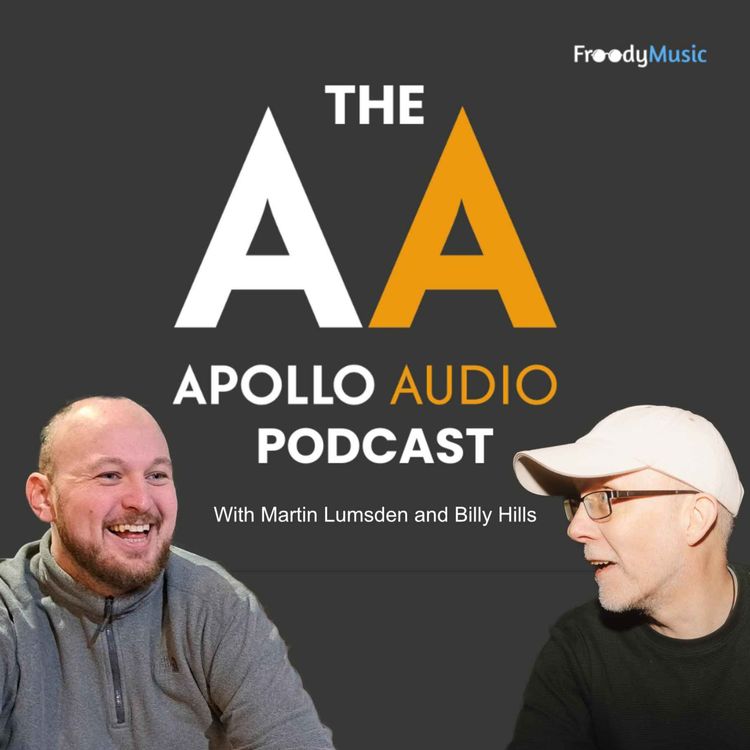
The Apollo Audio Podcast
Build a World Around the Music
Martin and Billy discuss running playlists, podcasts, vinyl buying, physical records, mastering for vinyl, artwork, sequencing and Björk’s Debut.
This episode looks at what changes when music becomes a physical object.
Vinyl brings its own practical demands: side length, sequencing, low end, loudness, high-frequency detail, artwork, bleed, metadata and the way a record is presented as something to hold, read, look at and own.
A song is not just an audio file. It can have artwork, sleeve notes, credits, visual identity, physical format, merch, context and a sense of place around it.
The album discussion is Björk’s Debut, with a focus on individuality, vocal identity, club influence, unexpected instrumentation, sampling, melody, experimentation and the creative confidence to make something that does not sound like everyone else.
Topics include:
Vinyl buying and record shops
ElasticStage and physical releases
Albums as objects
Vinyl sequencing and side lengths
Mastering for vinyl
Artwork, bleed and metadata
Building a world around a release
Björk
Debut
Club culture and sampling
Unusual instrumentation
Vocal identity and melodic risk
Why artists should lean into the weird
Find Apollo Audio online:
apollo-audio.co.uk
The Apollo Audio Podcast is hosted by record producer Martin Lumsden and musician and studio owner Billy Hills and is recorded at Apollo Audio Hertford.
Each episode offers insight into songs, records, and the creative process, drawn from real-world experience in studios and making music.
Also available to watch on YouTube and Spotify
📷 Instagram: @apolloaudiopodcast
📧 apolloaudiopod@gmail.com
A Froody Music Production. Production and editing by Martin Lumsden.
More episodes
View all episodes
38. Come Prepared, Stay Creative
31:14||Season 3, Ep. 38Martin and Billy discuss recording sessions, pre-production, band collaboration, studio creativity, live sound and Stevie Wonder’s Songs in the Key of Life.How much preparation should a band do before recording, and how much should be left to develop in the studio?Billy shares his recent experience recording drums and bass for his band's new EP at Apollo Audio, including the value of demos, guide tracks, tempo mapping, alternate takes and having the whole band involved in the process. Good preparation can save valuable studio time, but it also creates opportunities for new ideas that might never have emerged in rehearsal.Martin reflects on the producer's role in developing recordings, how advance listening helps shape production decisions, and why capturing spontaneous moments can be just as important as following the original plan. He also shares some experiences from running live sound for the recent We Will Rock You theatre production.The album discussion celebrates 50 years of Stevie Wonder's Songs in the Key of Life. Martin and Billy explore the extraordinary musicianship, layered vocal arrangements, instrumental performances, musical influences and ambitious production behind the record, alongside questions about song length, sequencing and how the way we listen to albums has changed.Topics include:Recording a band EP at Apollo AudioWhy demos and pre-production matterTempo, guide tracks and arrangement decisionsCapturing spontaneous studio ideasThe value of having everyone involvedLive sound and We Will Rock YouStevie Wonder's Songs in the Key of LifeLayered vocals, drums and musicianshipSong length, editing and production choicesAlbum sequencing and the vinyl listening experienceFind Apollo Audio online:apollo-audio.co.uk37. Music Needs Real People
36:35||Season 3, Ep. 37Martin and Billy discuss remote recording, production collaboration, AI tools, real musicians, the Apollo recording grant and Keo’s Put A Smile On For Me.This episode looks at where technology helps, and where music still needs people in the room, or at least properly involved in the process.Remote vocal recording can solve a practical problem. AI can help an artist hear a version of an idea. Session tools can sketch drums, bass or keyboards when there is no full band available. But the question running through the episode is what happens next: who shapes the part, who performs it, who brings taste, instinct, judgement and feel?The studio discussion focuses on collaboration, arrangement, production support and the value of bringing real musicians into a project. The AI discussion looks at the difference between using a tool to develop an existing song and asking a machine to create the song for you.The album discussion is Keo’s Put A Smile On For Me, with a focus on guitar-band energy, artwork, emotional weight, vocal identity, live potential, influences, sequencing and the work behind a band building real momentum.Topics include:Remote vocal recordingProduction collaborationApollo’s recording grantUsing real musicians in studio projectsAI as a sketch toolWhere AI stops being songwritingThe Pope, AI and the spark of human artKeoPut A Smile On For MeArtwork and album identityGuitar music and live momentumWhy new bands still need to keep playingFind Apollo Audio online: apollo-audio.co.uk35. Play Through the Mistakes
34:33||Season 3, Ep. 35Martin and Billy discuss live performance, mistakes, stagecraft, setlists, gear problems, rehearsal, audience connection and beabadoobee’s Pylon.This episode looks at what happens when songs leave the rehearsal room and have to work in front of an audience.A live set is not just a list of songs. It is the order, the gaps, the mistakes, the recovery, the tuning, the talking, the gear choices, the transitions and the way the band keeps going when something does not quite work.Martin and Billy talk about road-testing new songs, choosing what to cut, using setlist notes, building confidence through smaller gigs, planning for technical problems and learning how to play through mistakes rather than stopping every time something goes wrong.The album discussion is beabadoobee’s Pylon, with a focus on concise songwriting, vocal range, production choices, dynamic shifts, guest textures and the way short songs can still feel complete when the arrangement knows where it is going.Topics include:Live mistakes and recoveryRoad-testing new songsSetlist flow and stagecraftTalking to the audienceVisual clicks, tempo and feelPedalboards, amp problems and backup plansPlaying through mistakesbeabadoobeePylonConcise song arrangementsVocal melody and dynamicsProduction details and guest texturesFind Apollo Audio online:apollo-audio.co.uk34. Discovery Is Not the Same as Connection
34:34||Season 3, Ep. 34Martin and Billy discuss Oasis, AI, streaming, Bandcamp, artist discovery, merch, QR codes and Gallows’ Grey Britain.This episode looks at how artists create attention, build connection and give audiences something to follow beyond one song, one stream or one gig.Oasis’ continuing reunion story raises questions about music as event culture, nostalgia, generational identity and what it means when a band becomes bigger after they stop being active.The AI discussion focuses on authenticity, useful tools, fake content, creative replacement and why human creativity still matters when technology can imitate so much of the surface.For independent artists, the conversation returns to a practical point: streaming platforms can help people discover music, but they rarely provide a complete financial model. Artists need somewhere to send listeners next, whether that is Bandcamp, mailing lists, merch, live shows, direct fan contact or a simple QR code at a gig.The album discussion is Gallows’ Grey Britain, a heavy, ambitious and carefully constructed British punk record with Hertfordshire links, Frank Carter’s unmistakable vocal presence, and a strong sense of album identity.Topics include:Oasis and reunion cultureAI images, AI slop and creative authenticityStreaming as discovery, not incomeBandcamp, mailing lists and direct fan contactQR codes, merch and gig strategyGallowsGrey BritainFrank Carter and punk attitudeAlbums as complete statementsPreparation before recordingWhy attitude and musicianship can work togetherFind Apollo Audio online:apollo-audio.co.uk33. The Details Make the Performance
35:26||Season 3, Ep. 33Martin and Billy are back on The Apollo Audio Podcast, talking coffee, court, pedalboards, live setups, analogue gear, Reading Festival, Fontaine’s D.C., Charli XCX, Geese and DOMi & JD BECK’s WHO ASKED?The episode starts with Billy’s newly built pedalboard and a wider discussion about why physical gear, live setup, tap tempo, amp sounds, modulation, delay and stage performance all affect the way music feels.That leads into a bigger conversation about live sets, song transitions and the craft of performance. How do you build a set that flows properly? How do you move between songs? What happens when something goes wrong on stage? And how much of that only comes from doing it repeatedly?Martin and Billy also talk about Reading Festival, modern event culture, Fontaine’s D.C., Charli XCX, Geese, Glastonbury rumours, Oasis, Robbie Williams and the way live music now often works as a bigger cultural event.The album discussion focuses on DOMi & JD BECK’s WHO ASKED?, a technically impressive, jazz-influenced keyboard and drum record that raises a useful question: is technical proficiency enough if the listener cannot find a hook?Topics include:• Pedalboards, analogue gear and live guitar sounds• Quad Cortex vs physical pedals• Why live performance setup matters• Setlist flow and transitions• Sequencing a live set like an album• Reading Festival, Geese, Charli XCX and Fontaine’s D.C.• Glastonbury rumours and big-event culture• DOMi & JD BECK and WHO ASKED?• Technical musicianship, jazz influence and hooks• Why curiosity still matters in musicFind Apollo Audio online:apollo-audio.co.uk32. The Right Collaboration Changes the Record
34:50||Season 3, Ep. 32Martin and Billy are back for another episode of The Apollo Audio Podcast, talking PRS, set lists, songwriting royalties, Dolly Parton, Mr. Brightside, demos, Madonna and the difference between singles and albums.The conversation starts with how songs earn money when they are performed live, why venues need PRS licences, and why independent artists should understand metadata, publishing and the money they may already be entitled to.They also talk about Dolly Parton, the songwriting behind I Will Always Love You and Jolene, and how a song can take on a life far beyond its first version.That leads into Mr. Brightside, the power of a great first idea, and why demos can be more than rough sketches. A demo can help a band hear transitions, test arrangements, find hooks, and sometimes capture something that is hard to recreate later.The main album discussion focuses on Madonna’s Ray of Light, produced with William Orbit. Martin and Billy talk about Madonna’s career, her 80s and 90s pop dominance, why Ray of Light still feels like a proper album, and how producer collaboration helped create a sound that was different from what people expected.Topics include:• PRS, live set lists and songwriting royalties• Why metadata matters for independent artists• Dolly Parton and I Will Always Love You• Mr. Brightside and the power of a first song• Why demos are useful before recording• Madonna’s 80s and 90s career• Ray of Light and William Orbit• Producer collaboration and artist reinvention• Singles, EPs and albums• Why albums and singles do different jobsFind Apollo Audio online:apollo-audio.co.uk31. Perfect Isn’t Always Better
31:39||Season 3, Ep. 31Martin and Billy are back in one of Apollo Audio’s newly refurbished rehearsal rooms, talking studio upgrades, vinyl, cassettes, music scenes, AI, physical gear, festivals and Phoebe Bridgers’ new album Lost Weekend.The conversation starts with the changes happening around the studio, including the newly updated rehearsal rooms and plans for more music production, recording and releases at Apollo Audio.They also talk about record shops, cassette culture, vinyl collecting, local music scenes, AI music tools, Suno, physical amps, pedalboards, and why the process of making music still matters.The main album discussion focuses on Phoebe Bridgers’ Lost Weekend, a record that feels like a deliberate album rather than a collection of tracks. Martin and Billy discuss reinvention, courage, texture, production choices and why artists sometimes need to move forward without simply repeating what worked before.The episode closes on a production point that applies to any artist making records now: perfect is not always better. Sometimes the hiss, the movement, the push and pull, the timing changes and the rougher edges are what make a recording feel human.Topics include: • Apollo Audio’s refurbished rehearsal rooms • Vinyl, cassettes and physical music formats • Record shops and local scenes • AI music tools and creative shortcuts • Pedalboards, amps and physical sound • Reading and Leeds, BBC Introducing and new artist routes • Phoebe Bridgers and Lost Weekend • Reinvention after success • Why perfect is not always better • Human timing, texture and production choices • Keeping the feel in a recordingFind Apollo Audio online: apollo-audio.co.uk30. Music Needs Places to Grow
34:17||Season 3, Ep. 30Martin and Billy are joined by Josh Dean, MP for Hertford and Stortford, for a conversation about music, local culture, grassroots venues and why spaces like Apollo Audio matter.Josh talks about growing up in Hertford, spending time around friends in bands, discovering Bob Dylan through his granddad, and his more recent love of Ozzy Osbourne and Black Sabbath.Local music, business rates, rehearsal spaces, recording studios, grassroots venues and the role that places like Apollo Audio play in giving artists somewhere to practise, perform, record and develop, plus Hertford’s wider music culture, including Rock at the Castle, Musical Mystery Tour, local pubs, young musicians, summer band camps and the importance of giving people a real place to make music rather than only consuming it online.Topics include: • Josh’s musical background • Bob Dylan, Joan Baez and protest music • Ozzy Osbourne and Black Sabbath • Artists who reinvent themselves live • Hertford’s music scene • Grassroots venues and business rates • Why rehearsal and recording spaces matter • Young musicians and local opportunity • Apollo Audio as part of the community • Recommended album: Ozzy Osbourne, Blizzard of OzzFind Apollo Audio online: apollo-audio.co.uk