Share
The Academic Citizen
3: Is Fee-Free Education Possible?
•
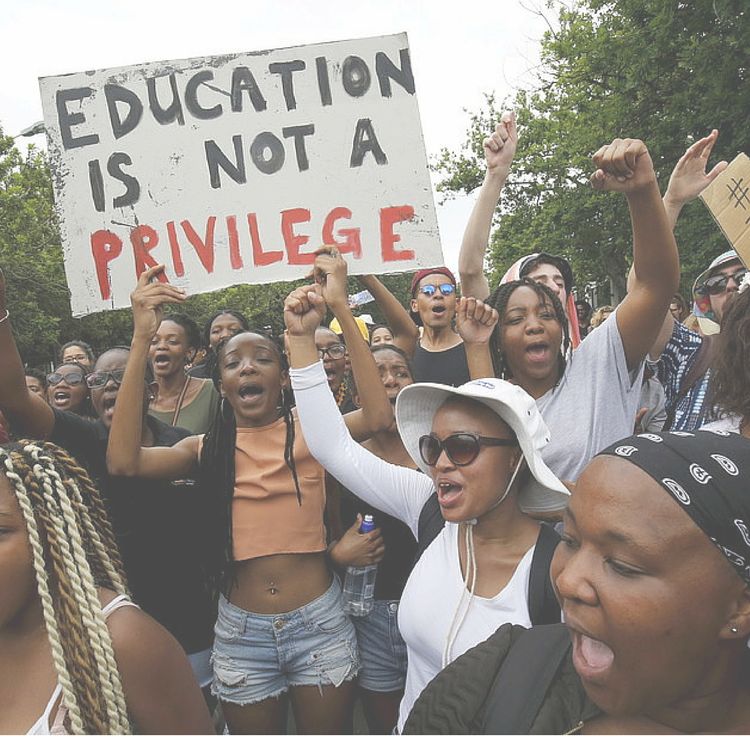
The #FeesMustFall movement has ushered calls for transformation
within higher education in South Africa, with fee-free education at
the forefront. Dick Forslund explains why and how fee-free
education can be made possible. The Academic Citizen also gathers
some student voices on how they are impacted by fees.
For more on Dick's views, visit: https://theacademiccitizen.org/2016/04/27/3-is-fee-free-education-possible/
Photo by Mike Hutchings
More episodes
View all episodes
54: New Universities
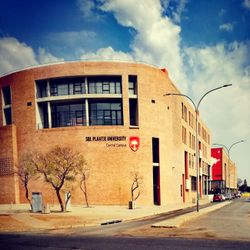
41:22|Carina Truyts is part of the pioneers at South Africa’s newest university, Sol Plaatje University in Kimberly. She has established the Anthropology department there. Her teaching and research is focused on contextual knowledge production, sharing and engagement. Truyts’ Masters Research was on Nourishment in the 'first thousand days' in the context of precarious livelihoods in a small Cape Winelands town. In this episode she shares with with Dr Nosipho Mngomezulu the excitement, countless opportunities and responsibilities associated with being part of this pioneering exercise. They also speak about institutional cultures and the ethical conundrums faced at such new establishments. Produced, Edited, Researched and Scheduled by: Simbarashe Honde
53: Decolonizing Science
33:48|
52: Politics of Academic Publishing
01:00:26|Writing for academic journals is highly competitive. The common saying in academic circles is, “get published or perish!” There’s no simple formula for getting published, expectations vary both between and within subject areas. But there are some challenges that will confront all academic writers regardless of their discipline. How should you respond to reviewer feedback and rejection? Is there a correct way to structure a paper? Why should I pay to get my article published? What is open access publishing and why must I pay for it? Dr Nosipho Mngomezulu explores these above questions and more with Oscar Masinyana, the managing editor of Taylor & Francis South Africa. Taylor & Francis publishes around 70 highly regarded academic and professional journals from the region in collaboration with learned societies, institutions and co-publishers Researched, Edited, Produced and Scheduled by Simbarashe Honde
51: Mental Wellness in Academia
38:26|In the Netherlands, a study revealed that 1 in 3 academics suffer from mental health disorder. This then begs the question if the same applies to Academics here in South Africa? If so what could be the reasons? Is mental wellness an Institutional problem? Is mental health gendered? How can academics cope? Well, this week’s podcast seeks to answer the above questions. Kholeka Shange caught up with Elvis Munatswa, a PhD Candidate in Psychology at Wits and had on the above issues. Produced, Edited, Scheduled and Researched by Simbarashe Honde
50: Young People and HIV Research Discourse
52:20|Dr. Beth Vale is a researcher at the Mapungubwe Institute for Strategic Reflection. She is a Mandela Rhodes and a Rhodes Scholar. Dr. Vale was a postdoctoral fellow under the NRF Chair in Local Histories, Present Realities at Wits University. Her research explored Johannesburg nightclub cultures as sites of identity, attachment and place-making. Vale’s doctoral research completed at Oxford, was an ethnographic study exploring the medication-taking practices of HIV-positive adolescents in the Eastern Cape province of South Africa. She worked as part of a mixed-methods team that worked collaboratively with government and local NGOs to inform policy and programming. In this episode, Dr Nosipho Mngomezulu caught up with Dr Vale and they chat on youth research, intimacy, HIV and writing for the public. They also discuss effective ways of engagement, conflict and identity construction in disseminating research.
49: In Conversation With SA's Youngest Dean
40:06|49: In Conversation With SA's Youngest Dean by The Academic Citizen
48: Bullying In Academia
42:19|Academic bullying is a prevalent but unexplored phenomenon in South Africa. In this week’s episode, Kholeka Shange and Dr Colett Gordon discuss how it manifests itself in the context of Higher Education and beyond. Photo Cred: Melanie Wasser Produced, Edited, Researched and Scheduled by: Simbarashe Honde
47 Public Intellectuals
47:11|
Welcome Back - Season 2
38:01|The Academic Citizen team is back and refreshed from the semester break. In this episode Dr Nosipho Mngomezulu introduces new cohost, Kholeka Belinda Shange. Shange is currently pursuing a PhD in History of Art. Her research is focused on visual representations of uMntwana Magogo kaDinuzulu. She is a Wits University graduate with a BA (Hons) in Dramatic Arts and a Master’s degree in Film and Television studies. Her Master’s research examined how spoken word poetry served as a vehicle through which young black male poets in Johannesburg reimagined stereotypical representations of black masculinities in mainstream cinema and popular media. As part of this degree, she produced and directed the short film “Rainbow’s Men”. In this episode, Mngomezulu and Shange discuss various themes which they would like to probe and deliberate on this semester. Themes ranging from the role of lecturers in addressing student problems, feminism in academia, what it means to be vulnerable yet at the same time be fully present and importantly exploring alternative ways of disseminating knowledge. In these days of social media and activism terms like being “woke’ “consciousness” are being thrown around and Mngomezulu and Shange also plan on dissecting what those terms mean amongst many other issues of concern in higher education. Produced, Edited, Researched and Scheduled by: Simbarashe Honde