Latest episode
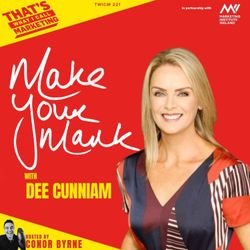
TWICM 221: Make Your Mark Ep 2 with Dee Cunniam of Britvic Ireland
36:05|Dee Cunniam, Head of Brand Marketing and Innovation at Britvic Ireland, joins That’s What I Call Marketing to discuss growing iconic Irish brands, leading through change and building a marketing career that keeps moving forward. How do you adapt a much-loved brand without losing what people love about it? Through her work on MiWadi and Ballygowan, Dee explains how consumer insight, product innovation and commercial judgement come together and why 18 years in one business has meant many different careers.In this episode, we cover:– How MiWadi responded when concerns about sugar challenged perceptions of the brand, balancing functional benefits with its emotional connection to families.– The thinking behind MiWadi’s 0% sugar range and why innovation needs to preserve a brand’s distinctiveness.– Ballygowan’s expansion into flavoured and functional water, and what an earlier launch taught the team about consumer readiness.– Moving shopper marketing beyond point-of-sale execution to a more strategic role across brands, customers and commercial teams.– Building influence by understanding other functions’ priorities and demonstrating marketing’s commercial value.– Why sideways moves, category experience and continuous learning can help marketers build broader careers.A useful listen for marketers interested in brand strategy, FMCG marketing, consumer insight, product innovation, marketing leadership and career development.That’s What I Call Marketing is the podcast for marketers who care about brand, B2B, creativity, effectiveness and the future of the profession.Follow the show for more conversations with CMOs, marketing leaders, agency leaders, professors, authors, thinkers and practitioners.Find more episodes at: https://www.thatswhaticallmarketing.comMAKE YOUR MARK — IN PARTNERSHIP WITH THE MARKETING INSTITUTE OF IRELANDThis is the final episode in our three-part Make Your Mark series, exploring the different ways marketers develop their expertise, build confidence and make a meaningful contribution to their organisations. The Marketing Institute of Ireland supports marketers through its competency framework, professional assessment, certification, ongoing CPD and a network of peers. Thank you to the Marketing Institute for partnering with That’s What I Call Marketing on this series.Find out more: https://mii.ieTIMESTAMPS02:51 From promotional work to agency life and FMCG06:41 Britvic Ireland and its portfolio of brands08:39 Eighteen years in one business, many different roles09:17 MiWadi: protecting the brand while responding to change13:00 Functional benefits, 0% sugar and product innovation15:18 Making the commercial case for brand investment16:17 Ballygowan: from mineral water to new drinking occasions17:55 Balancing innovation with the core brand19:37 How leadership changes as you become more senior21:23 Giving shopper marketing a more strategic role23:12 Building influence across the business24:44 Making time for learning and development28:53 Squiggly careers, sideways moves and category experience31:13 What marketing awards mean for the whole team32:51 The mark Dee still wants to make34:22 Club Orange, football and having fun along the way
More episodes
View all episodes
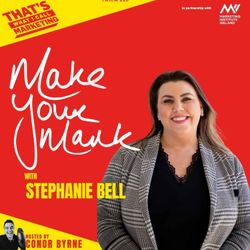
TWICM 220: Make Your Mark Ep 2 with Stephanie Bell of Mercedes Ireland
36:05|Make Your Mark: Stephanie Bell, Head of Marketing for Mercedes-Benz in Ireland joins That’s What I Call Marketing to discuss building commercial credibility, making a global brand relevant locally and earning support for ambitious marketing.You’ll hear what “speaking the language of the business” actually looks like, how Stephanie secured backing for The Traitors Ireland partnership and why building relationships with future buyers matters alongside delivering sales today.When sales fall, pausing marketing can seem like the obvious response. Stephanie shares how she challenged that thinking by starting with the revenue target, working back to the number of customers needed and explaining how marketing would help deliver them.That commercial grounding runs through a career spanning Diageo, Heineken, FMCG, not-for-profit and automotive. It also shaped her approach to The Traitors Ireland: a partnership the business initially turned down, which went on to deliver almost 30 minutes of on-screen car exposure. Stephanie discusses the 40% year-on-year growth in GLC sales that followed, the lessons from the first series and the creation of four locally produced Irish TV ads for the second.In this episode, we cover:– What commercial and trade marketing roles taught Stephanie about customers, margins and making a case for investment.– Working on Orchard Thieves and adapting lessons from Diageo and Heineken to businesses where marketing has to earn its influence.– Securing local and global approval for The Traitors Ireland, with conviction rather than certainty.– Why Irish creative and cultural relevance matter, even when you have a globally recognised luxury brand.– Balancing immediate sales with future demand across Mercedes-Benz and BYD, while responding to electrification and changing buyer behaviour.– Making professional development part of the working day and helping a team build its skills and confidence.A useful listen for marketers interested in brand strategy, sponsorship effectiveness, commercial impact, global and local marketing, marketing leadership and career development.That’s What I Call Marketing is the podcast for marketers who care about brand, B2B, creativity, effectiveness and the future of the profession.Follow the show for more conversations with CMOs, marketing leaders, agency leaders, professors, authors, thinkers and practitioners.Find more episodes at: https://www.thatswhaticallmarketing.comMAKE YOUR MARK | IN PARTNERSHIP WITH THE MARKETING INSTITUTE OF IRELANDThis is episode two of our three-part Make Your Mark series, created in partnership with the Marketing Institute of Ireland. The series explores different routes through a marketing career and how marketers make their mark through expertise, confidence, continued learning and the impact of their work.The Marketing Institute of Ireland supports marketers through its competency framework, professional assessment and certification, CPD and training.Find out more: https://mii.ieTIMESTAMPS02:55 Stephanie’s path from commercial roles into marketing04:47 Learning brand marketing at Diageo and Heineken06:15 Orchard Thieves and challenging the cider category07:56 Bringing big-company experience into smaller businesses10:02 “Sales are down”: making the commercial case for marketing12:26 Building credibility with commercial stakeholders13:40 From FMCG and not-for-profit into automotive15:33 Managing Mercedes-Benz in Ireland: global brand, local market18:50 The Traitors Ireland: taking the risk and securing support22:23 Creating Irish TV ads for the second series23:48 Conviction rather than certainty25:08 Balancing current sales and future buyers27:52 Electrification and the better-informed car buyer28:38 Developing your own skills and supporting your team32:27 Challenging “we’ve always done it that way”34:27 Winning Best Entertainment Sponsorship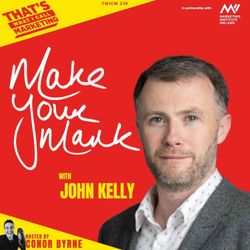
TWICM 219: Make Your Mark Ep 1 with John Kelly of Musgraves
31:59|Make Your Mark is a three-part series exploring how marketers build their careers and make a difference to their businesses, their customers and the people around them, in partnership with the Marketing Institute of Ireland.In this opening conversation, John Kelly, Retail Marketing Manager at Musgrave, joins That’s What I Call Marketing to discuss his 20-year career working predominantly with SuperValu, and what it takes to turn customer understanding into commercial results. John’s experience shows how much you can learn by taking on different challenges within one organisation. From checking promotional prices as a marketing assistant to delivering campaigns across a network of independent retailers, he explains how attention to detail, curiosity and doing what you said you would do build the credibility to take your next step.We also get into the work behind SuperValu’s “Yes You Scan” campaign. Getting TV, radio, social and in-store communications working together is one challenge; getting the entire business, right down to the checkout, moving towards the same outcome is another.In this episode, we cover:– How John deliberately built experience across value, local marketing, loyalty, sponsorship and retail marketing.– The commercial thinking and business-wide coordination behind Real Rewards prices and “Yes You Scan”.– What independent retailers know about their communities, and how that knowledge complements customer research and sales data.– Keeping SuperValu distinctive while competing on value and delivering short-term sales.– What John learned from micromanaging, and how he now uses trust, accountability and regular feedback to develop his team.– Why the time AI saves should help marketers get closer to customers, alongside the continuing need for creativity and storytelling.A useful listen for marketers interested in career development, retail marketing, brand building, customer insight, marketing effectiveness and leadership.TIMESTAMPS00:00 Consumer understanding and storytelling00:23 Introducing the Make Your Mark series03:08 John Kelly’s route into marketing04:00 Musgrave and SuperValu’s retailer model05:00 Different roles, new challenges and career development06:23 Commercial outcomes and attention to detail08:19 Why John’s team hears “never assume”10:21 Building credibility by following through11:00 Real Rewards prices and “Yes You Scan”12:12 Getting the whole business behind a campaign13:11 Competition, pace and brand differentiation15:34 Customer insight and the say-do gap16:47 Short-term sales and long-term brand building18:21 Learning to lead without micromanaging20:10 Mentoring and finding answers as a leader22:19 The attitude and skills John looks for when hiring25:37 Using AI to get closer to customers27:00 Demonstrating marketing’s business impact28:12 Recognising marketing talent through awards30:24 Make Your Mark and continuous learningThat’s What I Call Marketing is the podcast for marketers who care about brand, B2B, creativity, effectiveness and the future of the profession.Follow the show for more conversations with CMOs, marketing leaders, agency leaders, professors, authors, thinkers and practitioners.Find more episodes at: https://www.thatswhaticallmarketing.comOUR SERIES PARTNERThank you to the Marketing Institute of Ireland for partnering with us on this series as part of their Make Your Mark campaign. The campaign recognises that making your mark happens throughout your career: as you develop your skills, grow in confidence, take responsibility and help others progress. Across three conversations with marketers working in different organisations and at different career stages, we explore what that means in practice. The Marketing Institute of Ireland helps marketers build their expertise and professional credibility through its competency framework, professional assessment, certification and ongoing CPD.
TWICM 218: The Singles: Grindr IRL with Madonna, ON taking On Nike, Walkers Little Moments of Joy
28:06|Bella Harrison and Ed Parkin from Tracksuit join That’s What I Call Marketing to discuss Grindr’s push into real-world experiences, On’s entry into football and Walkers’ growing brand preference, exploring what each story tells marketers about building brands and measuring progress.Three brands, three different challenges: giving people more reasons to use an app, taking a specialist sports brand to a wider audience, and keeping an established favourite relevant. Conor Byrne, Bella and Ed examine the strategies alongside Tracksuit’s brand health data, discussing what is moving, what remains uncertain and which measures matter.In this episode, we cover:– Grindr’s “Global Gayborhood” ambition: how a surprise Madonna performance, events and broader services support its move beyond a hook-up app, and why its younger audience deserves closer attention.– On’s move into football with Kylian Mbappé and Thierry Henry: building on its running and tennis credentials, competing with Nike and adidas, and the questions facing a premium brand entering the boot market.– The difference between recognising a brand and thinking of it first, and how expanding into another sport could give On more opportunities to come to mind.– Walkers’ brand refresh, new flavours and football partnerships with Lionel Messi, David Beckham and Thierry Henry, alongside a rise in preference from 29% to 36%.– Why flat awareness or usage figures do not tell the whole story, and how audience differences, category context and preference can help marketers make a stronger case for their work.– “What the Actual?”: the discussion around Sydney Sweeney’s Novig campaign, PNC Bank using the Titanic in its advertising, and why the Laughing Cow has stopped laughing.A useful listen for marketers interested in brand strategy, customer insight, experiential marketing, sports marketing, brand building, marketing effectiveness and commercial impact.That’s What I Call Marketing is the podcast for marketers who care about brand, B2B, creativity, effectiveness and the future of the profession.Follow the show for more conversations with CMOs, marketing leaders, agency leaders, professors, authors, thinkers and practitioners.Find more episodes at: https://www.thatswhaticallmarketing.comTHE SINGLES — IN PARTNERSHIP WITH TRACKSUITThe Singles is our monthly look at the marketing stories getting people talking, using Tracksuit’s brand tracking data to bring evidence and context to the conversation.A huge thanks to Tracksuit for supporting the series, and to Bella Harrison and Ed Parkin for helping us understand the brand performance behind the headlines.Explore Tracksuit’s always-on, affordable brand tracking platform: https://www.gotracksuit.comTIMESTAMPS01:50 Grindr: real-world events and the “Global Gayborhood”02:58 Madonna, community and experiences people share04:08 What the brand data shows for Grindr05:33 Reaching younger audiences in a changing dating category06:41 Putting audience and category data into context07:37 Giving people reasons to use Grindr beyond dating09:14 On enters football with Kylian Mbappé10:08 Building on running and tennis10:53 Premium positioning and the realities of buying football boots13:06 On’s brand growth and the opportunity to come to mind more often14:36 Thierry Henry joins On as Director of Football15:16 Thierry Henry and Ireland’s long football memory16:10 Walkers: refreshing an iconic brand17:45 Why Walkers’ seven-point preference gain matters19:46 Competing across the wider snacking category21:25 Familiarity, trust and choosing a brand22:05 Using brand metrics in budget conversations23:27 What the Actual? Sydney Sweeney and Novig25:10 PNC Bank’s Titanic advertising26:08 The Laughing Cow stops laughing: one to watch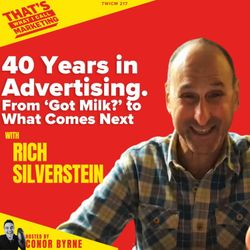
TWICM 217: Rich Silverstein Co-Founder of Goodby Silverstein & Partners on 40 Years in Advertising
52:45|On the day he retires from Goodby Silverstein & Partners, co-founder Rich Silverstein joins That’s What I Call Marketing to reflect on 40 years in advertising, the making of ‘Got Milk?’ and what makes an idea last. Rich takes us back to the early days of the agency, when a project for Electronic Arts helped turn a group of creatives who wanted to do things their own way into a business. We get into the thinking behind ‘Got Milk?’, the E*TRADE monkey ad and the lizards, and ask whether work made for a different media era could be even more powerful today. Rich is candid about the role of craft, humour and client confidence, as well as his concern that AI could make it easier to settle for work that is merely good enough.In this episode, we cover:– How Rich, Jeff Goodby and Andy Berlin started the agency, and what they took from their time with Hal Riney– The simple truth behind ‘Got Milk?’ and how its words and distinctive look came together– Why the best campaigns build a brand over time, rather than end with one commercial– What it takes to sell an unusual idea when more people want a say in the work– Rich’s mixed feelings about AI, and how he is using it to develop a musical– Why he tells young creatives to study the world and the people in itA useful listen for marketers interested in brand building, creative effectiveness, advertising craft, agency relationships and AI in marketing.That’s What I Call Marketing is the podcast for marketers who care about brand, B2B, creativity, effectiveness and the future of the profession.Follow the show for more conversations with CMOs, marketing leaders, agency leaders, professors, authors, thinkers and practitioners.Find more episodes at: https://www.thatswhaticallmarketing.comTimestamps00:00 – Rich Silverstein and 40 years in advertising10:01 – Hal Riney, Electronic Arts and starting Goodby Silverstein & Partners14:28 – Bringing design, journalism and craft together15:25 – Why Rich skips most advertising16:31 – AI and the danger of “good enough”21:46 – What editorial design and Rolling Stone taught him24:05 – Why great work should still hold up years later24:26 – The story behind ‘Got Milk?’26:00 – The E*TRADE monkey ad28:37 – Creative constraints and the need for confident clients30:36 – The lizards and building a brand over time33:15 – Using humour to make an idea last36:32 – Selling ambitious work and working with clients37:39 – Research, planning and creative collaboration40:37 – The ideas Rich loved but could not sell41:59 – 13 Days, his musical project, and using AI to make it46:47 – Advice for creatives starting an agency today49:19 – Why the ideas come faster, but selling them remains hard51:51 – The advertising Rich still admires52:46 – Mentors, observation and studying the worldThanks to Tracksuit for partnering with That’s What I Call Marketing. Find out more about its always-on brand tracking platform at https://www.gotracksuit.com.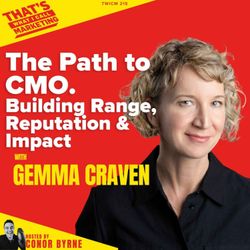
TWICM 216: Scribd CMO Gemma Craven on the Path to becoming CMO, Building Range, Reputation & Impact
44:16|Gemma Craven, Chief Marketing Officer at Scribd, Inc., joins That’s What I Call Marketing to discuss her path to becoming a CMO, the value of building experience across different areas of marketing and what it takes to reshape brands, teams and reputations.This episode explores how a varied career across PR, social media, technology, agencies, consultancy and in-house leadership gave Gemma the range required to lead marketing across Scribd, Everand, Fable and SlideShare. It is an honest conversation about career choices that did not always make immediate sense to other people.In this episode, we cover:– How moving between countries, disciplines and organisations shaped Gemma’s approach to marketing leadership– Building Social@Ogilvy New York when many people still believed social media would not last– Why Gemma deliberately moved beyond being known solely as a social media specialist– How working with CMOs at McCann helped her see CMO leadership as a possible destination– Why becoming a fractional CMO was initially viewed as a failure by some people– Restructuring Scribd’s marketing organisation around its products, audiences and areas of expertise– Managing a portfolio that includes Scribd, Everand, Fable and SlideShare– Why brands must actively manage their reputations rather than leave customers, reviews and online communities to define them– Connecting brand strategy more closely with product, engineering, design and customer experience– The thinking behind Scribd’s “Connect the Docs” campaign and the enduring human satisfaction of figuring something out for yourselfGemma Craven has more than 25 years of experience building and positioning global brands. Before joining Scribd, Inc., she led marketing at Melissa & Doug, advised senior leaders at companies including Spotify, Nike, Fiverr and Ford, and led digital brand strategy at McCann New York, where she helped make Fearless Girl a global phenomenon. She also built Social@Ogilvy New York into an award-winning, multi-practice division. A useful listen for marketers interested in marketing leadership, career development, brand strategy, organisational design, reputation management, customer experience and the path to becoming a CMO.That’s What I Call Marketing is the podcast for marketers who care about brand, B2B, creativity, effectiveness and the future of the profession.Follow the show for more conversations with CMOs, marketing leaders, agency leaders, professors, authors, thinkers and practitioners.Find more episodes at: https://www.thatswhaticallmarketing.comThis episode is brought to you in partnership with Tracksuit, the always-on brand-tracking platform that helps marketers monitor brand health and bring a clear, shared view of brand performance into the boardroom. Tracksuit tracks brands across more than 25 markets, making ongoing brand measurement more accessible, visible and useful for marketing teams and senior leaders. Find out more at: https://www.gotracksuit.comThe Big Marketing MeetUp Belfast, takes place at ICC Belfast on 5 November 2026, book tickets at: https://www.tickettailor.com/events/bmmubelfast/1935249Chapters04:15 – A career shaped by curiosity and working across cultures06:30 – Moving from London to New York and experiencing culture shock09:41 – Building Social@Ogilvy New York16:42 – Why Gemma moved from agency life into technology19:24 – When becoming a CMO started to feel possible20:49 – Why varied experience creates better marketing leaders23:13 – Too ambitious to work for Mick Jagger24:01 – Choosing the fractional CMO path28:11 – Restructuring marketing around products and audiences29:17 – What happens when a brand leaves its story untold29:48 – Leading teams through organisational change32:16 – Refreshing the Scribd and SlideShare brands32:24 – The strategy behind “Connect the Dots”36:26 – Resisting the pressure to launch a campaign too quickly38:06 – How brand discovery and reputation are changing
TWICM 215: The Singles: Monzo’s Get Busy Living, Heinz x Heineken & is Meta X Ray‑Ban creepy?
30:56|Conor Byrne hosts another “Singles” episode with Bella and Ed from Tracksuit, using brand tracking data to unpack the biggest marketing stories of the moment—what’s genuinely driving brand growth, what’s just noise, and where brands are taking real risks. From Monzo’s bold “Get Busy Living” brand campaign in a fiercely competitive banking market, to the clever Heinz x Heineken collaboration built for summer BBQ culture, they explore how creativity and brand equity show up in the metrics. They also break down quick-fire eclipse “culture-jacking” wins from brands like Starbucks, Netflix and Mastercard, before debating the backlash and brand danger around Meta-powered Ray-Ban smart glasses. Finally, they launch “What the Actual?”—spotlighting recent brand missteps from Target and a Callaway/Good Good promo—and invite listeners to submit their own.02:05 Monzo Brand Campaign13:02 Heinz Heineken Collab18:37 Solar Eclipse Marketing22:55 Meta Ray Ban Glasses27:28 What The Actual FailsCheck out tracksuit https://www.gotracksuit.com/That’s What I Call Marketing is where marketers come for real conversations about brand, B2B, creativity, effectiveness and the future of the profession.Hosted by Conor Byrne, the show features conversations with CMOs, marketing leaders, agency leaders, authors, thinkers and practitioners about what good marketing looks like in practice.Listen, follow and find more episodes at: https://www.thatswhaticallmarketing.comConnect with Conor on LinkedIn: https://www.linkedin.com/in/conorbyrneirl/If you enjoy the show, please follow, subscribe and leave a review. It helps more marketers find the conversations.