Share
Tax Software for CA
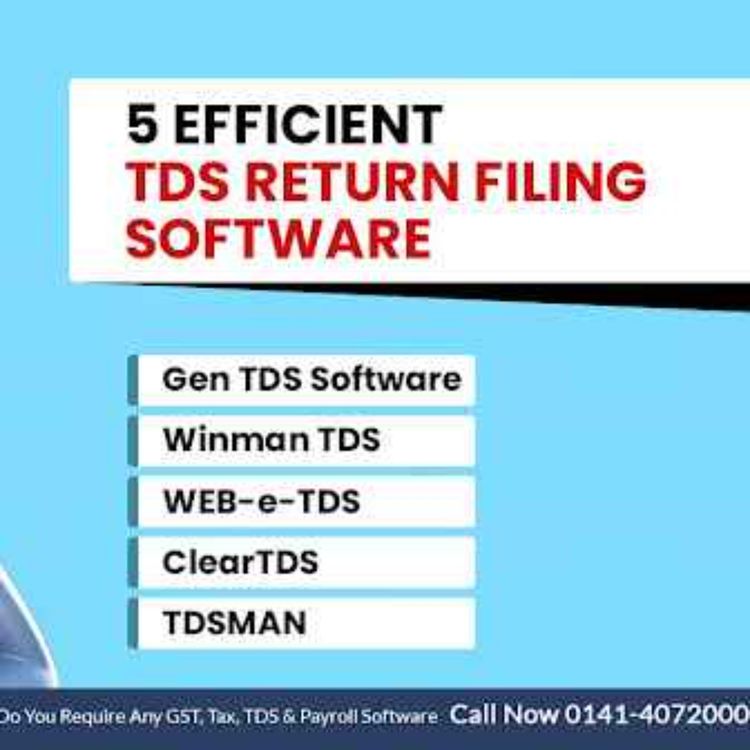
Top TDS Return Filing Software in India for Experts
•
There are many challenges associated with Tax Deduction at Source (TDS). In today's digital age, companies and individuals use easy-to-use software to file their TDS returns. In this article, we have discussed the best TDS return filing software available in India. The intuitive interfaces and powerful features of these software options make tax management effortless. You can manage your taxes more accurately and comfortably with these advanced TDS filing solutions. read article - https://saginfotech.blogspot.com/2023/11/5-user-friendly-tds-filing-software-tax-management.html
More episodes
View all episodes

Why Chartered Accountants and Tax Experts Prefer Genius Software
02:46|In today’s digital era, taxpayers and businesses are constantly looking for reliable software to simplify tax return filing. One of the key reasons why many tax professionals and organizations prefer Genius Tax Software is its user-friendly interface and ease of operation. Chartered Accountants, accounting firms, and tax practitioners often manage large volumes of data, and complex software can slow down their workflow. Genius Tax Software helps streamline tax compliance tasks, making return preparation, filing, and client management more efficient and hassle-free. Let’s explore more details through the link below: https://saginfotech.wordpress.com/2026/05/29/indian-tax-experts-trust-genius-software-india/
Managing GSTR-3B Tax Liability Breakup Through GST Software
02:34|If you're a GST taxpayer, it's important to check the tax details before you file your GSTR-3B form. This step helps ensure that your tax return is accurate and easy to complete. Here’s a simple explanation of how this process works. Read more for information. View more information about GSTR 3B Liability Breakup with GST software:-https://blog.saginfotech.com/how-gst-software-helps-gstr-3b-tax-liability-breakup
AI in ITR Software: How It Saves Time and Efficiency for CAs
01:48|The AI type integration in income tax return e-filing software is changing the way Chartered Accountants manage taxation and taxation compliance assignments. By automating duplicative and time-consuming exercises, AI solutions help professionals to enhance efficiency, accuracy and productivity. Machine learning, API, reconciliation, and compliance checking have simplified the complex tax procedures and reduced the manual work process. These smart systems software solutions should automatically import financial data, determine errors, reconcile records, and generate proper reports. read more - https://blog.saginfotech.com/how-ai-integration-itr-software-saves-time-casSAG Infotech Provides Trusted Taxation Solutions for CA Professionals
02:21|SAG Infotech is a leading taxation and IT firm that provides reliable and cost-effective solutions for CA professionals and businesses. With advanced software products and a strong IT-enabled infrastructure, the company has earned the trust of clients across the taxation industry. The software solutions offered by SAG Infotech are designed to meet the needs of professionals in various sectors, including accounting, human resources, taxation, and corporate compliance. https://huntbiz.com/listing/sag-infotech-private-limited
Which Is Better for GSTR-3B e-Filing: GST Portal or Software?
02:21|When GST taxpayers consider options for filing GSTR-3B returns, they often compare the GST portal with GST software available in the market. This article provides a detailed overview of both methods. The GST portal offers a simple and direct platform for return filing, while GST software provides additional benefits such as automation, error reduction, data management, and advanced compliance features. Choosing the better option depends on several factors, including business size, transaction volume, reporting accuracy, and the overall compliance requirements of the taxpayer. https://saginfotech-ca-software.weebly.com/home/gstr-3b-e-filing-which-better-gst-portal-software
New Excel Utilities Released for ITR-1 and ITR-4 Forms for AY 2026-27
03:16|The Income Tax Department has deployed the official Excel utilities for ITR-1 (Sahaj) and ITR-4 (Sugam), signaling the formal opening of the compliance cycle for Assessment Year 2026–27 (Financial Year 2025–26). These enhanced offline schemas enable eligible individual and presumptive business taxpayers to begin compiling their return data. Available for immediate download on the official e-filing portal, the updated tools feature structural enhancements designed to optimize local data validation, simplify JSON payload generation, and ensure a highly efficient filing workflow. Read Also: https://saginfotech.wixsite.com/about/post/ay-2026-27-itr-update-excel-utilities-itr-1-4
Guide to Prepare Balance Sheet By Genius Tax Software
03:20|The preparation of a balance sheet depends on the size and business structure. In small personal companies, the owner or business bookkeeper typically organises the balance sheet. For medium and large firms, the financial statements are usually checked by external accountants to ensure precision and tax compliance. For publicly traded corporations, balance sheets and other economic statements should follow the strict accounting standards. These businesses are needed to keep their documents in accordance with Generally Accepted Accounting Principles and file with the Securities and Exchange Commission (SEC). The type of public accountants also complete the external tax audits to confirm the accuracy of financial reporting. Read more - https://blog.saginfotech.com/how-prepare-balance-sheet-genius-tax-return-software
New Income Tax Law 2025 Brings Easy Filing, Digital Tools, and Faster Refunds
02:50|In this post, you will learn about the new Income Tax Law 2025 and how it aims to help taxpayers with easier tax filing, improved digital tools, and faster refund processing. The legislation is designed to simplify tax compliance, reduce tax-related litigation, and create a more transparent and technology-driven tax ecosystem. Explore the key highlights of the new income tax law, including simplified filing procedures, enhanced digital services, quicker refunds, and fewer tax-related disputes. Click here for more information: https://saginfotech.blogspot.com/2026/05/new-it-law-simpler-filing-digital-tools-faster-refunds.html
Explain Difference Between Income Tax and TDS
02:35|Income Tax and TDS are two commonly used terms among Indian taxpayers, although they differ significantly in their purpose and application. Income tax is levied on a taxpayer’s total annual income or profits, whereas TDS (Tax Deducted at Source) is deducted directly from specific sources of income based on the estimated tax liability. This article explains the key differences between Income Tax and TDS and also provides a detailed overview of their concepts, components, and definitions. For more detailed information, follow the link below: https://saginfotech.blogspot.com/2024/02/basic-key-differences-tds-income-tax.html