Share
talkADHD
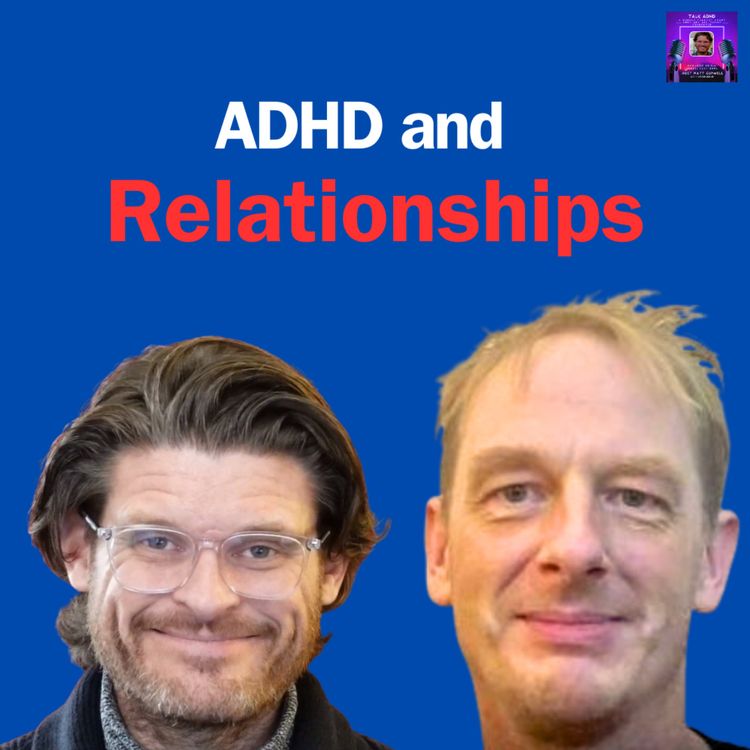
ADHD and RELATIONSHIPS
Summary
This episode of Talk ADHD explores the impact of ADHD on relationships.
Takeaways
- Relationships encompass all types of connections, not just romantic ones.
- Attachment theory plays a significant role in shaping our understanding of relationships.
- Individuals with ADHD often face challenges in communication, emotional regulation, and overwhelm.
- Masking, or adapting behavior to fit societal expectations, can impact relationships.
- Effective communication and understanding are crucial for maintaining healthy relationships. ADHD can have a significant impact on relationships, affecting communication and emotional intensity.
- Understanding ADHD symptoms and their effects is crucial for managing relationship challenges.
- Improving relationship dynamics requires open and honest communication, patience, and empathy.
- Supporting each other through understanding, education, and seeking professional help can strengthen relationships affected by ADHD.
Chapters
00:00 Introduction and Setting Expectations
03:02 The Definition of Relationship and its Impact
07:29 Attachment Theory and its Role in Relationships
10:35 Early Relationships and the Development of Self-Awareness
18:15 The Impact of Relationships on Emotional Regulation
25:28 Relationship Challenges in School and Overwhelm
30:45 Masking and the Impact on Relationships
38:38 The Ripple Effect of Early Relationships
46:06 The Complexity of Relationships and the Importance of Communication
50:11 Vulnerability and Investment in Communication
52:14 Struggles in Communication: ADHD and Concentration
57:20 The Impact of ADHD on Communication
01:03:12 Emotional Dysregulation and Relationships
01:08:06 Taking Responsibility in Relationships
01:10:56 Being Vulnerable and Honest in Relationships
01:19:31 Effective Communication in Relationships
01:25:46 The Importance of Listening in Relationships
01:30:13 Building a Strong Relationship
More episodes
View all episodes
5. ADHD Stigma and bias. Part 1
34:04||Season 3, Ep. 5What role to stigma and bias play in ADHD?In this episode of Talk ADHD, Matt Gupwell and Sara Jay delve into the complexities of ADHD, focusing on the stigma and biases that surround the diagnosis and treatment of the condition. They explore various types of biases, particularly confirmation bias, and how these can affect both clinicians and patients. The conversation highlights the importance of accurate assessment and the challenges of misdiagnosis, as well as the need for open communication between patients and healthcare providers. Sara shares her personal experiences as both a clinician and a caregiver, emphasizing the need for a holistic approach to ADHD treatment.Chapters00:00 Introduction and Context02:20 Who is Sara Jay?03:14 Understanding Stigma Around ADHD05:33 The Role of Bias in ADHD Diagnosis07:36 Confirmation Bias Explained10:02 The Importance of Comprehensive Assessment12:17 Navigating Misdiagnosis and Confirmation Bias14:40 The Impact of Personal Experience on Diagnosis17:02 Challenges in Clinical Settings17:46 Intermission19:43 Engaging in Open Conversations with Clinicians21:03 The Role of Evidence in Assessments23:35 Affinity Bias and Its Implications26:04 The Complexity of ADHD Diagnosis
4. “Echoes, Algorithms & ADHD: Why Resonance Isn’t the Same as Truth
44:13||Season 3, Ep. 4🎧 Episode Summary In this no-holds-barred episode, Matt and Andrew dive deep into the ever-messy world of ADHD social media discourse—where misinformation spreads fast, nuance disappears, and personal opinion often drowns out evidence.They tackle some of the most hotly debated topics online:Should you take ADHD medication?Is AuDHD (autism + ADHD) really as common as social media suggests?Have women with ADHD really been “completely ignored” by research?Why does content that feels right get shared more than what is right?Matt shares why cold-water swimming works for him, Andrew explains the science behind medication and blood pressure, and both highlight the dangers of mistaking a viral reel for validated truth.This episode is a call to critical thinking, clinical literacy, and self-reflection. It’s not about taking sides—it’s about asking better questions. If you've ever been unsure who to believe online, or if you’ve felt lost in the sea of ADHD content, this one’s for you.🧠 Key Takeaway:Don’t just ask “Does this resonate with me?”—ask “Where did this come from, and does it stand up to scrutiny?”Social media may serve as a mirror, but it shouldn’t replace a microscope.🎧 Chapters:00:00 Welcome00:54 The way social media presents information about ADHD.02:26 Stimulant Medication - Good or bad?09:23 Do Meds "make you autistic?"14:31 Is AuDHD a Neurotype or separate condition?16:39 We still aren't sponsored!17:30 The Role of Social Media in Perception22:36 A brief look at Women and ADHD26:08 When affintity is confused with our personal experience28:48 The Complexity of Individual Experiences30:41 Look for information that helps you make sense of you33:44 What has a Church bell got to do with Social media?37:30 Navigating Misinformation and Seeking Truth🔗 Links:Divergence Clinic:https://www.divergenceuk.orgDownload the divergenceADHD app:App Store:https://apps.apple.com/gb/app/divergenceadhd/id6743006969Google Play:https://play.google.com/store/apps/details?id=branded.md643cc45cd8141f0992f4d1cbdf919f2.divergence&pli=1ThinkNeurodiversity:https://www.thinkneurodiversity.co.ukOh That's Why - Late Diagnosed course:https://calendly.com/thinkneurodiversity/oh-thats-why-late-diagnosed-course-12-september-start
3. Contented? How ADHD information is presented online?
38:21||Season 3, Ep. 3This episode uses Matt's 5th appearance on ADHD Chatter as a way to discuss how ADHD is spoken about online.Chapters:00:00 Introduction to ADHD Conversations01:11 About this episode05:56 Insights from ADHD Chatter Podcast09:47 The Importance of Authenticity in ADHD Discussions16:13 Mistakes and Learning in ADHD Conversations20:13 Sponsors for this episode20:59 Fact-Checking and the Role of Expertise25:35 Navigating Influence and Credibility in ADHD Content30:38 The Validity of Personal Experience35:00 Navigating ADHD and Autism Conversations37:55 Thanks for watching Links:Divergence Clinic:https://www.divergenceuk.orgJoin the divergenceADHD community:https://www.divergenceuk.org/app-and-linksThinkNeurodiversity:https://www.thinkneurodiversity.co.ukOh That's Why - Late Diagnosed course:https://www.thinkneurodiversity.co.uk/late-diagnosed-8-week-courseADHD Chatter Episode:https://youtu.be/i7eyXVcfr7I?si=fIpmPww9-YgvfsqL
2. Professor Steven Faraone speaks about ADHD
49:19||Season 3, Ep. 2Professor Steve Faraone in conversation about ADHDSummary:In this episode of Talk ADHD, hosts Matt and Andrew engage in a deep conversation with Professor Steve Faraone about the complexities of ADHD, the importance of evidence-based treatment, and the challenges posed by misinformation on social media. They discuss the role of lived experience in understanding ADHD, the concept of neurodiversity, and the emerging discussion around AuDHD. The conversation also addresses concerns about overdiagnosis and the evolving understanding of ADHD in the medical community, emphasizing the need for a balanced approach that incorporates both scientific evidence and personal experiences.Chapters00:00 talkADHD introduction00:57 I know the sound isn't great, but I have tried my best!01:57 Introducing Professor Steve Faraone04:09 The Importance of Evidence in ADHD Research05:58 Bridging the Gap: Social Media and ADHD Awareness07:33 The Complexity of ADHD Diagnosis09:17 Lived Experience vs. Scientific Evidence11:11 Neurodiversity: Understanding ADHD in Society15:34 The Stigma of ADHD and the Need for Treatment21:07 We still don't have sponsors. So please Like, Comment and Subscribe.21:59 Understanding ADHD: Beyond the Superpower Narrative23:56 Coexisting Conditions and is AUDHD a separate condition? 29:49 Overdiagnosis Concerns: A Closer Look35:53 Trusting Science: Navigating ADHD Treatment43:25: Closing thoughts from Professor FaraoneLinks:Professor Faraone's Website:https://www.adhdevidence.org/Professor Faraone's Book:Navigating ADHD Care: A Practical Guide for Adultshttps://a.co/d/1KF1QccTo contact Divergence for assessment or diagnosis https://www.divergenceuk.org/To download the divergenceADHD app and join our community, access special events and bonus podcast content:https://www.mobileappinvite.com/place-invites/invite-lp/71fbb0cd-db77-4bff-906c-15595449f1c4To work with Matt for neurodiversity training or speaking:https://www.thinkneurodiversity.co.uk/
1. The NHS ADHD Taskforce Interim report - What was the point?
36:51||Season 3, Ep. 1The NHS ADHD Taskforce - Interim reportIn this episode of talkADHD, hosts Matt and Andrew discuss the recent ADHD Task Force's interim report, exploring its implications for public health, societal perceptions, and the future of ADHD treatment and diagnosis. They emphasize the importance of understanding ADHD as a complex condition that intersects with various aspects of life, including education, social care, and mental health. The conversation highlights the need for a comprehensive approach to ADHD that goes beyond traditional medical models, advocating for increased awareness, education, and support for individuals with ADHD and their families.TakeawaysThe ADHD Task Force report aims to address public health concerns.Expectations around the report may lead to disappointment in the ADHD community.ADHD is not just a medical issue; it has social implications.Public perception of ADHD is evolving, moving away from stigma.The report emphasizes the need for comprehensive ADHD care.Education and awareness are crucial for understanding ADHD.Medication remains a key treatment but is not the only solution.The concept of ADHD super specialists is being re-evaluated.The ADHD spectrum includes individuals who may not meet diagnostic criteria.Future discussions on ADHD should focus on societal impacts and support systems.Chapters00:00 Season 3 intro and welcome01:42 The ADHD Taskforce interim report. What did we learn?02:47 Understanding the Report's Target Audience03:44 Cultural Perceptions of ADHD05:24 The Role of Public Health in ADHD06:50 Neurodivergence and Broader Implications09:18 Accountability vs. Blame in ADHD Care10:26 Personal Experiences and Political Implications11:58 From Hospital to Community: A New Approach13:49 The Concept of ADHD Super Specialists16:33 A word from our Sponsors17:22 The Ripple Effect of ADHD on Society17:48 Medication and Its Misconceptions18:49 The Need for Education and Support19:46 Understanding ADHD Beyond Diagnosis21:59 The Spectrum of ADHD and Its Implications25:44 Do the terms and labels in the report help?31:05 Final thoughtsJoin the divergenceADHD community by downloading our new app:https://www.mobileapp.app/to/NGjyRoM?ref=m_cl
TALKADHD - Converasations worth having
57:07|Summary In this episode, Matt and Andrew discuss the challenges faced by individuals with ADHD, particularly on Blue Monday, a day often associated with feelings of sadness and anxiety. They explore the difficulties in accessing medication, the complexities of shared care agreements with GPs, and the impact of ADHD on employment and workplace dynamics. The conversation also touches on the experiences of individuals navigating the Universal Credit system and the importance of reasonable adjustments in the workplace. Throughout the discussion, they emphasize the need for effective communication, advocacy, and education to improve the experiences of those with ADHD. Chapters 00:00 Introduction to Blue Monday and ADHD Conversations 02:54 Challenges in Accessing ADHD Medication 05:09 Navigating Shared Care Agreements 10:58 Understanding the GP's Perspective 11:33 How to approach conversations with your GP. 17:10 GP's aren't trained in ADHD, so how can we help? 20:50 What the BMA said about Shared Care and what it may mean to you? 30:20 Exploring ADHD Treatment Efficacy 32:51 Navigating ADHD in the Workplace 43:51 Human Moments that lead to understanding 48:08 Knowledge is Power. But stick to facts not Hyperbole. 51:27 Empowering Conversations for Change Contact Divergenceuk.org for assessments and diagnosis: https://divergenceuk.org Contact Matt for Consultancy, workplace training or 1-2-1 Mentoring: https://thinkneurodiversity.com TALKADHD Whatsapp community: https://chat.whatsapp.com/JR8R8jTl5zY0jr8MzXjIE7 YouTube Channel Link: https://www.youtube.com/@TALKADHD Paper on MultiModal treatment of ADHD: https://www.sciencedirect.com/science/article/pii/S2215036624003602 Employment law episode: https://youtu.be/VxsfmT_9a8Y
1. ADHD Medication Explained by a Clinical prescriber
24:41||Season 3, Ep. 1This short episode is from Episode 1 of our podcast. In it Andrew explains: The Nice Guidelines for prescribing ADHD medication to adults and children. The different medication options available. How and why each drug works. What as patients we need to know. Why "side affects" aren't always what we think. 00:00: Introduction - What this inforamtion is for. 01:30: NICE Guidelines for Children 02:40: NICE Guidelines for Adults 05:54: What does Off Licence medications mean? 07:25: What is a brain and what does it do? 09:30: We don't have unlimited Dopamine. 11:11: ADHD is NOT a low Dopamine disorder. 14:40: Stimulant Drugs. Starting with Methylphenidate. 16:14: Dexamphetamine 17:20: Non-Stimulant drugs. Starting with Atomoxetine. 21:27: Guanfacine 23:28: How to think about side effects.
19. ADHD, Burnout and Overwhelm
56:50||Season 2, Ep. 19SummaryIn this episode, Matt Gupwell and Andrew Jay discuss the challenges of burnout and overwhelm, particularly in the context of ADHD and neurodivergence. They explore the importance of acknowledging feelings of being 'whelmed', the impact of societal expectations, and the necessity of self-care. The conversation emphasizes the need for open communication about mental health, recognizing signs of burnout in oneself and others, especially children, and the value of externalizing executive functioning tasks. They also touch on the importance of finding balance in productivity and personalizing strategies for recovery.Chapters00:00 Introduction in my dressing gown!02:09 How are you really?04:31 Recognising we're burtout and what we need to do first.06:16 Next steps to recovery09:17 Discussing burnout in the workplace12:18 Owning the labels and not being ashamed16:30 The Cost to the workplace18:44 Accepting burnout and doing the right thing.26:04 Recognizing Signs of Burnout in Children31:48 Managing Productivity Peaks and Valleys39:35 Skills that can help up manage burnout41:24 Leveraging AI for Executive Functioning46:01 The Importance of Personalization in Strategies50:59 Final thoughtsContact Divergenceuk.org for assessments and diagnosis:https://divergenceuk.orgContact Matt for Consultancy, workplace training or 1-2-1 Mentoring:https://thinkneurodiversity.comTALKADHD Whatsapp community:https://chat.whatsapp.com/JR8R8jTl5zY0jr8MzXjIE7YouTube Channel Link:https://www.youtube.com/@TALKADHD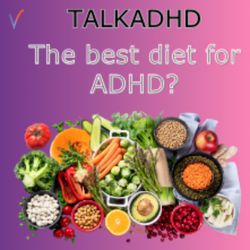
18. The best diet for ADHD
01:07:21||Season 2, Ep. 18In this episode, Matt G, Andrew, Paul, and Larry discuss the intersection of ADHD, dietary interventions, and clinical trials. They explore the challenges faced by individuals with ADHD, the importance of research in understanding dietary impacts, and the need for transparency in clinical trials. The conversation emphasizes the role of hope in managing ADHD and the potential benefits of a well-considered diet. Practical dietary recommendations are shared, along with insights into the long-term effects of dietary changes on ADHD symptoms.Chapters00:00 Introductions02:59 Paul's background05:49 Larry's background10:27 How Trials of Life started20:07 The Role of Transparency in Clinical Trials23:16 Hope and the Future of ADHD Treatment28:39 Commonalities in Diets for Mental Health31:49 The Efficacy of Omega-3 and Related Substances34:20 The Role of Magnesium and Sleep in Mental Health36:03 The Risks of Conflating Supplements with Medicine38:53 The Impact of Social Media on Mental Health41:06 Making Informed Decisions About Diets, information and trust.42:55 The Complexity of ADHD and Nutrition44:52 Comparing Nutrition and Medication for ADHD47:50 Dietary Strategies for ADHD Management51:00 Budget-Friendly Dietary Approaches57:02 The Role of Medication and Diet in ADHD01:00:06 Trial Design and Supplementation01:02:32 Personalized Nutrition and Individual Responses01:06:02 Future Directions and Community EngagementContact Divergenceuk.org for assessments and diagnosis:https://divergenceuk.orgContact Matt for Consultancy, workplace training or 1-2-1 Mentoring:https://thinkneurodiversity.comTALKADHD Whatsapp community: https://chat.whatsapp.com/JR8R8jTl5zY0jr8MzXjIE7YouTube Channel Link: https://www.youtube.com/@TALKADHD