Share
Sustainable Views
The Green Finance Institute's plan to unlock capital for net zero
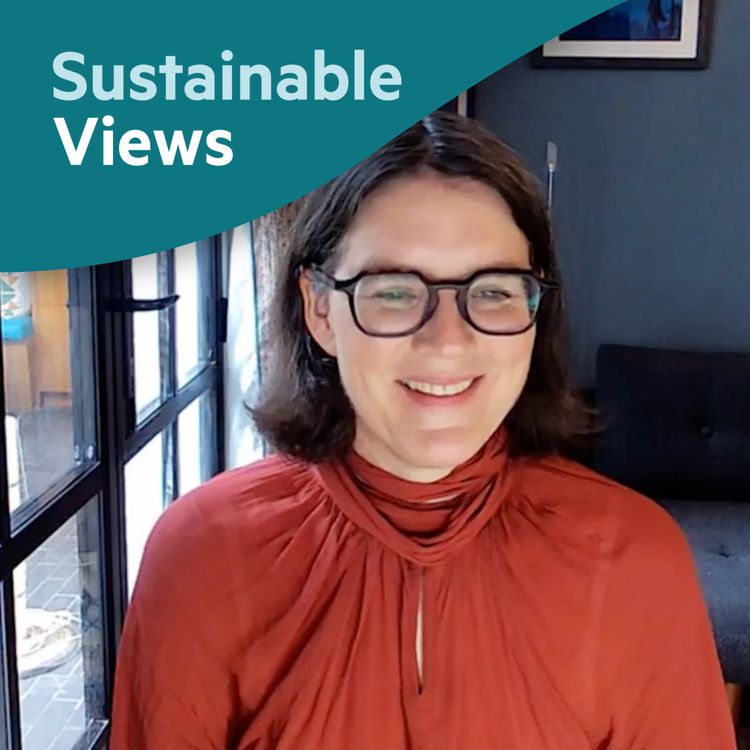
The UK has no shortage of innovative clean technologies, but securing the investment needed to bring them to market remains a major challenge. So what's stopping private capital from flowing into the green transition, and how can governments help close the funding gap?
In this episode of the Sustainable Views podcast, editor Philippa Nuttall speaks to Ingrid Holmes, deputy chief executive of the Green Finance Institute (GFI), about the barriers holding back green investment and the institute's efforts to overcome them.
Holmes explains how GFI's new Transition Finance Lab is working with government, public finance institutions and private investors to turn climate ambitions into investable projects. From battery supply chains and hydrogen to heat networks and floating offshore wind, the initiative aims to unlock funding for technologies and infrastructure critical to the UK's net zero ambitions.
The conversation also explores why British clean technology companies struggle to secure the large-scale investment available to their counterparts in the US and Europe, and the risk of promising businesses moving overseas rather than creating manufacturing jobs in the UK.
With COP31 approaching, Holmes discusses why international climate commitments alone won't unlock the investment required, the importance of effective government policy and how blended finance could help bring private investors into emerging green industries.
Chapters
00:00 – Introduction: Ingrid Holmes and the Green Finance Institute
01:45 – Inside GFI's new Transition Finance Lab
04:35 – Which green technologies need investment?
06:07 – What's stopping private capital from flowing?
09:36 – Why UK clean technology companies struggle to scale
12:09 – Financing the UK's heat networks
14:24 – Can the UK become a global green finance leader?
16:39 – Unlocking investment in sustainable aviation fuels
18:56 – Are government climate policies sending the right signals?
20:39 – Bringing the benefits of green investment to communities
23:37 – Jobs, heat pumps and the impact of the energy transition
25:33 – What needs to change at COP31?
27:03 – How international climate finance can unlock private investment
Read more analysis of sustainable finance, climate policy and the energy transition at www.sustainableviews.com.
Sustainable Views is an intelligence service by the Financial Times Group. To stay up-to-date, subscribe to our newsletter.
More episodes
View all episodes
18. Why nature needs finance ministers, not just environmental pledges
29:13||Season 5, Ep. 18The world is falling behind on its biodiversity targets. So what will it take to turn global promises into meaningful action?Following the COP17 UN biodiversity summit in Yerevan, Armenia, Sustainable Views editor Philippa Nuttall speaks to Kirsten Schuijt, director general of WWF International, about the state of global efforts to protect nature and halt biodiversity loss.Schuijt reflects on the summit's achievements and shortcomings, the challenges of meeting the 2030 biodiversity targets and the political obstacles to reforming environmentally harmful agricultural subsidies.They also discuss the growing role of banks, investors and businesses in financing nature conservation, the opportunities and risks of biodiversity credits, and why financial institutions need to recognise nature as an economic priority.With the US absent from international biodiversity agreements, can governments and businesses deliver the changes needed to protect the natural world?Timestamps00:00 - COP17: Progress and disappointments03:49 - Harmful subsidies and the 2030 biodiversity targets07:25 - Why the financial sector matters for biodiversity09:39 - Financing green projects versus greening finance13:51 - Can conservation advance without the US?16:42 - Lessons from carbon markets22:40 - Are businesses recognising nature's economic value?26:53 - Why climate and biodiversity policy must work together
17. Are banks doing enough to protect the climate and nature?
33:29||Season 5, Ep. 17As world leaders gather for COP17 in Armenia and prepare for COP31 in Turkey, the pressure is mounting on banks to redirect financing towards climate action and nature protection. But despite ambitious commitments, financial institutions continue to fund fossil fuels and environmentally damaging activities, while investment in clean energy and biodiversity restoration remains far below what is needed.In this episode of the Sustainable Views podcast, editor Philippa is joined by Anita Hawser, Europe editor of The Banker, and Sustainable Views reporter Ben Steel, to explore why banks are struggling to align their lending with global climate and biodiversity goals.They discuss the impact of Donald Trump's climate policy rollback, the collapse of the Net Zero Banking Alliance and the challenges banks face in assessing physical climate risks. They also examine why nature-related risks remain poorly understood, whether banks can make biodiversity projects financially viable, and how the rapid expansion of AI data centres is complicating the transition to net zero.With governments under pressure to deliver clearer policies and financial guarantees, can banks become drivers of the green transition, or will commercial pressures continue to hold back progress?
16. What to expect from the biodiversity COP in Yerevan
21:44||Season 5, Ep. 16In this episode of the Sustainable Views podcast, deputy editor Elizabeth Meager speaks to editor, Philippa Nuttall about the challenges facing COP17, following her recent reporting trip to Armenia and conversations with the summit's president.With the world falling behind on its biodiversity commitments, they discuss whether the targets agreed under the Kunming-Montreal Global Biodiversity Framework are achievable, why nature finance is struggling to attract investment, and what businesses and governments need to do differently.They also examine the striking imbalance in global spending on nature, with $30 spent on activities that degrade the environment for every $1 invested in protecting it, and why the success of COP17 may depend on bringing finance ministers and businesses into the negotiations.Timestamps00:00 – What is biodiversity COP17?01:06 – Armenia's priorities as host of COP1702:24 – The world's ambitious 2030 biodiversity targets03:49 – Why countries are falling behind on their commitments05:54 – What can COP17 realistically achieve?06:13 – The Cali Fund and the challenge of raising private finance08:05 – Why the nature finance gap is so large09:33 – Why protecting nature also means stopping harmful investment11:47 – Can countries be held accountable for missed targets?13:36 – How biodiversity and climate COPs are connected14:39 – Why finance ministers and businesses need to be involved18:23 – Is there still hope for international cooperation?20:08 – Why biodiversity loss threatens businesses and the global economyRead more: https://www.sustainableviews.com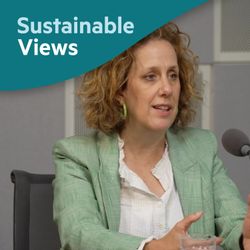
15. What to expect from New York Climate Week with Helen Clarkson
32:07||Season 5, Ep. 15As Climate Week NYC prepares for its biggest edition yet, what does corporate climate action look like in a world where businesses are increasingly reluctant to even use the word “climate”?In this episode of the Sustainable Views podcast, deputy editor Elizabeth Meager speaks to Helen Clarkson OBE, chief executive of Climate Group, the organisation behind Climate Week NYC. They discuss whether sustainability is genuinely becoming embedded in businesses or simply disappearing from public view, and why Clarkson believes staying silent on climate creates space for misinformation.The conversation explores the growing links between climate action, energy security and affordability; how US climate policy is affecting businesses; and why China and other parts of Asia are increasingly important to the global clean-energy transition.Clarkson also discusses the huge energy demands of AI, whether technology companies can maintain their climate ambitions as data-centre investment accelerates, and why she believes the economics of renewable energy still provide reasons for optimism.With businesses moving from climate commitments towards implementation, what will determine whether the transition happens quickly enough—and can Climate Week help turn conversations into action?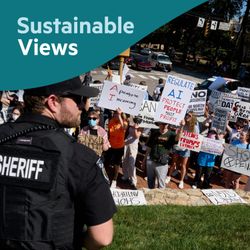
14. How data centres are reshaping climate politics
25:34||Season 5, Ep. 14In this episode of the Sustainable Views podcast, deputy editor Elizabeth Meager speaks to reporter Ben Steel about his coverage of AI and data centres, from their growing demands for energy and water to the political backlash emerging across the US.They discuss concerns raised by communities living near major data centre developments, why opposition is becoming a bipartisan political issue, and whether businesses and investors have underestimated the scale of public resistance. The conversation also examines the sustainability claims made by hyperscalers, the scrutiny facing frontier AI companies, and how businesses using AI should think about the environmental footprint of the technology.With AI investment continuing to accelerate, what will determine whether the infrastructure needed to support it can expand sustainable and how much could local opposition change the economics of the boom?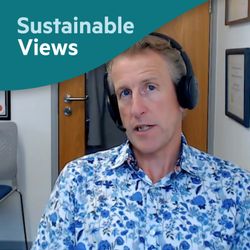
13. Tim Lenton on the climate tipping points we can’t ignore
26:40||Season 5, Ep. 13In this episode of Sustainable Views, journalist Florence Jones speaks to leading climate scientist Professor Tim Lenton OBE, chair in Climate Change and Earth System Science at the University of Exeter and chair of the Global Tipping Points initiative.They discuss what climate tipping points are, why they make conventional climate risk planning more difficult, and whether the 1.5°C target still matters. Lenton also explains where the economic consequences could emerge and offers a more optimistic perspective through positive tipping points, moments when changes in technology, markets and behaviour become self-reinforcing and accelerate the transition to a more sustainable economy.They discuss what businesses, policymakers and individuals can do to help trigger these positive changes, and whether influential companies can use their scale to accelerate climate action.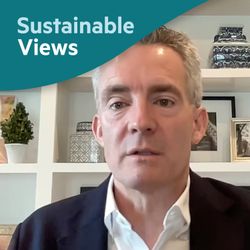
12. The Republican case for climate action
33:21||Season 5, Ep. 12Energy and climate policy are divisive issues in the United States but is there still room for bipartisan action?In this episode of the Sustainable Views Podcast, deputy editor Elizabeth Meager speaks with Alex Flint, Executive Director of the Alliance for Market Solutions and a former member of President Trump's transition team, about the future of climate policy in the US.They discuss why Republicans have become quieter on climate change, where there is still potential for cross-party cooperation, how businesses are shifting their focus from climate mitigation to adaptation, and what rising energy demand from AI and data centres means for the energy transition.
11. What business needs to know about PFAS
24:32||Season 5, Ep. 11PFAS, often called "forever chemicals", are found in everything from non-stick cookware and waterproof clothing to food packaging and industrial products. But growing concerns over their health and environmental impacts are driving tighter regulation around the world.In this episode of the Sustainable Views Podcast, editor, Philippa Nuttall is joined by Elizabeth Meager and Florence Jones to explore what PFAS are, why they're attracting so much attention from regulators, and what businesses need to know as rules tighten across the EU, UK and US.We also discuss the potential financial risks for companies, the legal action against manufacturers such as 3M, and why investors are paying closer attention to PFAS exposure.