Share
Sustainable Views
The Sustainable Views team take you behind the headlines, providing an informed view and expert analysis on fast-changing global sustainability rules.
Latest episode
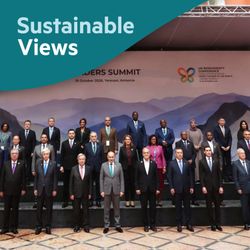
What to expect from the biodiversity COP in Yerevan
21:44|In this episode of the Sustainable Views podcast, deputy editor Elizabeth Meager speaks to editor, Philippa Nuttall about the challenges facing COP17, following her recent reporting trip to Armenia and conversations with the summit's president.With the world falling behind on its biodiversity commitments, they discuss whether the targets agreed under the Kunming-Montreal Global Biodiversity Framework are achievable, why nature finance is struggling to attract investment, and what businesses and governments need to do differently.They also examine the striking imbalance in global spending on nature, with $30 spent on activities that degrade the environment for every $1 invested in protecting it, and why the success of COP17 may depend on bringing finance ministers and businesses into the negotiations.Timestamps00:00 – What is biodiversity COP17?01:06 – Armenia's priorities as host of COP1702:24 – The world's ambitious 2030 biodiversity targets03:49 – Why countries are falling behind on their commitments05:54 – What can COP17 realistically achieve?06:13 – The Cali Fund and the challenge of raising private finance08:05 – Why the nature finance gap is so large09:33 – Why protecting nature also means stopping harmful investment11:47 – Can countries be held accountable for missed targets?13:36 – How biodiversity and climate COPs are connected14:39 – Why finance ministers and businesses need to be involved18:23 – Is there still hope for international cooperation?20:08 – Why biodiversity loss threatens businesses and the global economyRead more: https://www.sustainableviews.com
More episodes
View all episodes
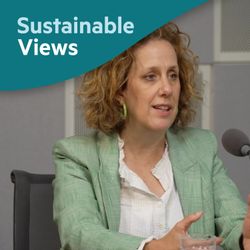
15. What to expect from New York Climate Week with Helen Clarkson
32:07||Season 5, Ep. 15As Climate Week NYC prepares for its biggest edition yet, what does corporate climate action look like in a world where businesses are increasingly reluctant to even use the word “climate”?In this episode of the Sustainable Views podcast, deputy editor Elizabeth Meager speaks to Helen Clarkson OBE, chief executive of Climate Group, the organisation behind Climate Week NYC. They discuss whether sustainability is genuinely becoming embedded in businesses or simply disappearing from public view, and why Clarkson believes staying silent on climate creates space for misinformation.The conversation explores the growing links between climate action, energy security and affordability; how US climate policy is affecting businesses; and why China and other parts of Asia are increasingly important to the global clean-energy transition.Clarkson also discusses the huge energy demands of AI, whether technology companies can maintain their climate ambitions as data-centre investment accelerates, and why she believes the economics of renewable energy still provide reasons for optimism.With businesses moving from climate commitments towards implementation, what will determine whether the transition happens quickly enough—and can Climate Week help turn conversations into action?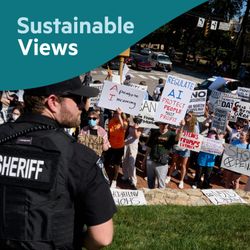
14. How data centres are reshaping climate politics
25:34||Season 5, Ep. 14In this episode of the Sustainable Views podcast, deputy editor Elizabeth Meager speaks to reporter Ben Steel about his coverage of AI and data centres, from their growing demands for energy and water to the political backlash emerging across the US.They discuss concerns raised by communities living near major data centre developments, why opposition is becoming a bipartisan political issue, and whether businesses and investors have underestimated the scale of public resistance. The conversation also examines the sustainability claims made by hyperscalers, the scrutiny facing frontier AI companies, and how businesses using AI should think about the environmental footprint of the technology.With AI investment continuing to accelerate, what will determine whether the infrastructure needed to support it can expand sustainable and how much could local opposition change the economics of the boom?
13. Tim Lenton on the climate tipping points we can’t ignore
26:40||Season 5, Ep. 13In this episode of Sustainable Views, journalist Florence Jones speaks to leading climate scientist Professor Tim Lenton OBE, chair in Climate Change and Earth System Science at the University of Exeter and chair of the Global Tipping Points initiative.They discuss what climate tipping points are, why they make conventional climate risk planning more difficult, and whether the 1.5°C target still matters. Lenton also explains where the economic consequences could emerge and offers a more optimistic perspective through positive tipping points, moments when changes in technology, markets and behaviour become self-reinforcing and accelerate the transition to a more sustainable economy.They discuss what businesses, policymakers and individuals can do to help trigger these positive changes, and whether influential companies can use their scale to accelerate climate action.
12. The Republican case for climate action
33:21||Season 5, Ep. 12Energy and climate policy are divisive issues in the United States but is there still room for bipartisan action?In this episode of the Sustainable Views Podcast, deputy editor Elizabeth Meager speaks with Alex Flint, Executive Director of the Alliance for Market Solutions and a former member of President Trump's transition team, about the future of climate policy in the US.They discuss why Republicans have become quieter on climate change, where there is still potential for cross-party cooperation, how businesses are shifting their focus from climate mitigation to adaptation, and what rising energy demand from AI and data centres means for the energy transition.
11. What business needs to know about PFAS
24:32||Season 5, Ep. 11PFAS, often called "forever chemicals", are found in everything from non-stick cookware and waterproof clothing to food packaging and industrial products. But growing concerns over their health and environmental impacts are driving tighter regulation around the world.In this episode of the Sustainable Views Podcast, editor, Philippa Nuttall is joined by Elizabeth Meager and Florence Jones to explore what PFAS are, why they're attracting so much attention from regulators, and what businesses need to know as rules tighten across the EU, UK and US.We also discuss the potential financial risks for companies, the legal action against manufacturers such as 3M, and why investors are paying closer attention to PFAS exposure.
10. Are sustainable funds delivering on their promise?
20:56||Season 5, Ep. 10In this episode, editor, Philippa Nuttall is joined by reporters, Florence Jones and Fiona McNally, to explore the rapidly changing landscape for sustainable investing and ESG funds.As political pressure, regulatory changes and shifting market conditions reshape the investment industry, sustainable funds are facing growing scrutiny from investors, policymakers and regulators alike. But despite the challenges, many asset managers continue to argue that sustainability remains a critical part of long-term investment decision-making.The discussion examines how sustainable funds are adapting, what will happen with the Sustainable Finance Disclosure Regulation (SFDR) review, and whether the ESG backlash has fundamentally changed the outlook for sustainable investing.