Share
Summed
The Index Card — Helaine Olen & Jonathan Clements
•
In this episode of Summed, we deliver a complete The Index Card summary—a back-to-basics guide to simple, common-sense personal finance. Journalists Helaine Olen and Jonathan Clements lay out the rules that fit on one card: spend less than you earn, crush high-interest debt, automate saving, max out tax-advantaged accounts, invest in low-cost index funds, keep fees and taxes low, buy adequate insurance, and keep it simple so you actually stick with it. In ~20 minutes, you’ll get the no-fluff checklist to run your money on autopilot.
About the authors
- Helaine Olen — Personal-finance journalist and author known for cutting through industry myths.
- Jonathan Clements — Veteran personal-finance writer and author focused on low-cost, behavior-first investing.
Key takeaways
- Live below your means and build a cushion first.
- Pay off high-interest debt before investing aggressively.
- Automate: savings, bill pay, and investments on payday.
- Use tax-advantaged accounts (where available) to cut taxes.
- Prefer low-cost index funds/ETFs; avoid complexity and high fees.
- Insure big risks (health, disability, term life); skip gimmicks.
- Keep it simple so you’ll keep doing it.
This week’s playbook
- Set a payday auto-transfer to high-yield savings and to a broad index fund.
- Do a debt triage: list balances/APRs; target the highest rate with automatic extra payments.
- Open or increase a tax-advantaged contribution (e.g., RA/TFSA/IRA/401(k) equivalent).
- Run a quick fee check on your funds; swap to lower-cost options if possible.
- Complete a basic insurance audit: health, disability, term life.
Powered by NotebookLM.
An experiment in using AI to hack your life and make your money work for you.
(Education only; not financial advice.)
More episodes
View all episodes
Common Stocks and Uncommon Profits — Philip Fisher
18:20|In this episode of Summed, we deliver a complete Common Stocks and Uncommon Profits summary—Philip Fisher’s classic on how to identify outstanding growth companies and hold them for years. In ~20 minutes, you’ll learn Fisher’s scuttlebutt research (talking to suppliers, customers, competitors), his famous 15-point checklist for management quality and runway, when to buy, add, or hold, and why “don’t sell too soon” is a powerful rule. Perfect for beginners and busy listeners who want a practical way to turn real-world insight into long-term investing edge.About the authorPhilip A. Fisher (1907–2004) was a pioneering growth investor whose ideas influenced legends like Warren Buffett—especially the focus on quality businesses, exceptional management, and long holding periods.Key takeaways Scuttlebutt method: learn from an ecosystem—customers, vendors, competitors, ex-employees.15-point Fisher checklist: size of market, competitive edge, sales organization, R&D effectiveness, profit margins, integrity/ability of management, and more.Buy right, hold long: concentrate in a few great businesses; let compounding work.Add on progress, not dips: increase when the business executes, not just when price falls.Don’t over-diversify: too many holdings dilute attention and results.When to sell: thesis broken, management deteriorates, or a clearly superior opportunity arises.This week’s playbook Build a one-page scuttlebutt plan for a company you use: list 3 customers, 2 suppliers, 1 competitor to contact or research.Run Fisher’s 15-point checklist (adapted) and score your top idea 0–2 on each point.Write a hold thesis with 2–3 milestones; add only if milestones are met.Trim diworsification: consider consolidating small “why do I own this?” positions.
The Bogleheads’ Guide to Investing — Taylor Larimore, Mel Lindauer & Michael LeBoeuf
14:33|In this episode of Summed, we deliver a complete The Bogleheads’ Guide to Investing summary—a straightforward handbook for building wealth with low-cost index funds, a simple three-fund portfolio, smart asset allocation, and ruthless control of fees and taxes. In 20 minutes, learn how to write an Investment Policy Statement (IPS), automate contributions and rebalancing, and protect against big risks (insurance) so you can stay the course through every market cycle. Perfect for beginners and busy listeners who want a proven, set-and-forget approach to investing.About the authorsTaylor Larimore, Mel Lindauer & Michael LeBoeuf are longtime stewards of the Bogleheads community, distilling John C. Bogle’s principles—own the market at low cost, minimize taxes, and be disciplined—into practical steps any investor can follow.Key takeaways Three-fund portfolio: total stock, total international, total bond—diversified, cheap, effective.Asset allocation first: match risk to your horizon and sleep-at-night level; write it into an IPS.Costs & taxes kill returns: prefer low expense ratios, tax-efficient funds, and smart account placement.Automate discipline: monthly contributions, dividend reinvestment, and calendar-based rebalancing.Insure big risks: health, disability, and term life before chasing higher returns.Stay the course: ignore forecasts; consistency beats cleverness.This week’s playbookDraft a one-page Investment Policy Statement (goals, target allocation, contribution plan, rebalance rule).Build or migrate to a three-fund core using low-cost index funds/ETFs.Automate monthly buys and turn on dividend reinvestment.Set an annual rebalance reminder (or 5% bands).Do a quick insurance audit to cover catastrophic risks.
Happy Money — Elizabeth Dunn & Michael Norton
14:59|In this episode of Summed, we deliver a complete Happy Money summary—a research-backed guide to spending for greater happiness. Psychologists Elizabeth Dunn (University of British Columbia) and Michael Norton (Harvard Business School) distill five principles—Buy Experiences, Make It a Treat, Buy Time, Pay Now/Consume Later, and Invest in Others, showing how to redirect the same dollars toward more joy, less stress, and better relationships. In ~20 minutes, you’ll learn practical ways to design your budget for well-being without spending more.About the authorsElizabeth Dunn, PhD — Social psychologist whose research explores how money and choices affect happiness.Michael Norton, PhD — Behavioral scientist at Harvard Business School focused on spending, giving, and satisfaction.Key takeawaysBuy Experiences: trips, classes, and shared moments outlast stuff.Make It a Treat: scarcity boosts appreciation—rotate indulgences.Buy Time: trade money for time (shorter commutes, outsourcing chores).Pay Now, Consume Later: prepay to enjoy the anticipation; avoid debt drag.Invest in Others: spending on people and causes reliably lifts happiness.Same budget, better life: it’s allocation, not income, that often moves the needle.This week’s playbookSwap one material purchase for an experience you’ll share with someone.Set a treat cadence (e.g., weekly coffee out) and keep it special.Buy an hour back: outsource one dreaded task and use the time intentionally.Prepay an upcoming event; block the date and enjoy the countdown.Send a surprise gift/donation—small, specific, and personal.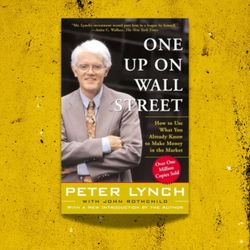
One Up on Wall Street — Peter Lynch
21:43|In this episode of Summed, we deliver a complete One Up on Wall Street summary—Peter Lynch’s classic guide to finding tenbaggers by spotting everyday companies you understand, then doing focused, common-sense research. In ~20 minutes you’ll learn Lynch’s six stock categories (slow growers, stalwarts, fast growers, cyclicals, turnarounds, asset plays), how to craft a one-minute thesis, why story + numbers matters, and simple rules on valuation (including PEG checks), patience, and avoiding “diworsification.” Perfect for beginners and busy listeners who want a practical way to turn real-life insights into better investing decisions.About the authorPeter Lynch is the former manager of Fidelity’s Magellan Fund and a bestselling author known for translating professional investing into straightforward rules for individual investors.Key takeawaysInvest in what you know: start with products, services, and trends you already notice.Six stock types: know what you own—each type has different expectations and risks.Tenbagger mindset: small, understandable businesses with long runways can compound massively.Story + numbers: a 60-second thesis backed by a few key metrics (growth, margins, debt, cash).PEG sanity check: growth should justify price; beware high P/E without high, durable growth.Ignore macro noise: focus on company fundamentals and execution.Avoid diworsification: add only what improves your edge or portfolio balance.Hold with reasons: update your thesis; sell when it’s broken, not because of headlines.This week’s playbookWhat-you-know sweep: list 5–10 companies you use and genuinely understand.Write a 60-second story for one idea + 3 numbers to track (revenue growth, operating margin, net debt/cash).Tag the type: categorize it (stalwart? fast grower?) and set expectations accordingly.Do a quick PEG check and a one-page pre-mortem: “What could kill this thesis?”Start a watchlist with price alerts and quarterly check-ins.
Die With Zero — Bill Perkins
16:13|In this episode of Summed, we deliver a complete Die With Zero summary—Bill Perkins’s blueprint for maximizing life ROI: spending more on meaningful experiences while you’re healthiest, time-bucketing your life, giving earlier to loved ones, and designing a plan to avoid oversaving you’ll never use. In ~20 minutes, you’ll learn how to set a baseline safety floor (emergency fund + insurance/annuity options), convert money into memory dividends, and align your saving, spending, and giving with the right decade—so you don’t postpone living.About the author:Bill Perkins is an energy trader and hedge-fund manager known for applying expected-value thinking to personal decisions—arguing that the goal isn’t dying rich, but living richly.Key takeaways:Life ROI > Net worth: Optimize for memorable experiences, relationships, health.Time buckets: Plan spending and experiences by decade (20s/30s/40s/50s+).Memory dividends: Experiences pay ongoing returns in joy and identity—invest early.Give sooner: Transfer some wealth when it has the highest utility (to kids/causes).Safety floor: Hedge longevity/health risks with reserves, insurance, and annuity options.Don’t oversave by default: Match savings rate to actual goals and timelines.This week’s playbook: Draft five time buckets (now, 30s, 40s, 50s, 60s+) and list one experience you’ll fund in each.Set a baseline safety number: emergency fund + insured risks; sanity-check against current savings.Schedule one memory-dividend experience this quarter (trip, skill, reunion) and pre-fund it.Plan giving-while-living: move a small, purposeful gift forward in time.
A Random Walk Down Wall Street — Burton G. Malkiel
19:44|In this episode of Summed, we deliver a complete A Random Walk Down Wall Street summary—Burton Malkiel’s classic case for low-cost index funds, broad diversification, and staying the course. In ~20 minutes, learn why most stock-picking and market-timing fail after fees and taxes, how to build a simple age-appropriate asset allocation, and the role of dollar-cost averaging, rebalancing, and tax-advantaged accounts. We also skim his take on bubbles, investor psychology, and why owning “the whole market” is the most reliable way to capture returns.About the authorBurton G. Malkiel is an economist and longtime Princeton professor, best known for advancing the random walk/efficient-markets view and advocating low-fee index investing for everyday investors.Key takeawaysMarkets are hard to beat: prices absorb information; excess returns rarely persist after costs.Own the market cheaply: total-market or S&P 500 index funds usually outperform active peers over time.Allocate by risk/age: blend stocks, bonds (and optionally internationals/REITs) to match your tolerance and horizon.Automate & rebalance: contribute on a schedule, reinvest dividends, and rebalance periodically.Mind fees & taxes: expense ratios, turnover, and taxable churn are silent return killers.Ignore the noise: bubbles and narratives tempt timing—discipline wins.This week’s playbook Build a three-fund core: total stock, total international, and a broad bond fund.Automate monthly buys (DCA) and turn on dividend reinvestment.Set a target allocation and a simple rebalance rule (e.g., annually or at 5% bands).Max tax-advantaged accounts first; keep high-turnover assets in tax-sheltered buckets.If you must “play,” cap it at ≤10% and track it separately.
The Automatic Millionaire — David Bach
14:38|In this episode of Summed, we deliver a complete The Automatic Millionaire summary—David Bach’s simple system for paying yourself first and letting wealth grow on autopilot. In ~20 minutes you’ll learn how to automate transfers on payday, fund tax-advantaged retirement accounts, build an emergency cushion, harness small daily savings (“Latte Factor”), and use set-and-forget rules (like automatic increases and biweekly payments) so your money works harder without willpower. Perfect for beginners and busy listeners who want a step-by-step plan to save more, invest consistently, and become an automatic millionaire over time.About the author David Bach is a bestselling personal-finance author and creator of the FinishRich framework. He’s known for turning complex money advice into straightforward habits anyone can automate.Key takeawaysPay yourself first: automate a slice of each paycheck into savings and retirement.Make it automatic: scheduled transfers/investments beat willpower.Latte Factor: small daily leaks compound—redirect them to long-term goals.Use tax-advantaged accounts: reduce taxes, boost compounding.Biweekly/round-up tactics: tiny, automatic boosts add up.This week’s playbook (pick 1–3)Set a payday auto-transfer to high-yield savings (emergency fund) and to a low-cost index fund.Turn on auto-increase (1–2% per year) for retirement contributions.Do a Latte Factor sweep: cancel/trim one daily/weekly spend; reroute the same amount automatically.If applicable, switch to biweekly payments on large debts to shave interest and time.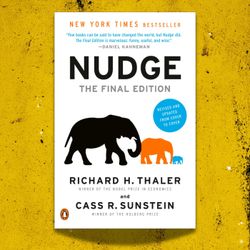
Nudge — Richard H. Thaler & Cass R. Sunstein
15:24|In this episode of Summed, we deliver a complete Nudge summary—how choice architecture uses gentle, freedom-preserving nudges to help people save more, pay down debt, budget better, and invest wisely. We break down the core tools—defaults, framing, salience, social norms, and commitment devices—and show practical ways to redesign your money environment so the wealth-building choice is the easy choice. Drawing on the authors’ “libertarian paternalism” approach, you’ll leave with simple, repeatable nudges you can set up today.About the authorsRichard H. Thaler — Behavioral economist and 2017 Nobel Prize winner; pioneer of applying psychology to everyday financial decisions.Cass R. Sunstein — Harvard Law professor and policy expert; co-architect of real-world nudge programs in government and business.Key takeawaysChoice architecture matters: the way options are arranged changes outcomes.Defaults are destiny: auto-enroll and auto-escalate savings; pick low-fee index funds as the default.Framing & salience: present costs/benefits clearly (annualized costs, after-fee returns).Social norms: show what “people like you” do to encourage better behavior.Commitment devices: automate transfers, bill pay, and savings increases to defeat present bias.Nudge, don’t shove: preserve freedom while guiding toward better choices.This week’s playbook (pick 1–3)Upgrade your defaults: set or raise your retirement contribution and turn on auto-escalation.Automate good behavior: monthly transfer to a low-cost total-market index fund + bill autopay.Reframe spending: show big purchases as annual cost and % of take-home in your budget app.Use social proof: share a savings goal with a friend and report progress weekly.