Share
QueerAF | Inspiring LGBTQIA+ stories told by emerging queer creatives
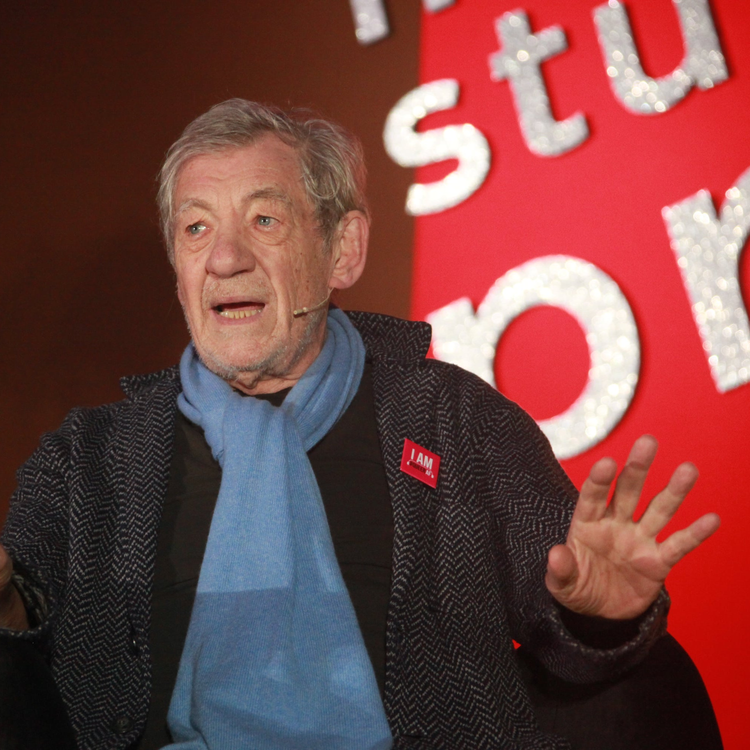
Ian McKellen's advice to LGBT+ people everywhere | Live record with guest host Evan Davis
National Student Pride's ambassador Evan Davis guest hosts the show and interviews LGBT+ Icon Ian McKellen on the #StudentPride podcast at National Student Pride 2019.
🦄 Subscribe:
https://itunes.apple.com/gb/podcast/queeraf-by-national-student-pride/id1126301158?mt=2
🎧 Spotify:
https://open.spotify.com/show/3wiN3JZBJ2uqcg3R0OQDqP
Evan Davis interviewed Ian McKellen on the #QueerAF podcast at National Student Pride 2019 at the University of Westminster, discussing his lifetime achievements and relationship with the LGBT community.
They spoke about #MeToo, chemsex, drugs, his coming out, the #MeToo movement and empowered the young LGBT+ audience.
The event took place on February 23rd at the non-profit organizations, now five-year-long residency, Westminster Marylebone campus.
Davis and McKellen hosted a live-stream of #QueerAF the National Student Pride podcast.
In conversation, McKellen proposed to Evan Davis they speak about chemsex. Otherwise known as getting high and horny or party and play – those who take part in chemsex do so to change the sex they are having with a so-called ‘holy trinity’ of drugs.
McKellen spoke about when he first tried a joint at the age of 30, with Evan Davis adding that ‘drugs were much weaker back then’.
The audience at National Student Pride were enthralled by Ian with his re-tellings of his pursuits to join the theatre as “one of the reasons I became a professional actor is because I learned that I could meet queers in the British theatre” and admitting “I just wish when I was younger I could have been myself”.
McKellen got many a laugh with his unrelenting wit, gesticulating at one point about “drawings of genitalia in public bathrooms”.
The conversation also looked at various aspects of McKellen's life:
- His coming out story
- How Margaret Thatcher’s Section 28 Law made him the activist he is today and how the queer scene in the theatre was what first attracted him to the profession
- His advice to young LGBT+ students
- Holding Elijah Wood’s hand while he got a tattoo during the filming of Lord of the Rings
- The #MeToo movement
On Me Too he says:
'Well frankly, I’m waiting for someone to accuse me of something, and me wondering whether they’re not telling the truth and me having forgotten (pointing to his head) you know.
But with the couple of names you’ve mention, people I’ve worked with, both of them were in the closet. And hence all their problems as people and their relationships with other people, if they had been able to be open about themselves and their desires, they wouldn’t have started abusing people in the way they’ve been accused.
Whether they should be forced to stop working. That’s debatable. I rather think that’s up to the public. Do you want to see someone who has been accused of something that you don’t approve of again? If the answer’s no, then you won’t buy a ticket, you won’t turn on the television. But there may be others for who that’s not a consideration.
And it’s difficult to be exactly black and white.'
He has since released this statement about the comments: https://twitter.com/IanMcKellen/status/1101741037083455488
Sign up as a QueerAF member to listen along ad-free and support our not-for-profit work, investing in a new generation of queer audio professionals:
https://www.wearequeeraf.com/membership/
If you like our podcast, you'll love our free weekly newsletter that thousands of readers use to understand the LGBTQIA+ 🏳️🌈 headlines, learn new perspectives and stay on top of the latest queer content. Try it now:
https://www.wearequeeraf.com/subscribe/
Make sure to sign up for updates about Trans+ History Week, a QueerAF launchpad project:
More episodes
View all episodes
15. The triumphs, trials and conundrum of Trans+ journalist Jan Morris
30:35||Season 7, Ep. 15June 2nd 1952, London, England. Coronation day of Elizabeth the second, who would at the age of twenty seven become Queen of the United Kingdom and Head of the Commonwealth Nations, but that morning much of the United Kingdom was already celebrating. News had broken that four and a half thousand miles away Edmund Hillary and Tenzing Norgay had finally become the first individuals in history to conquer Mount Everest. The person breaking this historic news, via coded message and two runners, was none other than Jan Morris, intrepid reporter for The Times. Jan Morris would go on to become a world famous journalist, writer, and historian, known for her works on Venice, Trieste, the British Empire, and her beloved home country of Wales - as well as her book covering her transition, Conundrum.Episode Credits: This episode was produced by Al Worth and Beyond Binary Productions. Mastering and executive production by Amber Devereux, with additional executive production by Jamie Wareham. With thanks to guests Twm Morys, Paul Clements, and Sara Wheeler for their valuable insights. Clips: ‘Jan Morris: Writing a Life’, BBC Wales, 2021. ‘Talk-in To Day’, BBC Two, 1974. This episode was produced as part of QueerAF's Trans+ History Week mentoring programme with thanks to Trans+ History Week's Creative Talent Sponsor, Publicis Groupe UK.
14. How to create a grassroots pride, without any corporate sponsorships
25:20||Season 7, Ep. 14Margate Pride has been around for ten years, and depending on which local you ask, it celebrated its tenth, or 11th, anniversary this year. See, that’s the thing about local and regional queer stories and history. You often have to rely on one of the queerest forms of communication to find them out - gossip. It's that fascination, which has led this town - with one of the densest populations of LGBTQIA+ people in Britain, only a little behind London, Manchester and Brighton - to better understand its queer heritage.This week, on the QueerAF podcast, with exclusive interviews and already captured audio archives from Margate Pride’s Heritage Hotline documenting queer life in this seaside town between 1960 and 2000 - we’re going to ask a question Margate Pride get all the time. Just how do they run a pride, with year-round activities, with no corporate sponsorship, that thousands attend, including an increasing number of out-of-towners - 'down from Londons' as we call them here - but keep it grounded in protest, the needs of the local community, and honouring LGBTQIA+ history?Episode Credits: This episode was produced by Dr Sé Nomyo, as part of our media partnership with Margate Pride. With thanks to clips from the Heritage Hotline, which is open to submissions and the Margate Queer Library. Editing and executive production by Jamie Wareham.
13. Trans+ life in the UK is more than concerning - what next?
55:37||Season 7, Ep. 13Recorded in February 2026 at National Student Pride, a live recording of the QueerAF podcast, hosted by Juno Dawson, with guests Munroe Bergdorf, Zelah Glasson, Lars Fellows and Fizz Sinclair - the panel explores Trans 2030, what life is like now and how Trans+ lives have changed. Without National Student Pride, QueerAF wouldn’t exist. We began as a podcast with them, mentoring early talent and student audio professionals to help them kick-start their careers. The event, which ran for 21 years, helped thousands start their working life, with their careers fair and pride of conversation - setting the tone for the pride season ahead with critical conversations, alongside running campaigns that changed laws, notably changes in Sex and Relationships education. Amid a changing context, this year the event announced it was it’s final edition - at least in the form that we know it as, the largest gathering of LGBTQIA+ students in the UK. Over the years, we’ve recorded a number of stunning live podcast episodes, including with Ian McKellen, Courtney Act and Olly Alexander - and for the final event, we were back as media partner one last time, recording with guest host Juno Dawson. This podcast was recorded before the implementation of the EHRC code, and the day after a High Court ruled that its previous interim guidance was lawful - a decision that allowed it to plow ahead. Episode Credits: With thanks to National Student Pride, its production team, and volunteers for producing the event. Hosted by Juno Dawson, with editing by Jamie Wareham.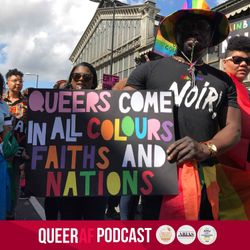
12. The transgender refugees finding sanctuary in the North of England
33:42||Season 7, Ep. 12The north of England has a long history of welcoming migrant communities, despite a growing far-right movement growing in the region. Indeed, immigration is an integral part of the history of the UK. While that’s in part due to a horrific colonial past, today we would hardly be anywhere without it. The well-loved national dish of Fish and Chips was brought over by Spanish and Portuguese migrants, and popularised by the Jewish migrant community in the mid-1800s. The iconic mini cooper was invented by a Greek engineer, who came to the UK to study. Chicken tikka massala, development of Marxist theory, 4am shawarma after a night out. Adrian Collins heads to Bradford, to speak with Trans+ refugees and migrants to find out what it's like on the intersections of being Trans+ and a migrant.Episode Credits: This episode was produced by Adrian Collins. Mastering and executive production by Amber Devereux, with additional executive production by Jamie Wareham. Music: “Echoes”, “Dandelion” and “Earth” by SyncMusicTracks, vocals by Ivan Fryman from Manchester Central Library archives. Thanks to interviewees Amelia Pearson, Ayman Eckford, Mya Skylar and “Hazel” from Rainbow Migration. An additional thanks to the help of LASS (Lesbian Asylum Seekers Sheffield) for their collaboration. This episode was produced as part of QueerAF's Trans+ History Week mentoring programme with thanks to Trans+ History Week's Creative Talent Sponsor, Publicis Groupe UK.
11. What is solidarity, really? And how can you do it justice?
32:25||Season 7, Ep. 11Allyship, solidarity. They’re words that are banded around a lot. Allies often ask how to show solidarity, and marginalised queer and Trans+ folks try their hardest to give ever-increasing practical insights. But what do those words, really mean? How do you do justice to the work?Only by truly understanding a community - including by learning its history, most difficult moments, and its joy and impact on society, can we use that to create a foundational shift in the way we show up - with solidarity This week on QueerAF, we look at the solidarity campaigns - that understand this work, because awareness and solidarity play their part in an ecosystem of change - but in what role?This episode is made possible thanks to Trans+ History Week’s Creative Talent Sponsor, Publicis Groupe UK. Episode Credits: Produced and hosted by Jamie Wareham, with thanks to Trans+ Solidarity Alliance, Not A Phase, Not In Our Name and Publicis Groupe UK, with clips from L With The T, Trans People Are Loved, Focus Features and Trans+ History Week.
10. Why are NHS gender clinic waiting times so long?
30:49||Season 7, Ep. 10Rachel Taylor MP told the UK Parliment, "waiting times for gender affirming healthcare are nothing short of a national scandal". Speaking, using almost word for word our reporting in the Gender Clinic Files - an investigation into the length of waiting times for NHS gender identity clinics (GICs) - she set out how 48,000 adults remain on waiting lists, with an average waiting time of 25 years. In one clinic, we found a 224-year wait if you joined the list in March, three times the average UK life expectancy. More than a lifetime of waiting.This week on the QueerAF podcast, Ludovic Parsons looks back at the joint investigation we did with Claire's Trans Talks and What The Trans?! to ask, has anything changed - and more critically, what would a gender healthcare system built for Trans+ people, not cisgender doctors, even look like?Dive deeper, with our investigations and long-reads into UK Trans+ Healthcare:The Gender Clinic Files - the full investigative seriesWhat would a healthcare system that works for Trans+ people look like in the UK?A brief history of how the UK’s broken Trans+ healthcare system only serves its cisgender doctorsThe clinical symposium where cisgender doctors formed the UK's gender identity clinic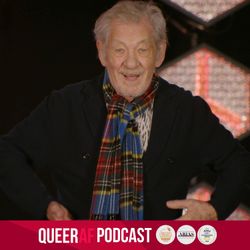
9. Ian McKellen on Shakespeare, Magneto and LGBTQIA+ activism
40:35||Season 7, Ep. 9Our show began as a collaboration with National Student Pride, where we worked with budding students, building audio production careers and giving them their first published work. The organisation, which ran for 21 years, had it’s final event this year in February. We were back, as the event’s media partner, to help them ring the bell on it’s format as a pride of conversation with panels, a careers fair, and the largest gathering of LGBTQIA+ students in the UK. Like all the years we’ve worked together, we were on stage recording our podcast, including an upcoming episode in the season.Over the years, we’ve had Courtney Act, Olly Alexander, Dustin Lance Black, Lady Phyll, and this year the team very kindly allowed us to run this gorgeous interview you’re about to hear. The last time he was at National Student Pride, it was for a recording of the QueerAF podcast - interviewed by Evan Davis in an interview that made headlines all over the world, and won us our first British Podcast Award. So it is touching that for the final event, he was the final speaker - in what was an interview too wonderful to be lost as a moment in time. So please enjoy, author and screenwriter Juno Dawson, in conversation with Sir Ian McKellen, as he returns to the QueerAF podcast feed one more time - for the last ever, National Student Pride.
8. How to build a better relationship with the news as a LGBTQIA+ person
53:37||Season 7, Ep. 8News overwhelm is an increasing issue, making more and more of us switch it off - four in ten of us now say we selectively avoid the news. But this is at a time when we need to be even more keyed into what's happening - so we know how to fight back against it. QueerAF founder Jamie Wareham sits down for a fireside conversation with Ludovic Parsons (QueerAF's lead investigative journalist) and Ruby Rare (Author, broadcaster) to talk about how we can use the news in the Pride season ahead to advocate for better for our LGBTQIA+ community for Indie News Week, with thanks to a micro-grant from the Public Interest News Foundation. Episode Credits: This episode was produced and hosted by Jamie Wareham. With thanks to our shout out tickets Queer Kent Life and Trans Club Margate - the Public Interest News Foundation's Indie News Week micro-grant that funded our venue, CAMP, photographer David Tovar, guests Ludovic Parsons, Ruby Rare and to Margate Pride for collaborating on the event with us.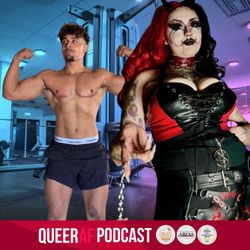
7. Cute twinks and gym bros: Why do we police trans masculine identities?
29:58||Season 7, Ep. 7This week, on QueerAF in an episode from our mentoring programme for Trans+ History Week, we’re going to trace back in recent history where body standards for both gay and trans men come from, how they show up, and challenge labels from drag acts to gym bros. It’s a nuanced discussion, especially when we think about how the labels we use in the queer community - often mean different things, depending on where we live, what scene we’re engaging in, and that's before we think about any other personal baggage we’re bringing to the equation.Episode Credits: This episode was produced by Otis Grieve and Batstone. With thanks to guests Zelah Glasson, Castor Von Curse, and Marc Thompson. Executive production by Amber Devereux and Jamie Wareham. This episode was produced as part of QueerAF's Trans+ History Week mentoring programme with thanks to Trans+ History Week's Creative Talent Sponsor, Publicis Groupe UK.