Share
Stream Close Up
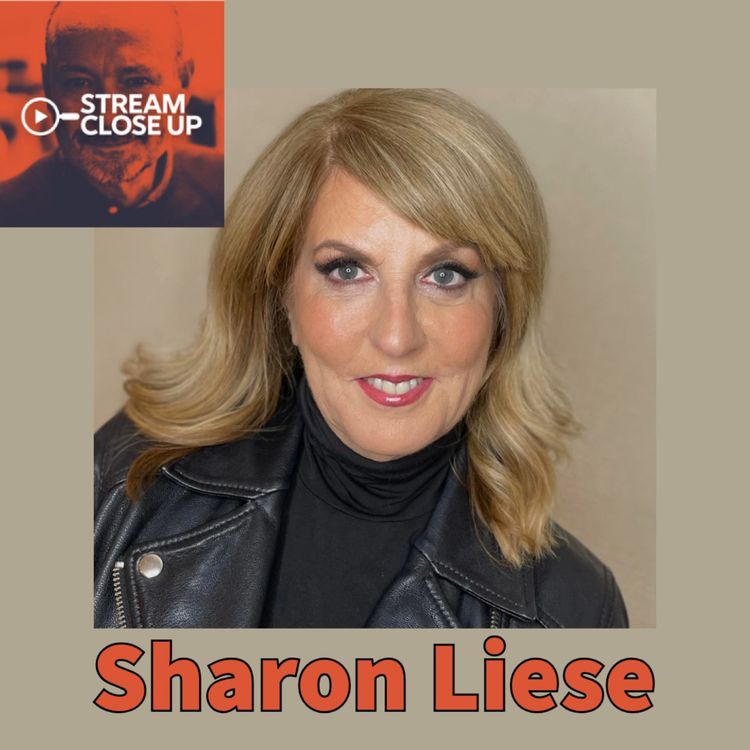
Sharon Liese - Seized
Seized: Sharon Liese on Community and Documentary Storytelling
How do you defend a free press when you dislike what your local newspaper writes about you?
In August 2023, police raided the Marion County Record in Kansas and the home of editor and publisher Eric Meyer. His 98 year old mother Joan, the newspaper’s co owner, died the following day. The raids attracted international condemnation, but within Marion, the response was more complicated.
For our Stockholm Film Festival coverage, Brian welcomes Emmy winning filmmaker Sharon Liese, director of Seized, to discuss the community behind the headlines and the choices involved in bringing its story to the screen.
Sharon explains how police body camera and surveillance footage helped reconstruct the raids, while a young reporter’s arrival offered a fresh perspective on the newspaper and the town it serves. We also explore gaining the trust of reluctant participants, allowing a protagonist’s flaws into the story, and finding humor and humanity amid a serious confrontation over press freedom.
In this conversation:
- Arriving in Marion as the story made international headlines.
- Eric Meyer, local journalism and the personal cost of scrutiny.
- New reporter Finn Hartnett as the audience’s guide.
- Earning access to Mayor Mike Powers and the newspaper’s critics.
- Journalist Jessica McMaster’s role in explaining the unfolding story.
- The decisions and missed opportunities that allowed the raids to happen.
- Filming Marion’s landscape and shaping the film through humour and music.
Sharon’s previous work includes The Flagmakers and Transhood.
Explore Sharon’s films at Herizon Productions.
Check out music from Moondog here: Moondog
Enjoyed the conversation? Share this episode with someone who loves documentary film or cares about the future of journalism.
More episodes
View all episodes
50. William Youmans & Jason Osder - Who Killed Alex Odeh?
43:45||Ep. 50Who Killed Alex Odeh? | Jason Osder and William Lafi Youmans on Justice, Media and Political ViolenceIn 1985, Palestinian American teacher, poet and activist Alex Odeh was killed by a bomb at his office in Santa Ana, California. More than forty years later, nobody has been charged with his murder.Directors Jason Osder and William Lafi Youmans join Bria to discuss Who Killed Alex Odeh?, their documentary examining the assassination, the investigation and a family’s long wait for accountability.Jason, director of Let the Fire Burn, and Will, who grew up hearing Alex’s story within the Arab American community, explain how their different backgrounds shaped the film. We explore their collaboration with investigative journalist David Sheen, the challenges of assessing testimony and the media narratives that influence whose stories are remembered.We also discuss:Alex’s commitment to dialogue and building bridges between communities.Tracking down suspects and documenting their public lives.Archival television, anti Arab stereotypes and the publicity surrounding extremism.Protecting vulnerable contributors while being transparent with audiences.The filmmakers’ interpretation of how politics has shaped the pursuit of justice.Reaching new audiences and mobilising those who already care.Who Killed Alex Odeh? received the U.S. Documentary Special Jury Award for Journalistic Excellence at Sundance 2026.This episode is part of Stream Close Up’s coverage of the Stockholm International Film Festival.Trailer: Who Killed Alex Odeh?
49. Robert Greene - Too Much Sugar - Fatherhood, Second Chances and Sharing the Storytelling
39:43||Ep. 49Ryan Holliger, a father of six in Missouri, dreams of making a comedy about his life. When documentary filmmaker Robert Greene joins him, the project grows to include stories imagined by Ryan’s children, partner Amanda and best friend AccRite. What begins as Ryan’s movie becomes a shared exploration of family, grief and the distance between the person you believe you are and how others experience you.In this episode of Stream Close Up, Brian speaks with Robert about Too Much Sugar and the possibilities of making films with people who rarely see their lives represented on screen.Their conversation explores:How a meeting at a children’s basketball game led to an unlikely filmmaking partnership.Why the films within Too Much Sugar are about dreams as much as cinema.How Ryan’s son Gavin becomes a crucial voice in the project.Amanda’s right to say no, and what genuine creative collaboration requires.The possibilities and limits of filmmaking as a way to confront grief.Why cinema audiences, festivals and online conversations matter to documentary discovery.Robert also reflects on the relationship between performance and documentary across his work, including Actress, Kate Plays Christine and Procession.Trailer: Too Much Sugar
48. Felix Randau - I Is Another / Ich ist ein Anderer
38:41||Ep. 48Felix Randau on I Is Another and the Stories We Tell About OurselvesFelix Kersten, Heinrich Himmler’s massage therapist, claimed to have used his influence to save thousands of concentration camp prisoners. When filmmaker Felix Randau began researching a proposed series about Kersten’s heroism, he found a more complicated story.Randau joins Brian Laffan to discuss I Is Another, starring Claes Bang as Kersten and Valerie Pachner as a journalist determined to challenge his account. Set aboard a train to Oslo, their encounter becomes a psychological struggle over evidence, guilt and reputation.We explore how Randau’s research transformed the project, why Bang was his first choice, and how the actors helped reshape a crucial confrontation through improvisation. Randau also discusses his decision to portray Himmler without the familiar caricature, and the resistance that approach encountered.The conversation extends to the stories people construct about themselves, the relationship between fake news and historical memory, and the challenge of bringing independent films to an audience.In this episode:Researching Kersten and questioning the heroic narrativeCreating Hedda as an extension of Randau’s own investigationClaes Bang’s casting, commitment and executive producer creditThe train setting, mirrors and competing versions of eventsRehearsal, improvisation and the film’s dramatic confrontationFestivals, discovery and finding audiences across bordersI Is Another Trailer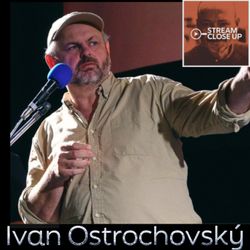
47. Ivan Ostrochovský - Only Beautiful Things To Look At
41:12||Ep. 47Ivan Ostrochovský on Only Beautiful Things to Look AtIn 1980s Czechoslovakia, a doctor’s comfortable understanding of her work begins to unravel through a friendship with a young Roma colleague.In this episode of Stream Close Up, Brian Laffan speaks with Slovak filmmaker Ivan Ostrochovský about Only Beautiful Things to Look At, starring Aňa Geislerová and Simona Boledovičová. Set against the forced sterilisation of Roma women, the film explores how prejudice becomes institutional practice, and how people rationalise the harm they cause.Ivan describes meeting doctors who continued to defend their actions decades later, and explains how those encounters shaped the film. We discuss the relationship between its two central characters, his approach to casting, and the striking images and intimate sound that draw us into their world.Our conversation also covers:Challenging stereotypes when portraying Roma communities.The tension between historical accuracy and emotional truth.Working with a small crew and producing films to protect creative freedom.His documentary Photophobia, filmed with children sheltering underground in Ukraine.Research into a possible American version addressing the sterilisation of Native American women.The role of culture and filmmaking in difficult political times.Recorded during the Karlovy Vary International Film Festival, shortly after the film’s world premiere.Since the interview: Only Beautiful Things to Look At won the FIPRESCI international critics’ award at Karlovy Vary and was selected for the 2027 European Film Awards fiction shortlist.Trailer: Only Beautiful Things To Look At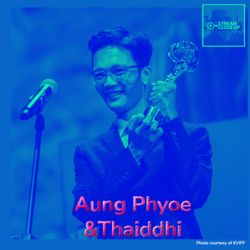
46. Director Aung Phyoe & Producer Thaiddhi - Fruit Gathering
42:58||Ep. 46In this episode, Brian speaks with director Aung Phyoe and cinematographer and producer Thaiddhi about Fruit Gathering, Aung’s feature debut and the winner of the Grand Prix Crystal Globe at the 60th Karlovy Vary International Film Festival.Set among textile workers in industrial Yangon, the film follows two young women searching for intimacy and escape amid economic uncertainty and social repression. Aung discusses his desire to tell a universal love story about someone who was never properly loved, and the difficulty of loving another person when you have never learned how.The conversation also explores the film’s evolution from the short Evening Clouds, its nonprofessional cast, the use of silence and a confined 4:3 frame, the meaning behind its title and spirit ceremony, and the realities of making independent cinema under Myanmar’s censorship system. Thaiddhi reflects on his long creative partnership with Aung and their shared ambition to help new voices from Myanmar become part of world cinema.Trailer: Fruit Gathering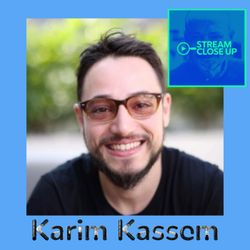
45. Karim Kassem - Pipes
40:57||Ep. 45In this episode of Stream Close Up, Brian speaks with Lebanese filmmaker Karim Kassem about his latest feature, Pipes, which premiered in the Crystal Globe Competition at the Karlovy Vary International Film Festival.Set in a remote Lebanese village, Pipes follows Hassan, a solitary farmer whose routine is disrupted when workers arrive in search of a buried water pipe. What begins as a practical task gradually becomes a quiet, humorous and deeply human reflection on isolation, community, migration and the uncertain future of rural life.Karim discusses the unusual path that led him to filmmaking, including his years living in New York, his early work in photography and music videos, and the influence of growing up with a father who worked as a news cameraman. He also reflects on the experiences that shaped his earlier films, from temporarily losing his sight to returning to Beirut just before the devastating port explosion.The conversation explores Karim’s preference for working with nonprofessional performers, his instinctive approach to storytelling and the balance between melancholy, absurdity and humour in his work. The episode also considers the understated performance of Ghassan Saad, who received the Crystal Globe for Best Actor for his role as Hassan in Pipes.Pipes TrailerTopics include:Karim’s journey from Beirut to New York and back againThe personal experiences behind his early feature filmsBuilding stories around place, memory and real communitiesWorking with nonprofessional actorsThe importance of silence, landscape and atmosphereFinding humour within difficult social and political realitiesThe making of PipesGhassan Saad’s award-winning performanceThe role of film festivals in helping independent films reach wider audiences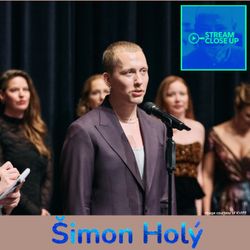
44. Šimon Holý on Chica Checa, Karlovy Vary, Drag, Family, and Finding Hope
47:23||Ep. 44In this episode of Stream Close Up, we continue our coverage of the 59th Karlovy Vary International Film Festival with Czech writer and director Šimon Holý.Šimon joins us to discuss his new film Chica Checa, which had its world premiere in the festival’s main competition. The film follows a woman working in a small-town post office whose dying mother has one final wish: to see a beloved Czech pop icon perform. To make that happen, she calls her son home from France, only to discover that the life he has built for himself is very different from the one she imagined.What begins as a mission to fulfill a grandmother’s last wish becomes something warmer and more surprising: a mother and son story about rediscovery, drag performance, small-town attitudes, and the possibility of starting again later in life.Šimon talks about the dream that sparked the idea, the personal connections behind the story, and why he sees the film as both humanistic and quietly political in the current Czech context. We also discuss working with Paula Tomašovová, casting the mother-son relationship, finding humor without falling into cliché, and why Chica Checa is, in Šimon’s words, almost like an eighties buddy movie.Topics include:Šimon Holý’s return to Karlovy VaryThe world premiere of Chica ChecaDrag performance and Czech pop cultureMother-son relationships on screenComing out, family, and the pain of not being knownCasting Paula Tomašovová and Jan CinaCamp, humor, and avoiding clichéThe political context of contemporary Czech cinemaHope, change, and starting over after fiftyTrailer: Chica Cheka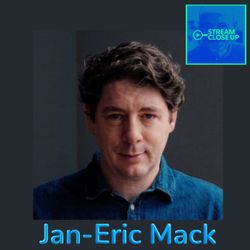
43. Jan-Eric Mack on "A Happy Family", Working Poor Switzerland and the Crystal Globe Competition
01:04:36||Ep. 43Swiss director Jan-Erik Mack joins Stream Close Up to discuss his new feature film A Happy Family, which premieres at the Karlovy Vary International Film Festival as part of the Crystal Globe competition.The film follows Niki, a single mother working two jobs while trying to keep her family afloat. After an accident brings her into conflict with the authorities, her life begins to spiral as she fights to remain close to her children. Mack describes the film as a story about Switzerland’s working poor, a reality that became more visible during the pandemic when food queues appeared in a country often associated with wealth and stability.In this conversation, Mack reflects on his path from graphic design to filmmaking, his time at the University of the Arts in Zurich. We also discuss his acclaimed short film Facing Mecca, which won numerous awards and was shortlisted for an Oscar. Mack explains how that success opened the door to television work, including his first series as a co-director and later work on Wilder.The conversation also explores Mack’s continuing creative partnership with Anna Schinz. She co-wrote Facing Mecca, appeared in Davos 1917, and now co-writes and stars in A Happy Family. Together, Mack and Schinz use an intimate family story to explore poverty, bureaucracy, parenthood, and the limits of institutional care.We also get into visual storytelling, working with children, the contrast between urban Zurich and the Swiss countryside, and how A Happy Family balances political reality with empathy for everyone caught inside the system.Trailer: A Happy Family