Share
Stream Close Up
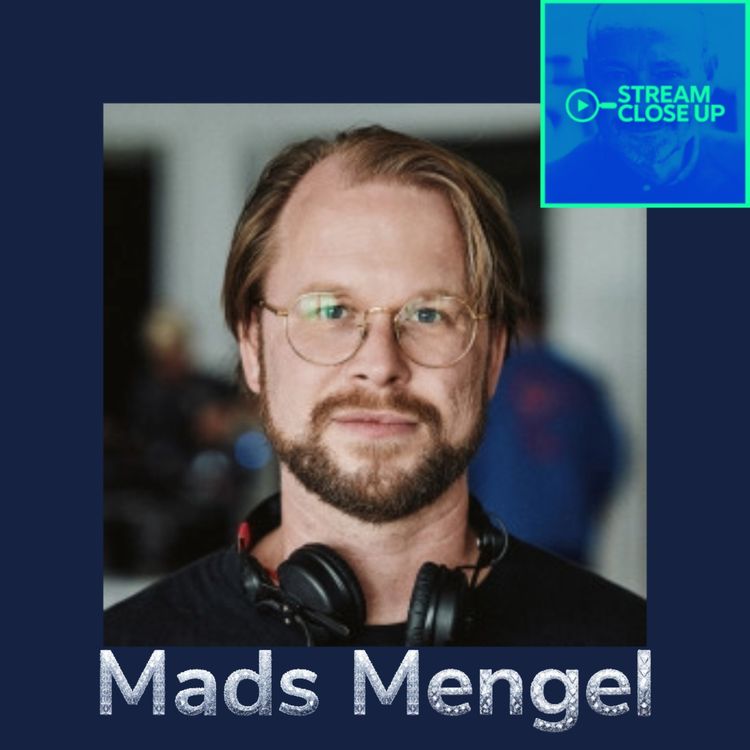
Mads Mengel - The Guest - “It has to have all of it, and then none of it. It has to be one big pile of grey.”
In this episode, Brian speaks with Danish filmmaker Mads Mengel about his feature debut The Guest, a tightly controlled family drama built around a deceptively simple event, a naming ceremony for a young couple’s new son. What begins as a celebration soon becomes something much more fragile when Carl’s estranged mother arrives unexpectedly, forcing the family to confront old pain, broken trust and the possibility of reconciliation.
Mads traces the long road to the film, from his childhood discovery that movies were something people actually made, through years of rejection before entering the Danish Film School. He reflects on the privilege of working in a country with strong public support for film, and how his own experience of becoming a father shaped the final version of the story.
The conversation also digs into the film’s remarkable cast. Mads talks about writing the role of Carl with Simon Bennebjerg in mind, discovering Josephine Park through his television work, and building a sibling dynamic that feels lived in rather than explained. He also discusses the importance of collaboration, improvisation and trusting actors to bring small details into the film, including one of the episode’s best anecdotes involving a dog that became part of the character’s emotional life.
At the center of the discussion is the film’s refusal to make things simple. Mads describes wanting the story to exist in “one big pile of grey,” where no character is reduced to a villain or victim. The result is a drama about family, mental illness, generational trauma and the uneasy question of when love becomes responsibility, and when responsibility becomes too much to carry.
“It has to have all of it, and then none of it. It has to be one big pile of grey.” - Mads Mengel
More episodes
View all episodes
47. Ivan Ostrochovský - Only Beautiful Things To Look At
41:12||Ep. 47Ivan Ostrochovský on Only Beautiful Things to Look AtIn 1980s Czechoslovakia, a doctor’s comfortable understanding of her work begins to unravel through a friendship with a young Roma colleague.In this episode of Stream Close Up, Brian Laffan speaks with Slovak filmmaker Ivan Ostrochovský about Only Beautiful Things to Look At, starring Aňa Geislerová and Simona Boledovičová. Set against the forced sterilisation of Roma women, the film explores how prejudice becomes institutional practice, and how people rationalise the harm they cause.Ivan describes meeting doctors who continued to defend their actions decades later, and explains how those encounters shaped the film. We discuss the relationship between its two central characters, his approach to casting, and the striking images and intimate sound that draw us into their world.Our conversation also covers:Challenging stereotypes when portraying Roma communities.The tension between historical accuracy and emotional truth.Working with a small crew and producing films to protect creative freedom.His documentary Photophobia, filmed with children sheltering underground in Ukraine.Research into a possible American version addressing the sterilisation of Native American women.The role of culture and filmmaking in difficult political times.Recorded during the Karlovy Vary International Film Festival, shortly after the film’s world premiere.Since the interview: Only Beautiful Things to Look At won the FIPRESCI international critics’ award at Karlovy Vary and was selected for the 2027 European Film Awards fiction shortlist.Trailer: Only Beautiful Things To Look At
46. Director Aung Phyoe & Producer Thaiddhi - Fruit Gathering
42:58||Ep. 46In this episode, Brian speaks with director Aung Phyoe and cinematographer and producer Thaiddhi about Fruit Gathering, Aung’s feature debut and the winner of the Grand Prix Crystal Globe at the 60th Karlovy Vary International Film Festival.Set among textile workers in industrial Yangon, the film follows two young women searching for intimacy and escape amid economic uncertainty and social repression. Aung discusses his desire to tell a universal love story about someone who was never properly loved, and the difficulty of loving another person when you have never learned how.The conversation also explores the film’s evolution from the short Evening Clouds, its nonprofessional cast, the use of silence and a confined 4:3 frame, the meaning behind its title and spirit ceremony, and the realities of making independent cinema under Myanmar’s censorship system. Thaiddhi reflects on his long creative partnership with Aung and their shared ambition to help new voices from Myanmar become part of world cinema.Trailer: Fruit Gathering
45. Karim Kassem - Pipes
40:57||Ep. 45In this episode of Stream Close Up, Brian speaks with Lebanese filmmaker Karim Kassem about his latest feature, Pipes, which premiered in the Crystal Globe Competition at the Karlovy Vary International Film Festival.Set in a remote Lebanese village, Pipes follows Hassan, a solitary farmer whose routine is disrupted when workers arrive in search of a buried water pipe. What begins as a practical task gradually becomes a quiet, humorous and deeply human reflection on isolation, community, migration and the uncertain future of rural life.Karim discusses the unusual path that led him to filmmaking, including his years living in New York, his early work in photography and music videos, and the influence of growing up with a father who worked as a news cameraman. He also reflects on the experiences that shaped his earlier films, from temporarily losing his sight to returning to Beirut just before the devastating port explosion.The conversation explores Karim’s preference for working with nonprofessional performers, his instinctive approach to storytelling and the balance between melancholy, absurdity and humour in his work. The episode also considers the understated performance of Ghassan Saad, who received the Crystal Globe for Best Actor for his role as Hassan in Pipes.Pipes TrailerTopics include:Karim’s journey from Beirut to New York and back againThe personal experiences behind his early feature filmsBuilding stories around place, memory and real communitiesWorking with nonprofessional actorsThe importance of silence, landscape and atmosphereFinding humour within difficult social and political realitiesThe making of PipesGhassan Saad’s award-winning performanceThe role of film festivals in helping independent films reach wider audiences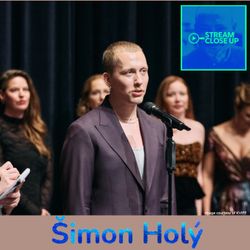
44. Šimon Holý on Chica Checa, Karlovy Vary, Drag, Family, and Finding Hope
47:23||Ep. 44In this episode of Stream Close Up, we continue our coverage of the 59th Karlovy Vary International Film Festival with Czech writer and director Šimon Holý.Šimon joins us to discuss his new film Chica Checa, which had its world premiere in the festival’s main competition. The film follows a woman working in a small-town post office whose dying mother has one final wish: to see a beloved Czech pop icon perform. To make that happen, she calls her son home from France, only to discover that the life he has built for himself is very different from the one she imagined.What begins as a mission to fulfill a grandmother’s last wish becomes something warmer and more surprising: a mother and son story about rediscovery, drag performance, small-town attitudes, and the possibility of starting again later in life.Šimon talks about the dream that sparked the idea, the personal connections behind the story, and why he sees the film as both humanistic and quietly political in the current Czech context. We also discuss working with Paula Tomašovová, casting the mother-son relationship, finding humor without falling into cliché, and why Chica Checa is, in Šimon’s words, almost like an eighties buddy movie.Topics include:Šimon Holý’s return to Karlovy VaryThe world premiere of Chica ChecaDrag performance and Czech pop cultureMother-son relationships on screenComing out, family, and the pain of not being knownCasting Paula Tomašovová and Jan CinaCamp, humor, and avoiding clichéThe political context of contemporary Czech cinemaHope, change, and starting over after fiftyTrailer: Chica Cheka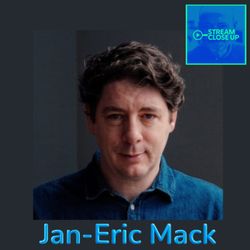
43. Jan-Eric Mack on "A Happy Family", Working Poor Switzerland and the Crystal Globe Competition
01:04:36||Ep. 43Swiss director Jan-Erik Mack joins Stream Close Up to discuss his new feature film A Happy Family, which premieres at the Karlovy Vary International Film Festival as part of the Crystal Globe competition.The film follows Niki, a single mother working two jobs while trying to keep her family afloat. After an accident brings her into conflict with the authorities, her life begins to spiral as she fights to remain close to her children. Mack describes the film as a story about Switzerland’s working poor, a reality that became more visible during the pandemic when food queues appeared in a country often associated with wealth and stability.In this conversation, Mack reflects on his path from graphic design to filmmaking, his time at the University of the Arts in Zurich. We also discuss his acclaimed short film Facing Mecca, which won numerous awards and was shortlisted for an Oscar. Mack explains how that success opened the door to television work, including his first series as a co-director and later work on Wilder.The conversation also explores Mack’s continuing creative partnership with Anna Schinz. She co-wrote Facing Mecca, appeared in Davos 1917, and now co-writes and stars in A Happy Family. Together, Mack and Schinz use an intimate family story to explore poverty, bureaucracy, parenthood, and the limits of institutional care.We also get into visual storytelling, working with children, the contrast between urban Zurich and the Swiss countryside, and how A Happy Family balances political reality with empathy for everyone caught inside the system.Trailer: A Happy Family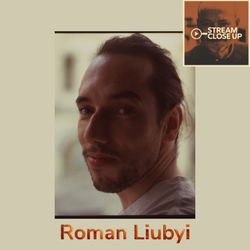
41. Work, Life, War Balance - Roman Liubyi - Time Machine Maidan
35:03||Ep. 41In this episode of Stream Close Up, Brian speaks with Ukrainian filmmaker Roman Liubyi about his latest film, Time Machine Maidan.Roman is part of the filmmaking collective Babylon’13, which came together during the first days of the Maidan Revolution in 2013. What began as an urgent effort to film, subtitle, and share short videos from inside the protest movement has grown into a larger cinematic archive of modern Ukrainian history.Time Machine Maidan draws on that archive in a strikingly original way. The film imagines a young soldier from today’s battlefield traveling back ten years to the beginning of the Revolution of Dignity. Using archival footage, voiceover, and experimental visual transitions, Roman and his collaborators turn documentary material into something closer to a time travel story, a memory piece, and a work of political cinema all at once.The conversation explores how the film was shaped by the tenth anniversary of Maidan, the desire to create something Roman could one day show his daughter, and the challenge of making a film about history while that history is still violently unfolding. Roman discusses the role of Babylon’13, the artistic tension behind the film’s structure, the use of new visual technology on decade-old footage, and why he sees Maidan and the current war as part of the same struggle.They also talk about the personal side of revolution: love stories born during moments of upheaval, the strange sense of community that existed on Maidan, and the responsibility Ukrainian filmmakers feel as they continue to create while living through war.A powerful conversation about memory, resistance, collective authorship, and the role cinema can play when the present is still fighting with the past.Trailer: Time Machine Maidan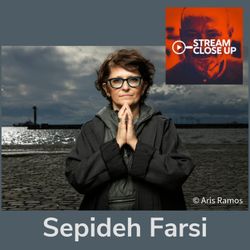
40. Sepideh Farsi - Put Your Soul On Your Hand And Walk
51:22||Ep. 40In this episode of Stream Close Up, Brian speaks with Iranian filmmaker Sepideh Farsi about her documentary Put Your Soul on Your Hand and Walk.The film follows Farsi’s remote collaboration with Fatma Hassona, a young Palestinian photographer and poet living in Gaza. Unable to enter Gaza herself, Sepideh began speaking with Fatma through video calls. Those conversations became the heart of the film, creating an intimate record of daily life, fear, resilience, friendship and artistic witness.Sepideh discusses what first drove her toward the project, her own experience of war, exile and political violence, and why she felt it was essential to move beyond outside commentary and hear directly from someone living inside Gaza.The conversation also explores the film’s unusual form. Instead of hiding the glitches, frozen images and broken internet connections, Sepideh chose to keep them. Those interruptions become part of the story, allowing the viewer to feel the fragility of the connection and the distance between the filmmaker and her subject.They also discuss Fatma’s photography, her writing, her remarkable spirit, and the heartbreaking reality that the film now stands as both a collaboration and a memorial.- Forensic Architecture investigation on the targeted attack on Fatma's houseTrailer: Put Your Soul on Your Hand and Walk
39. Malin Barr - Sauna Sickness
51:25||Ep. 39In this episode of Stream Close Up, Brian speaks with Swedish actor, writer, and director Malin Barr about her short film Sauna Sickness. The conversation explores Malin's journey from dance and acting into writing and directing, her decision to stay behind the camera for this project, and how her experience as a performer shapes the way she works with actors. They also discuss the film’s tense mix of drama, humor, and psychological unease, its strong cast, and the experience of bringing a Swedish short film to festivals including Gothenburg and Sundance.Sauna Sickness Trailer