Share

Stranger Nonfiction
The Woman Who Could Not Forget Anything
In the year 2000, a woman in California wrote a letter to a memory researcher
at UC Irvine. She told him she remembered every single day of her life — not
as summaries or impressions, but as lived experience she could not turn off.
If you named any date after 1980, she could tell you what day it was, what
she ate, what the weather was, and exactly how she felt.
She was not describing a gift. She was describing a condition her doctors
would eventually classify as Highly Superior Autobiographical Memory — one
of fewer than one hundred confirmed cases in the world.
Her name was Jill Price. And what her life reveals about memory, identity,
and the surprising value of forgetting will change how you think about your
own mind.
One true story. One strange thing. One lesson that still matters.
More episodes
View all episodes
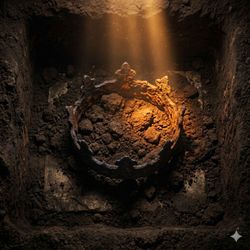
6. The King Under the Parking Lot
10:36||Season 1, Ep. 6A weathered iron crown half-buried in dark soil, viewed from directly above as if looking down into an archaeological dig. One corner of the crown catches a single dramatic shaft of light from above, as if a torch has just been shone on it for the first time in centuries. The soil around it is slightly disturbed, revealing the edge of old stone beneath. Mood: discovery, quiet wonder, time collapsed. Style: cinematic overhead still life, deep earth tones, single warm amber light beam against dark ground. Square format, centered composition, no text, no people.
5. The Day the Internet Decided to Destroy a Restaurant
09:38||Season 1, Ep. 5A small restaurant in Arizona appeared on Gordon Ramsay's Kitchen Nightmares. Ramsay walked out — the only time in a decade of the show. Then the owners went online. What happened next became a case study in how the internet handles outrage — and why the worst thing you can do in a crisis is respond.
4. The Man Who Sold the Eiffel Tower
09:26||Season 1, Ep. 4In 1925, a man forged government documents, booked a suite at one of Paris's finest hotels, and convinced a group of successful businessmen that he had the authority to sell the Eiffel Tower for scrap. One of them paid. Then Lustig came back and did it again. This is the story of Victor Lustig — and the one sentence that explains why smart people fall for simple tricks.
3. The Doctor Who Was Never a Doctor
10:42||Season 1, Ep. 3He performed emergency surgery on a Korean War soldier with a collapsed lung. The patient survived. So did the next fifteen. The surgeon had never attended medical school. This is the true story of Ferdinand Demara — and what his extraordinary deception reveals about trust, credentials, and how authority actually works.
2. The City That Did Not Exist
11:02||Season 1, Ep. 2In 1942, the U.S. Army built an entire city in rural Tennessee and told no one it existed. Seventy-five thousand people lived and worked there for three years. Most never knew what they were building. This is the story of Oak Ridge — and what it reveals about silence, trust, and the questions we choose not to ask.