Share
The Storytelling Lab
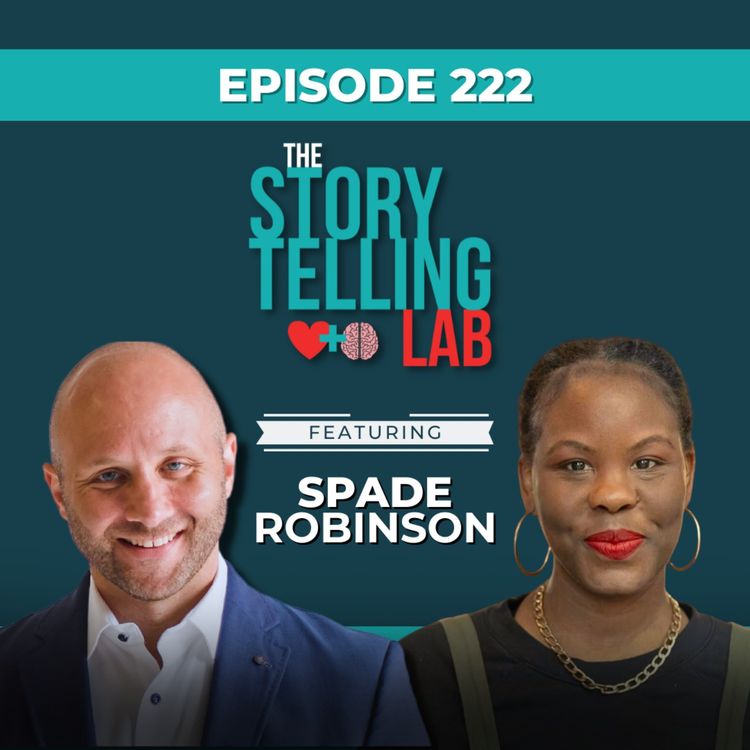
The Courage to Face What Your Story Is Really About with Spade Robinson
What if the difference between an average story and a great one has less to do with talent or skill and more to do with self-awareness?
In this episode, screenwriter and story consultant Spade Robinson breaks down why structure isn’t the enemy of creativity—it’s the foundation that allows it to thrive.
We explore how unforgiveness shows up on the page, why most writers avoid the emotional core of their work, and how discipline in story design eliminates writer’s block.
Spade also shares hard-earned insights from Sundance and the development world about the changing industry, why writers must think of themselves as studios, and how short-form storytelling and brand partnerships may shape the next era of film.
If you care about story craft, emotional truth, and building a sustainable creative career, this conversation will challenge you in all the right ways.
In this episode, you will learn to:
- Strengthen your stories by confronting the internal human question driving them
- Use structure as a creative advantage rather than a limitation
- Eliminate writer’s block by building a strong outline before drafting
- Understand art and commerce must work together in today’s industry
- Position yourself as a creator-studio in an attention-driven economy
Follow Spade Robinson on:
Instagram → https://www.instagram.com/spaderobinson
LinkedIn → https://www.linkedin.com/in/spade-robinson-5588a231/
Website → https://www.atlantafilmproject.com/
And for more storytelling tips and tricks:
Visit → https://rainbennett.com or https://thestorytellinglabpodcast.com
Or, follow along at...
TikTok → https://www.tiktok.com/@chiefstorytellingofficer
Twitter → https://twitter.com/rainbennett
Instagram → https://www.instagram.com/rainbennett
Facebook → https://www.facebook.com/thestorytellinglab
YouTube → https://www.youtube.com/@RainBennett
More episodes
View all episodes
237. The Complete Creator Framework Every Storyteller Needs with Anubhav Srivastava
54:06||Season 15, Ep. 237"The best of the writers know structures are important. And then they forget that they've been intuitively following a structure and tell the world you don't need structure. The rest of the people think they don't need structure and realize by the hundredth page they don't know what the story is going to be." —Anubhav SrivastavaWhat if there was one place where you could brainstorm your story, build your characters, map your world, storyboard your structure, and connect with expert storytellers who could help you take it further? That's exactly what Anubhav Srivastava set out to build. Four years, 17 chapters, and over 2,000 hours into writing his own fantasy fiction novel, Anubhav built VocaTales: a visual story crafting platform designed for planners, organizers, and creative thinkers who need more than a blank page.In this episode, Anubhav breaks down how VocaTales works, how it compares to tools like Scrivener and Miro, and why he built it exclusively for storytellers rather than corporate use cases. He also introduces UpTales, the companion platform where writers can connect with professional editors, writing coaches, and storytelling experts for short calls, long-term coaching, or workshopping their work. Together, VocaTales and UpTales form what Anubhav calls the Creator OS: a full flywheel from the first spark of an idea all the way to publication and beyond.We also dig into what Anubhav has learned from interviewing and collaborating with great storytellers, why structure is the most underrated tool any writer has, and why he believes AI should power your left brain tasks so your right brain can stay free to do what only humans can do. This one is equal parts product demo, storytelling masterclass, and a deeply personal conversation about dharma, self-discovery, and why the best products, like the best stories, are built for the creator first.In this episode, you will learn to:Use structure and story frameworks as a foundation for creativity rather than a constraint on itUnderstand the difference between VocaTales for building your story and UpTales for finding the right expert to help you grow itStart distributing your creative work from day one — not after the final draft is doneUse AI for analytical and efficiency tasks while protecting your creative right-brain work from outsourcingApply the promise, progress, payoff framework to hook readers from your very first lineLinks & ResourcesFollow Anubhav SrivastavaWebsite → https://www.vocatales.comPlatform → VocaTales (story crafting tool) → https://www.vocatales.comPlatform → UpTales (expert storytelling community) → https://www.uptales.comLinkedIn → https://www.linkedin.com/in/anubhavsrivastavaSpecial Offer → Free premium access for TSL listeners → check show notes link at vocatales.com Books Referenced → The Alchemist by Paulo Coelho People Referenced → Brandon Sanderson People Referenced → J.R.R. TolkienFor more storytelling tips and strategies, visit:Website → https://rainbennett.comPodcast → https://thestorytellinglabpodcast.comOr follow along at:TikTok → https://www.tiktok.com/@chiefstorytellingofficerTwitter/X → https://twitter.com/rainbennettInstagram → https://www.instagram.com/rainbennettFacebook → https://www.facebook.com/thestorytellinglabYouTube → https://www.youtube.com/@RainBennett
236. How to Build Narrative Architecture Before AI Builds It for You with Michael Margolis
01:15:43||Season 15, Ep. 236"A narrative lives or dies on the conviction of the most senior authorized leaders of the organizational system. The story is the strategy. A company without a story is usually a company without a strategy." — Michael Margolis | Storied, Inc.What if your organization's stories were the new code base? In this episode, Rain sits down with Michael Margolis, founder of Storied, Inc., and one of the most respected voices in organizational storytelling and narrative strategy, for a conversation that functions as a masterclass in how language, storytelling, and brand messaging actually drive business outcomes in the age of generative AI. Michael has spent over two decades pioneering narrative as a management discipline, working inside Facebook and Meta across 14 product divisions, advising companies like Google, Shopify, Uber, and NASA, and now serving as an operating partner for narrative at Veridical Ventures.This conversation goes deep into the distinction between story and narrative, two words most marketing strategy and brand storytelling content treats as interchangeable but which Michael argues are fundamentally different disciplines. A story is a closed loop with a beginning, middle, and end. A narrative is an open loop, an abstraction, an architecture that every individual story hangs from like an ornament on a Christmas tree. Michael breaks down the four waves of organizational storytelling, from early knowledge management to the social media era's democratization of brand narrative, to his seven years embedded inside Meta building the strategic narrative behind Facebook Groups, to today's narrative economy where large language models are, by definition, narrative machines.Whether you're a founder building brand purpose from scratch, a CMO trying to align your messaging house, or simply someone trying to understand why storytelling has quietly become the literal infrastructure of how modern organizations operate, this episode will change how you think about every word your company puts into the world.In this episode, you will learn to:Distinguish between story and narrative and understand why that distinction is the foundation of effective brand strategyRecognize language debt inside your own organization before it compounds into misalignment and confusionBuild narrative architecture using the thesis, first principles, identity layer, and evidence stack frameworkChoose coherence narratives over controlled narratives to navigate disruption and uncertainty with integrityUnderstand why large language models function as narrative machines and what that means for how you communicate going forwardLinks & ResourcesFollow Michael Margolis:Website → https://www.storiedinc.comLinkedIn → https://www.linkedin.com/in/michaelmargolisBook → Story 10x: Turn the Impossible Into the Inevitable by Michael Margolis https://amzn.to/4eUdxVxFirm → Veridical Ventures → https://www.veridical.vcLearning Platform → Narrative Intelligence courses on Maven → https://maven.com/storied Person Referenced → Steve Denning, founder of Golden Fleece community of practice Person Referenced → Paul Costello Person Referenced → Shane Curry, Deloitte Australia Person Referenced → John Hagel, Deloitte Center for the Edge Person Referenced → Ben Horowitz, Andreessen Horowitz Person Referenced → Jose Velez, Curation LabsFor more storytelling tips and strategies, visit:Website → https://rainbennett.comPodcast → https://thestorytellinglabpodcast.comOr follow along at:TikTok → https://www.tiktok.com/@chiefstorytellingofficerTwitter/X → https://twitter.com/rainbennettInstagram → https://www.instagram.com/rainbennettFacebook → https://www.facebook.com/thestorytellinglabYouTube → https://www.youtube.com/@RainBennett
235. The Content Cascade Strategy Every Brand Needs Right Now
20:45||Season 15, Ep. 235Pre-Order The Chief Storytelling Officer HERE: https://amzn.to/4eihvql"Commercials interrupt people. Shows invite them into the story world. That is the difference between traditional marketing and storytelling." — Rain BennettYour marketing campaign strategy is perfectly executed... and it still flops. The visuals are crisp, the copy is tight, and nobody cares. In this solo episode, Rain breaks down the real reason most marketing fails: it isn't a production problem, it's a storytelling problem. When your marketing isn't rooted in a clear brand purpose, it becomes what Rain calls "story yelling," which is loud, scattered, and ultimately forgettable. This is the fifth installment of the Narrative Operating System series, and it's where brand building and marketing strategy finally collide.Rain walks through how the Chief Storytelling Officer fits into your marketing function. Not to replace your CMO, but to ensure every campaign, every message, and every piece of content traces back to the brand narrative your company intentionally chose. The CSO's job isn't to ask "does this say what we want to say?" It's to ask "does this make people feel what we want them to feel?" That distinction is the entire difference between brand storytelling and traditional advertising.Using Yeti, Cali BBQ, and the Neuroendocrine Cancer Foundation as case studies, Rain shows how the most effective marketing strategies aren't campaigns at all—they're story worlds. He introduces the Content Cascade model as a practical framework for building tent pole projects, supporting stories, and audience amplifiers from a single unified brand messaging strategy. And before you go, he breaks down which metrics actually reflect meaningful connection (watch time, saves, comments, shares) and which vanity metrics to stop reporting on entirely. If your brand purpose is clear but your marketing still feels scattered, this episode is your blueprint. In this episode, you will learn to:Understand the difference between story yelling and storytelling—and which one your brand is currently doingUse the Content Cascade model to build tent pole projects, supporting stories, and audience amplifiers from a single narrativeReplace vanity metrics with story metrics that actually measure connection and community growthAvoid the traps of trend chasing, channel hopping, and virality chasing that derail most marketing strategiesAudit your last 10 pieces of marketing to see if they stem from one unified brand narrative or exist as isolated piecesLINKS AND RESOURCESEpisodes Referenced:EP 225 → Brand: How It Feels to Be Part of Your Story WorldEP 230 → Product: Where Your Story Gets ProvenGuest Referenced → Sean Walcheff, Cali Barbecue Media → https://www.calibbq.mediaOrganization Referenced → Neuroendocrine Cancer Foundation → https://www.ncf.net/Book → The Chief Storytelling Officer by Rain Bennett → Coming August 25th https://amzn.to/4eihvqlFor more storytelling tips and strategies, visitWebsite → https://rainbennett.comPodcast → https://thestorytellinglabpodcast.comOr follow along at:TikTok → https://www.tiktok.com/@chiefstorytellingofficerTwitter/X → https://twitter.com/rainbennettInstagram → https://www.instagram.com/rainbennettFacebook → https://www.facebook.com/thestorytellinglabYouTube → https://www.youtube.com/@RainBennett
234. Steven Pressfield Was 52 (!) Before His First Novel Sold
40:36||Season 15, Ep. 234"A good day is when the flow starts to happen and you kind of lose yourself in it. But you cannot count on those days. So I'm a real believer in grinding — just get in there and take what the defense will give you." — Steven PressfieldORDER THE ARCADIAN HERE: https://amzn.to/4nYHV5eSteven Pressfield is your favorite writer's favorite writer.But years before his best-selling hits like Gates of Fire and The War of Art, Steven Pressfield didn't sell his first novel until he was 52. After over two decades of trying!In Part 2 of our conversation, he and Rain dig into what kept him going, and what keeps him going still.From his daily gym ritual to his philosophy on the Muse, from building a catalog instead of betting everything on one book to his relationship with mentor Robert McKee, this episode is a masterclass in the long game of creative work.If you're in the weeds, struggling to finish, or wondering whether it's too late, this is the conversation you need to hear.In this episode, you will learn to:Build a daily creative habit that beats Resistance even when inspiration doesn't show upThink in catalogs, not single projects, to take pressure off any one piece of workUse physical movement and morning routines as momentum for the creative work that followsTrust the Muse over the market — your least commercial idea may be your most resonant oneEmbrace the long game and stop measuring yourself against overnight success storiesSpecial Thanks to our Presenting Sponsor for this episode, Vocatales → https://www.vocatales.comLinks & ResourcesFollow Steven Pressfield:Website → https://www.stevenpressfield.comInstagram → https://www.instagram.com/steven_pressfield/Book → The Arcadian by Steven Pressfield (out May 2025) https://amzn.to/4dA7yFJBook → A Man at Arms by Steven Pressfield https://amzn.to/4uvYojvBook → Gates of Fire by Steven Pressfield https://amzn.to/4nVT5aTBook → The Legend of Bagger Vance by Steven Pressfield https://amzn.to/4tXWiYMBook → The War of Art by Steven Pressfield https://amzn.to/43wWTWnPerson Referenced → Robert McKeePerson Referenced → Randy Wallace (screenwriter, Braveheart)Person Referenced → Rick RubinPerson Referenced → Jack Carr (thriller writer)Nove/Film Referenced → Project Hail Mary (Andy Weir)For more storytelling tips and strategies, visit:Website → https://rainbennett.comPodcast → https://thestorytellinglabpodcast.comOr follow along at:TikTok → https://www.tiktok.com/@chiefstorytellingofficerTwitter/X → https://twitter.com/rainbennettInstagram → https://www.instagram.com/rainbennettFacebook → https://www.facebook.com/thestorytellinglabYouTube → https://www.youtube.com/@RainBennett
233. Why Most Writers Build Characters Completely Wrong with Steven Pressfield
35:12||Season 15, Ep. 233"Sometimes you write a character that asserts himself—something you didn't plan. It's like he wanted to come back, and he brought his own story with him. It was kind of my job as a writer to ask myself what that story was." — Steven PressfieldORDER THE ARCADIAN HERE: https://amzn.to/4nYHV5eSteven Pressfield is your favorite writer's favorite writer.And in this episode, Rain sits down with him in person in Los Angeles to talk about the craft behind The Arcadian, the new novel in his Telamon series.What starts as a conversation about a centuries-spanning warrior with a karmic curse quickly becomes a writing advice masterclass in how great fiction actually gets made: through instinct, detail, observation, and a willingness to follow a character wherever he leads.Steven breaks down how he discovered Telamon's immortality only after writing him across multiple books, why physical and historical details are what make the impossible believable, and how a 2500-year-old quote from an ancient Greek philosopher became the seed of an entire novel.If you write anything—novels, screenplays, brand stories, or scripts—this conversation will change how you think about finding and following a story.In this episode, you will learn to:- Trust instinct over planning in your writing and follow your characters even when you don't understand where they're going- Use specific physical details to earn the reader's trust before asking them to believe the extraordinary- Find story seeds in quotes, lyrics, and observations, and let them percolate until the full shape emerges- Get the story first and research second to avoid using research as a form of Resistance- Move the camera inside your prose, shifting perspective the way a cinematographer would, to write vivid, immersive scenesSpecial Thanks to our Presenting Sponsor for this episode, Vocatales → https://www.vocatales.comLinks & ResourcesFollow Steven Pressfield:Website → https://www.stevenpressfield.comInstagram → https://www.instagram.com/steven_pressfield/Book → The Arcadian by Steven Pressfield (out May 2025) https://amzn.to/4dA7yFJBook → A Man at Arms by Steven Pressfield https://amzn.to/4uvYojvBook → Gates of Fire by Steven Pressfield https://amzn.to/4nVT5aTBook → The Legend of Bagger Vance by Steven Pressfield https://amzn.to/4tXWiYMBook → The War of Art by Steven Pressfield https://amzn.to/43wWTWnFilm Referenced → Past Lives directed by Celine SongFor more storytelling tips and strategies, visit:Website → https://rainbennett.comPodcast → https://thestorytellinglabpodcast.comOr follow along at:TikTok → https://www.tiktok.com/@chiefstorytellingofficerTwitter/X → https://twitter.com/rainbennettInstagram → https://www.instagram.com/rainbennettFacebook → https://www.facebook.com/thestorytellinglabYouTube → https://www.youtube.com/@RainBennett
232. Why Storytellers Are More Valuable in the Age of AI with Joe Lazer
53:55||Season 15, Ep. 232"AI was going to get better at technical skills like coding and data analysis much faster than storytelling, because it's much easier to objectively define what is correct code. With storytelling, it's much more ephemeral. AI researchers have called it absurd, trying to quantify what good storytelling is." — Joe LazerWhen ChatGPT launched, the headlines were brutal. Storytellers were cooked, creative work was done, they all said. Joe Lazer did what any good journalist would do: he started asking questions. What he found, after two years of salons, research, and interviews with AI developers and future-of-work researchers, was the exact opposite. In this episode, Joe breaks down why AI will make storytelling the most important skill in the new economy.Joe is the co-founder of Contently, author of the new book Super Skill, and one of the sharpest thinkers on the intersection of AI and human-centered storytelling. We get into the neuroscience of why storytelling makes us better at leadership, persuasion, and collaboration; why heavy AI reliance causes a measurable 17% drop in skill mastery; and how to avoid the "vortex of mid" that's pulling most brands toward mediocrity. We also get real about how both of us actually use AI day-to-day, and where we draw the line.In this episode, you will learn to:Understand why AI raises the value of storytelling rather than replacing itRecognize how heavy AI reliance causes measurable skill atrophyAvoid the vortex of mid and stay out of generic AI-flavored contentApply the Unlock, Unleash, and Upgrade framework from Super SkillBuild audience trust through transparency about your AI useLinks & ResourcesFollow Joe Lazer:Website → https://www.joelazer.comBook → Super Skill by Joe Lazer → https://amzn.to/4ublf3WSubstack → Subscribe for a signed copy → https://www.joelazer.com/subscribeCompany → Contently → https://www.contently.comTool Referenced → Verify My Writing → https://www.verifymywriting.comNewsletter Referenced → Rachel Karten (Link in Bio) on SubstackPerson Referenced → Shane SnowConference Referenced → State of the Story by Storytelling360For more storytelling tips and strategies, visit:Website → https://rainbennett.comPodcast → https://thestorytellinglabpodcast.comOr follow along at:TikTok → https://www.tiktok.com/@chiefstorytellingofficerTwitter/X → https://twitter.com/rainbennettInstagram → https://www.instagram.com/rainbennettFacebook → https://www.facebook.com/thestorytellinglabYouTube → https://www.youtube.com/@RainBennett
231. Your Audience's Senses Are Craving This Storytelling Technique with Charlie Melcher
01:05:28||Season 15, Ep. 231"A living story is immersive, embodied, agentic, responsive, and social. It's stories that we get to be in and experience and live — as opposed to dead stories." —Charlie MelcherCharlie Melcher has been on the cutting edge of storytelling for decades—from designing books with J.J. Abrams and Al Gore to building an app that Steve Jobs fell in love with to producing a 6,000-person immersive storytelling summit. In this conversation, he breaks down what he calls living stories: experiences that are immersive, embodied, agentic, responsive, and social, and why he believes they are the antidote to the loneliness and disconnection fueled by passive media.We cover the neuroscience of multi-sensory learning, the dyslexia origin story that put Charlie on this path, and the moment he walked into his team and said, "We're no longer in the book business." We also get into where AI fits into all of this and why Charlie sees it as the great unlock for immersive storytelling at scale.This one will make you see every story you've ever consumed differently.In this episode, you will learn to:Understand what a living story is and how immersion, agency, and embodiment change the way audiences feel and rememberRecognize why limiting storytelling to two senses is leaving most of your audience's emotional capacity untappedUse multi-sensory and physical elements to deepen learning, memory, and emotional connection in any story formatSee how AI will enable personalized, responsive story worlds at scale and why that demands a moral compass from storytellersReframe your own origin story the way Charlie did: not as a limitation but as the thread that explains everythingFollow Charlie Melcher:Website → https://www.futureofstorytelling.orgPodcast → The Future of Storytelling with Charlie MelcherBook → The Future of Storytelling by Charlie Melcher https://amzn.to/4w6gFVQCompany → Melcher Media → https://www.melchermedia.comExperience → Future of Storytelling Explorers Club → https://www.futureofstorytelling.orgBook Referenced → The Extended Mind by Annie Murphy Paul https://amzn.to/42UcU8ABook Referenced → Bowling Alone by Robert Putnam https://amzn.to/4whTtUJBook Referenced → S. (Ship of Theseus) by J.J. Abrams and Doug Dorst https://amzn.to/4f7PvI0App Referenced → Our Choice (iOS app, Apple Design Award 2011)Conference Referenced → State of the Story by Storytelling360Experience Referenced → Meow Wolf: House of Eternal Return (Santa Fe, NM)Experience Referenced → Sleep No More by Punch Drunk TheaterExperience Referenced → The Wizard of Oz at The Sphere (Las Vegas)For more storytelling tips and strategies, visit:Website → https://rainbennett.comPodcast → https://thestorytellinglabpodcast.comOr follow along at:TikTok → https://www.tiktok.com/@chiefstorytellingofficerTwitter/X → https://twitter.com/rainbennettInstagram → https://www.instagram.com/rainbennettFacebook → https://www.facebook.com/thestorytellinglabYouTube → https://www.youtube.com/@RainBennett
230. How a Narrative Operating System Solves the Product Problem That Kills Every Brand
25:18||Season 15, Ep. 230"Your product is not the features, the specs, it's not what you ship. The product is the experience, the transformation that your customer goes through. It's the change in their lives. That's what you're selling." — Rain BennettYou can have a bold vision, a clear mission, and a brand people believe in... and still fail. Because none of it matters if your product doesn't deliver. In this solo episode, Rain breaks down the fourth layer of the Narrative Operating System: Product, the moment where your story is either proven or broken. Using Nike's grassroots origins and screenwriting software Highland Pro as case studies, Rain shows how the best brands don't build products for their customers—they build them with them. He also introduces the Hub and Spoke Model as a practical framework for keeping every feature and offering tied back to your core brand narrative, and walks through the most common product traps (feature bloat, trend chasing, and data misreading) that cause brands to drift and fracture over time.In this episode, you will learn to:Reframe your product as the moment your brand story is proven, or exposedUse the Hub and Spoke Model to keep every product feature tied to your core narrativeBuild with your customers instead of for them by treating listening as a storytelling strategyUnderstand where the Chief Storytelling Officer sits in the product conversation and why it mattersAvoid the three biggest product traps: feature bloat, trend chasing, and misreading data without contextEpisodes Referenced:EP 216 → Vision: The Big Future Story (https://www.thestorytellinglabpodcast.com/items/the-real-reason-your-brand-feels-disconnected)EP 220 → Mission: How You're Going to Get There (https://www.thestorytellinglabpodcast.com/items/%E2%80%9Cvision-is-what-inspires-your-people.-mission-is-what-activates-and-organizes-them.%E2%80%9D)EP 225 → Brand: How It Feels to Be Part of Your Story World (https://www.thestorytellinglabpodcast.com/items/the-real-brand-difference)Guest Referenced → Nelson Farris, first Chief Storytelling Officer at NikeGuest Referenced → John August, screenwriter and founder of Highland ProPodcast Referenced → Scriptnotes with John August and Craig MazinSoftware Referenced → Highland Pro → https://www.highland.appBook → The Chief Storytelling Officer by Rain Bennett → Coming August 25th (https://www.barnesandnoble.com/w/the-chief-storytelling-officer-b-rain-bennett/1149080177?ean=9781636988115)Substack → Subscribe for more NOS content → https://rainbennett.substack.comFor more storytelling tips and strategies, visit:Website → https://rainbennett.comPodcast → https://thestorytellinglabpodcast.comOr follow along at:TikTok → https://www.tiktok.com/@chiefstorytellingofficerTwitter/X → https://twitter.com/rainbennettInstagram → https://www.instagram.com/rainbennettFacebook → https://www.facebook.com/thestorytellinglabYouTube → https://www.youtube.com/@RainBennett
229. The Story Advantage and Why Nobody Has the Same One as You with Bill Blankschaen
48:46||Season 15, Ep. 229"CQ — the character quotient — is who you are at the core of your values, and how consistently people can trust you to be that person. That to me is the exponential topper." — Bill BlankschaenEvery person has a story no one else has. The problem is most people either don't know how to tell it or don't believe it's worth telling. Bill Blankschaen, author of Your Story Advantage and founder of StoryBuilders, has spent over a decade helping thought leaders (from John Maxwell to Lewis Howes)nfind their story, shape it, and use it to grow their impact, influence, and income.In this episode, Bill breaks down the Story Multiplier Formula, the five traps that keep people from ever telling their story, and why the structure he teaches doesn't constrain you, but actually sets you free to be more creative and more effective. He also walks through IQ, EQ, and the often-overlooked "CQ," and why that last one is the only variable that's entirely your choice.If you've got a message inside you that you haven't figured out how to get out, this is your episode.In this episode, you will learn to:Apply the Story Multiplier Formula to turn who you are into measurable impact, influence, and incomeIdentify and break out of the confidence trap, the chaos trap, and the other story blocks holding you backUnderstand the difference between IQ, EQ, and CQ—and why character is the only one you fully controlBuild a story ecosystem with a clear message, a multiplier like a book, and a path to monetizationEdit your story for your audience, not yourself, because your story is about you but it was never for youFollow Bill Blankschaen:Website → https://billblankschaen.com/Free Resources → https://www.yourstoryadvantage.com/free-resourcesBook → Your Story Advantage by Bill Blankschaen: https://amzn.to/4vPjudWCompany → Story Builders → https://mystorybuilders.com/Book Referenced → Never Quit by Glenn Cunningham (https://amzn.to/4tsDFNe)People Referenced → John Maxwell, Lewis Howes, Dean Graziosi, Jason Wilson, Stephen Covey, Hugh HewittAnd for more storytelling tips and strategies, visit:Website → https://rainbennett.comPodcast → https://thestorytellinglabpodcast.comOr follow along at:TikTok → https://www.tiktok.com/@chiefstorytellingofficerTwitter/X → https://twitter.com/rainbennettInstagram → https://www.instagram.com/rainbennettFacebook → https://www.facebook.com/thestorytellinglabYouTube → https://www.youtube.com/@RainBennett