Latest episode
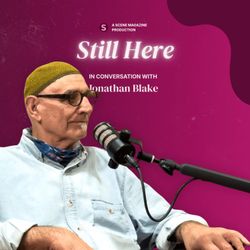
5. London 1: Jonathan Blake
01:08:37||Season 1, Ep. 5In October 1982, Jonathan Blake walked into the Middlesex Hospital in London and was given a number. London 1. He was one of the first people in the United Kingdom to be diagnosed with HIV, told he had between three and nine months to live.He is 76 years old. He is still here.In this episode, Leslie Clarke talks to Jonathan about the life he was living before the diagnosis arrived, the winter of 1982 when he came close to taking his own life, and the chance encounter outside a Bloomsbury bookshop with a man in crimson pantaloons that changed everything.They talk about Jonathan's founding role in Lesbians and Gays Support the Miners, the Pits and Perverts fundraiser at the Electric Ballroom, and the political chain of events that helped bring lesbian and gay rights into the Labour Party manifesto. About watching friends die through the epidemic years. About refusing to take AZT, and why he believes that decision is part of why he survived.About being globally outed at the end of the 2014 film Pride. About U=U, and what it means to no longer feel like a leper. About the HIV science that made Covid testing possible, and why nobody talks about it.And about now: the withdrawal of US aid funding, rising infection rates, and his message to governments who think the work is done.One of the most important voices in LGBTQ+ history. An extraordinary conversation.This interview is featured in Scene Magazine's Summer 2026 Pride Edition, on sale now. Read the full written feature at scenemag.co.uk/london-1Scene+ members get early access to the print edition and exclusive digital content. Join at scenemag.co.uk
More episodes
View all episodes
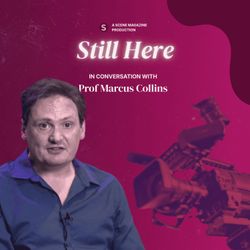
4. Cured, tolerated, erased: the BBC’s first documentary on homosexuality
01:06:58||Season 1, Ep. 4In 1953, the BBC secretly made its first ever documentary on homosexuality. The finished programme was so controversial that it sat on the shelf for four years. When a heavily edited version finally broadcast in July 1957, the original recording was lost. All that survived was a transcript, buried in a filing cabinet in a suburban bungalow in Reading.It stayed there, unnoticed, for decades. Until Professor Marcus Collins, a historian at Loughborough University, opened a folder labelled ‘Sexual Offences, 1953–4’ and found himself looking at a moment of broadcasting history that nobody knew existed.In this episode of Still Here, Leslie Clarke talks to Marcus about what he found, what the transcript reveals about 1950s Britain, and why a lost radio programme made by people who mostly feared and pitied gay men still has something urgent to say today.They discuss:Why the BBC made the programme in secret, and why the director general then vetoed itWho was in the room: the clergymen, lawyers, psychiatrists and one ‘reformed’ homosexual brought on to offer hope of a cureWhat liberal opinion actually looked like in 1957, and how disturbing it still soundsThe connection between the programme’s broadcast and the Wolfenden ReportThe eight-year silence that followed: no factual content about homosexuality on British radio or televisionThe parallels with how trans people are discussed in public life todayHow the transcript became a stage play now heading to Dublin and the Edinburgh FringeMarcus Collins is Professor of Modern History at Loughborough University and was the AHRC BBC Centenary Fellow. His archival research into the BBC’s coverage of homosexuality spans the 1930s to the 1980s.The stage play, The BBC’s First Homosexual, written by Dr Stephen Hornby and produced by Inkbrew Productions, plays at the International Gay Theatre Festival in Dublin and the Edinburgh Fringe in August 2026. A recorded version will be made available for LGBT+ History Month 2027. The play is sponsored by the Arts & Humanities Research Council.Read the Scene article on Scene.Watch the Loughborough University short film.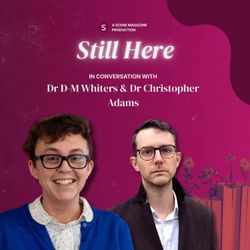
3. Buried in the Archives: The Lost Queer Novel of the 1960s
01:08:34||Season 1, Ep. 3What does it mean to rescue a queer story from the archives? In this episode, host Leslie Clarke sits down with Dr D-M Withers, founder of Bristol-based indie publisher Lurid Editions and Lecturer in Publishing at the University of Exeter, and Dr Christopher A. Adams, playwright, scholar and literary executor to the late Mariana Villa-Gilbert.Together they explore the republication of Villa-Gilbert's 1968 novel A Jingle Jangle Song — one of only around 30 British novels published between 1945 and 1970 to openly centre queer women's lives. They talk about how Adams tracked Villa-Gilbert down via a phone book listing in Cornwall, the typewritten letters that followed, and the extraordinary moment he learned she had left him her entire literary estate.They also get into the history of queer women's literature in Britain, the cultural suppression that followed The Well of Loneliness, and why independent publishers like Lurid Editions are more important than ever in the current political climate.A Jingle Jangle Song is available now from your local independent bookshop or direct from Lurid Editions at lurideditions.com.Resources mentioned in this episode:Book Ban Resources - PEN AmericaHome - 100 Years of The Well of Loneliness Chris's book: Obscenity, Literary Censorship, and Queer British Fiction: The Publishing Closet in the Mid-Twentieth Century: Christopher Adams: Bloomsbury Academic - Bloomsbury
2. Helmut Metzner on LGBTQ+ rights, memory and backlash (German)
48:44||Season 1, Ep. 2This episode is in German.In this episode of Still Here, Leslie Clarke speaks with Helmut Metzner, Chair of the Magnus Hirschfeld Federal Foundation in Berlin, about memory, visibility and the fragile nature of progress on LGBTQ+ rights.Metzner reflects on his long career in politics, his life as an openly gay man, and the work of a foundation tasked with rebuilding queer knowledge and infrastructure destroyed under National Socialism. The conversation spans Germany, the UK and the wider world, exploring how quickly rights can be gained — and how easily they can be lost again.An accompanying long-read article based on this conversation is available in English on Scene Magazine:👉 www.scenemag.co.uk/helmut-metzner-on-memory-visibility-and-the-fragility-of-progress1. Serving in Silence: Craig Jones on the Armed Forces Gay Ban
43:47||Season 1, Ep. 1Hosted by Leslie ClarkeStill Here is Scene Magazine’s new podcast exploring queer resilience, memory and resistance — told through the voices of those who refused to disappear.In our first episode, Leslie Clarke speaks with Craig Jones, former Royal Navy officer and founder of Fighting With Pride, about serving under the Armed Forces Gay Ban, coming out the day it was lifted, and the long fight to secure justice for LGBTQ+ veterans who were dismissed, imprisoned or erased from history.Jones reflects on integrity and fear, institutional change from the inside, and why equality — once won — can never be taken for granted. It’s a powerful conversation about what it means to survive hostile systems and insist on being seen.