Sterilization Station: A Sterile Processing Empowerment Podcast
All Episodes

Transforming SPD Education: Beyond the Classroom with Renee Moran Folds
27:26|Sterile processing educators shape the future of healthcare by developing skilled technicians whose work directly impacts patient outcomes and safety, often in ways that go unseen and unrecognized.• Successful SPD students demonstrate self-motivation, resilience, and the right mindset to overcome challenges• Effective SPD education goes beyond textbooks to include guest speakers, real lab experiences, and discussions about patient impact• Finding externships and mentorship opportunities is crucial for students completing certification requirements• Students should utilize resources like Beyond Clean podcast and network with industry professionals• SPD professionals act as "superheroes without capes," handling instruments that save lives without patient recognition• Building confidence through practice and teamwork helps students master complex skills and information• Current SPD students value hands-on lab experiences and the opportunity to make a difference in patient careFor coaching to elevate your SPD career, visit sterilizationstation.org to explore our three-tier program designed to create your success roadmap.
Trapped or Trained: Why Your Mindset Matters in Sterile Processing
15:36|Mindset is everything in sterile processing, where the difference between fixed and growth perspectives determines your ability to thrive amidst complex challenges and high-pressure situations.• Growth mindset believes abilities improve with effort while fixed mindset assumes skills are static• Real-world examples show how perspective transforms workplace challenges into learning opportunities• Catch negative self-talk and use the power of "yet" to reframe limitations as temporary• Surround yourself with growth-minded colleagues who encourage questions and constructive feedback• Handle mistakes with grace and responsibility rather than defensiveness• Ask better questions about the "why" behind sterile processing procedures• The whole department benefits when individual technicians commit to continuous growth• You're not stuck or behind—you're in a process of development like instruments being preparedKeep growing, keep believing, and keep showing up because the cleanest tools come from the strongest minds. Follow us on Instagram @sterilization_station52 or email questions to sterilizationstation@outlook.com.
28. Tough Love & Tough Topics: What SPD Students Really Need to Hear
22:24||Season 2, Ep. 28Send us a textSterile processing veteran Tameka Jones shares unfiltered insights about what it really takes to succeed in SPD, going beyond classroom theory to prepare students for real-world excellence.• SPD work requires deep understanding of instrumentation, protocols, and manufacturer instructions• Most students underestimate the level of commitment required in sterile processing• The disconnect between classroom learning and floor reality requires personalized instruction• "Return demonstration" teaching ensures students truly understand processes before certification• Sterile processing should be viewed as a starting point with numerous career advancement paths• Making training personal by visualizing preparing instruments for loved ones increases commitment• Military discipline and "one band, one sound" mentality helps maintain excellence even during challenges• Pride comes from knowing your work prevents infections and ensures successful surgeries• Tameka's facility has maintained zero infections over seven years through meticulous practices• Creating supportive environments where everyone's input is valued fosters growth mindsetShare this episode with your SPD class or mentor. Write down your biggest takeaway and tag us with #ToughLoveSPD or #SterilizationStation to join the conversation!Support the show
1. Skills with Jill: From Bedside to Leadership - Building a Culture of Excellence in Sterile Processing with Diana Anderson
15:38||Season 3, Ep. 1Send us a textCuriosity drives quality in sterile processing. That's the fundamental message from Diana Anderson, an 18-year healthcare veteran who transformed her career from bedside nursing to sterile processing leadership by constantly asking "why?" Join us for this fascinating exploration of quality systems in sterile processing as Diana shares practical wisdom gained through her journey. She reveals how understanding the clinical application of instruments creates powerful learning moments: watching a rigid laparoscope connect to a camera or viewing surgical technique videos for orthopedic procedures brings clarity to the meticulous work of reprocessing. Diana's approach emphasizes consistency – standardized processes, regular auditing, and accessible documentation that shows "what good looks like."The conversation delves into real-world challenges every sterile processing department faces: navigating complex manufacturer IFUs, building effective multidisciplinary teams, and fostering partnership with the OR. Diana's innovative solutions include leveraging SharePoint for digital standard work, utilizing electronic tracking systems to display step-by-step instructions, and facilitating cross-training between departments. She emphasizes the value of bringing frontline technicians into improvement discussions since they encounter the daily realities of implementation.What emerges is a philosophy that balances regulatory compliance with practical application. "If it's hard, it's challenging, it's probably the right work," Diana observes, especially when patient safety hangs in the balance. Whether you're new to sterile processing or a seasoned veteran, this episode offers valuable strategies for elevating quality in your daily operations through curiosity, standardization, and collaborative partnership. Connect with Diana on LinkedIn to continue the conversation about building excellence in sterile processing.Support the show
SPD: Your Secret Weapon for Device Success
32:35|Send us a textWhat if the key to your medical device success isn't in the OR, but in the basement? The Sterilization Station podcast uncovers a powerful but overlooked influence on device outcomes - the relationship between sales representatives and Sterile Processing Departments.Host Bill Rishell welcomes Gyda Loveres, an experienced medical device sales leader who started her career by dropping off trays at SPD. Their conversation reveals how treating SPD professionals with respect, communication, and emotional intelligence transforms transactional interactions into partnerships that drive success."Treat people like people," Gyda emphasizes throughout this eye-opening discussion. SPD teams juggle countless priorities while ensuring patient safety through proper instrument reprocessing. When sales representatives recognize these challenges and communicate effectively, everyone benefits - especially patients.The episode explores practical strategies for building productive SPD relationships, from advance communication about cases to small gestures like separating dirty instruments. Gyda shares how strong SPD partnerships have "saved her butt" countless times, with staff alerting her to competitor activities and protecting her instruments. Meanwhile, Bill offers the perspective that reps are "patients" deserving exceptional service.Whether you're a medical device professional seeking better case outcomes or a sterile processing technician navigating vendor relationships, this conversation provides actionable insights to transform your approach. The message is clear: the SPD-sales connection isn't just about logistical efficiency—it's about recognizing our shared humanity in service of better patient care.Want to build stronger bridges between SPD and sales? Listen now and discover how communication, respect, and collaboration create a win-win scenario for everyone involved in the surgical care journey.Support the show
AI Meets SPD: Transforming Instrument Management
32:24||Season 2Send us a textEtay Gafni, founder of LayerJot, shares how AI technology is transforming sterile processing by supporting technicians with instrument identification and tray management solutions. His company's innovations help SPD teams work more efficiently while improving accuracy and reducing workload.• LayerJot began after visiting an SPD department and recognizing the challenges technicians face memorizing thousands of instruments• Building AI that can recognize surgical instruments required tens of thousands of photos and specialized algorithms to identify subtle differences• SID (Surgical Instrument Directory) provides free access to a catalog of 3.5 million instruments through mobile app or website• New SID 4.0 features include the ability to scan count sheets to instantly access instrument information• Count Sheet AI helps departments manage their instrument lists with standardized descriptions and images• Tray Inspector allows comparison between physical instruments and count sheets to identify equivalents or mismatches• ORStats uses AI cameras in operating rooms to track which instruments are actually used during procedures• Data from ORStats helps facilities reduce tray sizes by 30-50% through evidence rather than opinion• LayerJot's philosophy focuses on supporting rather than replacing SPD professionals• All products available through layerjot.com with free options and trial periodsAccess LayerJot's free SID app at layerjot.com or through app stores to start exploring their surgical instrument catalog today.Still using outdated count sheets that slow you down with errors and confusion? Say goodbye to guesswork and hello to Count Sheet AI—an intelligent tool that transforms messy lists into clean, image-rich, standardized sheets in seconds. ⚙️ Save time, boost accuracy, and simplify SPD workflows today. 👉 Click to learn more: https://qr.me-qr.com/l/sterilizationstationSupport the show
Every Tray Tells a Story: Why There Are No Routine Days in Sterile Processing
14:41|Send us a textIn this episode of Sterilization Station, we challenge the dangerous mindset of “just another day” in sterile processing and uncover the deeper purpose behind every shift. Behind every tray, scope, and instrument is a real patient — someone’s story, someone’s life. Your hands are part of their healing.🔍 In This Episode:💡 Why “just another tray” is never just that — each one holds a human story.⚠️ The real danger of becoming desensitized to the importance of our work.🧠 Visualization techniques to reconnect with your purpose and see the people you serve.🔄 Six mindset shifts to transform routine into meaningful contribution.🌙 How every shift — day, evening, and overnight — carries unique impact and value.🪞 Moving from a mindset of recovery to reflection after long, demanding shifts.🎉 Why celebrating invisible wins matters — and how to do it meaningfully.What you do today echoes forever.Stay sharp. Stay sterile. Stay lit with purpose. Because this is not just another day.💡 Tools We Trust:🔧 Countsheet AI By LayerJot – Automate documentation, reduce errors, and reclaim time in SPD.Interested to learn more how countsheet ai can helo your hospital, surgery center, etc: https://na01.safelinks.protection.outlook.com/?url=https%3A%2F%2Fqr.me-qr.com%2Fl%2Fsterilizationstation&data=05%7C02%7C%7Cd8807713c72047e3722808ddadb26475%7C84df9e7fe9f640afb435aaaaaaaaaaaa%7C1%7C0%7C638857703908806457%7CUnknown%7CTWFpbGZsb3d8eyJFbXB0eU1hcGkiOnRydWUsIlYiOiIwLjAuMDAwMCIsIlAiOiJXaW4zMiIsIkFOIjoiTWFpbCIsIldUIjoyfQ%3D%3D%7C0%7C%7C%7C&sdata=zQOjRcwCJ3dW2CFZworURgbA0tLqs%2FBk19WhkfrOl3k%3D&reserved=0📬 Connect with Us: 🌐 www.sterilizationstation.org 📧 sterilizationstation@outlook.comSupport the show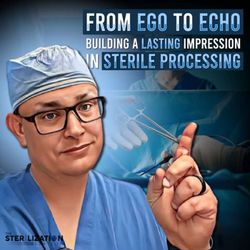
From Ego to Echo: Building a Lasting Impression in Sterile Processing
18:49|Send us a textEvery day in sterile processing, we're writing our legacy not with ink or on resumes, but through how we make people feel and the impact we leave on others.• The difference between ego and legacy: ego seeks personal recognition while legacy focuses on who we've helped grow• Five legacy killers: saying "it's not my job," correcting to control rather than coach, needing to be the smartest person, holding grudges, and belittling others• Ways to build lasting legacy: speaking encouragement aloud, being consistent, apologizing quickly, owning mistakes, and defending others when they're not present• Your name carries a narrative—what story will follow when people mention you after you're gone?• You will be remembered not by how many trays you processed, but by how many hearts you touched while processing them• If you don't like the legacy you're creating, it's never too late to rewrite your storyIf you're seeking coaching or leadership training, please reach out. We have a three-tier program available to help you grow in your profession.Support the show
loading...