Stealth Boom Boom: A Stealth Video Games Podcast
All Episodes
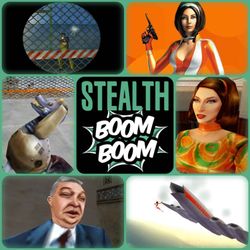
15. The Operative: No One Lives Forever Review | 11 Senses, Cate Archer, Not Parody
02:21:47||Season 3, Ep. 15A group of men that worked in the world of educational software used to get together and play Doom multiplayer one day wondered if they could make their own games. So, they called themselves Monolith Productions and got to work. We’re going back 25 years to 2000 to take a look at a first-person shooter set in stylised 1960s. We’re talking The Operative: No One Lives Forever.On this episode of Stealth Boom Boom, we chat a little bit about the removal of Adam Church and MI0 to avoid comparison to James Bond, the importance of Fox Interactive coming onboard when they did, and why the Scottish protagonist sounds the way she does. We also look at them trying to create distance between NOLF and Austin Powers, unsigned musicians, and the 11 (or maybe 2?) senses bad guys have in the game.Here are some of the things you’re gonna hear us chat about in our review: the weird limbo the rights live in and a community that’s kept the game playable; some very cool stealth ideas, very few of which appear to actually come off; an Agent 47 coin that is usable if you hammer the quick save; a loving poodle, a magic body remover, a hair clip lockpick are fun in theory, and they do help… sometimes; a ludicrously powerful crossbow; decent 25-year-old PC shooting with charming falls; Moonraker; a groovy nightclub; Sheriff J.W. Pepper; surprisingly long conversations that lack dynamism and thus don’t demand one’s attention; the lead singer of Keane; a really strong protagonist in Cate Archer; and an absolute cracker of a theme song.After all that, we take you through what some of the critics were saying about the game around the time it came out, and then we give you our final verdicts on whether The Operative: No One Lives Forever is a Pass, a Play, or an Espionage Explosion.For those who would like to play along at home, we'll be discussing, reviewing and dissecting Far Cry 2 on the next episode of Stealth Boom Boom.IMPORTANT LINKS TO THINGS🎧 Subscribe to Stealth Boom Boom🌤️ Stealth Boom Boom on Bluesky🐦Stealth Boom Boom on Twitter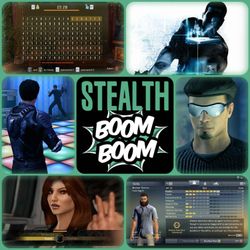
14. Alpha Protocol Review | Natural Dialogue, Invisible Thumping, Shooting Skill Trees
03:04:52||Season 3, Ep. 14Despite being made up of people with many years of experience, Obsidian Entertainment – arguably one of the more beloved developers making games today – were still very much in their early years while making this James Bond, Jack Bauer, and Jason Bourne-inspired game. We’re going back 15 years to 2010 to take a look at a third-person shooter-cum-RPG featuring a rookie secret agent whose surname is not Thornton. We’re talking Alpha Protocol.On this episode of Stealth Boom Boom, we chat a little bit about cult classics, yivwovs, and a very 007-esque CG trailer. We also look at an absolutely phenomenal music video that reminds you of the protagonist’s name, how you can’t see everything in one playthrough, and what the people of 2013 would remember about this game.Here are some of the things you’re gonna hear us chat about in our review: CD Projekt Red putting this game back on sale; hivemind bad guys that can see you from a distance that’s hard to measure with alarms you can turn off, which makes you think there’s an evasion mode (we don’t think there is???); turning invisible because why not; a stealth skill tree that is both expensive and necessary for someone looking to do any sneaking; is it a pacifist run if you’ve absolutely battered five fellas on your way to the objective in a level?; the quick save discussion returns; a distinct lack of RPG-style variation in gameplay scenarios; the shooting is adequate post-Gears of War fare; individual skill trees for each weapon type; the tension of trying to pick a lock while a nearby guard patrols the halls; fiddly menus; odd crouch walking and a resistance to hopping over waist-high walls; the outrageous Brayko boss fight; a cast of wacky characters that resemble Foxhound from a fake game; the majesty of the Dialogue Stance System and how it should’ve been copied many times in the last fifteen years (see Oxenfree and LA Noire for shades of it); how Michael Thorton’s in-game consequences compares to JC Denton’s; and seriously… why isn’t he just called Thornton?After all that, we take you through what some of the critics were saying about the game around the time it came out, and then we give you our final verdicts on whether Alpha Protocol is a Pass, a Play, or an Espionage Explosion.For those who would like to play along at home, we'll be discussing, reviewing and dissecting The Operative: No One Lives Forever on the next episode of Stealth Boom Boom.IMPORTANT LINKS TO THINGS🎧 Subscribe to Stealth Boom Boom🌤️ Stealth Boom Boom on Bluesky🐦Stealth Boom Boom on Twitter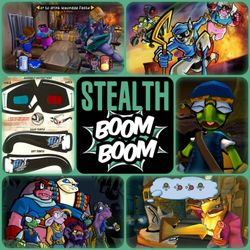
13. Sly 3: Honor Among Thieves Review | A Growing Gang, Empty Hubs, Disconnected Story
02:13:28||Season 3, Ep. 13For a record-breaking fourth time – a second time this year alone – we are looking at a game from the back catalogue of Sucker Punch Productions. And this series is special to this podcast, because it is the very first game we ever reviewed. We’re going back 20 years to 2005 to take a look at a stealth action mascot platformer featuring a thieving North American mammal. We’re talking Sly 3: Honor Among Thieves. On this episode of Stealth Boom Boom, we chat a little bit about some wonderfully silly telly ads, a box that is delightfully of the era, and how this studio was always planning to work on something different after this game. We also look at two workman-like trailers, and Sly Cooper taking the leap into 3D (we cannot confirm if Stuart or Hong Kong ever got to experience third dimension raccoon).Here are some of the things you’re gonna hear us chat about in our review: stealth mechanics that were introduced in Sly 2 return – hiding under tables, staying out of the light emitting from baddies’ lanterns, being mindful of running because it creates more noise – but you don’t have to engage with them as much; Sekiro horn guys; limited disguises and face button passwords; a less repetitive mission structure because of FIVE new playable characters with their own gimmicks; a Crackdown leap; binge drinking lemonade and an overload of mini games; hub areas that don’t need to be nearly as big as they are; less of an incentive to pickpocket than the previous game; Doom Eternal’s upgrade screen; hoarding coins, just in case; Splinter Cell’s sticky cam; Bentley’s character growth; Assassin’s Creed IV: Black Flag naval combat; a disappointing, disconnected story with a forgettable antagonist; the best version of the series’ motion comic-style cutscenes; and Vita-specific VO. After all that, we take you through what some of the critics were saying about the game around the time it came out, and then we give you our final verdicts on whether Sly 3: Honor Among Thieves is a Pass, a Play, or an Espionage Explosion.For those who would like to play along at home, we'll be discussing, reviewing and dissecting Alpha Protocol on the next episode of Stealth Boom Boom.IMPORTANT LINKS TO THINGS🎧 Subscribe to Stealth Boom Boom🌤️ Stealth Boom Boom on Bluesky🐦Stealth Boom Boom on Twitter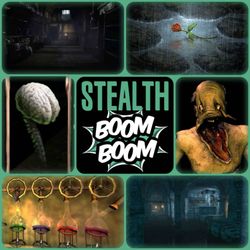
12. Amnesia: The Dark Descent Review | Managing Sanity, Touching Objects, Unnerving Sound
02:06:41||Season 3, Ep. 12We’re revisiting a developer on this episode that had an idea with with the Penumbra series that would revolutionise the horror genre. But not until they refined it and popularised said idea with the game we’re looking at on this episode. We’re going back to 2010 to take a look at a first-person survival horror game set in 1800s Prussia. We’re talking Amnesia: The Dark Descent.On this episode of Stealth Boom Boom, we chat a little bit about the very first Humble Indie Bundle, the concept of self, and how the audio was created with pipes and descriptions. We also look at the beginnings of recording yourself while playing a game, how the studio went from Lux Tenebras to Unknown before they settled on a final name, and whether or not there is too much death in video games.Here are some of the things you’re gonna hear us chat about in our review: a few quick thoughts on the Justine DLC; serviceable nuts and bolts stealth with rules that you’re not fully aware of; Alien: Isolation and Outlast type monsters that might show up when they want, maybe?; the push and pull of trying to balance your mental well being with getting out of the light and hiding from enemies in the dark; an outrageously weak protagonist; questioning whether or not the person eating Minstrels by your ear is real our not; the feeling of pulling open drawers and pushing open doors; puzzles that trust the player to use common sense and figure things out; a very dark storage area; trying to deal with invisible monsters splashing about in water; Memento; a decent idea for a story with a protagonist that is hard to care about; and Mike Wazowski.After all that, we take you through what some of the critics were saying about the game around the time it came out, and then we give you our final verdicts on whether Amnesia: The Dark Descent is a Pass, a Play, or an Espionage Explosion.For those who would like to play along at home, we'll be discussing, reviewing and dissecting Sly 3: Honor Among Thieves on the next episode of Stealth Boom Boom.IMPORTANT LINKS TO THINGS🎧 Subscribe to Stealth Boom Boom🌤️ Stealth Boom Boom on Bluesky🐦Stealth Boom Boom on Twitter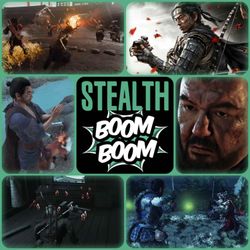
11. Ghost of Tsushima Review | Accessible Sekiro, The Feeling, Chasing Foxes
02:36:32||Season 3, Ep. 11We’re back after our summer holidays and kicking off the second half of season 3 by looking at a particular Washington-based developer that we’ve looked at many times before, Sucker Punch Productions. After chatting about two-thirds of their raccoon trilogy on this very podcast, we’re taking a look at something that is much more recent, much more grown-up, much more samurai. We’re going back to 2020 to take a look at an open-world, action-adventure game set during the first Mongol invasion of Japan. We’re talking Ghost of Tsushima.On this episode of Stealth Boom Boom, we chat a little bit about tourism, whether Akira Kurosawa mode is just a black and white filter and nothing more, and there’s what some people are calling “a surprising amount of Infamous chat”, too. We also look at how they tried to balance authenticity with audience expectation, finishing a game during a global pandemic, and there’s a heated discussion about wind.Here are some of the things you’re gonna hear us chat about in our review: outrageously quick load times; stealth that encourages speed over patience; some very enjoyable, very familiar outpost-clearing; the power of Focused Hearing; loads of tall grass; the feeling of a sequel to Assassin’s Creed 2; being hated by samurai as you fling kunai, wind chimes, and sticky bombs about; undercover Batman; sword-fighting that feels like accessible Sekiro: Shadows Die Twice, whilst also engaging the player with a number of different things to consider; no lock on; announcing your arrival at the beginning of a fight; taking on one other opponent in a duel; running after foxes, slicing bamboo, and one or two other things that are absolutely everywhere on this very large map; an uninspired grappling hook; an island that is too big for some and the right size for others; Samuel Taylor Coleridge; Ishikawa’s student; a plot that would’ve worked better in a more linear game; using Ghost tactics and feeling completely fine; and our clothing choices.After all that, we take you through what some of the critics were saying about the game around the time it came out, and then we give you our final verdicts on whether Ghost of Tsushima is a Pass, a Play, or an Espionage Explosion.For those who would like to play along at home, we'll be discussing, reviewing and dissecting Amnesia: The Dark Descent on the next episode of Stealth Boom Boom.IMPORTANT LINKS TO THINGS🎧 Subscribe to Stealth Boom Boom🌤️ Stealth Boom Boom on Bluesky🐦Stealth Boom Boom on Twitter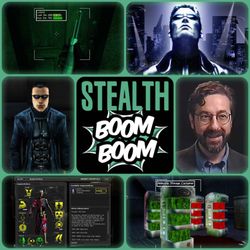
10. Deus Ex Review | Active Augmentations, Stealth Exploration, A Reactive World
03:02:15||Season 3, Ep. 10In the late 90s, John Romero convinced Warren Spector to join his studio in order to make the game of his dreams. This game was something Spector had been thinking about since 1993. It had a couple of names over the years – Troubleshooter being one, and Shooter: Majestic Revelations being another – but one thing remained the same: it was ambitious. We’re going back to 2000 to take a look at a first-person shooter, that is also a stealth game, that is also an RPG – so I guess we can call this one an immersive sim. We’re talking Deus ExOn this episode of Stealth Boom Boom, we chat a little bit about Ion Storm’s origins, Daikatana, and how one developer was going to make you his bitch. We also look at how that Dallas attitude affected Austin, the difficulty in marketing a game that’s quite different to everything else out there, how being a pacifist is okay actually, and how single player games are not dead.Here are some of the things you’re gonna hear us chat about in our review: the Revision mod; stealth systems that are reliable, but working underneath, meaning you have to mostly go on vibes; being seen is just part of your story rather than failure; THE QUICK SAVE; looking at every possible route to sneakily get around the world; the glorious lockpicking waggle; the invisibility cloak; weak small arms for those that want to kill quietly; the beast riot prod and the even beaster lightsaber Dragon’s Tooth sword; permanent a/b choices that really make you think about your build; draining bioenergy; remembering to turn off your augmentations; TORCH EYES; the GEP gun, the LAM, and all of this game’s wonderfully silly explosive weapons; managing the Resident Evil style inventory; boss encounters that don’t betray the game; kill phrases; your first encounter with the NSF on Liberty Island; buying drinks in Hong Kong’s Lucky Money club; conspiracy theories now vs conspiracy theories then; predictions that have come to pass (and others that have not); changing the course of its plot and how characters react to your actions and decisions in ways that never stop being brilliant; and that absolute stone cold classic of a theme song.After all that, we take you through what some of the critics were saying about the game around the time it came out, and then we give you our final verdicts on whether Deus Ex is a Pass, a Play, or an Espionage Explosion.For those who would like to play along at home, we'll be discussing, reviewing and dissecting Ghost of Tsushima on the next episode of Stealth Boom Boom.IMPORTANT LINKS TO THINGS🎧 Subscribe to Stealth Boom Boom🌤️ Stealth Boom Boom on Bluesky🐦Stealth Boom Boom on Twitter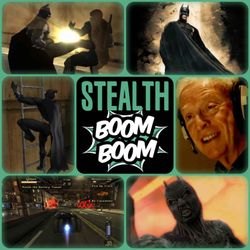
9. Batman Begins Review | Arkham Prototype, Scaring Goons, Acrobatic Gremlin
02:12:34||Season 3, Ep. 9In 2005, filmmaker Christopher Nolan was about to become mainstream with the first movie in his superhero trilogy. Meanwhile, a group of developers in Derby were working on a video game tie-in for said movie that wouldn’t turn out to be quite as popular. We’re taking a look at an action adventure game that was neither a precursor to a game based on The Dark Knight, nor The Dark Knight Returns. We’re talking Batman Begins.On this episode of Stealth Boom Boom, we chat a little bit about trailers that feature Batman smiling, Trailer Voice Man, and Phoenix International. We also look at how important it was for this to be an interactive version of the movie in almost every way, as well as a cavalcade of celebs: a disinterested Morgan Freeman, a bloodthirsty Cillian Murphy, anbemused Michael Caine, and a Christian Bale that thinks all this video game stuff is a complete waste of time.Here are some of the things you’re gonna hear us chat about in our review: the first glimpses of many things that would become staples in the Arkham games; instilling fear in your enemies by interacting with very specific parts of the environment; goons dropping their guns when they’re scared; the optic cable from Splinter Cell; an exceptionally violent inverted takedown; familiar punching and kicking, as performed by a more acrobatic, yet less fluid Batman; the weird context-sensitive special move thing; NO BATARANG BUSINESS; climbing things with 70% arm and 30% leg; bonus Game Boy Advance opinions; a lack of yellow paint; training in the Himalayas; driving the tumbler around Gotham like it’s a Burnout game; dingy rooms illuminated by beams of light coming through blinds; restrictions vs limitations; being rewarded(?) with clips from the film in between levels; odd differences in the narrative; Gary Oldman’s absence; and a lockpicking minigame that’s the same every single time.After all that, we take you through what some of the critics were saying about the game around the time it came out, and then we give you our final verdicts on whether Batman Begins is a Pass, a Play, or an Espionage Explosion.For those who would like to play along at home, we'll be discussing, reviewing and dissecting Deus Ex on the next episode of Stealth Boom Boom.IMPORTANT LINKS TO THINGS🎧 Subscribe to Stealth Boom Boom🌤️ Stealth Boom Boom on Bluesky🐦Stealth Boom Boom on Twitter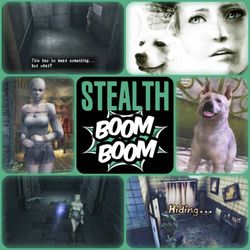
8. Haunting Ground Review | Dog Bonding, Dark Themes, Dodging Pursuers
02:24:31||Season 3, Ep. 8Imagine a game so successful that during the making of it, you actually end up coming up with three games. That’s what Capcom did when they were prototyping Resident Evil 4. They got that, they got Devil May Cry and they also got the game we’re talking about on this podcast. We’re going back to 2005 to take a look at a survival horror that didn’t get quite as many sequels as those other series just mentioned. We’re talking Haunting Ground.On this episode of Stealth Boom Boom, we chat a little bit about the much better Japanese name of DEMENTO, as well as a tagline that Josh likes and doesn’t like at all. We also look at a trailer with a lot of slobbering and panting, their reasons for including a dog, and mo-capping said dog.Here are some of the things you’re gonna hear us chat about in our review: being reactive after you are definitely spotted by one of your pursuers; hiding under beds, inside wardrobes, and behind doors; Alien: Isolation; a distinct lack of fear; special hiding spots; Hewie the attack dog; fairy earrings; the sound of vase-breaking vs dog-barking; how much your bond with your pooch; German Shepherd-sized holes; some real headscratchers of puzzles; some of the flattest boss fights; shoddy glowing fireflies; Resi 4 comparisons; nice-looking maps that are a bit hard to read; a story with some heavy sexual themes, delivered through some ludicrous characters and dialogue; Manhunt; the strangely calm Fiona Belli; setting the scene via static camera angles; the looks of a late PS2 game; and a wonderful lack of loading screens. After all that, we take you through what some of the critics were saying about the game around the time it came out, and then we give you our final verdicts on whether Haunting Ground is a Pass, a Play, or an Espionage Explosion.For those who would like to play along at home, we'll be discussing, reviewing and dissecting Batman Begins on the next episode of Stealth Boom Boom.IMPORTANT LINKS TO THINGS🎧 Subscribe to Stealth Boom Boom🌤️ Stealth Boom Boom on Bluesky🐦Stealth Boom Boom on Twitter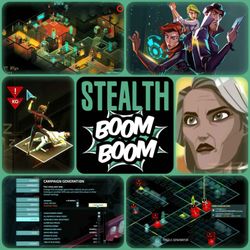
7. Invisible, Inc. Review | Risk vs Reward, Incognita, The Slow Chase
01:59:13||Season 3, Ep. 7After the launch of Don’t Starve, Canadian developer Klei Entertainment was on solid ground in every way. They’d put their hand to many genres and had been successful in pretty much all of them. We’re going back to 2015 (or 2013, if you want to include this game’s EARLY early access launch) when they revisited sneaking, but put a different spin on what they’d done before. We’re talking Invisible, Inc.On this episode of Stealth Boom Boom, we chat a little bit about why this game changed its name, and what stealthy aspects they could explore here that they didn’t in Mark of the Ninja. We also look at trying to enjoy the journey in difficult games, rather than just seeking the reward; and we chat about how much we enjoy early access vs its importance to devs. Here are some of the things you’re gonna hear us chat about in our review: Soliton Radar: The Game; red, yellow, and blue EVERYWHERE; peeking around corners to uncover more of the map; Monaco: What’s Yours Is Mine; a camera you don’t have full control of; a procedurally-generated table that’s just in the way; a slow and exhilarating chase; forecasting the movement of guards; five rewinds; single malt; the wonderfully-balanced and easy-to-use Incognita; Gunpoint; collections of boxy rooms with samey heists that blur together; finding the exit and then deciding what to do next; 72 hours; the auto thump; a ever-rising security level; Metal Gear Acid; breaking your pal out of their cell; an entirely irrelevant plot; some colour in character bios; and generating a campaign where a ko'd enemy stays down for 100 turns.After all that, we take you through what some of the critics were saying about the game around the time it came out, and then we give you our final verdicts on whether Invisible, Inc. is a Pass, a Play, or an Espionage Explosion.For those who would like to play along at home, we'll be discussing, reviewing and dissecting Haunting Ground. on the next episode of Stealth Boom Boom.IMPORTANT LINKS TO THINGS🎧 Subscribe to Stealth Boom Boom🌤️ Stealth Boom Boom on Bluesky🐦Stealth Boom Boom on Twitter
loading...