Share
Stateside with Kai and Carter
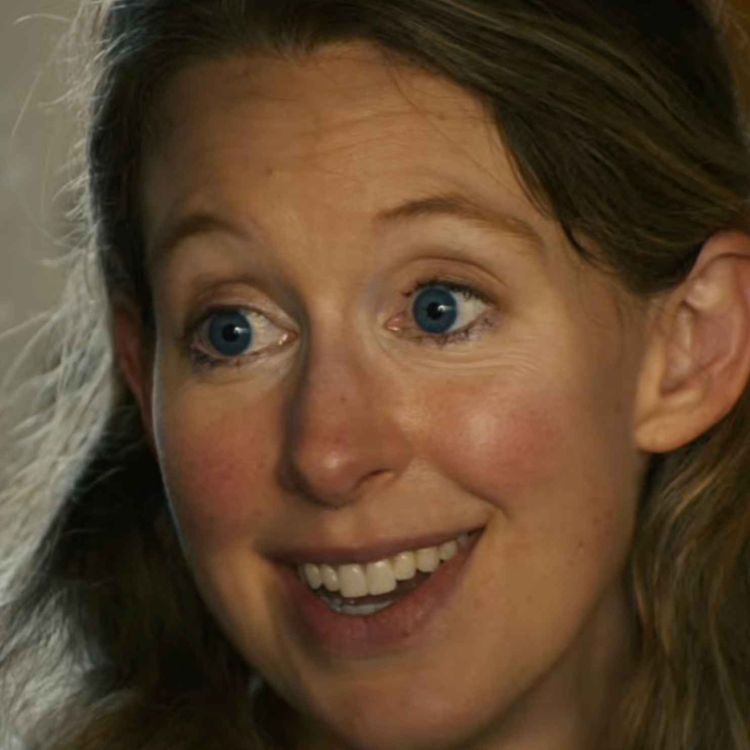
The 'trad wife-ification' of Elizabeth Holmes
•
Nathan Fielder and Lance Oppenheim’s You Can See Everything has packed movie theaters and set records at the box office. It’s also kicked off a debate about, well, pretty much everything that happens on screen – including whether the film's subjects, notorious fraudster Elizabeth Holmes and her mysterious partner Billy Evans, can ever be trusted. Carter Sherman and Guardian arts writer Adrian Horton break down Horton's five-star review of the film, analyze Evans's most shocking moments and chart Holmes' trajectory from girlboss to (maybe) tradwife. They want to know: how did ideas about gender and sex shape this film? Contains spoilers
Image credit: A24
More episodes
View all episodes

Who will win the midterm elections? Ask Latinos
38:07|Are the Democrats really going to take Texas? If there is going to be a blue wave, as polling suggests, winning the Lone Star State is going to be essential. James Talarico, the Democratic candidate for US Senate, is currently leading against Ken Paxton, a scandal-ridden, political survivor. Even the governor’s race in Texas, pitting Greg Abbot, the current governor, against Gina Hinojosa is within the margin of error. These elections, and ultimately control of the US Congress, are likely to be decided by one key demographic – Latinos. Hispanic men were key to Donald Trump’s 2024 win. But news commentator Carlos Eduardo Espina and pollster Stephanie Valencia tell Kai Wright there are signs that the economy, the Trump administration’s mass deportation campaign and Republican redistricting efforts are backfiring and Latinos seem to be swinging back to Democrats this year. Espina and Valencia break down what we really mean by “the Latino vote” and how those voters might just swing right back next election if Democrats aren’t careful.Image Credit: AP
Louisiana’s “blatantly unconstitutional” eviction system
40:57|A nine-month Guardian investigation has revealed that when a landlord evicts someone in Louisiana, they can choose to file the eviction in a venue where a portion of the court fee goes directly into the pocket of the judge.The Guardian found one justice of the peace in the suburbs of New Orleans who may well be the highest paid judge in the country. His court took in nearly $1 million in revenue last year. And he personally took home over $400,000. Somehow, this is all legal. Kai Wright speaks with Guardian US southern bureau chief Oliver Laughland and data editor Will Craft about the real life ramifications of this system for tenants and Laughland and Craft explain how they dug through more than 11,000 pages of eviction records to discover this little noticed judicial system that evicts thousands of people a year. A former judge called the system “blatantly unconstitutional.”Oliver Laughland and Will Craft’s Guardian investigation on the “Big Business” of evictionsImage credit: Annie Flanagan
These four elections could change the world in 10 days
20:41|Benjamin Netanyahu is in the fight of his political life. Voters in Israel are heading to the polls today to decide an election that could determine whether Netanyahu will remain the country's prime minister (and affect the outcome of the corruption charges against him). But the Israeli election also arrives at a time when voters around the world seem to be rejecting authoritarianism. A student-run movement stunned the world on Sunday when its candidates routed Serbia's long-serving leader, Aleksandar Vučić. That same day, Brazilians beat back a campaign by Flávio Bolsonaro — the son of Jair Bolsonaro, the disgraced former president — in a historic upset. Carter Sherman speaks to Julian Borger, the Guardian’s senior international correspondent, about how these four elections could reshape the political world order in just 10 days, and why the upcoming US midterm elections are the biggest test for global democracy.Julian Borger on ten days that could shake the worldImage credit: Amir Cohen/Reuters
Raids, arrests and lawsuits: how Trump is trying to steal the midterms
40:40|This week, the Department of Justice charged 28 green card holders in California over alleged voter fraud. It’s the latest move by the Trump administration to crack down on noncitizen voters, and part of a wider push to throw the results of the midterms into doubt. In today's episode, Carter Sherman and Kai Wright are joined by George Chidi and Sam Levine, two reporters who have spent years covering Donald Trump’s attacks on voting rights. They analyze the tactics being used to purge voter rolls, and look ahead to how Trump might react if the results on election day don’t go his way.Image credit: AFP/Getty Images
Abortion is on the ballot. Why is no one talking about it?
39:49|When the US supreme court overturned Roe v Wade in 2022, millions of people got angry — and voted on it, making abortion was one of the top issues in the 2022 and 2024 elections. But now, during this year’s midterms, it seems like abortion has fallen out of the headlines. Candidates aren't discussing it nearly as much as they used to, while voters say it's no longer as important to them — even though four states are voting directly on ballot measures that deal with abortion access. One state could even reinstate its near-total abortion ban.How did this happen? Co-host Carter Sherman, a longtime abortion rights reporter, speaks with co-host Kai Wright about this election's effects on abortion rights, how bans are imperiling women and why the Trump administration might attack abortion rights after the midterms.
Everything is expensive. Robert Reich explains who is to blame
33:54|The vast majority of Americans say they are struggling to pay for gas and groceries, and are cutting back on luxuries. But what or who is actually behind these price rises? We asked you to tell us what's gotten too expensive in your own life. Now, Kai Wright and Carter Sherman enlist Guardian columnist and former labor secretary Robert Reich to explain why you’re feeling the pinch. From breaking down the market factors behind the cost of a $16 cheesesteak, to explaining why AI is playing into the price of a Nintendo Switch 2, Reich reveals who you should point the finger at in this economy. Additional music by Epidemic SoundRobert Reich has written this week’s edition of How We Win, a pop-up opinion newsletter with bold ideas for defeating Trumpism. Sign up hereSend us your questions on how the US economy is shaping the US election
Timothy Snyder says Trump is weak. Can Democrats take advantage?
41:45|As the midterms approach, Donald Trump is continuing to make strongman moves: banning reporters from the White House; trying to remake Washington DC’s architecture in his name; putting "Dear leader"-style videos on television. But historian Timothy Snyder tells Kai Wright that what this really is, is a sign of weakness. And even as the Democrats seemed poised to win the midterms, Snyder argues that the Democrats need to take bold, decisive action if they do win. They have to investigate cases of obvious personal corruption among the people surrounding Trump and try everything they can to get money out of politics. Snyder is the author of On Tyranny and one of the first scholars to warn that the Trump movement presented a threat that looked like fascism.
Could Trump’s plan to suppress voters backfire in the south?
13:27|The biggest question in US politics may be whether Democrats can ever win in the south. In this year’s midterms, Georgia has once again emerged as a bellwether. The state has shifted from deep red to purple for the last several election cycles and remains a frontline state in the battle over voting rights. In a recent Stateside with Kai and Carter live event in collaboration On Air Presents, hosts Kai Wright and Carter Sherman were joined by Guardian contributing writer Charles Blow and political reporter Shrai Popat for a lively conversation about everything at stake in Georgia – including why Jon Ossoff needs Keisha Lance Bottoms to win the governor’s race if he hopes to run for president in 2028, what Donald Trump might do to intervene in the election, and how any voter suppression moves could backfire in the south.