Share
Stateside with Kai and Carter
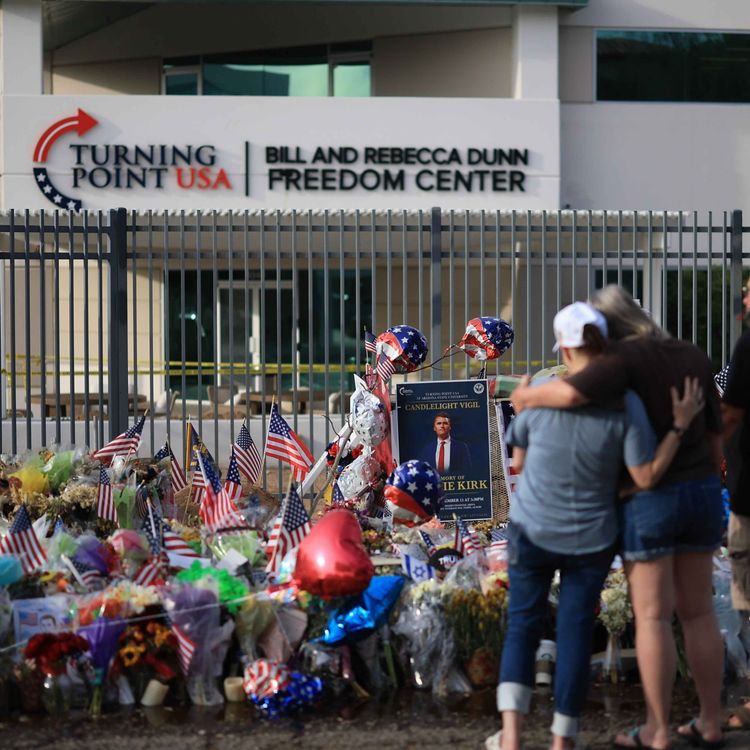
Charlie Kirk became a martyr. Then the conspiracy theories started
Charlie Kirk's death created a vacuum of power that still consumes the Maga right a year later. Immediately after Kirk was shot and killed, his ultraconservative activist organization Turning Point USA announced that his widow, Erika Kirk, would replace her late husband as CEO. But as Guardian reporter J Oliver Conroy tells Kai Wright, conspiracy theories pushed by Kirk's former allies and proteges have dogged both the organization and Erika Kirk herself. Real questions remain about whether Erika Kirk can maintain the enormous power and influence Turning Point holds on the right and what she is planning to do with the organization. Conroy spent months reporting on Charlie Kirk’s legacy talking to dozens of people within Turning Point USA and the larger Maga movement who view Charlie Kirk as a martyr. Conroy says martyrdom is a powerful force that can’t be controlled.
- J Oliver Conroy's Guardian story on Charlie Kirk and Turning Point USA: Grief, fury, conspiracy: inside Turning Point USA after Charlie Kirk’s killing
More episodes
View all episodes

Are we living in the End Times? With Naomi Klein and Astra Taylor
41:09|In a new book, writers Naomi Klein and Astra Taylor have created a term to define the era we are living in: End Times Fascism. A response to the climate crisis, the rise of the far-right and advancing AI technology, they spell out how the damage being wrought by the super-rich is becoming normalized. Klein and Taylor join Carter Sherman to talk about the recent events that have made us all feel like we’re hurtling towards the apocalypse, and how we can fight back through ‘hereness’.End Times Fascism And The Fight For The Living World is out now.
Why the real AI apocalypse is already here
17:19|A former Anthropic researcher’s apocalyptic declaration about artificial intelligence has led to a global panic that the technology might be the end of us all. At an event in Washington today to warn about the dangers of AI, US senator Bernie Sanders said that Congress has been ‘asleep at the wheel'. Oddly, Steve Bannon appeared at the same event. But is this response a distraction from the more immediate problems AI is already causing? Kai Wright and Carter Sherman are joined by Guardian tech reporter Johana Bhuyian to put this moment in context, and she explains why we should be cynical about industry calls for regulation
Taylor Lorenz on the global effort to ban kids from social media
37:09|What are we going to do about kids and social media? Lawsuit after lawsuit has accused the biggest social media platforms in the US of designing their products to be addictive and of endangering children. Meta recently settled one of those lawsuits, agreeing to pay up to $17.1bn in penalties and to limit how kids use its platforms, like Instagram and Facebook. (They did not admit to any wrongdoing.) The rest of the world is embracing a different solution that tech journalist Taylor Lorenz tells Carter Sherman would forever change the way we use the internet: social media bans. Last year, Australia became the first country to ban people under 16 from social media, and this week, the European Union is expected to propose a similar ban. If it goes into effect, the EU ban would be, by far, the world’s biggest effort to block kids from social media. But, as Lorenz points out, these laws raise all kinds of questions about civil liberties, data privacy, and the future of free speech on the internet.
25 years after 9/11, is Islamophobia in the US at an all-time high?
39:20|In the hours after the 9/11 attacks, the journalist Rozina Ali remembers her parents telling her that as Muslims, they would now be under suspicion. It took years for Ali to understand what they meant. She talks to Carter Sherman about this journey and how it led her to write about the history of Islamophobia in the US. Ali explores how attacks on Muslims by successive administrations since 9/11 cemented Islamophobia in all areas of American life, and she explains why she believes these prejudices are more pervasive now than ever.Seasons of Fury: Four Families, and the Rise of Islamophobia in America by Rozina Ali is out now
Summer break!
01:45|Stateside with Kai and Carter is taking a short end of summer break.We'll be back with new episodes after Labor Day.Make sure to catch previous episodes on YouTube, Apple, or Spotify. See you soon!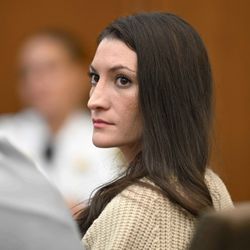
Lindsay Clancy killed her children. Here's why so many women still support her.
33:51|The trial of Lindsay Clancy, a former nurse accused of murdering her three children, is wrapping up its fifth week. On Friday morning, the defense rested, and the public attention to the case is at a fever-pitch — especially on social media. Clancy, 36, does not deny that she strangled her children, but has pleaded not guilty due to lack of criminal responsibility, also known as an insanity defense. She argues that she was in the throes of postpartum psychosis, a rare and devastating condition that can go unrecognized and untreated. Host Carter Sherman speaks with Jenna Amatulli, deputy head of news for Guardian US, about how the case has renewed attention on the fundamental shortcomings in America's maternal healthcare system, and about why Clancy's story has captivated—and polarized—so many people.Correction added September 1st 2026: This episode referenced a study that appeared to overstate the prevalence of postpartum depression in the US as more than 80%. In 2020, the Centers for Disease Control found that about 1 in 8 women in the U.S. report experiencing symptoms of postpartum depression up to 6 months after giving birth. This was based on data the CDC analyzed from the Pregnancy Risk Assessment Monitoring System (PRAMS).
Seeing Gaza through the eyes of a trauma surgeon
39:07|Ten months into a ceasefire in Gaza, Israel and Hamas seem like they are no closer to a real end to the war. Israel reportedly says they will carry on with their military operation until Hamas fully disarms. Hamas has said they will not begin disarming until Israel begins withdrawing. At the center of it all are Gazans living without the basic infrastructure of electricity, water sanitation and hygiene. Kai Wright speaks with two surgeons – Dr Mark Perlmutter and Dr Feroze Sidhwa – who worked under those conditions. The doctors are at the center of the new documentary, American Doctor, which chronicles what they witnessed first-hand while volunteering on the frontline in a Gaza hospital. The film follows the doctors and a third, Dr Thaer Ahmad, in their work on the ground and their subsequent return to the US to tell the media and congress what they saw.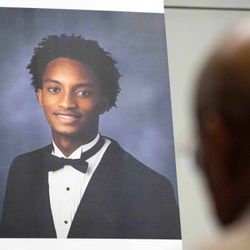
Why Nolan Wells’ death made Black parents say the quiet part out loud
41:34|When 18-year-old Nolan Wells went missing, his story immediately touched a nerve in Black families. He was last seen while hanging out with a group of white friends, at a popular beach near Ocean Springs, Mississippi. Nolan never came home from the trip, and he was found dead days later. Many questions about how he died remain unanswered publicly. And the mystery surrounding his death has revived an old conversation within Black communities: are we ever truly safe in white-dominated spaces? Who will feel responsible for our children’s safety when we send them out into a world where Black life is not valued? Host Kai Wright talks with historian Stacey Patton and writer Ashley Stoney about why Nolan Wells’ story has captured so much attention – and sparked so much anxiety – among Black parents, in particular. What does our collective reaction to Nolan Wells’ disappearance and death reveal about the limits of interracial society today?