Share
Stateside with Kai and Carter
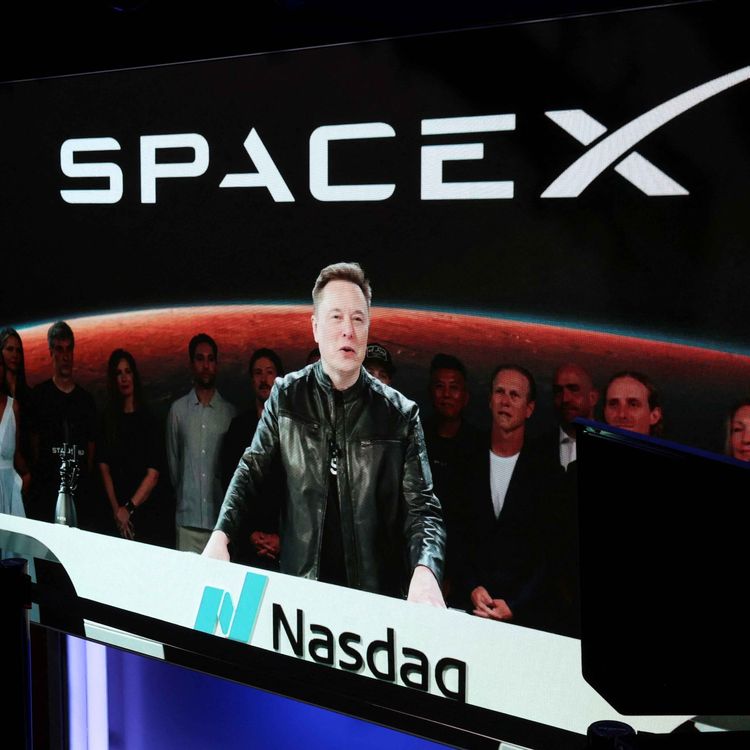
Elon Musk is a trillionaire now. Is that bad for the economy?
•
Elon Musk has become the world’s first trillionaire thanks to his company SpaceX, which now has the biggest IPO of all time. Public trading in the company has put it's valuation at over $2tn. The eye-watering sums of money pouring into AI are also boosting other tech titans, including OpenAI and Anthropic. Both companies are expected to go public this year with nearly trillion-dollar valuations. The Guardian’s US tech editor Blake Montgomery tells Kai Wright that with these IPOs, all our financial futures are forever tied to AI’s success, and more worryingly, its possible failure
More episodes
View all episodes

How Iranians are coping with the Iran war
33:43|With negotiations to end the war in Iran now underway, experts widely agree that the Iranian government has the upper hand. But if the regime emerges from the war stronger than before, what does it mean for the people of Iran? Carter Sherman speaks with Shirin Jaafari, a journalist for the World who focuses on the Middle East, about her reporting on Iranians living through war, a devastated economy and a government that executes people who dare to protest. Carter and Kai Wright also speak about the lasting effect of this war in the US – and what Americans have already lost.Oliver Holmes on the global cost of US-Israel war against IranJason Burke’s analysis of the peace agreement between the US and Iran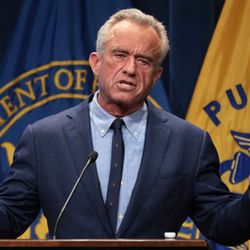
The unproven autism treatment taking off under RFK Jr
39:04|Parents of children with autism are turning to a controversial stem cell treatment backed by the US Health Secretary. A growing number of clinics in the US are charging parents tens of thousands of dollars for stem cell therapy, which is being given to children as young as 18 months old. The Guardian’s chief reporter Ed Pilkington tells Kai Wright about his months-long investigation into the providers of these treatments, and their connections to the health secretary, Robert F Kennedy Jr. He also spoke with figures in the science community who fear the FDA may be loosening its rigorous restrictions on stem cell treatment for autism
What happens when Trump drives you out of the United States?
47:49|A far-right, white supremacist ideology known as “remigration” aims to make life so punishing for immigrants that they leave the US. It’s also the policy of the Trump administration. There’s an "office of remigration" in the state department and the Department of Homeland Security has posted on X in support of it, saying: “The stakes have never been higher and the goal has never been more clear: Remigration now.” Carter Sherman speaks with journalist and author Paola Ramos about the immigrants who have made the difficult decision to leave the US, and how their departure could spell the death of the American Dream.Paola Ramos’s Rolling Stone article, The Great Reverse Migration
How Trump is changing the World Cup
39:09|When the US, Mexico and Canada submitted their winning World Cup bid, they predicted that Donald Trump would not be president in 2026. That prediction didn't exactly pan out – and now, as the tournament begins, Guardian soccer correspondent Jeff Rueter explains how Trump's America is rewriting the rules of the World Cup. Jeff also previews fun teams to watch, while Kai and Carter reveal who they’re rooting for. (Hint: it's not the US.)
How fighting Amazon made Chris Smalls a celebrity: 'My life changed'
39:01|In 2022, Amazon workers at a fulfillment center in Staten Island made history by voting to form a union. Their leader was fired Amazon worker Chris Smalls, who became something of a celebrity within the labor movement. Smalls left the union amid internal tensions, and has gone on to become a freelance activist since. He speaks with Kai Wright about being arrested while protesting the Jeff Bezos-funded Met Gala, and why courting attention is an effective form of activism. Smalls’ new book When the Revolution Comes is out now.
Knicks v Spurs: the NBA finals a billionaire can’t ruin
37:41|After winning Game 1 of the NBA finals, the New York Knicks are one step closer to winning a championship that has eluded them for 53 years. New Yorkers are feeling elated, but the Knicks are going to have to get through 7ft4in Victor Wembanyama of the San Antonio Spurs, who just might be the next face of the league. Kai Wright speaks with the Guardian’s Andrew Lawrence about who exactly these teams are, and why despite all the money flowing through the sport, this is a series for the people.Read Andrew Lawrence on Knicks billionaire donor James Dolan.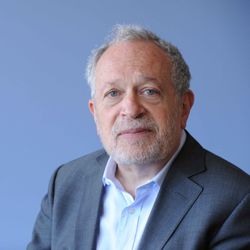
Robert Reich on how Trump's slush fund loss is an opportunity for Democrats
33:59|This week the bipartisan furor over Donald Trump’s $1.8bn slush fund escalated to the point that the administration balked, saying they are no longer moving forward with it. But Robert Reich, a Guardian columnist and former US secretary of labor, says the fund, and specifically, the additional detail of the settlement giving Trump and his family immunity from future IRS audits, are the essence of corruption – and if Democrats can successfully connect that corruption to the affordability crisis, they might just have a winning message on their hands.Robert Reich: 'The language of the American presidency doesn’t apply to Trump'Read Reich’s newsletter on how Democrats could tie the affordability crisis to Trump administration corruption
The comedian taking on AI datacenters
35:14|Last summer, Wisconsin comedian Charlie Berens started getting messages from people in his state about plans for a major datacenter in their community. When Berens dug in, he was shocked to discover the impact the datacenter would have on local residents. So he responded with comedy. The video he posted online about the datacenter went viral, and Berens has been on the frontlines of the fight against datacenters ever since. Carter Sherman speaks to Berens about how he is using his comedy as a tool for activism