Latest episode

Could Trump’s plan to suppress voters backfire in the south?
13:27|The biggest question in US politics may be whether Democrats can ever win in the south. In this year’s midterms, Georgia has once again emerged as a bellwether. The state has shifted from deep red to purple for the last several election cycles and remains a frontline state in the battle over voting rights. In a recent Stateside with Kai and Carter live event in collaboration On Air Presents, hosts Kai Wright and Carter Sherman were joined by Guardian contributing writer Charles Blow and political reporter Shrai Popat for a lively conversation about everything at stake in Georgia – including why Jon Ossoff needs Keisha Lance Bottoms to win the governor’s race if he hopes to run for president in 2028, what Donald Trump might do to intervene in the election, and how any voter suppression moves could backfire in the south.
More episodes
View all episodes

Cornell’s Jane Doe wants justice. Why is that so hard to get?
40:22|The internet is on fire with demands for justice for Jane Doe, the anonymous woman who alleges she was gang-raped at a Cornell fraternity house in 2024. Doe has filed a civil lawsuit, and law enforcement has reopened her case – but did Cornell fumble its Title IX investigation into her case? Title IX is a federal civil rights law that is supposed to protect against sexual discrimination in schools, including protecting young people against sexual assault and harassment. But in practice, it rarely works. Host Carter Sherman, a longtime sexual violence reporter, speaks with civil rights lawyer and Title IX expert Alexandra Brodsky about how the Trump administration has spent the last decade warping Title IX – and why #metoo never really made its way onto college campuses. If the law is broken, what can be done to fix it?• Information and support for anyone affected by rape or sexual abuse issues is available from the following organizations. In the US, Rainn offers support on 800-656-4673. In the UK, Rape Crisis offers support on 0808 500 2222. In Australia, support is available at 1800Respect (1800 737 732). Other international helplines can be found at ibiblio.org/rcip/internl.html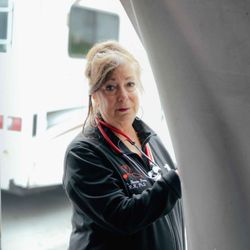
A nurse was attacked by ICE agents on camera. Now she wants justice
38:15|Earlier this year, the ACLU filed more than 50 legal claims across 17 states on behalf of people harmed by federal immigration agents. One of them is Norma Bowe. Norma is a nurse and grandmother who was working at her mobile medical clinic outside the Delaney Hall immigration center when protests broke out there in May. An ICE officer flung her to the ground while she was still wearing her stethoscope. In today’s episode Kai Wright speaks to Norma about why she is fighting back, and why her work continues to be vital for family members of people stuck in immigration detention.This nurse was assaulted by ICE - and it was caught on video. Now she wants her day in court
Mahmoud Khalil is ready to talk About ICE detention
43:35|After more than a year of legal limbo, Mahmoud Khalil is preparing to ask the US supreme court to hear his deportation case – and if they take it up, the outcome could have sweeping ramifications for political speech in the US. When Khalil was detained by ICE for his role in student protests at Columbia University, it was widely understood as a test case. Khalil was a legal permanent resident with a green card. The Trump administration claimed his advocacy on behalf of Palestinian people made him a threat to US foreign policy. Kai Wright speaks with Khalil about his new book, No Land To Stand On, which details what happened after ICE snatched him up, flew him across the country and deposited him in a for-profit detention center. Khalil and his wife, Noor Abdalla, share their family’s experience – how, with a newborn child, they fought to keep Khalil in the US, and how they’re facing the reality that the Trump administration is still trying to deport him.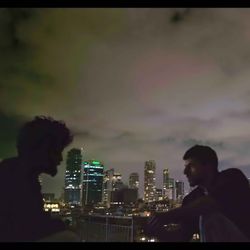
Why is Israel so afraid of the film NAZA? We spoke to its directors
47:53|When the documentary NAZA premiered at the Venice international film festival earlier this month, it sent shockwaves across the globe. Composed of interviews with 24 anonymous Israeli intelligence officers and soldiers, NAZA is a haunting exposé of the tools that the Israeli military uses to carry out the remote killing of Palestinians in Gaza – including AI, mass surveillance, and devastating airstrikes that kill civilians and raze homes. Now, the Israeli government is treating NAZA like a national security crisis. Its prime minister, Benjamin Netanyahu, is even pushing for legislation that could strip the film's two directors of their Israeli citizenship. Host Carter Sherman speaks with the directors of NAZA, Yuval Abraham and Rachel Szor, in one of their first interviews with an American journalist. The film, which was produced by the Guardian, will open in New York on September 30th and will play in theaters across the US starting October 9th. It will also stream, for free, on the Guardian website in November.Read some of the Guardian reporting that NAZA builds on:‘The Gospel’: how Israel uses AI to select bombing targets in GazaRevealed: Israeli military creating ChatGPT-like tool using vast collection of Palestinian surveillance data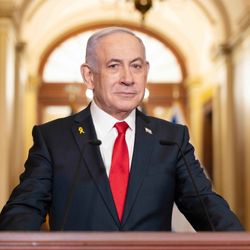
Has Netanyahu lost America?
28:22|Benjamin Netanyahu lands in New York today to speak at the UN general assembly. This visit marks the Israeli prime minister's first time in the city since Mayor Zohran Mamdani vowed to arrest him for war crimes – and it's happening as support for Israel among US voters is taking an unprecedented plunge. Sixty percent of Americans now have an unfavorable view of Israel. (In 2022, only 42% of Americans said the same.) But what does this mean for Netanyahu’s hold on US politics? And how will it play into Israel’s October elections? Kai Wright and Carter Sherman are joined by two reporters with different perspectives on the Netanyahu story. Andrew Roth spent time reporting from Israel and the West Bank this summer, and Alice Speri has covered the pushback against Israel in Democratic politics here in the US.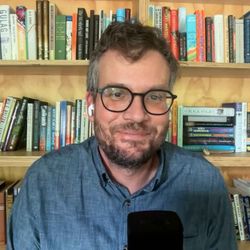
John Green wanted to be famous. Now what?
47:49|John Green is probably as famous as an author can get. His 2012 young adult novel The Fault In Our Stars sold more than 20m copies, got adapted into a Hollywood hit film, and catapulted to a level of success that he’d always longed for. And yet, all that left him feeling empty. Now, after nearly a decade away from fiction, Green is back with his first novel for adults, Hollywood, Ending. In a very meta conversation with Carter Sherman, Green explains how interviews can be maddening, explores his own insecurities around fame, and argues that social media has trained all of us to sell our private lives as products. Carter and John also talk about his success as a pioneering YouTube creator alongside his brother Hank Green and Hank's recent dustup over his use of AI.