Share
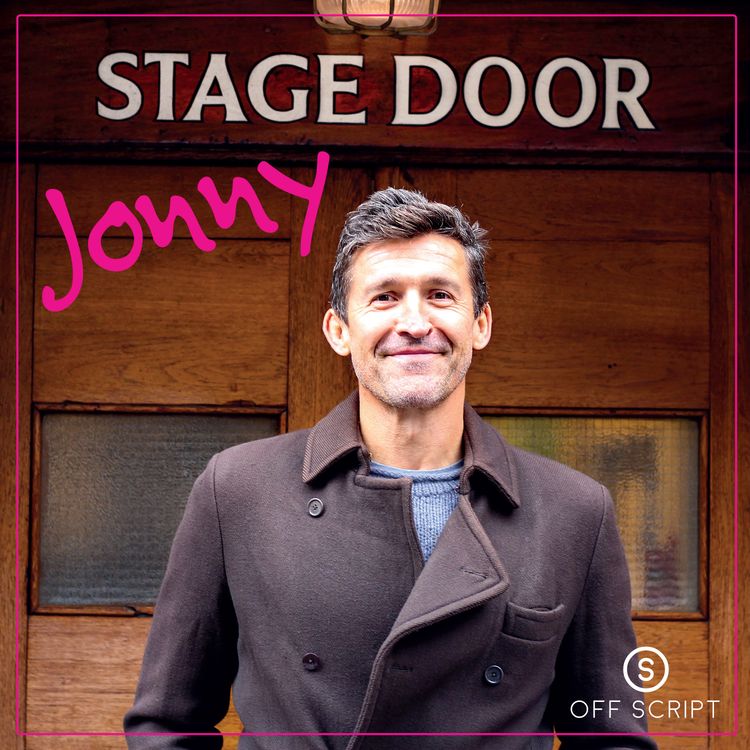
Stage Door Jonny
Sir Greg Doran (Act I)
Jonny’s guest for his 100th episode is class on a stick. Sir Gregory Doran is the former artistic director of the Royal Shakespeare Company, for 35 years and with the late Sir Anthony Sher one half of one of the most celebrated power couples in British theatre (and possibly the first pair of married Knights). In this episode Jonny and Greg reminisce about meeting on Derek Walcott’s Odyssey, Greg’s padded bra and a portrayal of Lady Anne that silenced his bullies, memories of Tony Sher’s groundbreaking Richard 3rd, being taught a painful lesson by his future husband (that Tony had learned by being kicked up the arse by Jonathan Pryce), how Flaubert helped Greg become a director, killing the laughs at a matinee by announcing the Nobel Prize winner, how new shoes crashed Titus Andronicus’s jeep, throwing crockery at his leading man, Tony Sher’s occasional torment, writing about death as though it were Tony’s next great role and how they are still collaborators after death (on a new book), as they were in life.
More episodes
View all episodes
5. Rajiv Joseph (Act II)
36:13||Season 7, Ep. 5In the second part of Jonny’s chat with Rajiv Joseph, the playwright tells Jonny about his work with and love for Robin Williams, the source of Robin’s sadness, his feelings about actors who ad lib, the spiritual faith in his work, whether he feels artistically invaded by Trump, a political landscape “like jello” and how to respond as a writer to our times, his interest in the teenage T-Rex, why everything feels faster when a gun is out, why he looks back at his early plays with envy, how much of a cannibal he is, Jonny’s theory of why the UK government supports the arts and the US doesn’t, being in search of the undeniable and Rajiv’s prescription for a better life.5. Rajiv Joseph (Act I)
41:42||Season 7, Ep. 5Jonny’s guest this week is playwright Rajiv Joseph, author of Bengal Tiger at the Baghdad Zoo and Guards at the Taj among many others. The conversation starts with Jonny confessing to forgetting Paul Rudd, how prolific Rajiv is, his need to write, what a “duty” to writing means and why Senegal was so important to him, starting with Jez Butterworth on Broadway and their different processes, Rajiv’s seductive pro debut as an actor, being a spoiled prince, how he’s not like Tom Stoppard in a rehearsal room, being told no by Kenny Leon, what he wants from a director and from his actors, Rajiv’s rules for endings, his dread of silence after the last line and why stories may be harder to finish in the theatre.4. Minnie Driver (Act II)
40:48||Season 7, Ep. 4In Act II of their live chat, Minnie and Jonny discuss the collaborative experience of Grosse Point Blank and Good Will Hunting, the duality of fame on Oscar night, falling in love with her co-stars, why relationships between actors don't work (not enough space in the bathroom mirror), Jonny’s courtship of the stage manager, the person who changed Minnie as an actor, wanting to do Shakespeare, not being able to get a job in the theatre, the challenge of dealing with our appearances as we age in public, what pisses her off about the theatre, Sexual Perversity in Chicago and why Matthew Perry changed his performance, the advice she would give to young actors, what Ben Power means to Stage Door Jonny, the power of Every Brilliant Thing and the wisdom of Robert Altman.4. Minnie Driver (Act I)
34:24||Season 7, Ep. 4Jonny’s show this week comes live from Bedales School in Hampshire, with old Bedalian and national treasure Minnie Driver. Minnie tells us about the values of the school that gave her tools to live by in Hollywood, why she ran away as a child, being sent to Miami on her own by her dad at age 11, why children like adults (its because they rather pity them), being mentally vengeful, turning pain into profit, trying to be heard, fighting for what she thought was right in Every Brilliant Thing, watching her crush, Daniel Day-Lewis, play football, the advice he gave her, being in a swimsuit in an Oldham winter in her first job and vociferous Northern audience members.3. Christopher Abbott (Act II)
49:53||Season 7, Ep. 3In part two of Jonny’s chat with Chris Abbott they discuss Arthur Miller and the edge of embarrassment, Chris’s thoughts on the extraordinary final scene of Salesman and how to do it afresh each night, just saying the first line and letting go and how to be generous onstage; having an action, grabbing Nathan Lane’s face onstage, a quick shift of recording location to Chris’s bedroom, the suggestion of violence Chris brings onstage, the life he brings off the text, responding to what the NYT theatre critic wrote in praise of his performance and whether we feel free onstage; what he needs from a director, freedom in a House of Blue Leaves with Ben Stiller and in John with Annie Baker and Sam Gold, what pisses him off about the theatre, knowing “how to backstage” and his longing for the experimental.3. Christopher Abbott (Act I)
46:03||Season 7, Ep. 3This week's episode brings you one of America’s hottest young actors, bubbling under as a major star since Girls and now ready to pop, the man described onstage by Nathan Lane after the final performance of Death of a Salesman as “the best actor i’ve ever worked with onstage”. It's Christopher Abbott. He and Jonny discuss clearing up boxes and making a nest for the baby he was about to have with the great Aubrey Plaza; the German word that Chris has in common with the very first Willy Loman; his psychological setting that has to do with religious roots and losing them; Chris’s interest in phenomenology; his first performance as Hark (the Herald Angel), coming from a working class area in a big town, cinema as church, believing he had a knack from the beginning, how much we perform for the other actor or the audience and what Kenny Lonergan said about Jonny’s performance in Salesman; Chris’s retirements, self-confidence, his own father watching him play a tortured son and his hardscrabble beginnings in the business.2. Wallace Shawn (Act II)
29:03||Season 7, Ep. 2In part two of Jonny’s chat with the legendary Wallace Shawn, they discuss Wally’s awareness of the audience when he’s acting, writing his first play at 10 (about Socrates and his own death), the puppet shows he kept writing until his early 20’s, the pure ecstasy of his early experiences of Eugene O’Neil and knowing Long Day’s Journey had something to say about the secrets in his own family, the part he still hopes to one day play and the influence of O’Neill on Moth Days; moving from puppet shows in people’s living rooms to doing his scabrous anti-capitalist monologue The Fever in other people’s living rooms; and trying to make theatre that is “one tiny influence on people” whilst knowing theatre has its work cut out to influence anyone.2. Wallace Shawn (Act I)
45:22||Season 7, Ep. 2This week Jonny’s guest is one of the radical icons of American theatre: writer, essayist and actor Wallace Shawn. Surely one of the most vocally and visually recognisable actors in the world after a screen career ranging from Vizzini in The Princess Bride to Rex the Dinosaur in Toy Story to Dr Sturgis in Young Sheldon, to My Dinner With Andre as himself, Wally has been at the forefront of some of the most boundary-pushing and innovative theatre work of the last forty years. The conversation ranges from the “sexually perverse” show that began his theatregoing career (Peter Pan) to his latest onstage outing understudying a female part in his most recent play, What We Did Before Our Moth Days; the profound experience of a Christmas pageant; the influence of England and English theatre artists on his life and career; the startling controversy of his first London play (it was raided by the Vice Squad and questions were asked in Parliament); his father, legendary New Yorker editor William Shawn’s, resistance to obscenities, the runaway hit that he was deprived of by the British government; voyeurism in the theatre; Andre Gregory, Grotowski and not acting onstage- and who cries the tears: actor or character?1. Joe Mantello (Act II)
51:40||Season 7, Ep. 1Part two of Jonny’s chat with actor/director Joe Mantello starts with a discussion of the response to their production of Death of a Salesman, the staging details that bothered some people, the director as dad, the award that was Joe’s professional pinnacle (and the closest he’s come to feeling like a parent), wrangling problem child like Glenda Jackson, his praising policy and how it’s changed over the course of his career, the early success that led to a reckoning with himself , how the production of a Balm in Gilead broke him open artistically, the pure experience of acting in Angels in America, the thrill of a bare stage, collaboration with Sondheim, his virtuosity with new plays and his relative lack of classics, his debt to Terence McNally, missing shows when you’re a little sad and the joys of his bonus round.