Share
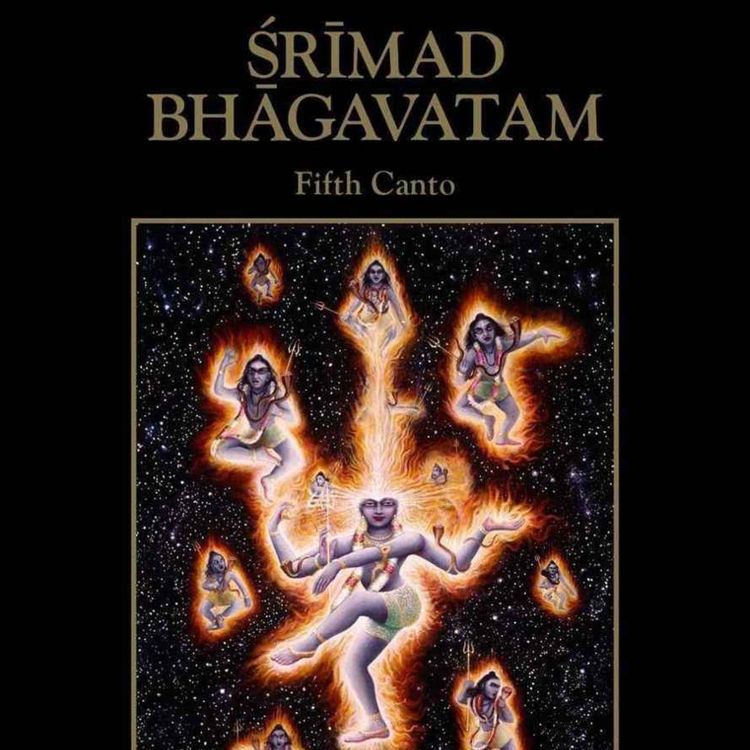
Srimad Bhagavatam Canto 5 Translations and Purports
Chapter 04: The Characteristics of Ṛṣabhadeva, the Supreme Personality of Godhead
In this chapter, Ṛṣabhadeva, the son of Mahārāja Nābhi, begot a hundred sons, and during the reign of those sons the world was very happy in all respects. When Ṛṣabhadeva appeared as the son of Mahārāja Nābhi, He was appreciated by the people as the most exalted and beautiful personality of that age. His poise, influence, strength, enthusiasm, bodily luster and other transcendental qualities were beyond compare. The word ṛṣabha refers to the best, or the supreme. Due to the superexcellent attributes of the son of Mahārāja Nābhi, the King named his son Ṛṣabha, or “the best.” His influence was incomparable. Although there was a scarcity of rain, Ṛṣabhadeva did not care for Indra, the King of heaven, who is in charge of supplying rain. Through His own potency, Ṛṣabhadeva sumptuously covered Ajanābha with ample rain. Upon receiving Ṛṣabhadeva, who is the Supreme Personality of Godhead, as his son, King Nābhi began to raise Him very carefully. After that, he entrusted the ruling power to Him and, retiring from family life, lived at Badarikāśrama completely engaged in the worship of Vāsudeva, the Supreme Lord. To follow social customs, Lord Ṛṣabhadeva for a while became a student in the gurukula, and after returning, He followed the orders of His guru and accepted a wife named Jayantī, who had been given to Him by the King of heaven, Indra. He begot a hundred sons in the womb of Jayantī. Of these hundred sons, the eldest was known as Bharata. Since the reign of Mahārāja Bharata, this planet has been called Bhārata-varṣa. Ṛṣabhadeva’s other sons were headed by Kuśāvarta, Ilāvarta, Brahmāvarta, Malaya, Ketu, Bhadrasena, Indraspṛk, Vidarbha and Kīkaṭa. There were also other sons named Kavi, Havi, Antarikṣa, Prabuddha, Pippalāyana, Āvirhotra, Drumila, Camasa and Karabhājana. Instead of ruling the kingdom, these nine became mendicant preachers of Kṛṣṇa consciousness, following the religious precepts of the Bhāgavatam. Their characteristics and activities are described in the Eleventh Canto of Śrīmad-Bhāgavatam during the talks between Vasudeva and Nārada at Kurukṣetra. To teach the general populace, King Ṛṣabhadeva performed many sacrifices and taught His sons how to rule the citizens.
Text 1: Śrī Śukadeva Gosvāmī said: As soon as the Lord was born as the son of Mahārāja Nābhi, He manifested symptoms of the Supreme Lord, such as marks on the bottoms of His feet [the flag, thunderbolt, etc.]. This son was equal to everyone and very peaceful. He could control His senses and His mind, and, possessing all opulence, He did not hanker for material enjoyment. Endowed with all these attributes, the son of Mahārāja Nābhi became more powerful day after day. Due to this, the citizens, learned brāhmaṇas, demigods and ministers wanted Ṛṣabhadeva to be appointed ruler of the earth.
Text 2: When the son of Mahārāja Nābhi became visible, He evinced all good qualities described by the great poets — namely, a well-built body with all the symptoms of the Godhead, prowess, strength, beauty, name, fame, influence and enthusiasm. When the father, Mahārāja Nābhi, saw all these qualities, he thought his son to be the best of human beings or the supreme being. Therefore he gave Him the name Ṛṣabha.
Text 3: Indra, the King of heaven, who is very materially opulent, became envious of King Ṛṣabhadeva. Consequently he stopped pouring water on the planet known as Bhārata-varṣa. At that time the Supreme Lord, Ṛṣabhadeva, the master of all mystic power, understood King Indra’s purpose and smiled a little. Then, by His own prowess, through yoga-māyā [His internal potency], He profusely poured water upon His own place, which was known as Ajanābha.
Text 4: Due to getting a perfect son according to his desire, King Nābhi was always overwhelmed with transcendental bliss and was very affectionate to his son. It was with ecstasy and a faltering voice that he addressed Him, “My dear son, my darling.” This mentality was brought […]
More episodes
View all episodes
1. Chapter 01: The Activities of Mahārāja Priyavrata
02:24:15||Season 5, Ep. 1This chapter describes how King Priyavrata enjoyed royal opulence and majesty and then returned to full knowledge. King Priyavrata was detached from worldly opulence, and then he became attached to his kingdom, but finally he again became detached from material enjoyment and thus achieved liberation. When King Parīkṣit heard about this, he was struck with wonder, but he was somewhat bewildered as to how a devotee with no attachment for material enjoyment could later become attached to it. Thus in astonishment he questioned Śukadeva Gosvāmī about this.In response to the King’s inquiries, Śukadeva Gosvāmī said that devotional service, being transcendental, cannot be deviated by any material influences. Priyavrata had received transcendental knowledge from the instructions of Nārada, and therefore he did not want to enter a materialistic life of enjoyment in a kingdom. He accepted the kingdom, however, at the request of such superior demigods as Lord Brahmā and Lord Indra, the King of heaven.Everything is under the control of the Supreme Personality of Godhead, the supreme controller, and everyone must work accordingly. Just as a bull is controlled by a rope tied to its nose, so all conditioned souls are forced to work under the spells of the modes of nature. A civilized man, therefore, works according to the institution of varṇa and āśrama. Even in materialistic life, however, no one is free to act. Everyone is compelled to accept a certain type of body offered by the Supreme Lord and thus be allotted different grades of happiness and distress. Therefore even if one artificially leaves home and goes to the forest, he again becomes attached to materialistic life. Family life is compared to a fortress for practicing sense control. When the senses are controlled, one may live either at home or in the forest; there is no difference.When Mahārāja Priyavrata, following the instruction of Lord Brahmā, accepted the royal throne, his father, Manu, left home for the forest. Mahārāja Priyavrata then married Barhiṣmatī, the daughter of Viśvakarmā. In the womb of Barhiṣmatī he begot ten sons, named Āgnīdhra, Idhmajihva, Yajñabāhu, Mahāvīra, Hiraṇyaretā, Ghṛtapṛṣṭha, Savana, Medhātithi, Vītihotra and Kavi. He also begot one daughter, whose name was Ūrjasvatī. Mahārāja Priyavrata lived with his wife and family for many thousands of years. The impressions from the rims of Mahārāja Priyavrata’s chariot wheels created seven oceans and seven islands. Of the ten sons of Priyavrata, three sons named Kavi, Mahāvīra and Savana accepted sannyāsa, the fourth order of life, and the remaining seven sons became the rulers of the seven islands. Mahārāja Priyavrata also had a second wife, in whom he begot three sons named Uttama, Raivata and Tāmasa. All of them were elevated to the post of Manu. Śukadeva Gosvāmī thus described how Mahārāja Priyavrata achieved liberation.Text 1: King Parīkṣit inquired from Śukadeva Gosvāmī: O great sage, why did King Priyavrata, who was a great, self-realized devotee of the Lord, remain in household life, which is the root cause of the bondage of karma [fruitive activities] and which defeats the mission of human life?Text 2: Devotees are certainly liberated persons. Therefore, O greatest of the brāhmaṇas, they cannot possibly be absorbed in family affairs.Text 3: Elevated mahātmās who have taken shelter of the lotus feet of the Supreme Personality of Godhead are fully satiated by the shade of those lotus feet. Their consciousness cannot possibly become attached to family members.Text 4: The King continued: O great brāhmaṇa, this is my great doubt. How was it possible for a person like King Priyavrata, who was so attached to wife, children and home, to achieve the topmost infallible perfection in Kṛṣṇa consciousness?Text 5: Śrī Śukadeva Gosvāmī said: What you have said is […]
2. Chapter 02: The Activities of Mahārāja Āgnīdhra
50:44||Season 5, Ep. 2In this chapter, the character of Mahārāja Āgnīdhra is described. When Mahārāja Priyavrata went off for spiritual realization, his son Āgnīdhra became the ruler of Jambūdvīpa, in accordance with Mahārāja Priyavrata’s instructions, and maintained its residents with the same affection a father feels for his sons. Once Mahārāja Āgnīdhra desired to have a son, and therefore he entered a cave of Mandara Mountain to practice austerity. Understanding his desire, Lord Brahmā sent a celestial girl named Pūrvacitti to Āgnīdhra’s hermitage. After dressing herself very attractively, she presented herself before him with various feminine movements, and Āgnīdhra was naturally attracted to her. The girl’s actions, expressions, smile, sweet words and moving eyes were fascinating to him. Āgnīdhra was expert in flattery. Thus he attracted the celestial girl, who was pleased to accept him as her husband because of his mellifluous words. She enjoyed royal happiness with Āgnīdhra for many years before returning to her abode in the heavenly planets. In her womb Āgnīdhra begot nine sons — Nābhi, Kiṁpuruṣa, Harivarṣa, Ilāvṛta, Ramyaka, Hiraṇmaya, Kuru, Bhadrāśva and Ketumāla. He gave them nine islands with names corresponding to theirs. Āgnīdhra, however, his senses unsatisfied, was always thinking of his celestial wife, and therefore in his next life he was born in her celestial planet. After the death of Āgnīdhra, his nine sons married nine daughters of Meru named Merudevī, Pratirūpā, Ugradaṁṣṭrī, Latā, Ramyā, Śyāmā, Nārī, Bhadrā and Devavīti.Text 1: Śrī Śukadeva Gosvāmī continued: After his father, Mahārāja Priyavrata, departed to follow the path of spiritual life by undergoing austerities, King Āgnīdhra completely obeyed his order. Strictly observing the principles of religion, he gave full protection to the inhabitants of Jambūdvīpa as if they were his own begotten sons.Text 2: Desiring to get a perfect son and become an inhabitant of Pitṛloka, Mahārāja Āgnīdhra once worshiped Lord Brahmā, the master of those in charge of material creation. He went to a valley of Mandara Hill, where the damsels of the heavenly planets come down to stroll. There he collected garden flowers and other necessary paraphernalia and then engaged in severe austerities and worship.Text 3: Understanding King Āgnīdhra’s desire, the first and most powerful created being of this universe, Lord Brahmā, selected the best of the dancing girls in his assembly, whose name was Pūrvacitti, and sent her to the King.Text 4: The Apsarā sent by Lord Brahmā began strolling in a beautiful park near the place where the King was meditating and worshiping. The park was beautiful because of its dense green foliage and golden creepers. There were pairs of varied birds such as peacocks, and in a lake there were ducks and swans, all vibrating very sweet sounds. Thus the park was magnificently beautiful because of the foliage, the clear water, the lotus flowers and the sweet singing of various kinds of birds.Text 5: As Pūrvacitti passed by on the road in a very beautiful style and mood of her own, the pleasing ornaments on her ankles tinkled with her every step. Although Prince Āgnīdhra was controlling his senses, practicing yoga with half-open eyes, he could see her with his lotuslike eyes, and when he heard the sweet tinkling of her bangles, he opened his eyes slightly more and could see that she was just nearby.Text 6: Like a honeybee, the Apsarā smelled the beautiful and attractive flowers. She could attract the minds and vision of both humans and demigods by her playful movements, her shyness and humility, her glances, the very pleasing sounds that poured from her mouth as she spoke, and the motion of her limbs. By all these qualities, she opened for Cupid, who bears an arrow of flowers, a path of aural reception into the minds of men. When she spoke, nectar seemed to flow from her […]3. Chapter 03: Ṛṣabhadeva’s Appearance in the Womb of Merudevī, the Wife of King Nābhi
45:18||Season 5, Ep. 3In this chapter the spotless character of King Nābhi, the oldest son of Āgnīdhra, is described. Wanting to have sons, Mahārāja Nābhi underwent severe austerities and penances. He performed many sacrifices along with his wife and worshiped Lord Viṣṇu, master of all sacrifices. Being very kind to His devotees, the Supreme Personality of Godhead was very pleased with the austerities of Mahārāja Nābhi. He personally appeared before the King in His four-handed feature, and the priests who were performing the sacrifices, began to offer their prayers unto Him. They prayed for a son like the Lord, and Lord Viṣṇu agreed to take birth in the womb of Merudevī, the wife of King Nābhi, and incarnate as King Ṛṣabhadeva.Text 1: Śukadeva Gosvāmī continued to speak: Mahārāja Nābhi, the son of Āgnīdhra, wished to have sons, and therefore he attentively began to offer prayers and worship the Supreme Personality of Godhead, Lord Viṣṇu, the master and enjoyer of all sacrifices. Mahārāja Nābhi’s wife, Merudevī, who had not given birth to any children at that time, also worshiped Lord Viṣṇu along with her husband.Text 2: In the performance of a sacrifice, there are seven transcendental means to obtain the mercy of the Supreme Personality of Godhead: (1) by sacrificing valuable things or eatables, (2) by acting in terms of place, (3) by acting in terms of time, (4) by offering hymns, (5) by going through the priest, (6) by offering gifts to the priests and (7) by observing the regulative principles. However, one cannot always obtain the Supreme Lord through this paraphernalia. Nonetheless, the Lord is affectionate to His devotee; therefore when Mahārāja Nābhi, who was a devotee, worshiped and offered prayers to the Lord with great faith and devotion and with a pure uncontaminated mind, superficially performing some yajña in the line of pravargya, the kind Supreme Personality of Godhead, due to His affection for His devotees, appeared before King Nābhi in His unconquerable and captivating form with four hands. In this way, to fulfill the desire of His devotee, the Supreme Personality of Godhead manifested Himself in His beautiful body before His devotee. This body pleases the mind and eyes of the devotees.Text 3: Lord Viṣṇu appeared before King Nābhi with four arms. He was very bright, and He appeared to be the best of all personalities. Around the lower portion of His body, He wore a yellow silken garment. On His chest was the mark of Śrīvatsa, which always displays beauty. He carried a conchshell, lotus flower, disc and club, and He wore a garland of forest flowers and the Kaustubha gem. He was beautifully decorated with a helmet, earrings, bangles, belt, pearl necklace, armlets, ankle bells and other bodily ornaments bedecked with radiant jewels. Seeing the Lord present before them, King Nābhi and his priests and associates felt just like poor people who have suddenly attained great riches. They received the Lord and respectfully bent their heads and offered Him things in worship.Texts 4-5: The priests began to offer prayers to the Lord, saying: O most worshipable one, we are simply Your servants. Although You are full in Yourself, please, out of Your causeless mercy, accept a little service from us, Your eternal servants. We are not actually aware of Your transcendental form, but we can simply offer our respectful obeisances again and again, as instructed by the Vedic literatures and authorized ācāryas. Materialistic living entities are very much attracted to the modes of material nature, and therefore they are never perfect, but You are above the jurisdiction of all material conceptions. Your name, form and qualities are all transcendental and beyond the conception of experimental knowledge. Indeed, who can conceive of You? In the material world we can perceive only material names and qualities. We have no other power than to offer our respectful obeisances and prayers unto You, the transcendental […]5. Chapter 05: Lord Ṛṣabhadeva’s Teachings to His Sons
01:32:52||Season 5, Ep. 5In this chapter there is a description of bhāgavata-dharma, religious principles in devotional service that transcend religious principles for liberation and the mitigation of material misery. It is stated in this chapter that a human being should not work hard like dogs and hogs for sense gratification. The human life is especially meant for the revival of our relationship with the Supreme Lord, and to this end all kinds of austerities and penances should be accepted. By austere activities, one’s heart can be cleansed of material contamination, and as a result one can be situated on the spiritual platform. To attain this perfection, one has to take shelter of a devotee and serve him. Then the door of liberation will be open. Those who are materially attached to women and sense gratification gradually become entangled in material consciousness and suffer the miseries of birth, old age, disease and death. Those who are engaged in the general welfare of all and who are not attached to children and family are called mahātmās. Those who are engaged in sense gratification, who act piously or impiously, cannot understand the purpose of the soul. Therefore they should approach a highly elevated devotee and accept him as a spiritual master. By his association, one will be able to understand the purpose of life. Under the instructions of such a spiritual master, one can attain devotional service to the Lord, detachment from material things, and tolerance of material misery and distress. One can then see all living entities equally, and one becomes very eager to know about transcendental subject matters. Endeavoring persistently for the satisfaction of Kṛṣṇa, one becomes detached from wife, children and home. He is not interested in wasting time. In this way one becomes self-realized. A person advanced in spiritual knowledge does not engage anyone in material activity. And one who cannot deliver another person by instructing him in devotional service should not become a spiritual master, father, mother, demigod or husband. Instructing His one hundred sons, Lord Ṛṣabhadeva advised them to accept their eldest brother, Bharata, as their guide and lord, and thereby serve him. Of all living entities, the brāhmaṇas are the best, and above the brāhmaṇas the Vaiṣṇavas are situated in an even better position. Serving a Vaiṣṇava means serving the Supreme Personality of Godhead. Thus Śukadeva Gosvāmī describes the characteristics of Bharata Mahārāja and the sacrificial performance executed by Lord Ṛṣabhadeva for the instruction of the general populace.Text 1: Lord Ṛṣabhadeva told His sons: My dear boys, of all the living entities who have accepted material bodies in this world, one who has been awarded this human form should not work hard day and night simply for sense gratification, which is available even for dogs and hogs that eat stool. One should engage in penance and austerity to attain the divine position of devotional service. By such activity, one’s heart is purified, and when one attains this position, he attains eternal, blissful life, which is transcendental to material happiness and which continues forever.Text 2: One can attain the path of liberation from material bondage only by rendering service to highly advanced spiritual personalities. These personalities are impersonalists and devotees. Whether one wants to merge into the Lord’s existence or wants to associate with the Personality of Godhead, one should render service to the mahātmās. For those who are not interested in such activities, who associate with people fond of women and sex, the path to hell is wide open. The mahātmās are equipoised. They do not see any difference between one living entity and another. They are very peaceful and are fully engaged in devotional service. They are devoid of anger, and they work for the benefit of everyone. They do not behave in any abominable way. Such people are known as mahātmās.[…]6. Chapter 06: The Activities of Lord Ṛṣabhadeva
40:31||Season 5, Ep. 6This chapter tells how Lord Ṛṣabhadeva left His body. He was not attached to His body even when it was being burned up in a forest fire. When the seed of fruitive activity is burned by the fire of knowledge, the spiritual properties and mystic powers are automatically manifest, yet bhakti-yoga is not affected by these mystic powers. An ordinary yogī is captivated by mystic powers and his progress checked; therefore a perfect yogī does not welcome them. Because the mind is restless and undependable, it must remain always under control. Even the mind of the advanced yogī Saubhari created such a disturbance that he lost his yogic mystic powers. Due to a restless mind, even a very advanced yogī can fall down. The mind is so restless that it induces even a perfect yogī to be controlled by the senses. Therefore Lord Ṛṣabhadeva, for the instruction of all yogīs, showed the process of quitting the body. While traveling in South India, through the provinces of Karṇāṭa, Koṅka, Veṅka and Kuṭaka, Lord Ṛṣabhadeva arrived in the neighborhood of Kuṭakācala. Suddenly there was a forest fire that burned the forest and Lord Ṛṣabhadeva’s body to ashes. The pastimes of Lord Ṛṣabhadeva as a liberated soul were known by the King of Koṅka, Veṅka and Kuṭaka. This King’s name was Arhat. He later became captivated by the illusory energy, and in this condition he set forth the basic principles of Jainism. Lord Ṛṣabhadeva set forth the principles of religion that can free one from material bondage, and He put an end to all kinds of atheistic activities. On this earth, the place known as Bhārata-varṣa was a very pious land because the Supreme Lord appeared there when He wanted to incarnate.Lord Ṛṣabhadeva neglected all the mystic powers for which the so-called yogīs hanker. Because of the beauty of devotional service, devotees are not at all interested in so-called mystic power. The master of all yogic power, Lord Kṛṣṇa, can exhibit all powers on behalf of His devotee. Devotional service is more valuable than yogic mystic powers. Devotees who are sometimes misled aspire for liberation and mystic powers. The Supreme Lord gives these devotees whatever they desire, but they cannot attain the most important function of devotional service. Devotional service to the Lord is guaranteed for those who do not desire liberation and mystic power.Text 1: King Parīkṣit asked Śukadeva Gosvāmī: My dear Lord, for those who are completely pure in heart, knowledge is attained by the practice of bhakti-yoga, and attachment for fruitive activity is completely burned to ashes. For such people, the powers of mystic yoga automatically arise. They do not cause distress. Why, then, did Ṛṣabhadeva neglect them?Text 2: Śrīla Śukadeva Gosvāmī replied: My dear King, you have spoken correctly. However, after capturing animals, a cunning hunter does not put faith in them, for they might run away. Similarly, those who are advanced in spiritual life do not put faith in the mind. Indeed, they always remain vigilant and watch the mind’s action.Text 3: All the learned scholars have given their opinion. The mind is by nature very restless, and one should not make friends with it. If we place full confidence in the mind, it may cheat us at any moment. Even Lord Śiva became agitated upon seeing the Mohinī form of Lord Kṛṣṇa, and Saubhari Muni also fell down from the mature stage of yogic perfection.Text 4: An unchaste woman is very easily carried away by paramours, and it sometimes happens that her husband is violently killed by her paramours. If the yogī gives his mind a chance and does not restrain it, his mind will give facility to enemies like lust, anger and greed, and they will doubtlessly kill the yogī.Text 5: The mind is the root cause of lust, anger, pride, greed, lamentation, illusion and fear. Combined, these constitute bondage to fruitive activity. What learned man would put faith in the mind? […]7. Chapter 07: The Activities of King Bharata
32:46||Season 5, Ep. 7In this chapter, the activities of King Bharata Mahārāja, the emperor of the whole world, are described. Bharata Mahārāja performed various ritualistic ceremonies (Vedic yajñas) and satisfied the Supreme Lord by his different modes of worship. In due course of time, he left home and resided in Hardwar and passed his days in devotional activities. Being ordered by his father, Lord Ṛṣabhadeva, Bharata Mahārāja married Pañcajanī, the daughter of Viśvarūpa. After this, he ruled the whole world peacefully. Formerly this planet was known as Ajanābha, and after the reign of Bharata Mahārāja it became known as Bhārata-varṣa. Bharata Mahārāja begot five sons in the womb of Pañcajanī, and he named the sons Sumati, Rāṣṭrabhṛta, Sudarśana, Āvaraṇa and Dhūmraketu. Bharata Mahārāja was very rigid in executing religious principles and following in the footsteps of his father. He therefore ruled the citizens very successfully. Because he performed various yajñas to satisfy the Supreme Lord, he was personally very satisfied. Being of undisturbed mind, he increased his devotional activities unto Lord Vāsudeva. Bharata Mahārāja was competent in understanding the principles of saintly persons like Nārada, and he followed in the footsteps of the sages. He also kept Lord Vāsudeva constantly within his heart. After finishing his kingly duties, he divided his kingdom among his five sons. He then left home and went to the place of Pulaha known as Pulahāśrama. There he ate forest vegetables and fruits, and worshiped Lord Vāsudeva with everything available. Thus he increased his devotion toward Vāsudeva, and he automatically began to realize further his transcendental, blissful life. Due to his highly advanced spiritual position, there were sometimes visible in his body the aṣṭa-sāttvika transformations, such as ecstatic crying and bodily trembling, which are symptoms of love of Godhead. It is understood that Mahārāja Bharata worshiped the Supreme Lord with the mantras mentioned in the Ṛg Veda, generally known as Gāyatrī mantra, which aim at the Supreme Nārāyaṇa situated within the sun.Text 1: Śukadeva Gosvāmī continued speaking to Mahārāja Parīkṣit: My dear King, Bharata Mahārāja was a topmost devotee. Following the orders of his father, who had already decided to install him on the throne, he began to rule the earth accordingly. When Bharata Mahārāja ruled the entire globe, he followed the orders of his father and married Pañcajanī, the daughter of Viśvarūpa.Text 2: Just as the false ego creates the subtle sense objects, Mahārāja Bharata created five sons in the womb of Pañcajanī, his wife. These sons were named Sumati, Rāṣṭrabhṛta, Sudarśana, Āvaraṇa and Dhūmraketu.Text 3: Formerly this planet was known as Ajanābha-varṣa, but since Mahārāja Bharata’s reign it has become known as Bhārata-varṣa.Text 4: Mahārāja Bharata was a very learned and experienced king on this earth. He perfectly ruled the citizens, being himself engaged in his own respective duties. Mahārāja Bharata was as affectionate to the citizens as his father and grandfather had been. Keeping them engaged in their occupational duties, he ruled the earth.Text 5: With great faith King Bharata performed various kinds of sacrifice. He performed the sacrifices known as agni-hotra, darśa, pūrṇamāsa, cāturmāsya, paśu-yajña [wherein a horse is sacrificed] and soma-yajña [wherein a kind of beverage is offered]. Sometimes these sacrifices were performed completely and sometimes partially. In any case, in all the sacrifices the regulations of cāturhotra were strictly followed. In this way Bharata Mahārāja worshiped the Supreme Personality of Godhead.Text 6: After performing the preliminaries of various sacrifices, Mahārāja Bharata offered the results in the name of religion to the Supreme Personality of Godhead, Vāsudeva. In other words, he performed all the yajñas for the satisfaction of Lord Vāsudeva, Kṛṣṇa. Mahārāja Bharata thought […]8. Chapter 08: A Description of the Character of Bharata Mahārāja
47:34||Season 5, Ep. 8Although Bharata Mahārāja was very elevated, he fell down due to his attachment to a young deer. One day after Bharata Mahārāja had taken his bath as usual in the river Gaṇḍakī and was chanting his mantra, he saw a pregnant deer come to the river to drink water. Suddenly there could be heard the thundering roar of a lion, and the deer was so frightened that it immediately gave birth to its calf. It then crossed the river, but died immediately thereafter. Mahārāja Bharata took compassion upon the motherless calf, rescued it from the water, took it to his āśrama and cared for it affectionately. He gradually became attached to this young deer and always thought of it affectionately. As it grew up, it became Mahārāja Bharata’s constant companion, and he always took care of it. Gradually he became so absorbed in thinking of this deer that his mind became agitated. As he became more attached to the deer, his devotional service slackened. Although he was able to give up his opulent kingdom, he became attached to the deer. Thus he fell down from his mystic yoga practice. Once when the deer was absent, Mahārāja Bharata was so disturbed that he began to search for it. While searching and lamenting the deer’s absence, Mahārāja Bharata fell down and died. Because his mind was fully absorbed thinking of the deer, he naturally took his next birth from the womb of a deer. However, because he was considerably advanced spiritually, he did not forget his past activities, even though he was in the body of a deer. He could understand how he had fallen down from his exalted position, and remembering this, he left his mother deer and again went to Pulaha-āśrama. He finally ended his fruitive activities in the form of a deer, and when he died he was released from the deer’s body.Text 1: Śrī Śukadeva Gosvāmī continued: My dear King, one day, after finishing his morning duties — evacuating, urinating and bathing — Mahārāja Bharata sat down on the bank of the river Gaṇḍakī for a few minutes and began chanting his mantra, beginning with oṁkāra.Text 2: O King, while Bharata Mahārāja was sitting on the bank of that river, a doe, being very thirsty, came there to drink.Text 3: While the doe was drinking with great satisfaction, a lion, which was very close, roared very loudly. This was frightful to every living entity, and it was heard by the doe.Text 4: By nature the doe was always afraid of being killed by others, and it was always looking about suspiciously. When it heard the lion’s tumultuous roar, it became very agitated. Looking here and there with disturbed eyes, the doe, although it had not fully satisfied itself by drinking water, suddenly leaped across the river.Text 5: The doe was pregnant, and when it jumped out of fear, the baby deer fell from its womb into the flowing waters of the river.Text 6: Being separated from its flock and distressed by its miscarriage, the black doe, having crossed the river, was very much distressed. Indeed, it fell down in a cave and died immediately.Text 7: The great King Bharata, while sitting on the bank of the river, saw the small deer, bereft of its mother, floating down the river. Seeing this, he felt great compassion. Like a sincere friend, he lifted the infant deer from the waves, and, knowing it to be motherless, brought it to his āśrama.Text 8: Gradually Mahārāja Bharata became very affectionate toward the deer. He began to raise it and maintain it by giving it grass. He was always careful to protect it from the attacks of tigers and other animals. When it itched, he petted it, and in this way he always tried to keep it in a comfortable condition. He sometimes kissed it out of love. Being attached to raising the deer, Mahārāja Bharata forgot the rules and regulations for the advancement of spiritual life, and he gradually forgot to worship the Supreme Personality of Godhead. After a few days, he forgot everything about his […]9. Chapter 09: The Supreme Character of Jaḍa Bharata
38:22||Season 5, Ep. 9In this chapter Bharata Mahārāja’s attainment of the body of a brāhmaṇa is described. In this body he remained like one dull, deaf and dumb, so much so that when he was brought before the goddess Kālī to be killed as a sacrifice, he never protested but remained silent. After having given up the body of a deer, he took birth in the womb of the youngest wife of a brāhmaṇa. In this life he could also remember the activities of his past life, and in order to avoid the influence of society, he remained like a deaf and dumb person. He was very careful not to fall down again. He did not mix with anyone who was not a devotee. This process should be adopted by every devotee. As advised by Śrī Caitanya Mahāprabhu: asat-saṅga-tyāga — ei vaiṣṇava-ācāra. One should strictly avoid the company of nondevotees, even though they may be family members. When Bharata Mahārāja was in the body of a brāhmaṇa, the people in the neighborhood thought of him as a crazy, dull fellow, but within he was always chanting and remembering Vāsudeva, the Supreme Personality of Godhead. Although his father wanted to give him an education and purify him as a brāhmaṇa by offering him the sacred thread, he remained in such a way that his father and mother could understand that he was crazy and not interested in the reformatory method. Nonetheless, he remained fully Kṛṣṇa conscious, even without undergoing such official ceremonies. Due to his silence, some people who were no better than animals began to tease him in many ways, but he tolerated this. After the death of his father and mother, his stepmother and stepbrothers began to treat him very poorly. They would give him the most condemned food, but still he did not mind; he remained completely absorbed in Kṛṣṇa consciousness. He was ordered by his stepbrothers and mother to guard a paddy field one night, and at that time the leader of a dacoit party took him away and tried to kill him by offering him as a sacrifice before Bhadra Kālī. When the dacoits brought Bharata Mahārāja before the goddess Kālī and raised a chopper to kill him, the goddess Kālī became immediately alarmed due to the mistreatment of a devotee. She came out of the deity and, taking the chopper in her own hands, killed all the dacoits there. Thus a pure devotee of the Supreme Personality of Godhead can remain silent despite the mistreatment of nondevotees. Rogues and dacoits who misbehave toward a devotee are punished at last by the arrangement of the Supreme Personality of Godhead.Texts 1-2: Śrīla Śukadeva Gosvāmī continued: My dear King, after giving up the body of a deer, Bharata Mahārāja took birth in a very pure brāhmaṇa family. There was a brāhmaṇa who belonged to the dynasty of Aṅgirā. He was fully qualified with brahminical qualifications. He could control his mind and senses, and he had studied the Vedic literatures and other subsidiary literatures. He was expert in giving charity, and he was always satisfied, tolerant, very gentle, learned and nonenvious. He was self-realized and engaged in the devotional service of the Lord. He remained always in a trance. He had nine equally qualified sons by his first wife, and by his second wife he begot twins — a brother and a sister, of which the male child was said to be the topmost devotee and foremost of saintly kings — Bharata Mahārāja. This, then, is the story of the birth he took after giving up the body of a deer.Text 3: Due to his being especially gifted with the Lord’s mercy, Bharata Mahārāja could remember the incidents of his past life. Although he received the body of a brāhmaṇa, he was still very much afraid of his relatives and friends who were not devotees. He was always very cautious of such association because he feared that he would again fall down. Consequently he manifested himself before the public eye as a madman — dull, blind and deaf — so that others would not try to talk to him. In this way he saved himself from bad association. Within he […]