Share
Sport in History
Tony Collins on Roy Francis: Rugby's forgotten black leader
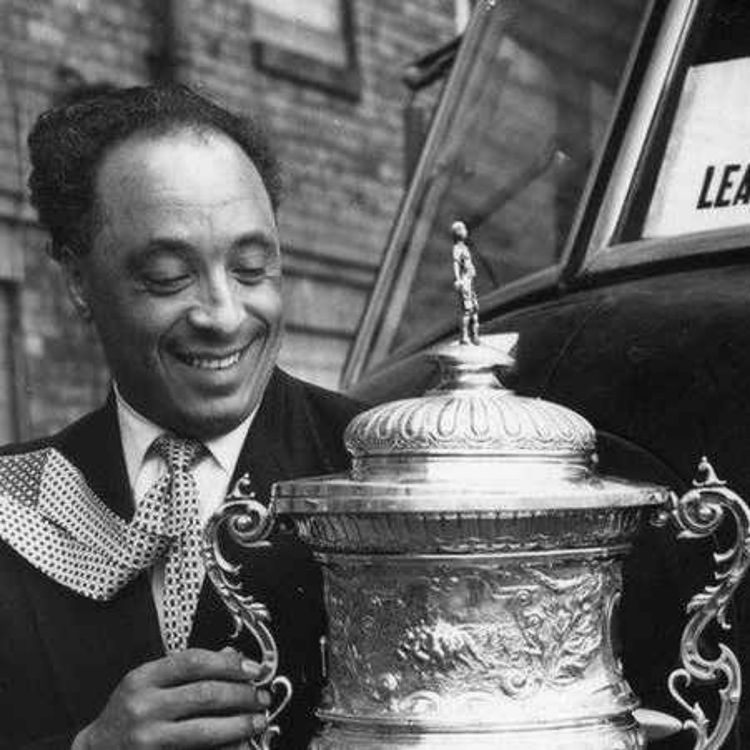
Join Max Portman as he speaks to a true legend of academic sports history in Professor Tony Collins, Emeritus Professor of History at De Montfort University and a Fellow of the Institute of Sports Humanities at Loughborough University. The two are discussing Tony's new book Roy Francis: Rugby’s Forgotten Black Leader, published by Bloomsbury Sport in June 2025.
Tony's book covers the life of Roy from his humble beginnings in Brynmawr in the Welsh valleys where the circumstances surrounding his birth were contentious, through his journey to the North of England, where he made his name, first as a player in the 1930s and 1940s, before a managerial career that carried through until the 1970s. Across the interview, Max and Tony discuss Roy's father Lionel, an interesting character in his own right, Roy's wartime service, which involved a brief sojourn into rugby union, and how Roy broke down not just racial barriers in the pre-windrush era, but also revolutionised rugby league into the modern age as the first black manager in rugby league history.
If you love Rugby League, sports or are interested in hearing a new chapter of Black British history, then this is the perfect epsiode for you!!
For more information about the podcast, please visit: https://www.sportinhistory.org/ or https://shows.acast.com/sport-in-history-podcast
Thia podcast is a British Society of Sports History (BSSH) production from the UK's leading society for the history of sport.. You can find the podcast on all social media & major podcast platforms here.
Likewise, Click through to the BSSH website for further information on our events and to find out how to join the British Society of Sport History: https://www.sportinhistory.org/
More episodes
View all episodes
Alan Hester on 'Tiny Keeper: Steve Death, Record Breaker, Shy Genius and Maverick'
58:15|Join us for our latest episode as Max Portman interviews Alan Hester, lifelong Reading fan and founder and namesake of Alan Hester Associates about his book 'Tiny Keeper: Steve Death, Record Breaker, Shy Genius and Maverick', published by Pitch Publishing in March 2025.Tiny Keeper, a labour of love about a boyhood idol based on interviews with other heroes, is his first sports book and tracks the life of Steve Death, who played 471 games for Reading over 13 years and is still regularly voted as the best goalkeeper in Reading's long history.In just shy of an hour, Alan & Max discuss how Steve's diminutive stature of only 5 foot Seven (and a half) prevented him from playing at the top level of English football despite his exceptional ability, his displeasure at conformity and with authority and how a man with no ego endeared him to a town in Berkshire who still fondly remembers him almost 45 years after last played for the Royals.A must-listen for any football and sports fans who grew up in the 1970s, loves classic football and who love maverick players who make us fall in love with the "beautiful game".Alan Hester is an internationally published author of books on leadership, success and confidence, including Management Starts With You (2017) and Get Out Of Your Own Way (2018). His books have been translated into Chinese, Arabic and Greek and sold by Hachette in the USA.
David Searle on the University Boat Race
01:32:50|Join us for the latest episode of the Sport in History Podcast as Max Portman talks to David Searle, former executive director of the University Boat race between Oxford & Cambridge which is due to take place this weekend in London for it's 171st edition this year. In a in-depth interview, David reveals with much honesty how he got into rowing, the impact it has had on his life from a young age and how much the sport means to him both personally and professionally. Max and David discuss a multitude of various subjects regarding the boat race, including its history, David's involvement in the running of the race and other aspects such as the cost, the technicalities of the race and much, much more! Join this pair as they go out onto the waters of podcasting and learn plenty about a famous race that has global recognition from someone who ran it for over 10 years!!
Formula 1 rivalry: F1 and the Media with Michael Beddoes, Raymond Boyle & Richard Haynes
01:10:52|Join us for a special edition of the Sports and Leisure History Seminar Series at Silverstone Museum as we host a discussion on the book Streaming the Formula 1 Rivalry: Sport and the Media in the Platform Age by Professors Raymond Boyle, Professor of Communications at the University of Glasgow and Richard Haynes, Professor of Media Sport in the Division of Communications, Media and Culture. The discussion was chaired by Michael Beddoes, motorsport historian, lecturer in Filmmaking at Birmingham City University and producer for Al Murray and James Holland’s YouTube channel WW2 Headquarters.This talk wouldn't have been made possible if not for funding from the Institution of Historical Research's Seminar@ fund. For this, we give a HUGE thank you to the IHR. This event coincided with the beginning of the 2026 Formula 1 Season and the release of the 8th season of the Netflix show Drive to survive, the hit series that has become integral to expanding Formula 1’s reach to a broader audience in recent years, and a key part of what the book discusses in detail throughout.The talk is split in two halves. The first half is Richard and then Raymond giving brief talks on the book and their area of expertise, followed by the second half discussion with Mike on the book, F1, media and of course, Drive to Survive! A must listen for all those interested in sports and entertainment media, Formula 1, motorsport and the relationship between sports and media in this social media age!!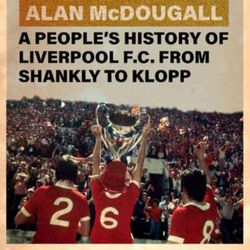
Dreams and Songs to Sing: A People's History of Liverpool FC from Shankly to Klopp with Alan McDougall
01:44:14|Join us on our latest episode as Max Portman interviews Alan McDougall, Lifelong Liverpool fan and Professor of History from the University of Guelph in Canada for his book Dreams and Songs to Sing: A People's History of Liverpool FC from Shankly to Klopp, published in September 2025 by Cambridge University Press. Dreams and Songs to Sing is a unique people's history of the triumphs and tragedies of one of the biggest teams in sport. From Shankly to Klopp, Alan McDougall takes us on a global tour of Liverpool FC's history, viewed through the eyes of the people who've been there all along: the supporters. Written as a labour of love about Alan's beloved Liverpool, Max & Alan chat for a full 90 minutes, plus a full half of extra time about all things Liverpool over its history from its late 19th-century origins, the power of Billy Liddell in the 1950s and how Bill Shankly built an empire that was succesful for 30 years and is still felt today across world football. Highlights from this episode include plenty of social history talking about the club, its supporters and the city of Liverpool as well as the thriving music scene of Liverpool that contains critically acclaimed bands such as the Beatles and the Real Thing, plus Alan showing off his rapping skills when asked about the Anfield Rap. Well worth a listen for all lovers of Liverpool, football and historians of community and Britain.
Catching the Spirit? The ICC Women's T20 World Cup 2026
53:14|Tanya Aldred (The Guardian) interviews ECB's Laura Entwistle, former international cricketer Laura MacLeod and journalist Raf Nicholson about the forthcoming Women's T20 World Cup which is being hosted this summer in England and Wales. The panelists discuss the potential for legacy, how the tournament will test the new women's domestic structure, and how we should measure the success of the World Cup.This Q&A took place during the annual Cricket Research Network conference in Cambridge, which was kindly supported by the BSSH. To find out more about the Network, see our LinkTree https://linktr.ee/cricketresearchnetwork or follow us @cricketacademic on BlueSky.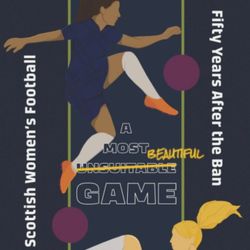
A most unsuitable game: Reflections on a community celebration of the women’s game in Scotland
01:09:16|8 Months on from the book, A Most Unsuitable Game: Celebrating Scottish Women’s Football Fifty Years After the Ban was completed and released, the Sports and Leisure History Seminar series is pleased to announce an event to celebrate the book and discuss it with its three main authors and editors, Professor Fiona Skillen, Dr Karen Fraser and Julie McNeill. In this seminar, the editors, in a panel chaired by academic and journalist Dr Raf Nicholson, reflect on the compilation of the book and the continued lack of general knowledge about the women’s game in Scotland. It will also reflect on what we have learned in the process of collating and editing the book, working with authors of different genres and experience, and promoting it to both the football and wider communities.This will not be centred on promoting the book but is rather to illustrate lessons that we learned to be shared with those who may wish to undertake a similar venture.The panel does not intend to use formal PowerPoint led presentations but would propose a more informal talk given by the three of us using a panel discussion format.We would also welcome questions from the audience, either at the time of the panel or in advance, if the panel slot on the programme allowed for this.Biographies:Professor Fiona Skillen is a professor in History at Glasgow Caledonian University. Her research focuses on women’s sport during the late 19th and 20th centuries where she has published extensively in this subject area. Professor Skillen has also completed a FIFA-sponsored project on the history of women’s football in Scotland, 1850-1939.Dr Karen Fraser is an independent researcher associated with the University of Stirling. Her PhD research focused on the history of Women’s Football in Scotland from 1960 to 2021. While she has worked on different aspects of the history of Scottish Football, her focus remains seeking to uncover the untold history of women’s football in Scotland.Julie McNeil is the poet-in-residence for St Mirren FC charitable Foundation and the Makar of the Hampden Collection. She is also the co-author of the award-winning Mission Dyslexia series for Neurodivergent Children.
Atlanta Tsiaoukkas on The Schoolgirl Sporting Heroines of Early Twentieth-Century Girls’ Fiction
28:52|In the earliest depictions of the schoolgirl in British girls’ fiction, she is far from the hockey stick wielding tomboys recognisable in the stories of Angela Brazil and Elinor Brent-Dyer, instead restricted to crocodile walks and movement-limiting dress codes. Over the first decades of the twentieth-century, popular depictions of the schoolgirl radically changed her into a games fanatic, distinct from both her Victorian literary ancestors and the real modern schoolgirl she ostensibly represented.The advent of the sporting schoolgirl in girls’ media offered revised codes of what was considered acceptable behaviour for girls, re-envisioning Victorian femininity to incorporate a patriotic, masculinised vision of modern girlhood which presented sport as a gateway to the previously inaccessible heroism and honour available to boys. Through sport, the increasingly stigmatised stereotypes of ill-health and melodrama attached to Victorian womanhood were rejected in favour of an emotionally restrained and physically active masculine girlhood. This seminar looks to a range of early twentieth-century authors such as Brazil and Dorothea Moore to investigate how representations of sport offered a tool by which femininity was redefined for a new century of athletic women and girls.Atlanta Tsiaoukkas is a PhD student at the Centre for Research in Children’s Literature at the University of Cambridge. Her research explores Victorian and Edwardian girls’ school fiction, and she is widely interested in the development of girls’ cultural identities and their popular representation in British and Irish media.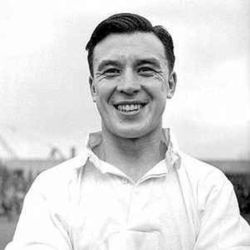
Alan Lau From the Frank Soo Foundation
55:35|If you were watching or were at the England Vs Wales football match last month, you may have seen a cap ceremony that saw Frank Soo, the first Asian player ever to play for the national team (albeit in semi-official matches only) and the only man of East Asian descent to date, receive a posthumous cap for his nine appearances for the England team during World War 2. But who was Frank Soo? And much like his contemporary pioneer Jack Leslie, why was he forgotten by football for many years? We're honoured to be joined on the podcast by Alan Lau, co-founder and chairman of the Frank Soo foundation, who has spent 8 years tirelessly trying to promote the legacy of Frank Soo as well as be a champion of community football, but primarily the Chinese and East Asian Community, both in the UK and overseas. Alan's championing has been recognised in football, when Alan won the Watford FC Community Sports & Education Trust Equality Champion award in 2023. But Alan is an inclusivity champion in the wider world of football, holding roles as an FA EDI Community of Practice Ambassador, as well as serving as chair of the Hertfordshire FA's IAG (Inclusion Advisory Group) & the FA County IAG Chair's steering group. He additionally serves on the national council of the Football Supporters Association. But Alan is here today to talk about the work he's done with the Frank Soo foundation and educate us a bit about Frank Soo and the importance of Asian inclusivity into football.