Share
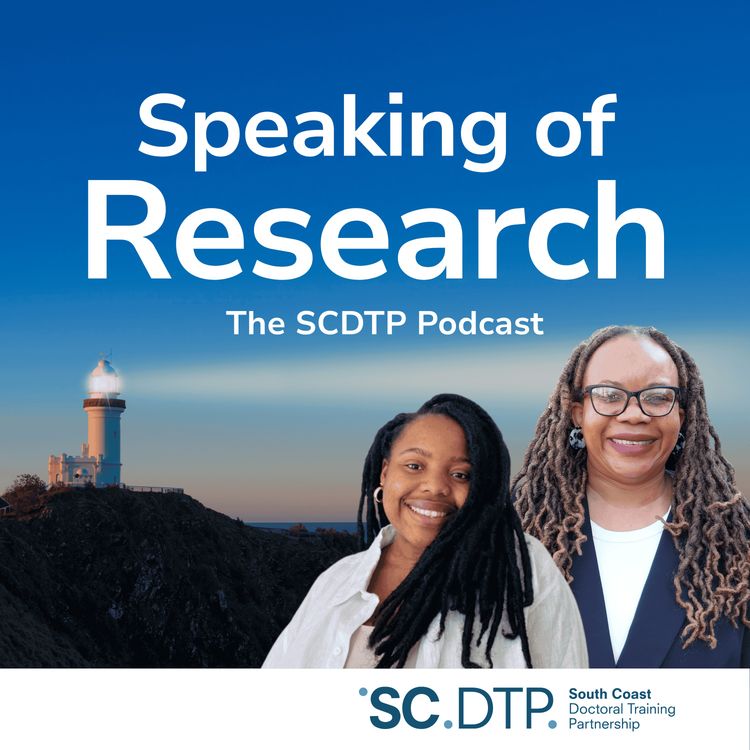
Speaking of Research: The SCDTP Podcast
Building Digital Communities and Challenging Systemic Barriers for Migrant Women with Patricia Ncube and Bev Price
How can migrant women use digital platforms to share information, build community, and speak back to the system on their own terms?
And what happens when a doctoral researcher adapts her methodology after listening to community feedback, shifting from traditional qualitative methods to exploring lived experiences shared online?
In the second episode of "In Dialogue with Stakeholders", a special series of Speaking of Research presented by Catherine McDonald, we bring researchers together with the people and organisations who can help shape their research and show how it can have impact in the real world.
Joining Catherine is SCDTP doctoral researcher Patricia Ncube, whose research explores how migrant women use YouTube and digital platforms to share knowledge and challenge systemic barriers, and Bev Price, a migrant woman herself, community advocate, and Patricia’s mother.
Together, Patricia and Bev explore how migrant women are taking narrative ownership of their stories away from mainstream media and political discourse. They discuss the shift in research methods from traditional interviews and diaries to digital spaces where women feel safe to share their everyday, lived experiences - from navigating immigration status tied to employment to seeking a quiet, ordinary life.
Their conversation also highlights why stakeholder and community accountability matters. Bev offers insights on moving beyond simply celebrating resilience to questioning the systemic barriers that force migrant women to navigate difficult journeys in the first place.
"In Dialogue with Stakeholders" captures these conversations to show how researchers and stakeholders can work together from the outset, bringing different expertise and perspectives to research and helping shape its potential for impact beyond academia.
You can read a transcript of the conversation here.
Find out more about the South Coast Doctoral Training Partnership at southcoastdtp.ac.uk
This is a Research Podcasts production.
Credits:
Presenter and Producer: Catherine McDonald, Research Podcasts
Guests: Patricia Ncube, University of Portsmouth; Bev Price, Reverend
Video and Audio Editor: Alex Canner, Research Podcasts
Transcripts: Lauren White, Research Podcasts
More episodes
View all episodes
6. Addressing Gender-Based Violence Among Displaced Women and Refugees with Sixtus Onyekwere and Deborah Shedrack
31:43||Season 3, Ep. 6How can humanitarian aid and protection services better prevent violence against women and girls during times of crisis and forced displacement?And what happens when a doctoral researcher collaborates with local grassroots organisations to ground sensitive research in local context and decolonial practice?In the sixth episode of "In Dialogue with Stakeholders", a special series of Speaking of Research presented by Catherine McDonald, we bring researchers together with the people and organisations who can help shape their research and show how it can have impact in the real world.Joining Catherine is SCDTP doctoral researcher Sixtus Onyekwere, whose mixed-methods research examines how NGOs deliver interventions targeting gender-based violence among internally displaced persons and refugees in Nigeria during emergency shocks like COVID-19, and Deborah Shedrach from the Grassroots Researchers Association, a Nigerian-based non-profit focusing on conflict resolution and evidence-based research.Together, Sixtus and Deborah explore the critical role of local ‘foot soldiers’ in building trust, navigating ethical complexities, and collecting vital field data across displaced communities. They discuss how crisis conditions and economic disruptions compound vulnerabilities to gender-based violence, the sharp differences in reported experiences between camp and host settings, and the ongoing challenge of securing government involvement and legal accountability for perpetrators.Their conversation demonstrates the value of embedded stakeholder partnerships: providing the empirical evidence needed by NGOs and decision-makers to strengthen humanitarian protection and ensure aid responses are better prepared for future shocks."In Dialogue with Stakeholders" captures these conversations to show how researchers and stakeholders can work together from the outset, bringing different expertise and perspectives to research and helping shape its potential for impact beyond academia.You can read a transcript of the conversation here.Find out more about the South Coast Doctoral Training Partnership at southcoastdtp.ac.ukThis is a Research Podcasts production. Credits:Presenter and Producer: Catherine McDonald, Research PodcastsGuests: Sixtus Onyekwere, South Coast Doctoral Training Partnership; Deborah Shedrach, Grassroots Researchers Association, NigeriaVideo and Audio Editor: Alex Canner, Research PodcastsTranscripts: Lauren White, Research Podcasts
5. Sensory Theatre and Belonging for People with Profound Disabilities with Elspeth Clark and Ellie Griffiths
33:02||Season 3, Ep. 5Can theatre create a sense of belonging without relying on words? In the fifth episode of “In Dialogue with Stakeholders”, a special series of Speaking of Research presented by Catherine McDonald, we explore what happens when research and creative practice come together to ask how cultural experiences can be made more inclusive for people with profound intellectual and multiple disabilities. Joining Catherine is SCDTP doctoral researcher Elspeth Clark from the University of Southampton whose PhD explores whether meaningful activity can foster belonging for students with profound intellectual and multiple disabilities, and Ellie Griffiths, Artistic Director of Oily Cart Theatre, a company pioneering sensory theatre. Their collaboration brings together occupational therapy research and creative practice, exploring how movement, sound, lighting, smell and other sensory experiences can create connection and shared meaning without relying on conventional forms of communication. They discuss Elspeth’s researcher residency at Oily Cart Theatre, their work on Making Sideways and the development of Sideways, an at-home sensory theatre experience designed for families to experience together. Elspeth and Ellie reflect on what research and practice can learn from one another, and how involving stakeholders can challenge assumptions, strengthen research and help turn ideas into practice. Their conversation highlights how greater attention to non-verbal communication could help cultural, educational and research spaces include people whose voices and participation have traditionally been overlooked. “In Dialogue with Stakeholders” captures these conversations to show how researchers and stakeholders can work together from the outset, bringing different expertise and perspectives to research and helping shape its potential for impact beyond academia. You can read a transcript of the conversation here. Find out more about the South Coast Doctoral Training Partnership at southcoastdtp.ac.uk This is a Research Podcasts production. Credits: Presenter and Producer: Catherine McDonald, Research Podcasts Guests: Elspeth Clark, South Coast Doctoral Training Partnership; Ellie Griffiths, Oily Cart Theatre Video and Audio Editor: Alex Canner, Research Podcasts Transcripts: Lauren White, Research Podcasts
4. Navigating Health and Social Care as a Trans Autistic Adult with Katie Munday and Alex Robertson
33:16||Season 3, Ep. 4What would health and social care look like if the people using those services helped shape how they work? And what happens when a practising GP is involved in research from the outset, bringing clinical expertise and frontline experience to help shape its direction and potential impact? In the fourth episode of “In Dialogue with Stakeholders”, a special series of Speaking of Research presented by Catherine McDonald, we bring researchers together with the people who can help shape their research and explore how collaboration can turn research into impact in the real world. Joining Catherine is SCDTP doctoral researcher Katie Munday from the University of Portsmouth whose participatory research explores the health and social care experiences of transgender autistic adults, and Alex Robertson, a practising GP, who brings frontline clinical experience to the research and its potential application in healthcare. Katie’s research works alongside trans autistic adult co-researchers with experience in community work, activism and research. The project focuses on experiences of accessing talking therapies in the NHS and private sector, examining barriers including difficult systems, primary care gatekeeping, misgendering, stereotyping and disbelief. Together, Katie and Alex explore what research can learn from clinical practice – and what practitioners can learn from research rooted in lived experience. Their conversation considers how this collaboration can help identify practical changes, from better clinician education to more inclusive systems for recording names and pronouns. At its heart, this episode demonstrates the value of involving stakeholders early in the research process: bringing a practising GP into the conversation not simply to respond to research findings, but to help shape questions, outcomes and the potential for change from the outset. “In Dialogue with Stakeholders” captures these conversations to show how researchers and stakeholders can work together to create research with impact beyond academia. You can read a transcript of the conversation here. Find out more about the South Coast Doctoral Training Partnership at southcoastdtp.ac.uk This is a Research Podcasts production. Credits: Presenter and Producer: Catherine McDonald, Research Podcasts Guest: Katie Munday, University of Portsmouth and Alex Robertson, Practising GP Video and Audio Editor: Alex Canner, Research Podcasts Transcripts: Lauren White, Research Podcasts
3. AI Tutors and Learning in Primary Schools with Nick Huxley and Hollie Benfield
28:14||Season 3, Ep. 3How do we make sure AI helps children learn rather than simply giving them the answers? And what happens when a researcher exploring the future of AI in education works directly with a school already putting AI into practice? In the third episode of “In Dialogue with Stakeholders”, a special series of Speaking of Research presented by Catherine McDonald, we bring researchers together with the people and organisations who can help shape their research and show how it can have impact in the real world. Joining Catherine is SCDTP doctoral researcher Nick Huxley from the University of Brighton and former primary teacher, whose research explores how AI tutors can support children’s mathematical reasoning, and Deputy Headteacher Hollie Benfield from Knockhall Primary School in Kent, where AI is already being embedded across teaching and school life. Together, Nick and Hollie bring research and classroom expertise into conversation, exploring how AI can be used safely and effectively in primary education. They discuss teacher training, safeguarding and teaching children about AI, alongside the potential for personalised learning and real-time feedback. Their conversation also highlights why stakeholder involvement matters. Hollie’s experience of implementing AI in a real school environment raises important questions for Nick’s research, from how AI tutors should respond to children’s developmental needs to how technology can support learning without replacing teachers, peer interaction or hands-on experiences. “In Dialogue with Stakeholders” captures these conversations to show how researchers and stakeholders can work together from the outset, bringing different expertise and perspectives to research and helping shape its potential for impact beyond academia. You can read a transcript of the conversation here. Find out more about the South Coast Doctoral Training Partnership at southcoastdtp.ac.uk This is a Research Podcasts production. Credits: Presenter and Producer: Catherine McDonald, Research Podcasts Guests: Nick Huxley, University of Brighton; Hollie Benfield, Knockhall Primary School Video and Audio Editor: Alex Canner, Research Podcasts Transcripts: Lauren White, Research Podcasts
1. Making Blue Spaces More Inclusive for People with Visual Impairments with Sadie Rockliffe and Melanie Barratt
41:16||Season 3, Ep. 1What does it take to make swimming in the sea, a lake or a river genuinely accessible to people with visual impairments? And what happens when a researcher brings a stakeholder into the research from the very beginning? In the first episode of “In Dialogue with Stakeholders”, a special series of Speaking of Research presented by Catherine McDonald, we bring researchers together with the people and organisations who can help shape their research and show how it can have impact in the real world. Joining Catherine is SCDTP doctoral researcher Sadie Rockliffe from the University of Brighton, who is researching how people with visual impairments experience blue spaces, and blind double Paralympic champion swimmer and open water pioneer, Melanie Barratt, who is also the first blind woman to swim the English Channel. Together, Sadie and Melanie have co-created Gateway to the Sea, working with partners including British Blind Sport, SwimTrek, Sea Lanes and Red Equipment. The event combined research, lived experience and practical expertise to help people with visual impairments build confidence and independence in the water. Their conversation offers a glimpse of what can happen when stakeholders are involved early in the research process, challenging assumptions, bringing different expertise to the table and helping shape research that has the potential to make a difference beyond academia. “In Dialogue with Stakeholders” captures these conversations to show researchers what meaningful collaboration can look like, and how working with stakeholders from the outset can help research have real-world impact. You can read a transcript of the conversation here. Find out more about the South Coast Doctoral Training Partnership at southcoastdtp.ac.uk This is a Research Podcasts production. Credits: Presenter and Producer: Catherine McDonald, Research Podcasts Guests: Sadie Rockliffe, University of Brighton; Melanie Barratt, Blind double Paralympic champion swimmer Video and Audio Editor: Alex Canner, Research Podcasts Transcripts: Lauren White, Research Podcasts
10. Women’s Leadership and Change in Sport with Michelize van Heerden
09:18||Season 2, Ep. 10In the tenth episode of Series 2 of Speaking of Research, a podcast from the South Coast Doctoral Training Partnership, we meet Michelize van Heerden, a doctoral researcher from the University of Chichester. Michelize’s research explores the Women’s Sports Leadership Academy (WSLA) - a pioneering residential programme that has supported over 450 women from 78 countries in developing as leaders in sport.Against a backdrop of ongoing gender imbalance - with only 26% of CEO roles in sport held by women, and a global 3% decrease in female representation on funded sports boards - Michelize examines how WSLA creates a safe, empowering space for growth and connection. Her research draws on the personal stories of participants to disrupt traditional evaluation models, placing lived experience at the centre. Through this work, she aims to understand WSLA's long-term impact on women’s leadership development and the broader transformation of sporting culture.You can read a transcript of the conversation here.Find out more about the South Coast Doctoral Training Partnership at southcoastdtp.ac.ukThis is a Research Podcasts production.Credits:Presenter: Catherine McDonald, Research PodcastsGuest: Michelize van Heerden, University of ChichesterProducer: Krissie Brighty-Glover, Research PodcastsEditor: Anton Jarvis, Research PodcastsTranscripts: Lauren White, Research Podcasts9. Gender Euphoria and Trans Wellbeing with Daniel Griffiths
09:26||Season 2, Ep. 9In the ninth episode of Series 2 of Speaking of Research, a podcast from the South Coast Doctoral Training Partnership, we meet Daniel Griffiths, a doctoral researcher from the University of Southampton. Daniel’s research explores gender euphoria and gender congruence in trans, non-binary, and gender-diverse adults - focusing on the joyful, affirming experiences that accompany living authentically.Through qualitative studies, Daniel has found that gender euphoria is a distinct and powerful positive emotion, often felt most intensely during the early stages of transition. Over time, it tends to evolve from moments of “explosive joy” into a more settled sense of contentment and alignment. His work aims to shift the narrative around trans lives, moving beyond deficit-focused perspectives to highlight diversity, fulfilment, and wellbeing - and to inform interventions that better support gender congruence and positive mental health.You can read a transcript of the conversation here.Find out more about the South Coast Doctoral Training Partnership at southcoastdtp.ac.ukThis is a Research Podcasts production.Credits:Presenter: Catherine McDonald, Research PodcastsGuest: Daniel Griffiths, University of SouthamptonProducer: Krissie Brighty-Glover, Research PodcastsEditor: Anton Jarvis, Research PodcastsTranscripts: Lauren White, Research Podcasts8. Law, Violence and LGBTQ+ Rights in Brazil with Ramon Almeida
08:38||Season 2, Ep. 8In the eighth episode of Series 2 of Speaking of Research, a podcast from the South Coast Doctoral Training Partnership, we meet Ramon Almeida, a doctoral researcher at the University of Southampton. A former lawyer in Brazil, Ramon investigates violence against LGBTQ+ people in the years following the 2019 criminalisation of homophobia and transphobia.Despite this legal milestone, Brazil remains one of the most dangerous countries in the world for LGBTQ+ individuals - with 291 violent deaths recorded in 2024 alone. Through qualitative research in Salvador involving 33 participants, including victims and legal professionals, Ramon uncovers deep inequalities in access to justice and persistent institutional prejudice. His work underscores the need for intersectional approaches and highlights how NGOs often provide more effective support than state systems. By amplifying these voices, Ramon aims to inform international policy and strengthen protections against hate crimes targeting marginalised LGBTQ+ communities worldwide.You can read a transcript of the conversation here.Find out more about the South Coast Doctoral Training Partnership at southcoastdtp.ac.ukThis is a Research Podcasts production.Credits:Presenter: Catherine McDonald, Research PodcastsGuest: Ramon Almeida, University of SouthamptonProducer: Krissie Brighty-Glover, Research PodcastsEditor: Anton Jarvis, Research PodcastsTranscripts: Lauren White, Research Podcasts