Share
Southern Demonology
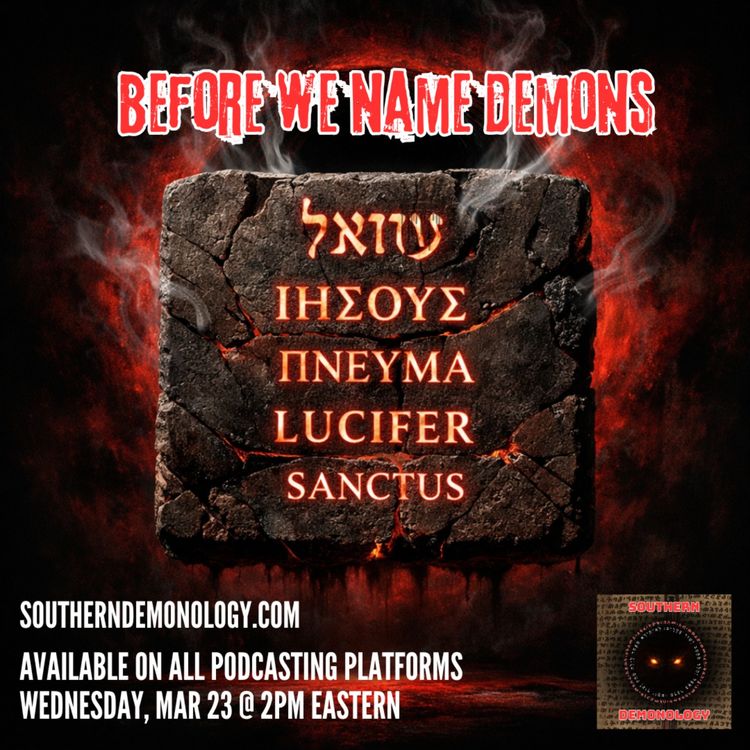
Before we Name Demons
Before we begin a full series on named demons, we need to ask a more basic question: what are these names, really? Are they ancient and original, or are they titles, translations, corruptions, polemics, and borrowed labels that changed over time?
In this episode, JJ lays the groundwork for thinking carefully about demon names by exploring the differences between Semitic, Greek, and Latin traditions, how names shift as they move across languages and cultures, and why people should be cautious about putting too much certainty in them. Along the way, we’ll examine how gods become demons, how titles become identities, and why the history behind a name is often stranger than the name itself.
If you’ve ever wondered whether demon names carry real meaning, how much stock you should put in them, or why so much modern lore gets this topic wrong; this is the essential starting point.
A sober introduction to names, origins, language, and the illusion of certainty.
More episodes
View all episodes
13. Doug Bradley Pt 2
01:14:16||Season 7, Ep. 13In Part 2 of this special conversation, Doug Bradley moves beyond horror cinema and into the deeper waters of the paranormal. The discussion turns toward haunted houses, family ghost stories, religious belief, folk practice, Ouija experiences, and the strange tension between skepticism and personal encounter. Along the way, Doug reflects on whether ghost experiences are truly the dead, whether some phenomena may be psychological rather than supernatural, and why certain stories remain impossible to shake.The episode also explores Skinwalker Ranch, the possibility of naturally occurring but unexplained phenomena, and Doug’s surprising admission that the subject has made him more open to ideas he once dismissed — including the possibility of portals. If Part 1 was about horror, belief, and the legacy of Pinhead, Part 2 is where the conversation gets stranger, darker, and much more personal.#dougbradley, #pinhead, #hellraiser, #paranormal, #ghosts, #hauntedhouse, #hauntings, #spirits, #ouija, #skinwalkerranch, #portals, #supernatural, #paranormalpodcast, #horrorpodcast, #horroricon, #clivebarker, #thewanderingroadpodcast, #southerndemonology, #podcast, #podcastclips, #darkdiscussion, #ghoststories, #supernaturalpodcast, #mystery, #unknown
12. Doug Bradley
01:02:11||Season 7, Ep. 12In Part 1 of this special two-part conversation, The Wandering Road Podcast and Southern Demonology Podcast sit down with horror legend Doug Bradley for a wide-ranging discussion that goes far beyond Hellraiser.Doug reflects on his lifelong fascination with ghosts, horror, mythology, and the paranormal, and explains why he describes himself as a “religious atheist.” From there, the conversation moves into religion, the problem of evil, the Hebrew Bible, demonology, and the strange tension between skepticism and wonder. Doug also shares how horror first entered his life through Hammer films, Poe, Lovecraft, and Tolkien, before looking back on his early creative relationship with Clive Barker and the path that eventually led to Pinhead.This first half also includes Doug’s reflections on becoming part of horror history, the legacy of Pinhead, and what it means to leave an indelible mark on the genre decades after the role first appeared on screen. If you want Doug Bradley at his most thoughtful, reflective, and fascinating, this is the place to begin.#dougbradley, #pinhead, #hellraiser, #clivebarker, #horror, #horrorpodcast, #horrorinterview, #horrorlegend, #horrorcommunity, #paranormal, #paranormalpodcast, #ghosts, #supernatural, #lovecraft, #edgarallanpoe, #tolkien, #thewanderingroadpodcast, #southerndemonology, #podcast, #podcastclips, #cultclassic, #horrorfans, #cinemahistory, #darkdiscussion, #comingsoon
11. Nephilim: The Unholy Union of Spirit and Flesh
25:46||Season 7, Ep. 11The Nephilim are often remembered as giants, but 1 Enoch presents them as something far more terrifying. In this episode, JJ explores the Nephilim as the product of a rebellion that begins when the Watchers bind themselves in a curse, descend from their proper estate, and force together spirit and flesh in a way that should never have happened. The result is not merely violence on the earth, but a profound violation of the created order itself.From Genesis 6 to the Watchers tradition, this episode examines how the Nephilim become the ultimate expression of unlawful mixture, why their destruction in the flood does not fully solve the problem, and how their lingering spirits help explain the origin of evil spirits in later Jewish thought. JJ also explores the haunting Enochic and Essene idea of time as a temple, and why the four “leftover” days outside its perfect order were viewed as especially dangerous.This is not an episode about internet myths or giant skeleton nonsense. It is about the theological horror at the center of the Nephilim tradition: what happens when heaven and earth are joined in defiance of God’s order, and why the damage does not stay buried.#southerndemonology, #nephilim, #watchers, #1enoch, #genesis6, #secondtemplejudaism, #angelology, #demonology, #hebrewbible, #deadseascrolls, #essenes, #apocalypticliterature, #biblicalstudies, #ancientreligion, #religioushistory, #supernaturalpodcast, #paranormalpodcast, #theology, #spiritualwarfare, #forbiddenknowledge, #evilspirits, #watcherrebellion, #ancientmysteries, #historyofreligion, #southerndemonologypodcast
10. The Hidden History of Archangels
31:05||Season 7, Ep. 10Where did the idea of archangels actually come from, and why do so many traditions speak of seven of them? In this episode, JJ traces the development of the archangels from the Hebrew Bible through Second Temple Jewish literature, Tobit, 1 Enoch, and later Christian tradition. Along the way, he explains why only a few names—especially Michael, Gabriel, and Raphael—became widely recognized, while others such as Uriel, Raguel, Sariel, Remiel, Phanuel, Jeremiel, and Dokiel remained better preserved in apocalyptic and Ethiopic literature.This episode also breaks down the meanings of the angelic names themselves, showing how names ending in -el reflect divine association and how those meanings sometimes align with an angel’s role—and sometimes do not. Special attention is given to Gabriel as revealer, despite the more martial force of his name, as well as to the older traditions of four chief angels alongside the better-known pattern of seven.If you have ever wondered where the archangels came from, why the lists differ, and how Ethiopic literature preserves a broader angelic world than most Christians realize, this episode lays out the history carefully and clearly.#southerndemonology, #archangels, #sevenarchangels, #michael, #gabriel, #raphael, #uriel, #raguel, #sariel, #remiel, #phanuel, #jeremiel, #dokiel, #angelology, #hebrewbible, #secondtemplejudaism, #1enoch, #tobit, #ethiopicliterature, #apocalypticliterature, #biblicalstudies, #ancientreligion, #religioushistory, #christianhistory, #theology, #historyofreligion, #podcast, #supernaturalpodcast, #southerndemonologypodcast
9. Lilith: Wind, Night, and Wasting
30:42||Season 7, Ep. 9Lilith is one of the oldest, most controversial, and most misunderstood names in all of demonology. In this first episode of the named demons series, JJ examines Lilith through the lens of language, history, and reception rather than modern mythmaking. Beginning with her Mesopotamian roots and moving through Isaiah 34, Psalm 91’s allusive “arrow that flieth by day,” the Dead Sea Scrolls, and later Jewish tradition, this episode explores how Lilith developed into one of the most enduring demonic figures in religious history.Along the way, JJ explains why Lilith is far more complex than the simplified versions found in pop culture, occult books, and internet lore. Was she originally a night demon, a wind spirit, a child-killing entity, Adam’s first wife, or something even older and stranger? This episode lays out the evidence carefully and shows why names must be treated as data before doctrine.If you want to understand Lilith without flattening the ancient sources into easy certainty, this is the place to start.Get more at https://www.southerndemonology.com#southerndemonology, #lilith, #demonology, #nameddemons, #demonnames, #occulthistory, #ancientreligion, #biblicalstudies, #secondtemplejudaism, #hebrewbible, #deadseascrolls, #isaiah34, #psalm91, #lamia, #lamashtu, #ancientneareast, #religioushistory, #theology, #spiritualwarfare, #paranormalpodcast
8. Free Will in a Haunted Universe
01:03:19||Season 7, Ep. 8In this crossover-style conversation with Chris from The Wandering Road, JJ dives into one of theology’s oldest and most stubborn questions: do human beings truly have free will, or are we simply moving through a script already known by God?What begins with a discussion of UFO disclosure, alien life, and the theological panic such revelations might cause quickly turns toward much deeper ground: divine omniscience, prophecy, demonic possession, moral responsibility, and whether God’s knowledge of the future removes the possibility of genuine choice.Along the way, JJ and Chris explore whether free will protects humanity from spiritual coercion, whether figures like Paul and Moses were chosen or compelled, how scripture is filtered through human language and experience, and why the sublime terror of encountering God may be far more important than the comfortable version of religion many prefer.There is also, naturally, a little Tolkien, a little philosophy, a little heresy-adjacent speculation, and more than enough laughter to keep the existential dread manageable.#southerndemonology, #thewanderingroad, #freewill, #theology, #christiantheology, #demonology, #demons, #prophecy, #predestination, #divineforeknowledge, #ufodisclosure, #uap, #aliensandtheology, #scripture, #spiritualwarfare, #paranormalpodcast, #theologydiscussion, #christianpodcast, #highstrangeness, #tolkien, #karlbarth, #philosophy
7. Demonic Sigils: Myth, Magic, or the Greatest Hoax Ever Told?
50:33||Season 7, Ep. 7In this episode, JJ is joined by Chris and Dean from the Wandering Road for a conversation centered around the world of demonic sigils. Together, they explore where these symbols actually originated, how they became tied to demons and occult practices, and whether there’s any real historical or theological basis behind them at all.The discussion takes a closer look at the validity of demonic sigils themselves questioning whether they were ever genuinely believed to hold power, used in real rituals or exorcisms, or if much of their reputation has been built through folklore, fear, pop culture, and modern internet mythology. The group also examines the Church’s perspective on sigils and occult symbolism while separating historical fact from exaggeration.As always, the conversation includes plenty of laughs, theories, stories, and laid-back banter along the way. Whether you’re skeptical, curious, or just interested in the history behind these symbols, this episode offers a balanced and entertaining discussion on one of the paranormal world’s most debated topics.
6. The Dark, the Desk, and the Shadow Man
49:07||Season 7, Ep. 6In this episode of Southern Demonology, JJ takes a brief pause from the ongoing demonology series for a conversation with Tommy from the Let’s Get Freaky podcast.Tommy shares the personal encounters that first drew him into the world of paranormal investigation and podcasting, beginning with a childhood home marked by unexplained footsteps, oppressive atmospheres, and a terrifying full-bodied apparition seated at his bedroom desk. From there, the conversation moves through shadow figures, family experiences, strange voices in the home, protective prayer, and the uneasy question of whether speaking about the paranormal can sometimes stir something in return.The discussion also branches into UFO encounters, including a bizarre structure-like object seen in the sky as a teenager and a later sighting of metallic, shape-shifting spheres witnessed with his mother-in-law. Throughout the episode, JJ and Tommy reflect on fear, faith, discernment, community, and the difficult balance between open-mindedness and skepticism.This is not a sensationalized ghost story collection. It is a grounded, thoughtful conversation about high strangeness, spiritual caution, and what happens when the weird is not simply entertainment, but part of someone’s lived experience.
5. Demonic Sigils
27:40||Season 7, Ep. 5Demonic sigils are everywhere: in grimoires, in horror shows, and plastered across thumbnails any time someone says the word “infernal.” In this episode of southern demonology, we slow everything down and ask harder questions: what are these sigils actually supposed to be, where did they come from, and how do they relate to older ideas like angelic script and heavenly writing?We trace the path from ancient concerns about names and authority, through medieval and early modern grimoires, into modern chaos magic and internet occult branding. Along the way, we look at why so many sigils are really stitched together from astrological and “angelic” glyphs, and why that borrowing matters for how we evaluate their claims.Rather than treating every symbol as an instant spiritual live wire—or dismissing them all as harmless doodles—we explore a more careful grammar of the unseen: one that takes hostile spiritual agency seriously, refuses historical sloppiness, and keeps pastoral discernment at the center. If you have ever wondered whether those seals you see online are ancient business cards of the infernal or just very effective smoke screens, this one is for you.#southerndemonology, #demonology, #demonicsigils, #angelicscript, #secondtemplejudaism, #biblicalstudies, #grimoire, #arsgoetia, #spiritualdiscernment, #christianpodcast, #theology, #paranormal, #occultmyth, #symbolism, #mentalhealth, #religionandculture, #spiritualwarfare, #ancientnearEast, #biblehistory, #podcastepisode