Share
Sound Investments
Hard Tech for Planetary Health with Sarah Applebaum, Pangaea Ventures
Ed Barker talks to Sarah Applebaum, partner at Pangaea Ventures. They discuss Sarah's journey into venture capital and her work at Pangaea, an investment firm focused on hard tech and sustainability. The conversation covers the startup ecosystem in Vancouver, the importance of hard tech for addressing global challenges, and specific investment sectors like industrial decarbonization, green chemistry, and semiconductor manufacturing. They also dive into the dynamics between Pangaea and its corporate partners and explore current trends and challenges in the venture capital landscape.
Pangaea Ventures Hard Tech report can be found here.
00:00 Introduction
00:17 Meet Sarah Applebaum
09:47 Understanding Hard Tech and Planetary Health
13:03 Strategies and Challenges
23:02 Investment Opportunities
34:57 Corporate Partnerships and Future Outlook
37:59 Conclusion and Final Thoughts
About Your Host
Ed Barker has enjoyed a weird and varied career. Ed is a Brit now resident in Seattle and has founded three startups, enjoyed a long career in corporate strategy, and most recently as a VC. He's now building a podcast production company, Studio 1878. Sound Investments is a modest attempt to shine some light on the fantastic work being done in the Pacific Northwest entrepreneurial community.
Sarah Applebaum, Partner, Pangea Ventures
Sarah brings more than a decade of venture capital and company building experience to the team. Sarah has cultivated expertise in building entrepreneurial teams, scaling early stage ventures, and venture financing. Sarah is an active mentor to early stage entrepreneurs and a startup community activator and advocate. Sarah led Pangaea’s investments into PolySpectra, Correlia Biosystems, and pH7. Sarah holds a BSc. From Dalhousie University and an MBA from the Schulich School of Business. Outside of work, you can find Sarah on the local trails with her dog, Indie, out on her road bike, or spending time with friends and family.
More episodes
View all episodes
50. Investing in Mavericks with Jordan Baker, Athenaeum Ventures
51:57||Season 1, Ep. 50Ed Barker sits down with Jordan Baker, founding general partner of Seattle's Athenaeum Ventures, whose path to running a fund looks nothing like the standard resume. He left home at 14, passed through three high schools, dropped out at 16, skipped college, and built a career across music, streaming, and gaming, most prominently the brand agency Moonrock, before raising his first fund. Baker argues that venture has drifted from its original job, backing insane people with insane ideas, into what he calls consensus capital, where investors crowd the same credentialed founders and price out everyone else. His edge, he says, is finding mispriced founders and ideas before the rest of the market does, sourcing them inside the Discord servers, Reddit threads, and gaming communities most investors cannot reach, then committing to a hands-on stretch that runs from a blunt five-minute fit test through weeks of diligence and real help with hiring, customers, storytelling, and the next round. He runs the firm with unusual openness, sending LPs data-rich updates that log every cold outreach and conversion, and reports a 4.3x paper markup roughly seven weeks into a deliberately small $5M fund. He also explains why he refuses SPVs, shares dealflow freely with other managers, and is happy to back founders as unorthodox as a startup that cryogenically freezes pets. His sharpest words are for Seattle, a city he calls brilliant at producing business owners and poor at producing founders, where pedigree is prized, tech wealth sits idle, and the most interesting builders keep leaving for the Bay.00:00 Introduction: Jordan Baker, Athenaeum Ventures02:02 Leaving Home at 14: An Atypical Origin12:01 The Investor as Mispriced Founder12:28 Why Raise a Fund at All18:33 Sourcing and Vetting Mispriced Founders23:05 LP Strategy and Fund Metrics30:15 Media, Storytelling, and Radical Honesty36:20 Reach Versus Value: Building Niche Audiences38:13 What Seattle Gets Wrong About Founders47:16 Conviction, Risk, and the Future of VentureAbout Your HostEd Barker has enjoyed a weird and varied career. Ed is a Brit now resident in Seattle and has founded three startups, enjoyed a long career in corporate strategy, and most recently as a VC. Sound Investments shines a small light on the fantastic work being done in the Pacific Northwest entrepreneurial community.Studio 1878Ed is Founder of Studio 1878, a podcast strategy and production studio focused on helping brands tell smarter, more human stories. We work with founders, operators, and marketing leaders to design shows that serve clear strategic goals. Studio 1878 handles the full process - from concept and positioning through recording, editing, and distribution. Our work blends editorial thinking with production craft, prioritizing substance over noise. The result is podcasts that build trust, credibility, and long-term brand value.Jordan BakerJordan is the founder and general partner of Athenaeum Ventures, a $5 million Seattle micro-fund with a contrarian thesis: back mispriced founders the consensus has overlooked, often before any other investor finds them. His own story is that thesis in miniature. He left home at 14, moved through three Arizona high schools before dropping out at 16, and skipped college, building instead through music, streaming, and the Minecraft creator economy that grew into his gaming agency Moonrock, where he ran brand activations for Walmart, Samsung, and HR Block. He still finds founders the way he once found audiences, deep inside the Discords and game communities most VCs never enter, and he tracks the hunt obsessively: 481 cold outreaches, a 67% response rate, and a 4.3x paper markup about seven weeks into the fund. He is enough of a lifelong gamer that his wife walked down the aisle to the Minecraft theme.Connect with Alexandra: Athenaeum: athenaeum.vcLinkedIn: linkedin.com/in/jordan-baker-4319bb225
49. Decarbonising Heavy Industry with Alexandra Iljadica, BHP Ventures
45:12||Season 3, Ep. 49Ed Barker talks to Alexandra Iljadica, Principal at BHP Ventures, the corporate venture arm of the global mining and minerals company, about what hard-tech and climate investing looks like from inside a major industrial. Alexandra traces her path from a nutrition science degree in Australia through founding and scaling a sustainability nonprofit, then burnout, a year in Croatia, and a 2018 move to Seattle where she helped build the 5G Open Innovation Lab.BHP has a three-part thesis covering novel energy for decarbonisation, mining operations from AI-led exploration to novel extraction and processing, and changing end-market demand around the energy transition. The mandate is follow-on, $3 to $10 million, stage-agnostic, and free to invest in non-core commodities like hydrogen and lithium. The conversation gets into copper substitution and recycling, the resurgence of nuclear and uranium, fusion-grade high-temperature superconducting tape, tailings repurposed into cementitious materials, and the capital-stack squeeze on climate companies trying to get from facility one to facility ten in the wake of Fervo Energy's IPO, where BHP was an early Series B investor.There are hard-won lessons in CVC deployment and a reflection on Seattle's introverted culture. The episode closes with practical advice for founders: meet strategic investors years before you need them, think carefully about which strategics belong on your cap table and when, and do the basic homework on what each one actually produces.00:00 Introduction01:41 Alexandra's Origin Story05:25 About BHP Ventures07:33 Critical Minerals and Where BHP Invests10:59 Inside the Fund13:58 Lessons from Corporate Venture Investing23:07 Thesis Building and Looking Ahead27:50 Nuclear, Copper and the Climate Rollercoaster29:29 Founders in Mining32:19 Seattle's Venture Scene41:30 Advice for FoundersAbout Your HostEd Barker has enjoyed a weird and varied career. Ed is a Brit now resident in Seattle and has founded three startups, enjoyed a long career in corporate strategy, and most recently as a VC. Sound Investments shines a small light on the fantastic work being done in the Pacific Northwest entrepreneurial community.Studio 1878Ed is Founder of Studio 1878, a podcast strategy and production studio focused on helping brands tell smarter, more human stories. We work with founders, operators, and marketing leaders to design shows that serve clear strategic goals. Studio 1878 handles the full process - from concept and positioning through recording, editing, and distribution. Our work blends editorial thinking with production craft, prioritizing substance over noise. The result is podcasts that build trust, credibility, and long-term brand value.Alexandra IljadicaAlexandra is an Investor at BHP Ventures, the corporate venture arm of the global mining and minerals company BHP, where she invests in industrial decarbonisation, novel mining operations from AI-led exploration to extraction and processing, and the commodities of the energy transition. She joined BHP Ventures four years ago after helping stand up the 5G Open Innovation Lab, the Seattle-based accelerator. Her earlier career was in Australia, where she co-founded Youth Food Movement Australia and spent seven years scaling it into a national community of more than 20,000 young people, serving as CEO. She describes her own career as a series of moves "upstream" toward root causes, and is a visible presence in Seattle's climate community.Connect with Alexandra: BHP Ventures: bhp.com/about/our-businesses/ventures LinkedIn: linkedin.com/in/alexandra-iljadica
48. Innovating Circular Economies with Sarah O'Sell, UW CoMotion Labs
45:58||Season 3, Ep. 48Ed Barker talks to Sarah O'Sell manager at CoMotion Labs’ Climate Tech Incubator at the University of Washington and a partner in the Seattle Climate Innovation Hub with Virtue Lab, NineZero, and the City of Seattle. Sarah recounts her circular-economy education in industrial design, early supply-chain work with Starbucks, and a career pivot after witnessing environmental harm and labor issues in China. She explains how the hub is designed to create “flow” from research to commercialization, and details the incubator’s application, review, and six-month program covering team-building, sales/marketing, operations, fundraising, mentor matching, and concluding with a demo day. Prior teams have raised about $1M each on average. The conversation defines sustainability, net zero, regenerative and degrowth, and highlights Ocean Made’s kelp-based seedling pot as an example of regenerative innovation. There's the impact of long timelines for materials and infrastructure innovation; it assesses venture scalability and identifies regional gaps like mobility/transportation amid shifting federal climate policy.00:00 Introduction01:47 Welcome Sarah O'Sell: Origin Story08:08 The Seattle Climate Innovation Hub10:08 Inside the Accelerator Programme16:59 Defining the Language of Climate20:42 Ocean Made: A Regenerative Company Case Study24:30 The Pace of Breakthroughs30:39 The Pacific Northwest Climate Ecosystem35:54 Policy, Hype and What's Missing41:47 Advice for FoundersAbout Your HostEd Barker has enjoyed a weird and varied career. Ed is a Brit now resident in Seattle and has founded three startups, enjoyed a long career in corporate strategy, and most recently as a VC. Sound Investments shines a small light on the fantastic work being done in the Pacific Northwest entrepreneurial community.Studio 1878Ed is Founder of Studio 1878, a podcast strategy and production studio focused on helping brands tell smarter, more human stories. We work with founders, operators, and marketing leaders to design shows that serve clear strategic goals. Studio 1878 handles the full process - from concept and positioning through recording, editing, and distribution. Our work blends editorial thinking with production craft, prioritizing substance over noise. The result is podcasts that build trust, credibility, and long-term brand value.Sarah O'Sell Sarah O'Sell is Manager of the CoMotion Labs Climate Tech Incubator at the University of Washington, the six-month cohort-based program housed inside the Seattle Climate Innovation Hub and run in partnership with the City of Seattle's Office of Economic Development, 9Zero, and VertueLab. She came to the role from Anim8 Collective, the circular economy strategy consultancy she founded after a decade of work spanning sustainable product design, supply chain transformation, and clean technology. Her introduction to the field was hands-on: at Western Washington University's industrial design engineering program, she sourced waste from local businesses and turned it into commercial products, and later co-founded a college solar startup that won EPA grants. She identifies publicly, including in her LinkedIn handle, as a circular economy practitioner. Across two cohorts she has reviewed 63 applicants and accepted 14, with portfolio companies spanning kelp-based agriculture, biochar, building performance software, EV adoption, and biodegradable materials.Connect with Sarah:Comotion Labs Climate Tech Incubator: comotion.uw.edu/startups-incubation/comotion-labs/comotion-labs-climate-tech-incubator/LinkedIn: linkedin.com/in/circular-economy/
47. Rethinking Sustainability with Ben Eidelson, Stepchange
57:01||Season 3, Ep. 47Ed Barker talks to Ben Eidelson, general partner at the Stepchange, about his path from engineering to Microsoft, to startups acquired by Google and Stripe, and then into climate ventures. After his first child was born and a growing urgency about the climate crisis, Ben began advising startups, making something like 12 angel investments in nine months. He realized VC was the job that incentivized helping early founders. Stepchange runs a $7.5M first fund aiming for 30 software/AI-centric climate investments, focused on venture-scale outcomes with major climate impact. The portfolio includes deployable solutions that improve distribution, financing, decision-making, and system incentives. Eidelson is also host of the long-form Stepchange Show, a research-heavy podcast that to build networks and attract talent. The conversation also touches on Seattle’s collaborative climate ecosystem - what’s now and what’s next.00:00 Introduction02:06 Ben's Journey: From Builder to Climate Investor05:23 Building Community Around Climate Talent08:28 Why a VC Fund? The Genesis of Stepchange12:07 Software-Centric Climate Thesis15:52 Fund Mechanics, Check Size, Collaboration26:37 Stepchange Show: Acquired for Energy38:35 Grid, Jevons Paradox, Regulation47:37 Seattle Climate Ecosystem51:07 Fund Two and What's NextAbout Your HostEd Barker has enjoyed a weird and varied career. Ed is a Brit now resident in Seattle and has founded three startups, enjoyed a long career in corporate strategy, and most recently as a VC. Sound Investments shines a small light on the fantastic work being done in the Pacific Northwest entrepreneurial community.Studio 1878Ed is Founder of Studio 1878, a podcast strategy and production studio focused on helping brands tell smarter, more human stories. We work with founders, operators, and marketing leaders to design shows that serve clear strategic goals. Studio 1878 handles the full process - from concept and positioning through recording, editing, and distribution. Our work blends editorial thinking with production craft, prioritizing substance over noise. The result is podcasts that build trust, credibility, and long-term brand value.Ben Eidelson Ben is the co-founding general partner of Stepchange, a Seattle and LA-based venture fund backing software and AI-centric climate startups, where he and partner Anay Shah are deploying a $7.5M first fund across 30 investments focused on the deployment and distribution problems holding back already-proven climate technology. Before Stepchange he was a two-time founder whose companies were acquired by Google, where he worked on Photos and early mobile messaging, and Stripe, where he led work on ACH and US payment methods. He's also the co-host of The Stepchange Show, a long-form research podcast that has produced multi-hour episodes on the history of coal, data centers, and the grid. A Stanford-trained electrical engineer who pivoted to climate after the birth of his first child in 2018, Ben writes the Climate Papa newsletter and is a vocal advocate for bringing software, product, and operator talent into the climate transition.Connect with Ben:Stepchange: stepchange.vcLinkedIn: linkedin.com/in/beneidelson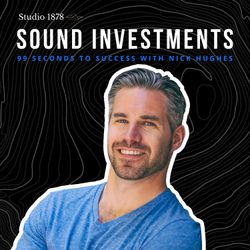
46. 99 Seconds to Success with Nick Hughes, Founders Live
58:10||Season 3, Ep. 46Nick Hughes, founder and CEO of Founders Live, discusses how a painful mobile payments startup failure led him to launch a casual Seattle pitch night in March 2014—five friends pitching for 99 seconds—which grew into a global entrepreneurship community across 155+ cities. He explains why 99 seconds became a differentiated, brandable format; how he treats community like a product with iterative growth; and how the “city leader” ambassador model enables local, self-sustaining events that don’t lose money while HQ builds a global member data layer. Hughes outlines Founders Live as an ecosystem focused on connection, knowledge, resources/capital, and exposure, with revenue increasingly driven by the Backstage marketplace and complemented by the global Pitch Challenge and premium membership with AI-powered search. He reflects on burnout, travel as renewal, lessons for Seattle’s ecosystem, and how AI will make starting easier but scaling and discovery harder.00:00 Welcome: Nick Hughes, Founders Live02:21 Origin Story: The First Event03:55 The 99-Second Pitch05:48 Going Global and The City Leader Model10:20 Burnout and What Keeps Nick Going13:20 The Founders Live Ecosystem and Business Model32:41 Pitch Patterns and Storytelling39:26 Seattle vs. the World56:29 AI and the Future of EntrepreneurshipAbout Your HostEd Barker has enjoyed a weird and varied career. Ed is a Brit now resident in Seattle and has founded three startups, enjoyed a long career in corporate strategy, and most recently as a VC. Sound Investments shines a small light on the fantastic work being done in the Pacific Northwest entrepreneurial community.Studio 1878Ed is Founder of Studio 1878, a podcast strategy and production studio focused on helping brands tell smarter, more human stories. We work with founders, operators, and marketing leaders to design shows that serve clear strategic goals. Studio 1878 handles the full process - from concept and positioning through recording, editing, and distribution. Our work blends editorial thinking with production craft, prioritizing substance over noise. The result is podcasts that build trust, credibility, and long-term brand value.Nick Hughes Nick is the founder and CEO of Founders Live, the global community and media platform he started in Seattle in March 2014 as a Friday-night gathering with a 99-second pitch limit and audience voting. What began as Feature Friday has since grown into an event series running in more than 150 cities across 50-plus countries, alongside a digital ecosystem that now includes the Backchannel community, Backstage Intelligence, and the Prime Time Pitch Challenge global tournament. Before Founders Live, Nick founded mobile payments startup Seconds and was a co-founder of Coinme, the Bitcoin ATM company. He is a Seattle native, a Western Washington University graduate, and one of the most-traveled community builders in the global startup world.Connect with Nick:Founders Live: founderslive.comLinkedIn: linkedin.com/in/jnickhughes/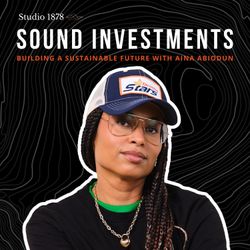
45. Building a Sustainable Future with Aina Abiodun, VertueLab
52:32||Season 3, Ep. 45Ed Barker talks to Aina Abiodun, President and Executive Director of VertueLab, about how the Hurricane Sandy blackout and failed emergency infrastructure in New York drove her into climate work, her five years in Germany learning how Europe funds climate tech, and why she moved to Seattle in 2023. Aina talks about VertueLab’s role funding and supporting climate entrepreneurs, how Washington’s Climate Commitment Act and Portland’s PCEF shape the ecosystem, and why early-stage hardware needs more support despite growth-stage capital concentration. There's a deep dive into VertueLab’s catalytic Climate Impact Fund One, including examples like Photon Marine, OpConnect, Community Energy Labs, and Cascadia Seaweed, then a discussion about the geo-restricted Opaline Climate Capital fund. Does the Pacific Northwest need more “hype,” better incentives and permitting for company relocation, and more infrastructure funds?00:00 Intro: Hurricane Sandy and The Wake-Up Call01:57 Nigeria, New York and the Climate Turning Point03:56 From Sandy Volunteer to Climate Obsessive10:05 Germany, the Pacific Northwest and Regional Climate Strategy14:19 VertueLab: The Fund, the Model and Portfolio Companies26:29 The Funding Landscape and Battery Innovation in Washington33:57 Seattle Ecosystem: Strengths, Weaknesses and What's Missing44:35 The Future of Climate Investing and VC's Hardware ReckoningAbout Your HostEd Barker has enjoyed a weird and varied career. Ed is a Brit now resident in Seattle and has founded three startups, enjoyed a long career in corporate strategy, and most recently as a VC. Sound Investments shines a small light on the fantastic work being done in the Pacific Northwest entrepreneurial community.Studio 1878Ed is Founder of Studio 1878, a podcast strategy and production studio focused on helping brands tell smarter, more human stories. We work with founders, operators, and marketing leaders to design shows that serve clear strategic goals. Studio 1878 handles the full process - from concept and positioning through recording, editing, and distribution. Our work blends editorial thinking with production craft, prioritizing substance over noise. The result is podcasts that build trust, credibility, and long-term brand value.Aina Abiodun Aina is President and Executive Director of VertueLab, a Portland-based nonprofit that provides funding, mentorship and federal grant assistance to early-stage cleantech entrepreneurs and operates out of the Seattle Climate Innovation Hub. A Nigerian-Canadian-American immigrant and three-time founder, she was the first Black woman to run a venture-backed tech company in Germany, and her path into climate work began after witnessing the unequal recovery from Hurricane Sandy in 2012 while working as a freelance brand strategist in New York. Before VertueLab, she founded Just & Green Partners, co-founded the cross-platform storytelling community Storycode, and advised brands from Meta to The Obama Foundation on social impact strategy. She holds an MFA from UCLA's film school and a BA from Amherst, and sits on the boards of Washington State Green Bank, Candide Group, and Climate Solutions. Based in Tacoma, she describes her work as "systems interventionist" — making climate innovation more just, more local, and more accountable to the communities it claims to serve. Connect with Jim:VertueLab: www.vertuelab.orgLinkedIn: linkedin.com/in/ainaabiodun/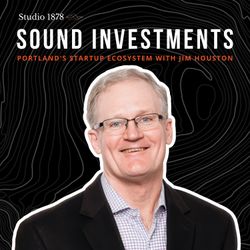
44. Portland's Startup Ecosystem with Jim Houston
44:58||Season 3, Ep. 44Ed Barker talks to Jim Houston, an early Intel Capital team member and later founder of the Portland Seed Fund, now a climate investor with E8. Jim remembers Intel Capital’s 1995 origins to help shape the emerging internet, its rapid global scale, its ecosystem-building investment approach, and what he learned about syndication and founders. Jim talks about why he launched Portland Seed Fund in 2010 to fill a critical seed-capital gap that was driving startups to Silicon Valley and assesses Portland’s mixed progress, including the influence of Intel and Nike, limited in-city research-university presence; and changing dynamics of founders and talent. Houston describes his shift into climate investing for impact, E8’s expansion via virtual meetings to nationwide deal flow, interest across diverse climate areas (including SMRs and AI-for-energy), and his view that AI is disrupting SaaS while AI-enabled hardware may create stronger moats.00:00 Introduction02:18 Intel Capital: Building Corporate Venture06:31 Portland's Tech Ecosystem10:33 Portland Seed Fund: Investments and Strategy22:47 Pivoting to Climate Investing33:21 AI, Energy and the Climate Crisis41:43 2026 Outlook and the SaaS ApocalypseAbout Your HostEd Barker has enjoyed a weird and varied career. Ed is a Brit now resident in Seattle and has founded three startups, enjoyed a long career in corporate strategy, and most recently as a VC. Sound Investments shines a small light on the fantastic work being done in the Pacific Northwest entrepreneurial community.Studio 1878Ed is Founder of Studio 1878, a podcast strategy and production studio focused on helping brands tell smarter, more human stories. We work with founders, operators, and marketing leaders to design shows that serve clear strategic goals. Studio 1878 handles the full process - from concept and positioning through recording, editing, and distribution. Our work blends editorial thinking with production craft, prioritizing substance over noise. The result is podcasts that build trust, credibility, and long-term brand value.Jim Houston Jim has spent three decades at the early stages of technology investing, starting in 1995 at Intel Capital during the early days of the internet, where he led 17 investments over nine years before moving to Bay Area growth firm Blueprint Ventures as Managing Director. In 2011 he co-founded the Portland Seed Fund with Angela Jackson, building it into one of the Pacific Northwest's most active pre-seed platforms and helping seed companies like Auth0, CrowdStreet, and OpenSesame. Today his focus is climate: he runs JH Climate Ventures, a seed and pre-seed platform, and co-manages Regenr8, a member-driven fund affiliated with E8 Angels that invests alongside the 130-plus-investor cleantech community. Since 2021 he has personally backed 19 climate startups, including a first-check into Photon Marine.Connect with Jim:E8: portlandseedfund.comLinkedIn: linkedin.com/in/jimhustonvc
43. Fixing Healthcare VC with Buffy Alegria, Loud Ventures
40:44||Season 3, Ep. 43This week Ed Barker talks to Buffy Allegria, managing partner and co-founder at Loud Ventures, about how her corporate banking background and experiences after having premature twins led her into healthcare venture capital. We talk about how VC is structurally broken for healthcare, where regulatory, reimbursement, and adoption hurdles require more than a check. Loud’s model embeds fractional executives and provides venture-building support to help companies navigate payer contracting, reimbursement codes, workflow integration, and other operational challenges, aiming to improve outcomes for founders, investors, and patients and to bring innovation to rural communities. The conversation also covers Buffy’s deal sourcing through angel groups, health systems, and programs like Creative Destruction Lab, her focus across healthcare infrastructure, medtech, alternative care models, and life sciences, and her views on AI’s promise and risks, including data quality, privacy, and bias.00:00 Introduction00:20 Introduction01:24 Buffy's Journey: From Banking to Healthcare VC05:13 Founding Loud Ventures09:19 Why Traditional VC Fails Healthcare16:14 The Companies and Founders They Back17:59 AI in Healthcare: Opportunity and Risk22:50 Navigating Reimbursement and Regulation29:32 The Pacific Northwest Healthcare EcosystemAbout Your HostEd Barker has enjoyed a weird and varied career. Ed is a Brit now resident in Seattle and has founded three startups, enjoyed a long career in corporate strategy, and most recently as a VC. Sound Investments shines a small light on the fantastic work being done in the Pacific Northwest entrepreneurial community.Studio 1878Ed is Founder of Studio 1878, a podcast strategy and production studio focused on helping brands tell smarter, more human stories. We work with founders, operators, and marketing leaders to design shows that serve clear strategic goals. Studio 1878 handles the full process - from concept and positioning through recording, editing, and distribution. Our work blends editorial thinking with production craft, prioritizing substance over noise. The result is podcasts that build trust, credibility, and long-term brand value.Buffy Alegria, Loud Buffy is Managing Partner at LOUD Ventures, a healthcare-focused venture firm investing in companies that pair purpose with profit across alternative care models, MedTech, tech-enabled health, and biotech. A Pacific Northwest native based in Kirkland, Buffy built her career at the intersection of finance, healthcare, and venture, beginning in banking before moving into early-stage investing and co-founding SteelSky Ventures, the women's health fund that backed companies serving more than 44 million people during her tenure. Her healthcare grounding runs deep, including a graduate degree from Oregon Health and Science University and a former board seat with the Washington State Hospital Association. At LOUD, she leads a model that embeds operational depth and leadership directly into portfolio companies, working alongside clinicians, operators, and financial partners to move healthcare innovation from discovery to delivery faster, and to reshape what venture capital looks like for founders solving the system's hardest problems.Connect with Buffy:Loud: loudco.com/venturesLinkedIn: linkedin.com/in/buffy-alegria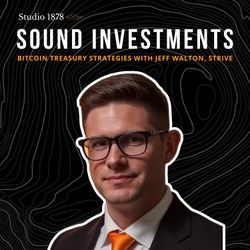
42. Bitcoin Treasury Strategies with Jeff Walton, Strive
56:53||Season 3, Ep. 42This week Ed Barker talks to Jeff Walton, Chief Risk Officer at Strive, about the company's shift from anti-ESG activism to building a Bitcoin treasury aimed at institutional exposure. Walton's background in reinsurance positions him well to understand the changing Bitcoin landscape, and how others in the market are delivering Bitcoin-driven balance-sheet growth. The conversation covers Strive’s approach to managing Bitcoin volatility, the role of a perpetual preferred equity security instrument, and transparent, real-time performance data. The episode shifts to a discussion about regulation - headwinds like Basel III - and tailwinds in the Bitcoin market. We talk about the impact of BlackRock and bank-launched Bitcoin ETFs, the thesis that expanding money supply and debt support Bitcoin as a store of value, and AI-driven threats to corporate cash flows.00:00 Introduction to Jeff Walton, Chief Risk Officer, Strive10:00 Strive's Bitcoin Treasury Strategy10:32 Perpetual Preferred Equity Explained13:58 Strive's Evolution: From ESG Activism to Bitcoin19:01 The Regulatory and Policy Landscape22:22 Crypto's Credibility Problem and Institutional Adoption29:45 Corporate Treasury and Bitcoin as a Store of Value40:05 Jeff's Pacific Northwest Roots46:10 Strive's Market Position50:26 The Role of a Chief Risk OfficerAbout Your HostEd Barker has enjoyed a weird and varied career. Ed is a Brit now resident in Seattle and has founded three startups, enjoyed a long career in corporate strategy, and most recently as a VC. Sound Investments shines a small light on the fantastic work being done in the Pacific Northwest entrepreneurial community.Studio 1878Ed is Founder of Studio 1878, a podcast strategy and production studio focused on helping brands tell smarter, more human stories. We work with founders, operators, and marketing leaders to design shows that serve clear strategic goals. Studio 1878 handles the full process - from concept and positioning through recording, editing, and distribution. Our work blends editorial thinking with production craft, prioritizing substance over noise. The result is podcasts that build trust, credibility, and long-term brand value.Jeff Walton, Strive Jeff is Chief Risk Officer at Strive, the publicly traded Bitcoin treasury and asset management company, where he leads capital markets strategy and risk for one of the world's top ten corporate Bitcoin holders. He is also founder and CEO of True North, a Strive subsidiary and peer group focused on Bitcoin treasury adoption, structured credit, and collateralized finance, and host of the Hurdle Rate podcast. Before Strive, Jeff spent more than a decade in reinsurance and capital markets, building deep expertise in structured finance, risk transfer, and probabilistic risk analysis — a background he now applies to designing Bitcoin-backed credit instruments aimed at the $300T fixed income market. He holds a BA in Business and Economics from the University of Puget Sound.Connect with Jeff:Strive: strive.comLinkedIn: linkedin.com/in/jeff-walton-3b39683a