Share
Software Made Human
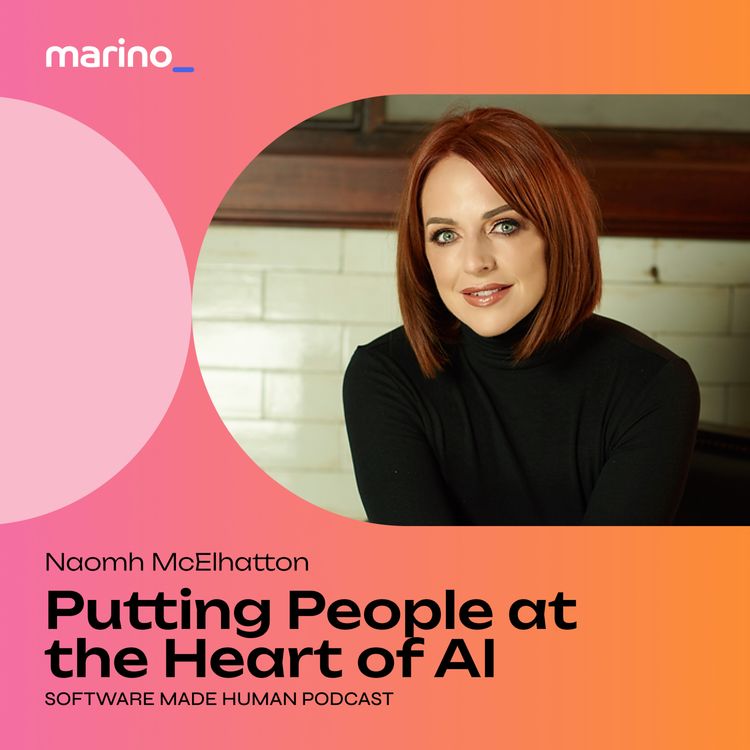
Putting People at the Heart of AI with Naomh McElhatton
Season 1, Ep. 9
•
On Software Made Human from Marino Software, host Garett Sheridan is joined by Naomh McElhatton, Irish Ambassador for Women in AI, founder of the Business of AI Club, and creator of The She Said Club.
Naomh shares her mission to make AI inclusive, accessible, and above all, people-focused. Together, they discuss how SMEs can adopt AI in meaningful ways, why regulation and ethics matter, and how education and diversity can shape a better future for technology.
They also explore bias, empathy, and what it really means to keep people at the centre of innovation.
More episodes
View all episodes
12. Sustainability as Responsibility with Louise French
44:30||Season 1, Ep. 12In this episode of Software Made Human, host Garrett Sheridan is joined by Louise French, sustainability consultant and Enterprise Ireland approved service provider. Louise spends her days sitting down with businesses and working out where they actually start with sustainability, and that turns out to be the real story. Most companies aren't resisting. They just don't know what the first step looks like.Louise makes the case that sustainability is better understood as responsibility, and that where we've landed now, the word we really need is regeneration. She walks through Kate Raworth's Doughnut Economics and the problem with treating growth as the goal in itself, and is refreshingly honest about her own Celtic Tiger years along the way.The conversation also gets into the energy and water side of AI and data centres, including the Codema district heating project in Tallaght, where waste heat from an AWS data centre is being piped into public services, and why software companies have sustainability challenges that are less visible, but arguably harder to control, than a manufacturer's.In this episode:Why "sustainability" has been diluted, and what it should actually mean in practiceDoughnut Economics, planetary boundaries, and growth for growth's sakeWhat's really blocking businesses, and the grants that exist to unblock themHow to make the case to a board, and why there's no one-size-fits-all strategyWhere software differs from manufacturing, governance, data, trust, and automationWhether Ireland's government is doing enough, given what it has to work withWhy getting ahead of regulation is leadership, and complying with it isn'tPlus a quick-fire round covering Doughnut Economics, the UN Sustainable Development Goals, the Climate Cocktail Club, staying curious as a leadership trait, and never saying no to an invite.You'll find Louise French on LinkedIn.
11. From Data Overload to Winning Insights with Fiona Ryan
44:45||Season 1, Ep. 11How does a winding career path through law and financial services lead to revolutionising the elite sports world? In this episode of Software Made Human, host Garrett Sheridan sits down with Fiona Ryan, co-founder and COO of Collata. Fiona shares her journey from navigating the early days of household technology to building a cutting-edge, Enterprise Ireland-supported sports analytics platform. We dive into how Collata solves "data overload" for coaches and performance directors by integrating fragmented athlete tracking systems into a seamless, human-centred dashboard. Fiona discusses the role of AI (including their chatbot, Ask Riley) in boosting team productivity, and the incredible strength of the Irish tech ecosystem. Tune in for an insightful conversation about keeping the human in the loop, maximising limited resources as a lean startup, and turning complex data sets into a true competitive edge.
10. Designing the Hero’s Journey with Pádraig Walsh
40:27||Season 1, Ep. 10In this episode of Software Made Human, Garrett Sheridan is joined by behavioural psychologist Pádraig Walsh, founder of ChangeAble Behaviour Solutions.Padraig’s work sits at the intersection of psychology, design, and technology — helping organisations understand how real human behaviour shapes whether products succeed or fail.The conversation explores how behavioural science can inform better software design, from reducing cognitive load and friction, to understanding motivation, capability, and behaviour change. Padraig shares practical frameworks including self-determination theory and the COM-B model, alongside everyday examples from tools like Xero and Strava.A central theme of the episode is the idea of the hero’s journey — and how the best software doesn’t position itself as the hero but helps users feel more capable, confident, and in control.This is a thoughtful conversation for anyone building software, designing products, or thinking deeply about how technology fits into real human lives.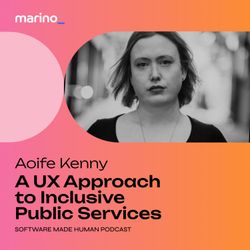
8. A UX Approach to Inclusive Public Services
32:11||Season 1, Ep. 8In this episode of Software Made Human, we’re joined by Aoife Kenny, Product Design Lead at Marino Software, to explore how inclusive design and user-centred thinking can break down barriers and create real impact.From her early career in graphic and spatial design to building digital healthcare products, Aoife shares how her work — and her personal life — have been shaped by technology. We talk about how software transformed her mother’s independence after a life-changing stroke, why “tick-box accessibility” isn’t enough, and how involving users from the very beginning leads to better outcomes for everyone.We also dive into Ireland’s new disability strategy, especially its transport and mobility pillar, and unpack how UX principles like co-design, continuous iteration, and empathy-driven research can turn policy into meaningful change.Whether you’re a designer, policymaker, or technologist, this conversation is a powerful reminder that when we design for the edges, we improve experiences for all.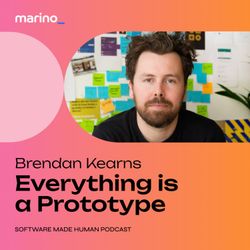
7. Brendan Kearns — Everything is a Prototype
45:40||Season 1, Ep. 7Brendan Kearns, designer and author of Everything is a Prototype, joins Garrett Sheridan to talk about creativity, risk, and learning through iteration. They explore prototyping as a mindset, reframing failure, navigating uncertainty, and what the future holds for intelligent, adaptive software.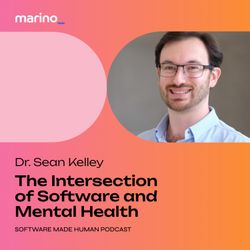
6. The Intersection of Software and Mental Health with Dr. Sean Kelley
47:57||Season 1, Ep. 6In this episode of Software Made Human, host Garrett Sheridan sits down with Dr. Sean Kelley, co-founder of Myndgard and PhD in computational psychiatry from Trinity College Dublin. Together, they explore how software and data science are transforming the field of mental health care, from early warning signs of depression to personalised therapy insights. Dr. Kelley shares his journey from studying primate behaviour to launching a mental health startup that aims to revolutionize patient care through predictive data and AI-driven insights. Tune in to discover how technology is not only shaping the future of therapy but also enabling preventive mental health care.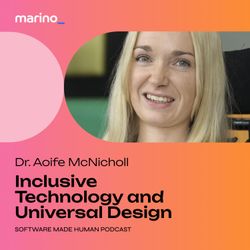
5. Inclusive Technology and Universal Design with Dr. Aoife McNicholl
34:13||Season 1, Ep. 5In this episode of Software Made Human, host Garrett Sheridan chats with Dr. Aoife McNicholl, assistant professor of psychology at Dublin City University. Drawing from both academic research and lived experience, Aoife explores how assistive technology shapes identity, supports independence, and impacts access to education.They dive into voice-activated tools, universal design, the stigma around assistive tech, and how small mindset shifts can create more inclusive software and systems. From higher education to independent living, this episode is packed with insights for developers, designers, educators, and anyone interested in the human side of technology.Key themes: disability identity, co-design, universal design, inclusive education, tech for empowerment.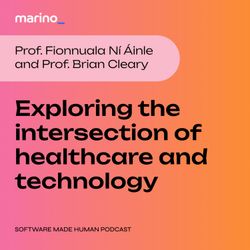
4. Saving Lives with Digital Tools: Tackling Maternal Blood Clots
35:22||Season 1, Ep. 4In this episode of the Software Made Human podcast, host Garrett Sheridan is joined by two incredible guests, Professors Fionnuala Ní Áinle and Brian Cleary, to explore the intersection of healthcare and technology. They discuss their groundbreaking work on using digital tools to prevent blood clots, the leading cause of maternal deaths in the UK and Ireland. The conversation covers their compassionate approach to healthcare, the creation of an electronic VTE risk assessment tool, and the impact of public awareness campaigns. This inspiring episode highlights how technology, when paired with human expertise, can save lives and transform healthcare outcomes.