Share
Slow Burn
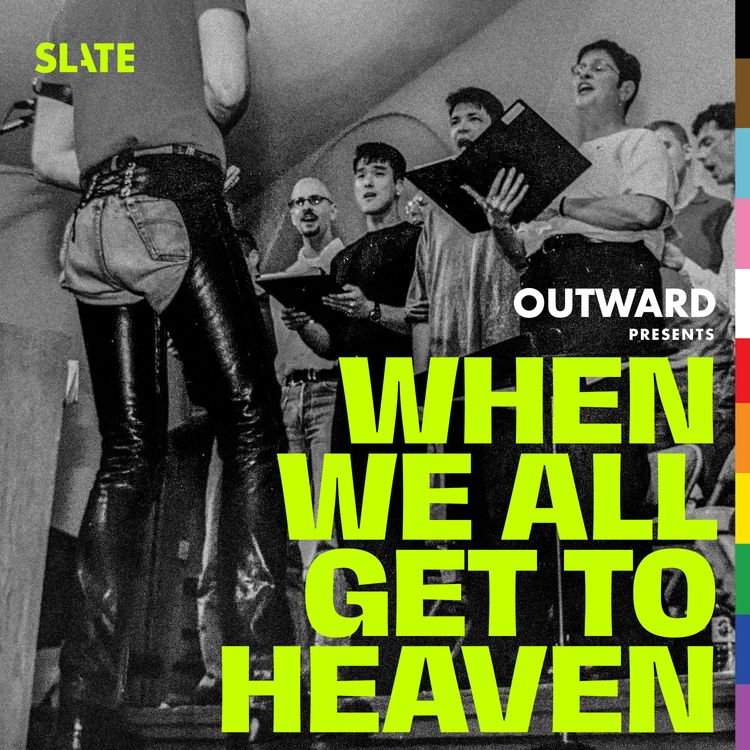
When We All Get to Heaven | Setting the Table
In 1993, more than 10 years into the AIDS epidemic, the Metropolitan Community Church of San Francisco (MCC-SF) tries to remember all they’ve lost. We think about remembering too after encountering an archive of 1,200 cassette recordings of this queer church’s services during the height of the epidemic. Whether you’re a regular church goer or would never step into one, we invite you to spend time with this LGBTQ+ San Francisco church as it struggles to reconcile sexuality and faith in the midst of an existential crisis.
For images and links about this episode visit https://www.heavenpodcast.org/episode-1.
About the montage: The worship service in this episode was on February 28, 1993. The Dyke March proclamation was written and read by Rev. Lea Brown. Rev. Karen Foster read the statement that sexual orientation does not need to be changed. Jim Mitulski recalled his hospital visit with the man who recognized him by his shape. Paul Francis told strangers at a restaurant to get ugly lovers and Eric Rofes told his mother that he was going to stay safe and keep having sex. Cleve Jones had the vision of a thousand rotting corpses, Rev. Ron Russell Coons preached that we have AIDS as a community, and Rev. Troy Perry proclaimed a revival on Eureka Street. The other people heard in the episode are either unknown or did not want to be named.
When We All Get to Heaven is produced by Eureka Street Productions. It is co-created by Lynne Gerber, Siri Colom, and Ariana Nedelman. Our story editor is Sayre Quevedo. Our sound designer is David Herman. Our managing producer is Krissy Clark. Tim Dillinger is our consulting producer and Betsy Towner Levine is our fact-checker. We had additional story editing help from Sarah Ventre, Arwen Nicks, Allison Behringer, and Krissy Clark. For a complete list of credits, please visit http://heavenpodcast.org/credits.
This project received generous support from individual donors, the Henry Luce Foundation (www.hluce.org), the E. Rhodes and Leona B. Carpenter Foundation, and California Humanities, a non-profit partner of the National Endowment for the Humanities (www.CalHum.org).
Eureka Street Productions has 501c3 status through our fiscal sponsor FJC: A Foundation of Philanthropic Funds.
The music for this episode is from the Metropolitan Community Church of San Francisco’s archive. It was performed by MCC-SF’s musicians and members with Bob Crocker and Jack Hoggatt-St.John as music directors. Additional music is by Tasty Morsels.
Thanks to
-
Paul Katz and Henry Machen for permission to use “June in San Francisco” from their fabulous 1991 musical Dirty Dreams of a Clean Cut Kid.
-
The estate of Leonard Bernstein for the use of “Somewhere” from West Side Story.
Great thanks, as always, to the members and clergy of the Metropolitan Community Church of San Francisco who made this project possible.
Get more Outward with Slate Plus! Join for weekly bonus episodes of Outward and ad-free listening on all your favorite Slate podcasts. Subscribe from the Outward show page on Apple Podcasts or Spotify, or visit slate.com/outwardplus for access wherever you listen.
Need to set up your Slate Plus feed? If you subscribed through Slate.com, check out our FAQ at slate.com/podcastfaqs for easy instructions. Members subscribed via Apple Podcasts get automatic access—no setup required.
More episodes
View all episodes
Season 1 Trailer: Watergate
02:42||Season 1It took two years for the Watergate scandal to unfold—for a break-in at the Democratic Party's headquarters to go from a weird little caper to a constitutional crisis that brought down a president. What was it like to experience those two years in real time?Hosted by Leon Neyfakh. An eight-episode podcast series made possible by Slate Plus members. Coming Nov. 28.
1. Watergate | 1. Martha
24:13||Season 1, Ep. 1People called her crazy, and to be fair she must have seemed crazy. But she was onto something. How Martha Mitchell, the celebrity wife of one of Nixon’s closest henchmen, tried to blow the whistle on Watergate—and ended up ruining her life.Want more Slow Burn? Join Slate Plus to unlock full, ad-free access to Slow Burn and your other favorite Slate podcasts. Subscribe to Slate Plus on Apple Podcasts by clicking "Try Free" at the top of the Slow Burn show page. Or, visit slate.com/slowburnplus to get access wherever you listen.
2. Watergate | 2. The Defeat of Wright Patman
28:54||Season 1, Ep. 2In 1973, the Senate Watergate hearings gripped the nation. But the first congressional hearings on the scandal took place a year earlier—and featured an angry Texan shouting at four empty chairs.Want more Slow Burn? Join Slate Plus to unlock full, ad-free access to Slow Burn and your other favorite Slate podcasts. You can subscribe directly from the Slow Burn show page on Apple Podcasts and Spotify. Or, visit slate.com/slowburnplus to get access wherever you listen.
3. Watergate | 3. A Very Successful Cover-Up
05:38||Season 1, Ep. 3Woodward and Bernstein, Walter Cronkite, and a host of other journalists tried to make people care about Watergate in the run-up to the 1972 election. They totally failed.This episode is member-exclusive. Listen to it now by joining Slate Plus. As a member, you'll unlock full, ad-free access to Slow Burn and your other favorite Slate podcasts. You can subscribe directly from the Slow Burn show page on Apple Podcasts and Spotify. Or, visit slate.com/slowburnplus to get access wherever you listen.
4. Watergate | 4. Lie Detectors
08:29||Season 1, Ep. 4How a folksy segregationist senator, a team of young investigators, and a few whistleblowers staged the hearings that made Watergate must-see TV.Want more Slow Burn? Join Slate Plus to unlock full, ad-free access to Slow Burn and your other favorite Slate podcasts. Subscribe to Slate Plus on Apple Podcasts by clicking "Try Free" at the top of the Slow Burn show page. Or, visit slate.com/slowburnplus to get access wherever you listen.
5. Watergate | 5. True Believers
06:20||Season 1, Ep. 5At a bar in Queens, and in the Senate offices, Nixon's supporters stood with him long after it was clear his hands were dirty. How did they rationalize their position? And what, finally, made them waver?This episode is member-exclusive. Listen to it now by joining Slate Plus. As a member, you'll unlock full, ad-free access to Slow Burn and your other favorite Slate podcasts. You can subscribe directly from the Slow Burn show page on Apple Podcasts and Spotify. Or, visit slate.com/slowburnplus to get access wherever you listen.
6. Watergate | 6. Rabbit Holes
07:01||Season 1, Ep. 6Why were so many Americans ready to believe conspiracy theories after Watergate? How did those beliefs help trigger Nixon‘s downfall? And given what we know about Watergate—what separates a conspiracy theory from just a theory?This episode is member-exclusive. Listen to it now by joining Slate Plus. As a member, you'll unlock full, ad-free access to Slow Burn and your other favorite Slate podcasts. You can subscribe directly from the Slow Burn show page on Apple Podcasts and Spotify. Or, visit slate.com/slowburnplus to get access wherever you listen.
7. Watergate | 7. Saturday Night
06:42||Season 1, Ep. 7What did Richard Nixon do when he felt the walls closing in? How did the country respond? And what did it feel like when people finally got to hear those tapes?This episode is member-exclusive. Listen to it now by joining Slate Plus. As a member, you'll unlock full, ad-free access to Slow Burn and your other favorite Slate podcasts. You can subscribe directly from the Slow Burn show page on Apple Podcasts and Spotify. Or, visit slate.com/slowburnplus to get access wherever you listen.
Extra, Extra
21:50||Season 1Slate Plus members get a bonus episode of Slow Burn every week. This week, we're releasing some samples of those episodes—interviews with people with a unique perspective on Watergate.Next week: The end. Find out more at slate.com/slowburn.