Share
Sisters In Sobriety
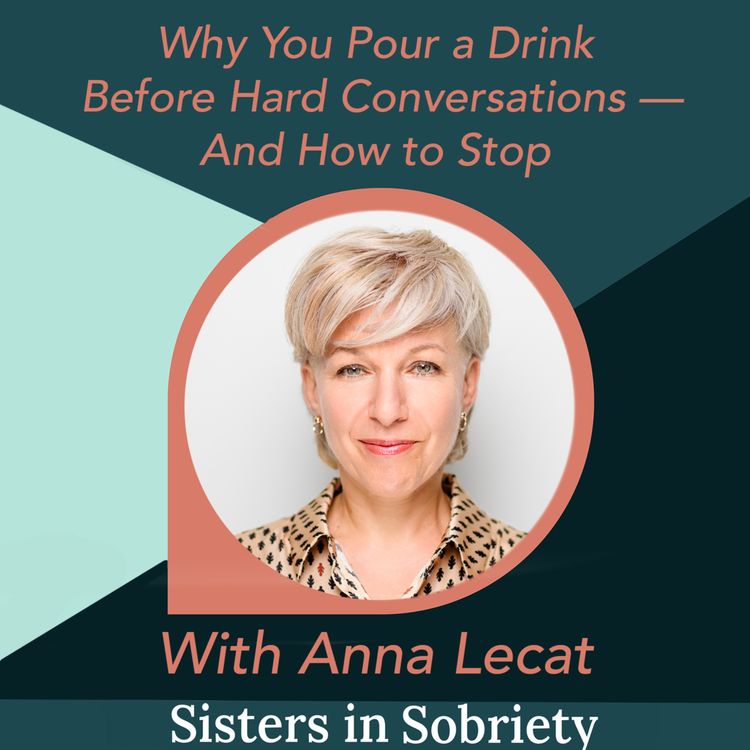
Why You Pour a Drink Before Hard Conversations — And How to Stop With Anna Lecat
Conflict avoidance and people-pleasing show up in so many women's stories around alcohol — yet they rarely get the airtime they deserve. In this episode of Sisters in Sobriety, Sonia and Kathleen sit down with Anna Lecat, intimacy and conflict consultant, global speaker, and author of Loving Conflict: Creating Collaboration Where Others See Division. Anna has spent decades across cultures, continents, and boardrooms persuading people that learning to conflict well is one of the most loving things we can offer each other.
What does it actually mean to fight kindly? Why do so many women reach for a drink before a hard conversation — or avoid it entirely? And what is it about anger that feels so unbearable to sit with?
Anna unpacks the tango metaphor at the heart of her work — conflict as tension plus connection, not threat plus danger. She walks through a practical spectrum for building conflict confidence, starting with low-stakes settings like restaurants and working up to the relationships that flood us most. The conversation explores emotional responsibility, nervous system regulation, and how early experiences with anger shape us as adults — often leading us to read conflict as rejection when it's really someone else's old wound surfacing.
Then things get personal. Sonia opens up about pouring a glass of wine before calling her mother — and how that glass became a bottle. Kathleen shares her own story of returning to her hairdresser with honest, gentle feedback and what that small act revealed about the difference between avoiding conflict and moving through it with care.
This is Sisters in Sobriety, the support community that helps women change their relationship with alcohol. Check out our Substack for extra tips, tricks, and resources.
Highlights
[00:01:00] Anna reframes conflict as a doorway rather than a threat
[00:02:00] Her mission: persuading people to fight kindly
[00:03:00] People who are deeply loved don't need to wage war
[00:05:00] Connection and uplift extend beyond romance to friends, parents, and coworkers
[00:06:00] Why women are socialized to avoid conflict
[00:07:00] Conflict as a tango — listening, suggesting, responding in turn
[00:08:00] Using nonverbal tango exercises in corporate workshops
[00:11:00] Men in Beijing end up in tears during a two-minute eye contact meditation
[00:13:00] Why sending food back at a restaurant is the perfect place to start
[00:14:00] "If you think you're enlightened, go spend a week with your parents"
[00:15:00] Kathleen's hairdresser story becomes a master class in kind conflict
[00:18:00] Sonia's glass of wine before calling her mother — and how it became a bottle
[00:20:00] Why anger is the most stigmatized emotion across every culture
[00:21:00] Anger reveals a person's deepest fears and values — slow down and listen
[00:22:00] How Anna navigates her own anger — consent first, then curiosity
[00:27:00] It only takes one person to shift the dynamic of a relationship
[00:29:00] People-pleasing as a conflict strategy — and how to tell it from self-protection
[00:33:00] Practice conflict in low-stakes settings before the ones that flood you
[00:37:00] Anna's nightly practice: revisiting hard moments and calming her nervous system
[00:43:00] Start small, start outside, get good at it. It becomes a superpower.
Links:
https://www.amazon.com/dp/1966629974
SIS Links
💌 Sisters In Sobriety Substack – where the magic (and the mocktail recipes) happen
📸 Sisters In Sobriety Instagram
🌐 Kathleen’s Website Kathleen does not endorse any products mentioned in this podcast
More episodes
View all episodes

High Vibration Foods With Chef Whitney
49:57|In this episode of Sisters in Sobriety, Sonia sits down with Chef Whitney Aronoff, founder of Starseed Kitchen and creator of High Vibration Living, to explore the powerful connection between food, energy, and emotional wellbeing. Together, they unpack how supportive nutrition goes far beyond what’s on your plate—and how small, intentional shifts can help women feel more aligned, energized, and connected in sobriety and everyday life.The conversation weaves through questions many women quietly ask themselves: Why do cravings—especially for sugar or alcohol—feel so intense? How does what we eat impact our mood, clarity, and intuition? Is “clean eating” actually helping, or could it be contributing to digestive issues and burnout?Whitney introduces the concept of “high vibration” foods—fresh, seasonal, whole ingredients that support both physical health and energetic balance. She challenges common wellness myths (like relying on raw foods or pre-packaged “healthy” meals) and emphasizes simple, traditional cooking methods like roasting, steaming, and slow cooking. The episode also explores how alcohol impacts blood sugar and cravings, why intuitive eating requires removing distractions and calming the nervous system, and how quality over quantity applies to everything from pantry staples to indulgences like chocolate or ice cream.Whitney shares her personal journey of healing chronic digestive issues by becoming her own advocate—moving beyond conventional advice and learning to listen to her body. The discussion expands into emotional and energetic health, touching on how food choices can influence clarity, identity, and even spiritual awareness.This is Sisters in Sobriety, the support community that helps women change their relationship with alcohol. Check out our substack for extra tips, tricks and resources.Highlights00:00 – Introduction to Chef Whitney Aronoff and High Vibration Living01:30 – Early relationship with food and chronic digestive issues03:00 – Becoming your own advocate in health and nutrition04:30 – The role of whole foods vs processed foods05:30 – Why simplicity in cooking supports digestion07:00 – The “fireplace” analogy for digestion and cold foods08:30 – Eating seasonally and adjusting food to climate10:00 – Why one hot meal a day matters11:00 – Food as a gateway to emotional and spiritual awareness12:30 – How diet changes can shift identity and intuition13:30 – Understanding cravings through energy and environment15:00 – What “high vibration” food actually means16:30 – Grocery store vs farmers market choices18:30 – Navigating food access and making better choices19:30 – Reconnecting with hunger cues and intuitive eating21:00 – How environment and stress affect digestion22:30 – Alcohol, sugar cravings, and blood sugar cycles24:00 – Rethinking sugar as “treats” instead of restriction26:00 – Quality over quantity when it comes to indulgences29:00 – Physical vs emotional cravings explained31:00 – Essential pantry staples for supportive nutrition34:00 – Adapting food philosophy to different lifestyles and cultures36:00 – Perfectionism, control, and emotional imbalance38:00 – Making cooking easier with planning and batch meals41:00 – Practical shortcuts: frozen foods, curry pastes, and bone broth44:00 – Carbs, rice, and personalized nutrition approaches47:00 – Building community through food and shared meals48:30 – Prioritizing joy and intentional livingWhitney's Linkshttps://starseedkitchen.com/https://www.instagram.com/whitneyaronoff/SIS Links💌 Sisters In Sobriety Substack – where the magic (and the mocktail recipes) happen📬 Sisters In Sobriety Email📸 Sisters In Sobriety Instagram🌐 Kathleen’s Website Kathleen does not endorse any products mentioned in this podcast📸 Kathleen’s Instagram
Simple Wellness Routines That Actually Help Mental Health With Cameron Rogers
49:27|Mental health routines don’t have to be complicated to make a real difference. In this episode, Sonia and Kathleen sit down with Cameron Rogers to talk about the small, realistic practices that help regulate anxiety, quiet racing thoughts, and support emotional wellbeing. Cameron Rogers is the founder and host of the Conversations with Cam podcast and uses her unfiltered voice and humor to create a safe space online for honest conversations about motherhood, mental health, and personal growth. As a mental health advocate, community curator, and mom, Cameron’s audience connects with her authentic approach to navigating life’s challenges. She is also the creator of Quiet Your Mind and Busy Your Hands, a product that blends journaling prompts, coloring affirmations, and reflection to help people reconnect with creativity and calm—an idea inspired by her recovery from a concussion that forced her to step away from screens and rediscover the power of simple, analog practices.In this conversation, Sonia, Kathleen, and Cameron explore the realities of caring for mental health in a busy world. They discuss anxiety, ADHD, productivity culture, and how motherhood can reshape the way we think about self-care. The episode touches on questions many women are asking: how journaling can interrupt spiraling thoughts, why hydration and movement affect mood, and how creating small rituals—like journaling spaces or “calm corners”—can help regulate the nervous system during stressful moments.The discussion also highlights practical tools Cameron uses regularly. Journaling becomes a central theme as a way to release thoughts onto paper and reduce anxiety. Cameron shares how simple prompts, gratitude practices, and even word-dump journaling can make the habit approachable. They also explore how environment affects emotional regulation through lighting, texture, and calming spaces, and how modern wellness culture can sometimes create unrealistic pressure to maintain the “perfect” routine.Later in the episode, the conversation shifts to substance use and mindfulness. Cameron explains why she stepped away from alcohol after noticing it worsened her anxiety, and mindful cannabis use, dopamine-seeking behaviors linked to ADHD, and Cameron’s experience with microdosing and a guided psychedelic journey that helped her process lingering stress and identity shifts after leaving her corporate career.This is Sisters in Sobriety, the support community that helps women change their relationship with alcohol. Check out our substack for extra tips, tricks and resources.Episode Highlights00:00 Introduction to Cameron Rogers and her work01:40 The concussion that changed Cameron’s mental health practices03:00 Growing up in a high-performance environment05:00 When self-care becomes obsessive07:10 How journaling became Cameron’s core practice10:00 Using journaling to calm anxiety12:15 Gratitude practices for shifting mindset13:30 Creating “calm corners” for nervous system regulation15:00 Sensory elements that create calm spaces18:00 Hydration and mental clarity22:30 Mindful cannabis use and creativity24:00 Cameron’s decision to stop drinking alcohol26:30 Addiction, dopamine, and ADHD32:00 Cameron’s psychedelic therapy experience39:30 Using affirmations to shift inner dialogue43:00 Reframing exercise as mental health support47:00 Letting go of the “perfect” wellness routineCameron's LinksInstagram: @cameronoaksrogers Substack: Fill Your CupSIS Links💌 Sisters In Sobriety Substack – where the magic (and the mocktail recipes) happen📬 Sisters In Sobriety Email📸 Sisters In Sobriety Instagram🌐 Kathleen’s Website Kathleen does not endorse any products mentioned in this podcast📸 Kathleen’s Instagram
When Family Is the Source of the Trauma With Dr. Sherrie
43:28|Licensed clinical psychologist and bestselling author Dr. Sherrie Campbell joins us for a powerful conversation about toxic family dynamics, emotional abuse, and the complicated path toward family estrangement. In this episode, Sonia and Kathleen explore how unhealthy family relationships can shape self-worth, boundaries, and coping mechanisms—including substance use—and how women can begin to reclaim their lives. Dr. Campbell is a nationally recognized expert on family estrangement, author of Adult Survivors of Toxic Family Members, a TEDx speaker, and host of the top 1% podcast Sherapy Sessions: Cutting Toxic Family Ties. Together, they unpack the realities of emotionally abusive parenting, boundary setting, and the courage it takes to choose healing.The conversation explores difficult but deeply relatable questions: What actually qualifies as emotional abuse in a family system? Why do so many adult children struggle to recognize toxic dynamics while they’re living inside them? How do manipulation, triangulation, guilt, and silent treatment shape a child’s development—and how do those patterns follow people into adulthood? The episode also examines how family trauma can intersect with coping behaviors like alcohol use, why estrangement is often misunderstood, and how protective distance can become an act of self-respect rather than rejection.Dr. Campbell shares parts of her own story of growing up in a deeply dysfunctional family system and the decades-long process that ultimately led her to cut contact with her mother. She walks through the moment that finally broke the cycle, the years of boundary setting that preceded it, and the grief that often accompanies estrangement. The conversation closes with reflections on healing, journaling as a lifelong practice, and what it means to build a chosen life outside of family dysfunction.This is Sisters in Sobriety, the support community that helps women change their relationship with alcohol. Check out our substack for extra tips, tricks and resources.Episode Highlights00:00 – Introducing Dr. Sherrie Campbell and the topic of toxic family relationships02:30 – Why family estrangement is often misunderstood04:10 – The difference between single-incident conflict and chronic family dysfunction05:40 – Why parents are responsible for repairing relationships with their children07:20 – How boundaries are meant to preserve relationships, not destroy them08:10 – The common behaviors of emotionally abusive parents10:15 – Why emotional abuse can be difficult to recognize inside families11:00 – A personal example of subtle emotional humiliation12:30 – Emotional abuse vs. emotional neglect explained14:00 – What “protective estrangement” really means15:30 – The metaphor of the house, yard, and fence for setting boundaries18:30 – Why estrangement usually follows decades of boundary violations21:00 – How long many adult children try to repair relationships before cutting ties24:00 – The intersection of childhood trauma and substance use25:00 – Why people turn to alcohol or other coping behaviors27:30 – Lessons learned from working with addiction recovery groups29:30 – What changes internally when someone gets sober31:00 – Why addiction recovery requires responsibility and self-respect33:30 – The first steps toward healing from family trauma36:30 – Rebuilding self-trust after toxic parenting39:00 – Dr. Campbell’s personal healing practices and journaling ritual41:00 – Breaking generational cycles through love and conscious parentingDr. Sherrie's LinksLink to TEDx talk: https://youtu.be/deyHwDkG7oc?si=vy7p-wD6MvgwCfR-Instagram: https://www.instagram.com/dr.sherrie/SIS Links💌 Sisters In Sobriety Substack – where the magic (and the mocktail recipes) happen📬 Sisters In Sobriety Email📸 Sisters In Sobriety Instagram🌐 Kathleen’s Website Kathleen does not endorse any products mentioned in this podcast📸 Kathleen’s Instagram
Midlife Isn’t a Crisis — It’s a Comeback With Heather Francis
48:03|Sonia and Kathleen sit down with Heather Francis, host of the Midlife Moves Podcast. Heather is an entrepreneur and mom of four who brings a lived-experience perspective to conversations around identity, self-trust, and personal growth. She speaks as a woman who has learned, often through trial and error, what it means to evolve, recalibrate, and choose herself more intentionally.Together, they explore what really happens in our forties and fifties: shifting identities, perimenopause, strength training, sleep disruption, protein intake, and the unexpected grief that can come when children grow up and roles change. Together, they unpack how to move through midlife with intention rather than fear—and how movement, community, and curiosity can help women feel strong, clear, and empowered in this next chapter.The conversation weaves through questions many women are quietly asking: Why does anxiety spike in perimenopause? Why does sleep suddenly fall apart at 1:00 AM? Why does cardio stop working the way it used to? How much protein do women actually need in midlife? What role do magnesium, creatine, and recovery days play in hormonal health? How do friendships, identity, and self-definition evolve when the “mom” role begins to shift?Heather shares practical insights around strength training versus excessive cardio, mobility work, rest days, over-exercising, wearable technology, alcohol’s impact on sleep, sugar spikes, and the importance of fueling the body with whole-food protein sources. The discussion touches on cognitive health in midlife, research around creatine for women, bloodwork-guided supplementation, anxiety management, and why connection is foundational for both brain health and emotional resilience. Rather than extreme reinvention, the theme becomes small, intentional adjustments that support longevity, muscle preservation, sleep quality, and overall wellness.Heather opens up about her identity crisis when her children began leaving home, the depression that followed, the isolation of rediscovering herself alone, and the courage it took to ask: Who am I beyond caretaker, wife, and mother? The conversation moves into friendship shifts, gym communities, saying yes to coffee dates, and redefining confidence outside of labels. In a powerful closing reflection, Heather offers a reframe for midlife: not as decline, but as possibility—a second act that doesn’t require blowing up your life, just choosing more intentionally within it.This is Sisters in Sobriety, the support community that helps women change their relationship with alcohol. Check out our substack for extra tips, tricks and resources.Highlights00:00 – Introduction to Heather Francis and Midlife Moves02:00 – Identity crisis when children grow up04:00 – Realizing midlife is a second act, not an ending05:00 – Perimenopause conversations we wish existed06:00 – Hormones, anxiety, and 1:00 AM wakeups07:00 – Why movement helped anxiety more than medication08:00 – Cardio vs. strength training in midlife09:00 – What strength training actually looks like13:00 – Yoga, mobility, and emotional release15:00 – Signs you may be over-exercising17:00 – Magnesium, meditation, and sleep hygiene19:00 – Alcohol’s impact on sleep quality20:00 – Wearables, tracking, and number obsession21:00 – Sugar’s effect on sleep and recovery23:00 – Nutrition, fueling, and hormone support27:00 – Protein myths and whole-food sources34:00 – Creatine, cognitive health, and supplements38:00 – Friendship shifts and loneliness in midlife44:00 – Redefining identity beyond “mom”46:00 – The message of midlife: possibility and intentional changeHeather's Links https://www.instagram.com/themidlifemovespodcast/midlifemoves.co SIS Links💌 Sisters In Sobriety Substack – where the magic (and the mocktail recipes) happen📬 Sisters In Sobriety Email📸 Sisters In Sobriety Instagram🌐 Kathleen’s Website Kathleen does not endorse any products mentioned in this podcast📸 Kathleen’s Instagram
AI Journaling With Sean Dadashi
48:31|Sonia sits down with Sean Dadashi, co-founder of Rosebud, an AI-guided journaling app built to deepen self-reflection, emotional awareness, and intentional healing. Together, they explore how journaling can move beyond venting and become a powerful tool for insight — helping you recognize emotional patterns, understand triggers, and reshape the internal narratives that shape sobriety and personal growth.The conversation expands into the evolving role of AI in mental health and self-development. They discuss how guided prompts, voice journaling, emotional tagging, and pattern recognition can make reflection more accessible — especially for those intimidated by a blank page. At the same time, they examine the importance of keeping therapy, community, and real human connection at the center of healing, while using technology as a supportive tool rather than a replacement.Sonia and Sean also walk through specific journaling practices, including Rose-Bud-Thorn reflections, somatic journaling, gratitude work, boundary-setting exercises, and intention setting. They explore how Rosebud can support therapy preparation, unsent letters, difficult conversations, and voice-based emotional processing.Throughout the episode, they highlight how digital journaling can help expand emotional vocabulary, identify recurring behavioral patterns, and deepen therapeutic work between sessions.On a more personal note, Sonia shares her love of pen-to-paper journaling — the colored pens, the bedside rituals — and reflects on what it means to shift from analog habits to digital tools in a way that enhances, rather than replaces, the reflective experience.This is Sisters in Sobriety, the support community that helps women change their relationship with alcohol. Check out our substack for extra tips, tricks and resources.Highlights00:00 — Introduction to Sean Dadashi and the mission behind Rosebud01:45 — Sean’s early relationship with journaling during family divorce04:10 — Moving from handwritten journals to digital reflection06:20 — Recognizing emotional and behavioral patterns over time08:05 — The “blank page problem” and barriers to starting journaling09:40 — How the “Go Deeper” function guides layered reflection11:30 — AI summaries, emotional tagging, and weekly reports13:05 — Metrics, character tracking, and narrative insights14:10 — Naming emotions and therapist-informed AI design15:20 — How Rosebud differs from generic chatbots16:40 — AI memory and long-term pattern recognition17:25 — Asking big-picture life questions through journal history18:50 — Year-end reflection archetypes and narrative mapping20:10 — AI personas: nurturing vs. direct reflection styles21:05 — Preventing AI from replacing human connection22:30 — Platform limits and ethical guardrails24:00 — Crisis response and safety considerations28:40 — Using journaling alongside therapy and coaching31:10 — Preparing for therapy sessions through reflection insights32:15 — Pen-and-paper vs. digital journaling debate34:05 — Voice journaling and emotional expression36:10 — Importing handwritten journals via photo transcription38:15 — Rose-Bud-Thorn framework and evening reflections40:20 — Somatic journaling and body-based awareness41:10 — Letter writing, boundary setting, and hard conversations43:00 — Facilitating real-life conversations using AI support44:05 — Intention setting and future-self visualization45:50 — Creating mantras and symbolic yearly totems46:40 — Building sustainable daily reflection practices47:30 — Closing thoughts and episode wrap-upRosebud https://my.rosebud.app/SIS Links💌 Sisters In Sobriety Substack – where the magic (and the mocktail recipes) happen📬 Sisters In Sobriety Email📸 Sisters In Sobriety Instagram🌐 Kathleen’s Website Kathleen does not endorse any products mentioned in this podcast📸 Kathleen’s Instagram
From High-Functioning To Whole Again With Marci Hopkins
58:33|In this episode, Sonia sits down with TV personality, recovery advocate, and author Marci Hopkins to unpack the layered journey from trauma and addiction to emotional sobriety and self-trust. As the host of the award-winning talk show Wake Up with Marci and author of Chaos to Clarity, Marci brings both lived experience and professional insight to the conversation. Together, they explore healing, resilience, and what it really takes to rebuild a life after alcohol.The discussion moves through the experiences that shaped Marci’s relationship with alcohol, from early childhood trauma and family addiction to high-functioning drinking in adulthood. Themes of generational cycles, emotional suppression, validation-seeking relationships, and the normalization of alcohol surface throughout the conversation. The episode also examines the slippery slope from social drinking to dependence, how denial shows up, and the internal bargaining that often delays change.Marci shares how practices like affirmations, forgiveness work, boundary setting, and cognitive “interrupters” can begin to rewire negative thought patterns.Marci walks through the defining moments that led to her final surrender — including the DUI that forced her to confront the reality of her drinking. She reflects on motherhood, marriage, career pressure, and the emotional reckoning that followed. The conversation closes on her path to advocacy, her commitment to breaking stigma, and how turning pain into purpose became central to her healing.This is Sisters in Sobriety, the support community that helps women change their relationship with alcohol. Check out our substack for extra tips, tricks and resources.Episode Highlights00:01:00 – Marci’s introduction and recovery advocacy work00:03:00 – Childhood trauma and the first experiences of abuse00:05:00 – Living with her grandparents and early instability00:08:00 – Abuse and lack of maternal protection00:10:00 – Perfectionism and controlling the external image00:12:00 – Teen drinking, validation, and blackout weekends00:14:00 – Escaping home life through relationships00:16:00 – Party culture, drugs, and early adulthood00:17:00 – DUIs and hitting early warning signs00:20:00 – Using appearance and relationships for power00:23:00 – Career rise in television and media00:25:00 – Motherhood, ambition, and mounting pressure00:26:00 – Alcohol as “liquid courage” for auditions00:27:00 – Hiding drinking and increasing dependence00:28:00 – The failed attempt to moderate00:29:00 – The day of her final drink00:31:00 – DUI arrest and confrontation with reality00:33:00 – Surrender and return to AA00:38:00 – Emotional sobriety and healing trauma00:55:00 – Breaking stigma and normalizing recovery conversationsMarci's LinksInstagramYouTubeSIS Links💌 Sisters In Sobriety Substack – where the magic (and the mocktail recipes) happen📬 Sisters In Sobriety Email📸 Sisters In Sobriety Instagram🌐 Kathleen’s Website Kathleen does not endorse any products mentioned in this podcast📸 Kathleen’s Instagram
Why You Can’t “Just Move On” From Trauma With Amber T
53:18|In this episode of Sisters in Sobriety, Sonia is joined by Amber Trejo, a licensed marriage and family therapist and certified clinical trauma professional who specializes in complex childhood trauma and the family system. Amber is also a wife and mom of three on her own healing journey, and today she helps Sonia unpack how childhood wounds quietly shape adult life — and what it looks like to move from survival mode into safety, self-regulation, and connection.Sonia and Amber explore the ways complex trauma can show up long after childhood — through hypervigilance, perfectionism, emotional shutdown, and repeating relationship patterns. They discuss why so many people struggle to even name what happened to them, especially when emotional neglect, invalidation, or silent treatment were normalized.Amber shares a nervous-system-centered approach to healing, weaving in polyvagal theory, cues of safety versus danger, parts work, somatic grounding, and EMDR. The conversation touches on how trauma lives in both the brain and the body, and why healing requires more than simply intellectualizing the past — it’s about building real capacity for regulation, curiosity, and connection in the present.In the personal story thread, Sonia opens up about having very few childhood memories, the fear of “making it up,” and the complicated ways trauma can surface later in adulthood, especially in relationships and family dynamics. Together, they connect trauma work to sobriety — exploring addiction as a form of nervous system coping, why white-knuckling often isn’t enough, and how early recovery sometimes means doing whatever it takes to get through the hardest moments with compassion.This is Sisters in Sobriety, the support community that helps women change their relationship with alcohol. Check out our substack for extra tips, tricks and resources.00:00 — Amber Trejo joins Sonia to discuss trauma healing01:00 — Amber shares her own childhood trauma and path to therapy03:00 — Trauma resurfacing through marriage and motherhood04:00 — Complex trauma vs single-event PTSD05:00 — Emotional neglect as an overlooked trauma wound07:00 — Why complex trauma shows up most in relationships08:00 — Sonia’s “grimy breaker” metaphor for trauma patterns10:00 — Minimizing pain: “but it could be worse”12:00 — Shame, invalidation, and not trusting emotions14:00 — Perfectionism as a survival strategy15:00 — Parts work and inner child healing17:00 — Intellectualizing vs healing in the body18:00 — Sonia on missing childhood memories20:00 — “What if I’m making it up?” as a trauma hallmark22:00 — Safety and resourcing before deeper trauma work25:00 — Cues of danger, passive aggression, and hypervigilance31:00 — Ventral vagal state: curiosity as a sign of safety33:00 — Addiction as nervous system regulation38:00 — Alcohol as relief before it becomes the problem45:00 — Early sobriety: small realistic coping tools49:00 — Creativity, aliveness, and building daily regulation practicesAmber's Links: Instagram:https://www.instagram.com/integrativetraumatherapist?igsh=MWpvdTI5emVyZzU4aA%3D%3D&utm_source=qrCourse for parents with trauma: https://stan.store/Integrativetraumatherapist/p/-sjwt4r2xWebsite: https://www.theintegrativetraumatherapist.com/SIS Links💌 Sisters In Sobriety Substack – where the magic (and the mocktail recipes) happen📬 Sisters In Sobriety Email📸 Sisters In Sobriety Instagram🌐 Kathleen’s Website Kathleen does not endorse any products mentioned in this podcast📸 Kathleen’s Instagram
Redefining Intimacy After 40 With Dr. Maria Sophocles
46:47|Sonia sits down with Dr. Maria Sophocles, an internationally respected gynecologist and leader in menopause and female sexual health, to explore what really happens to intimacy, desire, and connection in midlife. The conversation challenges the often-unspoken realities of perimenopause, menopause, and sexuality—offering women reassurance, clarity, and a sense of possibility in a season that is too often misunderstood.Sonia and Dr. Sophocles open up a wide-ranging discussion about the cultural pressure women carry around sex, the emotional weight of obligation, and how expectations in long-term relationships can quietly create distance over time. They explore themes like libido changes, communication, pleasure, dating after divorce, and the ways women can begin rewriting outdated scripts around intimacy as bodies and hormones evolve.Throughout the episode, Dr. Sophocles breaks down the physiology of menopause beyond hot flashes—touching on vaginal dryness, arousal shifts, clitoral health, and the role of estrogen deficiency in sexual function. She also clarifies common misconceptions around hormone therapy, explains why hormone testing often adds confusion, and shares evidence-based options including vaginal estrogen and newer treatments.Alongside the medical insight, Sonia also reflects on the personal side of this conversation—what it means to move from performance toward connection, from silence toward honesty, and from shame toward self-trust. Dr. Sophocles offers compassionate language for couples navigating change, and gentle encouragement for women stepping into this chapter with curiosity instead of fear.This is Sisters in Sobriety, the support community that helps women change their relationship with alcohol. Check out our substack for extra tips, tricks and resources.00:01 — Introducing Dr. Maria Sophocles and her new book The Bedroom Gap00:02 — Why menopause training is still missing in women’s healthcare00:03 — The most overlooked symptom: sexual shame and silence00:05 — What the “Bedroom Gap” really means in relationships00:07 — How gender roles set couples up for disconnection00:09 — Why sex education is still fear-based, not pleasure-based00:11 — Dating after divorce in midlife: a whole new world00:13 — Sonia opens up about “duty sex” and long-term marriage patterns00:15 — Responsive desire: why arousal can come before libido00:16 — The power of G-rated intimacy and skin-to-skin connection00:18 — When a hug feels like pressure: navigating partner expectations00:20 — How to communicate needs without triggering defensiveness00:23 — Reframing lube, toys, and support as sex-positive tools00:25 — Menopause changes in the brain, vulva, vagina, and clitoris00:28 — Why vaginal estrogen is one of the most underused solutions00:32 — Breast cancer survivors and the truth about local estrogen safety00:33 — Other treatments: Intrarosa and Osphena00:36 — Why hormone blood tests rarely give useful answers00:41 — Fantasy, erotic content, and “bibliotherapy” for desire00:45 — Dr. Sophocles’ hope: grace, permission, and rewriting the rulesDr. Sophocles LinkInstagram: https://www.instagram.com/mariasophoclesmd/TED Talk: https://www.ted.com/talks/maria_sophocles_what_happens_to_sex_in_midlife_a_look_at_the_bedroom_gapThe Bedroom Gap: https://www.amazon.com/Bedroom-Gap-Rewrite-Rules-Roles/dp/0306837404SIS Links💌 Sisters In Sobriety Substack – where the magic (and the mocktail recipes) happen📬 Sisters In Sobriety Email📸 Sisters In Sobriety Instagram🌐 Kathleen’s Website Kathleen does not endorse any products mentioned in this podcast📸 Kathleen’s Instagram