Share
Sing for Science
Jena Malone: Set Your Sorrows Down (Polyamory Science with Amy Moors)
Actor and musician Jena Malone joins Sing For Science to discuss “Set Your Sorrows Down” from her album Flowers for Men, a deeply personal record exploring identity, desire, transformation, and non-monogamy. The song’s central question — “Who am I to become now?” — opens a conversation about inherited relationship scripts and what it means to “take the society out of you.” Joining Jena is Chapman University psychologist and Kinsey Institute Research Fellow Dr. Amy Moors, whose work examines consensual non-monogamy, polyamory, stigma, jealousy, compersion, and the relationship structures that exist outside conventional monogamy. Together they explore why non-monogamy remains so stigmatized despite being far more common than many people assume, how art can make hidden experiences visible, and why studying love scientifically can help dismantle shame.
More episodes
View all episodes
Scott Holiday (Rival Sons): Topology (Phenomenology with Dylan Trigg)
46:03| @RivalSons guitarist Scott Holiday joins philosopher Dr. Dylan Trigg of Central European University in Vienna for a conversation about identity, dreams, and what remains of us when everything changes. Taking “Veridream” from Scott’s album Topology as a starting point, we explore topology as a philosophical metaphor: how we can be transformed by experience while retaining something essential. Scott shares how recovery from a serious cycling accident reshaped an instrumental project into songs he needed to sing himself. Drawing on his accompanying essay, The Invisible Geometry of the Heart, Trigg brings the philosophy of Maurice Merleau-Ponty and Freud’s concept of the uncanny into a discussion of perception, technology, and our connections to one another. Subscribe to our channel for new podcasts every other week or subscribe to the podcast on your favorite podcast app: Listen Now: https://www.singforscience.org/ Apple Podcasts: https://podcasts.apple.com/us/podcast/sing-for-science/id1535070210 Spotify: https://open.spotify.com/show/2xXs2PTc16TYY34FTgpbIY?si=ac55ac8510c54bef YouTube: https://www.youtube.com/@UC5IsH4kGa8B2UlAmaeuULYw X: https://x.com/singforscience Instagram: https://www.instagram.com/singforscience Facebook: https://www.facebook.com/singforscience LinkedIn: https://www.linkedin.com/company/sing-for-scienceCain Culto: a plague, a pestilence (Psychiatry with Dr. Jack Drescher)
49:41|Musician @cainculto and Columbia University clinical professor of psychiatry Dr. Jack Drescher join Sing for Science to examine the evidence against conversion therapy. Cain discusses his Latin American and Appalachian roots, his journey from Christian rock to queer self-expression, and his experience with conversion therapy. Dr. Drescher explores psychiatry’s history of pathologizing homosexuality, the activism that helped change it, and the evidence against efforts to change sexual orientation. A conversation about faith, identity, and what happens when the promise of healing becomes a source of harm.Subscribe to our channel for new podcasts every other week or subscribe to the podcast on your favorite podcast app:Listen Now: https://www.singforscience.org/Apple Podcasts: https://podcasts.apple.com/us/podcast/sing-for-science/id1535070210Spotify: https://open.spotify.com/show/2xXs2PTc16TYY34FTgpbIY?si=ac55ac8510c54befYouTube: https://www.youtube.com/@UC5IsH4kGa8B2UlAmaeuULYw X: https://x.com/singforscienceInstagram: https://www.instagram.com/singforscienceFacebook: https://www.facebook.com/singforscienceLinkedIn: https://www.linkedin.com/company/sing-for-science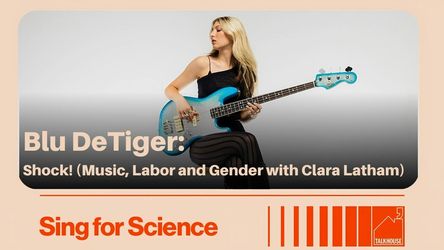
Blu DeTiger: Shock! (Music, Labor and Gender with Clara Latham)
42:58|Bass virtuoso, DJ, and producer Blu DeTiger joins Dr. Clara Latham, music scholar at The New School, for a conversation about groove, gender, and the work behind making music look effortless. Taking Blu’s “SHOCK!” as a starting point, we explore her fluency in disco and funk, the coordination involved in DJing while playing bass, and the blurry line between music as work and music as play. Along the way, we consider why labor-saving technologies sometimes create more work, what makes a turntable an instrument rather than an appliance, and how women musicians challenge expectations about skill, sexuality, and who gets taken seriously.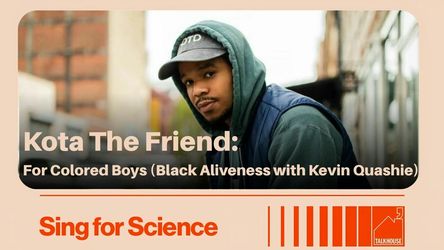
Kota The Friend: For Colored Boys (Black Aliveness with Kevin Quashie)
01:05:57|Brooklyn rapper, producer, and singer-songwriter Kota the Friend joins Brown University professor and author Dr. Kevin Quashie for a conversation about Black life, language, world-building, and the possibilities of imagining a Black world beyond narratives defined by violence. Using Kota’s “For Colored Boys” alongside ideas from Quashie’s Black Aliveness, or A Poetics of Being, the conversation explores Black aliveness, Black pessimism, audience, self-love, conformity, spirituality, and the extraordinary power of language to create new ways of seeing and being. Recorded live at Poster House NYC on September 2, 2026, in conjunction with its Act Black: Posters from Black American Stage & Screen exhibition.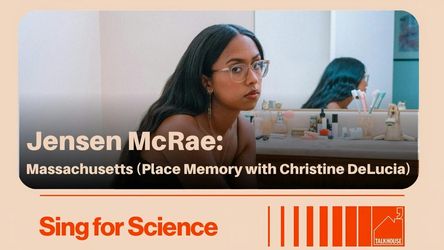
Jensen McRae: Massachusetts (Place Memory with Christine DeLucia)
38:38|How do the specific objects and places of our past shape our understanding of personal and collective history? In this episode of Sing for Science, singer-songwriter Jensen McRae sits down with Williams College historian Dr. Christine DeLucia to explore the intersections of songwriting, material culture, and historical memory. Starting with a deep dive into the specific imagery of Jensen’s song "Massachusetts"—specifically the lyric referencing a souvenir pilgrim ashtray—they examine how ordinary objects serve as powerful conduits for memory. #SingForScience #JensenMcRae #ChristineDeLucia #massachusetts #songwriting #MaterialCulture #HistoricalMemory #WilliamsCollege #SciencePodcast #MusicAndHistory #PublicHistory #PodcastsOnYouTube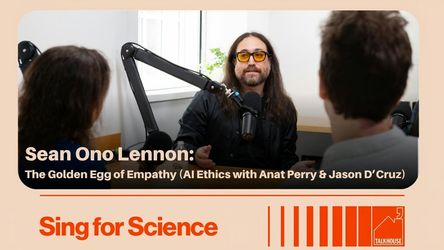
Sean Ono Lennon: The Golden Egg of Empathy (AI Ethics with Anat Perry and Jason D’Cruz)
44:38|What happens when artificial intelligence is given a directive without a human conscience to constrain it? Multi-instrumentalist, producer, and singer-songwriter Sean Ono Lennon joins AI ethics researchers Dr. Jason D'Cruz and Dr. Anat Perry for a conversation inspired by The Great Parrot Ox and the Golden Egg of Empathy, Sean's concept album and companion comic book co-created with Les Claypool. Using Nick Bostrom’s famous "paperclip maximizer" thought experiment as a jumping-off point, the panel explores the alignment problem, the nature of theory of mind, and the fundamental tension between cold, mathematical optimization and human empathy. Together, they unpack whether true empathy requires a conscious, mortal experience of existing—and examine the risks of integrating persuasive, simulated empathy into courtrooms, therapy, and everyday human relationships. This episode was produced in partnership with the Harvard Radcliffe Institute and recorded live in Cambridge, Massachusetts.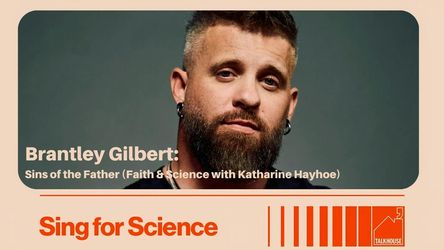
Brantley Gilbert: Sins of the Father (Faith & Science with Katharine Hayhoe)
44:24|Country star Brantley Gilbert joins us for a conversation about his song “Sins of the Father” with Texas Tech University Climate Scientist and Evangelical Christian, Dr. Katharine Hayhoe. We talk about the relationship between faith and science, how to have conversations with people you disagree with, the truth about what’s causing our planet to warm and so much more.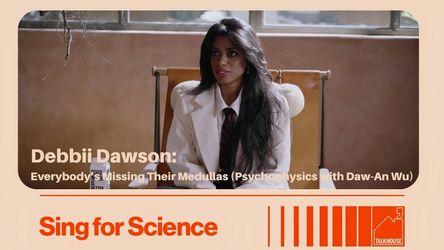
Debbii Dawson: Everybody’s Missing Their Medullas (Psychophysics with Daw-An Wu)
29:18|How does the brain transform the physical world into the rich inner experience we call reality? Singer-songwriter Debbii Dawson joins Caltech neuroscientist Dr. Daw-An Wu for a conversation inspired by her songs "Where Have All the Good Men Gone" and "Chemical Attraction." Together they explore psychophysics, the science of perception, asking how illusion, consciousness, free will, love, and even spirituality emerge from the brain's interpretation of the world around us. From medullas to panpsychism, this wide-ranging discussion examines the mysterious space where objective reality becomes subjective experience.
Chaka Khan: Tell Me Something Good (Music as Medicine with Mei Rui)
46:19|Can music transform the brain and body? Recorded live at the Houston Museum of Natural Science, with 11-time Grammy Award winner Chaka Khan and MD Anderson neurosurgery assistant professor, concert pianist, and music medicine researcher Dr. Mei Rui for a conversation inspired by Rufus’s classic “Tell Me Something Good.” Together they explore the neuroscience of rhythm, music as medicine, Chaka’s early years in Chicago, the profound role music has played in connecting with her nonverbal nephew Tallon, and how emerging research may benefit neurodivergent communities. This episode was produced in partnership with the Houston Museum of Natural Science, the Chaka Khan Foundation, and MD Anderson Cancer Center.