
Latest episode
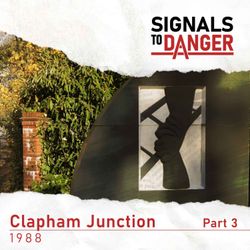
82. Clapham Junction - 1988 — Part Three
01:29:00||Season 1, Ep. 82On 12 December 1988, 35 people lost their lives and 484 were injured when three trains collided on the approaches to Clapham Junction. The subsequent investigation exposed far more than a single signalling fault. It revealed serious weaknesses in the way British Rail installed, tested and supervised safety-critical equipment, and raised fundamental questions about how safety was managed across the organisation.In November 1989, Anthony Hidden QC published his findings, making 93 recommendations intended to prevent future accidents, improve safety management and reduce the consequences when things went wrong.But what happened next?In the concluding episode of our three-part investigation into the Clapham Junction disaster, we examine the legacy of Hidden's report and the changes that followed.From signalling installation standards, independent testing and the management of working hours, to Automatic Train Protection, cab radio, rolling-stock crashworthiness and emergency preparedness, we explore how the railway responded to the lessons of Clapham.We also examine the difficult decisions that followed. Not every recommendation was implemented exactly as proposed, and some of the most ambitious safety improvements faced substantial technical, financial and practical challenges.Finally, we return to the human consequences of the disaster, the 35 people who never came home, and the responsibility the railway continues to carry.Nearly four decades later, what does Clapham Junction still have to teach us about railway safety?The Clapham Junction TrilogyPart One — The Collision: The events of 12 December 1988, the trains involved, the collision and the extraordinary emergency response.Part Two — The Investigation: The signalling failure at WF138, the engineering work that introduced it, the safeguards that failed and the organisational weaknesses uncovered by Anthony Hidden QC.Part Three — The Legacy: Hidden's recommendations, the improvements that followed and the enduring lessons of one of Britain's most significant railway disasters.About Signals to DangerSignals to Danger is a UK railway history and safety podcast exploring rail accidents, incidents and the investigations that followed them. From historic railway disasters to modern rail safety and current events, each episode looks beyond what happened to understand why it happened, what was learned and how those lessons continue to shape the railway today.Music CreditsOpening credits: "Epic Motivation" by Aylex — freetouse.comClosing credits: "A Kind of Hope" by Scott Buckley — www.scottbuckley.com.au"A Kind of Hope" is licensed under Creative Commons Attribution 4.0 International (CC BY 4.0).Artwork CreditsCover photograph: "Memorial for the Clapham rail crash of 1988" by David Smith, sourced from Geograph Britain and Ireland via Wikimedia Commons.Original photograph: https://commons.wikimedia.org/wiki/File:Memorial_for_the_Clapham_rail_crash_of_1988_geograph.org.uk-_5198130.jpgLicensed under Creative Commons Attribution-ShareAlike 2.0 Generic (CC BY-SA 2.0): https://creativecommons.org/licenses/by-sa/2.0/The original photograph has been cropped, colour-adjusted and incorporated into the Signals to Danger cover design, with additional graphic elements and typography. The finished adapted cover artwork is licensed under Creative Commons Attribution-ShareAlike 2.0 Generic (CC BY-SA 2.0): https://creativecommons.org/licenses/by-sa/2.0/Listen and SupportFind more episodes and information at https://signalstodanger.comFollow Signals to Danger on Facebook, TikTok and X (@signalstodanger), or email dan@signalstodanger.com.Support the podcast and listen ad-free through Patreon.Thank you for listening, and until the next episode, travel safe.
More episodes
View all episodes
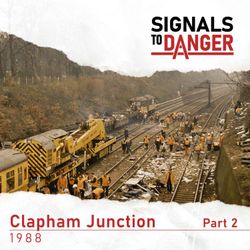
81. Clapham Junction - 1988 – Part Two
01:19:44||Season 1, Ep. 81On the morning of 12 December 1988, three trains collided near Clapham Junction in south London. Thirty-five people lost their lives, and hundreds more were injured. The disaster raised a fundamental question about railway safety: how could a signalling system designed to keep trains apart allow one to proceed towards another standing on the same line?In the second episode of our three-part series, we follow the investigation into the Clapham Junction railway disaster. At the centre of the inquiry was signal WF138, which had displayed dangerously incorrect aspects to approaching Drivers. Investigators would discover how a single redundant wire, left behind during signalling alterations, had created an electrical false feed capable of defeating a vital safety protection.But identifying the electrical fault was only the beginning. The investigation, led by Anthony Hidden QC, examined the engineering work undertaken as part of the Waterloo Area Resignalling Scheme, the failure to independently check the completed installation, and the shortcomings in supervision and testing which allowed the defect to remain undetected.As the inquiry progressed, it uncovered evidence of wider organisational weaknesses within British Rail's Signal and Telecommunications Department. Earlier signalling failures at Oxted and Queenstown Road had already raised concerns about installation and testing practices, yet important lessons had not been effectively implemented. The findings would extend responsibility far beyond one technician, raising profound questions about the management of safety-critical railway engineering.The Clapham Junction TrilogyThis episode is the second instalment of our three-part examination of the 1988 Clapham Junction railway disaster.Part One – The Collision: The events of 12 December 1988, the trains involved, the collision and the extraordinary emergency response.Part Two – The Investigation: The signalling failure at WF138, the engineering errors, the investigation led by Anthony Hidden QC and the organisational shortcomings it uncovered.Part Three – The Legacy: The recommendations which followed, the changes made to British railway safety and the lasting consequences of the disaster.About Signals to DangerSignals to Danger is a UK railway history and safety podcast exploring rail accidents, incidents and the investigations that followed them. From historic railway disasters to modern rail safety and current events, each episode looks beyond what happened to understand why it happened, what was learned and how those lessons continue to shape the railway today.Music CreditsOpening CreditsEpic Motivation by AylexSource: https://freetouse.com/musicFree To Use Music for VideoAdditional Music and Closing CreditsIntervention by Scott BuckleyWebsite: https://www.scottbuckley.com.auLicensed under Creative Commons Attribution 4.0 International (CC BY 4.0):https://creativecommons.org/licenses/by/4.0/SupportSupport the podcast and help make future episodes possible through Patreon.Follow Signals to Danger on social media for railway history, safety explainers and updates on new episodes.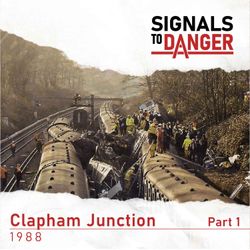
80. Clapham Junction - 1988 - Part one
59:53||Season 1, Ep. 80On the morning of Monday 12 December 1988, three trains collided on the approaches to London's Clapham Junction station, killing 35 people and injuring 484 others.It was the height of the morning rush hour. Thousands of commuters were travelling towards London Waterloo, relying on one of Britain's busiest railway networks to carry them safely into the capital.The 07:18 service from Basingstoke had been brought to a stand on the Up Main line after its driver witnessed a signal unexpectedly change from green to red.Behind it, a twelve-car passenger train from Poole was approaching at speed. Its driver had received no warning that the line ahead was obstructed.The resulting collision devastated the leading coaches of the Poole train and threw wreckage into the path of a third train travelling in the opposite direction.In this first episode of our three-part series examining the Clapham Junction rail disaster, we reconstruct the events of that December morning.We follow the journeys of the three trains, examine the circumstances surrounding the collisions, and explore the extraordinary emergency response that brought railway staff, emergency services, local residents and schoolchildren together in an enormous rescue operation.But the collision also raised a deeply troubling question. How could a railway signalling system, specifically designed to keep trains safely separated, allow one train to proceed towards another occupying the same section of track?The answer would reveal failures extending far beyond the railway cutting at Clapham Junction.The Clapham Junction TrilogyThis is Part One of a three-part Signals to Danger series examining the Clapham Junction railway disaster of 1988.Part One – The Collision: The trains, the accident and the rescue.Part Two – The Investigation: The signalling failure and the findings of the Hidden Inquiry.Part Three – The Legacy: The organisational failures, recommendations and lasting consequences for British railway safety.About Signals to DangerSignals to Danger is a UK railway history and safety podcast exploring rail accidents, incidents and the investigations that followed them. From historic railway disasters to modern rail safety and current events, each episode looks beyond what happened to understand why it happened, what was learned and how those lessons continue to shape the railway today.Music CreditsOpening: Epic Motivation by Aylex — freetouse.comAdditional music and closing credits: The Long Dark by Scott Buckley — scottbuckley.com.auThe Long Dark by Scott Buckley is licensed under Creative Commons Attribution 4.0 International (CC BY 4.0).Support the podcast and help make future episodes possible through Patreon.Follow Signals to Danger on social media for railway history, safety explainers and updates on new episodes.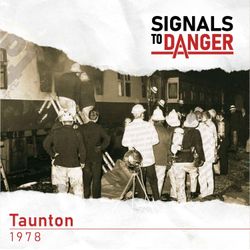
79. Taunton - 1979
01:06:08||Season 1, Ep. 79On the night of 5 July 1978, passengers boarded the overnight sleeper service from Penzance to London Paddington, expecting to wake the following morning as their train approached the capital.But in the early hours of 6 July, as the train approached Taunton in Somerset, a fire developed aboard one of its sleeping carriages.By the time railway staff became aware of the danger, smoke and toxic gases had already spread through the sleeping accommodation, exposing passengers who were asleep in their individual compartments.The train was brought to a stand short of Taunton station, where passengers, railway staff, local residents and emergency responders confronted a rapidly developing emergency.Twelve people would ultimately lose their lives.In this episode of Signals to Danger, we examine the events aboard the sleeper, the remarkable accounts of those who escaped, and the investigation undertaken by Major A. B. G. King of Her Majesty's Railway Inspectorate.We explore how bags of bed linen stored against an electric heater caused the fire, how the carriage's ventilation arrangements contributed to the danger, and why the systems intended to protect sleeping passengers proved inadequate.The investigation would reveal shortcomings in established working practices, fire detection, staff training and emergency arrangements.But perhaps its most important lesson concerned something much broader: the risks which can emerge when equipment changes, but the practices surrounding it do not.Research and sourcesThis episode draws principally upon Major A. B. G. King's official investigation, Report on the Fire that occurred in a Sleeping-Car Train on 6th July 1978 at Taunton in the Western Region, British Railways, together with historical railway material and contemporary accounts.Find more episodes and information at https://signalstodanger.comFollow Signals to Danger on Facebook, TikTok and X (@signalstodanger), or email dan@signalstodanger.com.To support the podcast and listen ad-free through Patreon, visit the support page at https://signalstodanger.comOPENING CREDITSMusic track: Epic Motivation by AylexSource: https://freetouse.com/musicFree To Use Music for VideoEND CREDITSMusic track: Saved by Brothers by AylexSource: https://freetouse.com/musicFree Background Music for VideoSignals to Danger is a UK railway history and safety podcast exploring rail accidents, incidents and the investigations that followed them. From historic railway disasters to modern rail safety and current events, each episode looks beyond what happened to understand why it happened, what was learned and how those lessons continue to shape the railway today.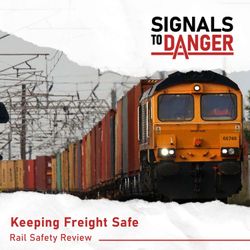
78. Keeping Freight Safe
58:58||Season 1, Ep. 78Moving freight by rail sounds straightforward: choose a wagon, load it up and send it on its way. But behind an uneventful arrival lies a system of engineering decisions, examinations, handling restrictions and communication.Following our episodes on Linslade and Surbiton, this time we follow an imaginary track panel from loading to destination. How do we choose a suitable wagon? What keeps its load in place? Why can shunting compromise an otherwise secure arrangement, and how do we establish that it will fit along its route?Drawing on those two accidents, alongside incidents at Basford Hall and Reading West, we explore loading patterns, freight train preparation, gauging and the detection of problems during a journey.Above all, we examine the gap between having safety arrangements written down and making them work in practice. Because keeping freight safe involves much more than keeping the train on time.Find more episodes and information at https://signalstodanger.comFollow Signals to Danger on Facebook, TikTok and X (@signalstodanger), or email dan@signalstodanger.com.To support the podcast and listen ad-free through Patreon, visit the support page at https://signalstodanger.comOPENING CREDITSMusic track: Epic Motivation by AylexSource: https://freetouse.com/musicFree To Use Music for VideoEND CREDITSMusic track: Saved by Brothers by AylexSource: https://freetouse.com/musicFree Background Music for VideoCOVER PHOTOGRAPHSteve Knight: https://www.flickr.com/photos/58415659@N00/51254064425/Licensed under CC BY 2.0: https://creativecommons.org/licenses/by/2.0/Cropped to square and overlaid with episode title and branding.Signals to Danger is a UK railway history and safety podcast exploring rail accidents, incidents and the investigations that followed them. From historic railway disasters to modern rail safety and current events, each episode looks beyond what happened to understand why it happened, what was learned and how those lessons continue to shape the railway today.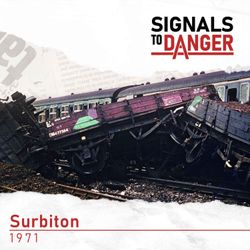
77. Surbiton - 1971
55:58||Season 1, Ep. 77On 4 July 1971, a ballast train passing through Surbiton derailed into the path of a Portsmouth Harbour passenger service approaching at 72 miles an hour.The collision left the leading passenger carriage on its side, damaged both trains and tore up the railway. Remarkably, nobody lost their life.But why had an empty wagon in the middle of the ballast train left the rails?This time on Signals to Danger, we follow the investigation from the wreckage at Surbiton back to the sidings at Clapham Junction. Marks on rails and buffers revealed a dangerous condition which could travel with a train—and the checks which might have stopped it reaching the main line.Investigation report: https://www.railwaysarchive.co.uk/docsummary.php?docID=1128OPENING CREDITSMusic track: Epic Motivation by AylexSource: https://freetouse.com/musicFree To Use Music for VideoEND CREDITSMusic track: Saved by Brothers by AylexSource: https://freetouse.com/musicFree Background Music for VideoSignals to Danger is a UK railway history and safety podcast exploring rail accidents, incidents and the investigations that followed them. From historic railway disasters to modern rail safety and current events, each episode looks beyond what happened to understand why it happened, what was learned and how those lessons continue to shape the railway today.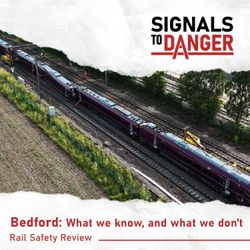
76. Bedford: What we know & what we don't
42:16||Season 1, Ep. 76Bedford: What We Know and What We Don’tOn 19 June 2026, two passenger trains collided near Elstow, south of Bedford. Driver Shaun Burton lost his life, and at least 160 people were injured.RAIB has now published its interim report. In this Rail Safety Review, we examine the evidence released so far: an unexpected AWS warning at a green signal, a following train passing that same signal at red, and the collision and emergency response that followed.We explain how AWS and TPWS work, the protection arrangements at signal WH154, and the difficulties staff faced when the collision left them unable to make railway emergency calls using GSM-R.This is an ongoing investigation. The interim report provides a clearer account of what happened, but it does not establish the final explanation of why. Throughout the episode, we distinguish the recorded evidence from the questions RAIB is still investigating.Official interim report:https://assets.publishing.service.gov.uk/media/6abd271555bc01d752a7f17f/IR012026_261001_Elstow.pdfOPENING CREDITSMusic track: Epic Motivation by AylexSource: https://freetouse.com/musicFree To Use Music for VideoEND CREDITSMusic track: Saved by Brothers by AylexSource: https://freetouse.com/musicFree Background Music for VideoSignals to Danger is a UK railway history and safety podcast exploring rail accidents, incidents and the investigations that followed them. From historic railway disasters to modern rail safety and current events, each episode looks beyond what happened to understand why it happened, what was learned and how those lessons continue to shape the railway today.