Share
Sidequests
The Great Catapult Reversal
•
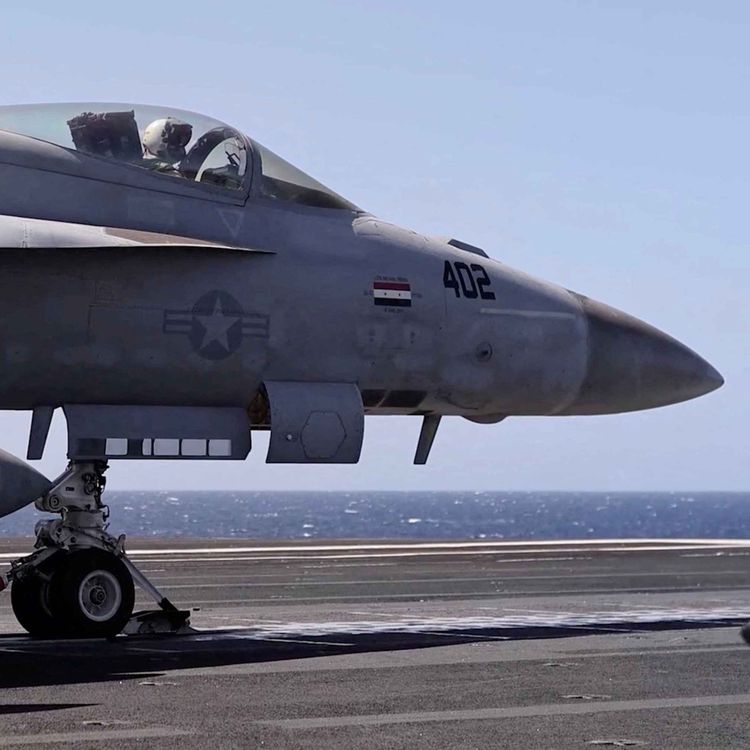
President Trump ordered the U.S. Navy to abandon electromagnetic aircraft catapults and return to 1950s-era steam launch systems — despite Navy reports that the electromagnetic system is now working as designed and contributing to higher aircraft sortie rates than older carriers. This episode of Sidequests covers how aircraft carrier catapults actually work, why EMALS was genuinely problematic during development and why Trump's original criticism was fair, what has changed since then, and why the order to reverse course now — with one carrier already under construction around the new system and steam manufacturing capacity largely dormant — may cost far more than the alternative it's meant to replace.
More episodes
View all episodes

The Mold That Changed Medicine Forever
09:10|In September 1928, Alexander Fleming returned from vacation to find a contaminated culture plate — a mold had grown on it, and in a ring around the mold, all the bacteria were dead. Most scientists would have thrown it away. Fleming looked more closely, recognized what he was seeing, and named the substance penicillin. This episode of Sidequests covers the discovery, the decade-long stall before anyone could make it work, how World War II created the urgency that finally drove Florey and Chain to solve the stability problem, and why the story of the first antibiotic is really a story about accident, observation, and the gap between scientific discovery and practical medicine.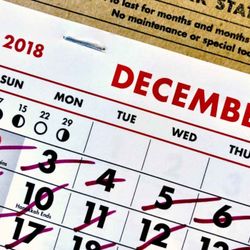
The Day the Pope Deleted Ten Days From the Calendar
12:27|On October 4, 1582, Catholic Europe went to bed and woke up ten days later. Pope Gregory XIII had ordered the deletion of October 5-14 to correct 1,600 years of accumulated drift in the Julian Calendar — a drift of just 11 minutes per year that had compounded into an 11-day error in the date of the spring equinox. This episode of Sidequests covers the Julian-to-Gregorian calendar shift: the elegant mathematics behind the fix, the legal and commercial chaos the deleted days created, why Protestant countries refused to adopt a Catholic calendar innovation for over a century, and why it took nearly 400 years — until Greece switched in 1923 — for the entire world to finally agree on what day it was.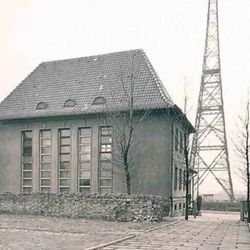
The False Flag That Started World War II
10:35|On August 31, 1939, German commandos dressed in Polish uniforms staged a fake attack on a radio station near the Polish border, broadcast a fabricated message in Polish, and left behind a murdered prisoner to serve as evidence. The next morning, Hitler used the incident as justification for invading Poland. Within days, World War II had begun. This episode of Sidequests covers the Gleiwitz Incident — the false flag operation that started the deadliest conflict in human history, how it was planned and executed in a matter of hours, why the lie worked well enough to serve its purpose, and what investigators discovered after the war when they pieced together exactly what had happened.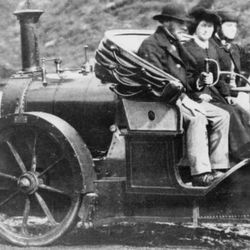
The First Person Ever Killed by a Car
08:52|On August 31, 1869, a 62-year-old Irish woman named Mary Ward was thrown from a steam-powered automobile and killed when the rear wheel ran over her — becoming the first recorded automotive fatality in history. The newspapers barely covered it. No safety investigation followed. Society moved on. This episode of Sidequests marks the anniversary of her death and examines what the lack of reaction reveals about how we actually adopt new technology: not carefully, not cautiously, but by accepting casualties as the cost of progress and building systems around the deaths rather than stopping. Mary Ward's story was forgotten for over a century, then rediscovered by historians — significant in retrospect, invisible at the time.
Why Everyone Is Suddenly Freaking Out About the Bond Market
12:53|Last week, 30-year Treasury yields hit their highest level since 2007. The Treasury Department tried bond buybacks to calm things down. It worked for about a day. Then yields climbed back up. This episode of Sidequests is the plain-language explainer: what bonds and yields actually are, why investors are getting nervous about lending to a government carrying $40 trillion in debt, why the Treasury's short-term fixes didn't hold, and why a problem in a financial market most people never think about eventually shows up in mortgage rates, car loans, and credit cards. The bond market isn't exciting — but it's where the price of money gets established, and right now the price of money is going up.
The Crossword That Almost Gave Away D-Day
09:58|In the spring of 1944, with D-Day just weeks away, British intelligence noticed something alarming in the Daily Telegraph crossword: the classified code words for the Normandy invasion — Utah, Omaha, Overlord, Neptune, Mulberry — were appearing as answers, one after another, in a civilian newspaper read across Britain. MI5 investigated, interrogated the schoolmaster who created the puzzles, and found no evidence of espionage. The official explanation for forty years was extraordinary coincidence. Then in 1984, a former student offered a stranger account involving overheard conversations, teenage curiosity, and an accidental chain of carelessness that no one fully understood at the time. This episode of Sidequests covers the D-Day crossword mystery — what happened, what was investigated, and why the answer may be even more unsettling than a spy.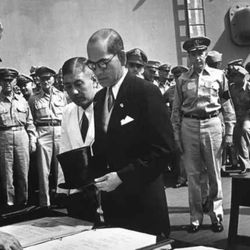
The Night Japanese Soldiers Tried to Stop the Surrender
15:23|On the night of August 14-15, 1945, Japanese Army officers stormed the Imperial Palace, killed a senior general, forged military orders, and searched desperately for the recordings of Emperor Hirohito's surrender speech — determined to destroy them and continue the war. They failed. At noon on August 15, Japan surrendered. This episode of Sidequests covers Japan's last days: the political deadlock that persisted even after Hiroshima, Soviet entry into the war, and Nagasaki; the emperor's unprecedented personal intervention to break it; and the attempted coup that reveals just how contested the surrender actually was — and what all of it tells us about the enduring debate over whether the atomic bombs were necessary to end World War Two.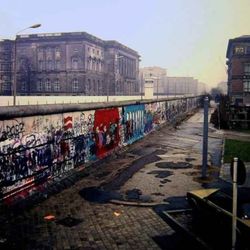
The Night Berlin Was Divided
15:26|On the night of August 12-13, 1961, East German soldiers erected barbed wire across Berlin's streets while the city slept, separating families, severing train lines, and dividing a city overnight. This episode of Sidequests covers the construction of the Berlin Wall — why it was built (East Germany was losing nearly 20 percent of its population to the West and couldn't stop the exodus), how it evolved from barbed wire to a lethal concrete barrier with guard towers and a death strip, what it cost the people who tried to cross it, and why the Western powers allowed it to stand despite their stated commitment to freedom. The wall wasn't built to keep capitalism out. It was built to keep people in — and that distinction is the whole story.