Share
Sidequests
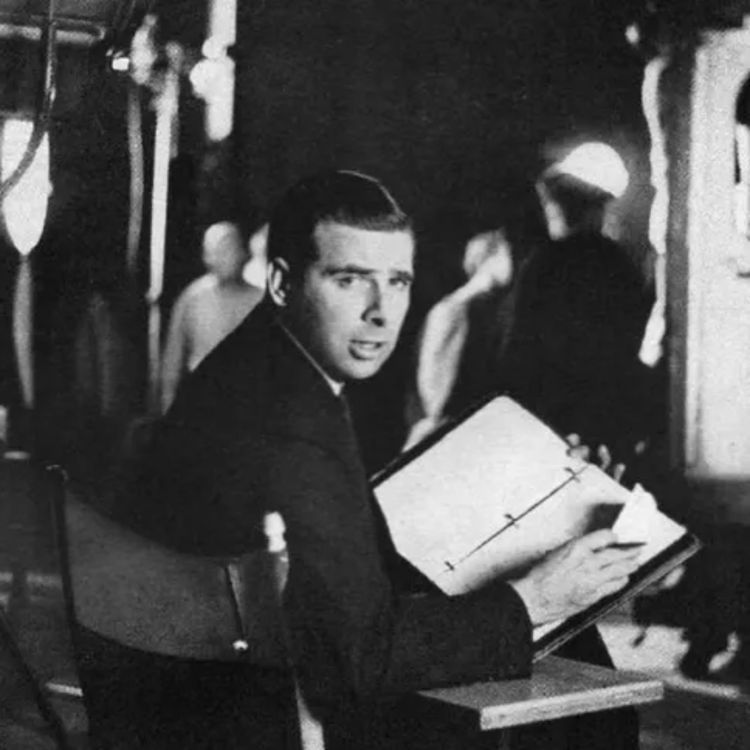
That Time Gene Roddenberry Survived a Plane Crash and Saved the Day
•
On June 19, 1947, a Pan American flight went down in the Syrian Desert in the middle of the night. Engines failing, fuselage on fire, fifteen people killed on impact — including everyone in the cockpit. Among the survivors was an off-duty 25-year-old pilot named Gene Roddenberry, riding as a passenger. With broken ribs, he pulled people out of the burning wreckage, organized the survivors, improvised shelter from a life raft, and walked four miles across open desert to find help. Almost twenty years later, he created Star Trek. This is the story you've probably never heard about the man who imagined humanity's future in the stars — and what he did the night the sky fell.
More episodes
View all episodes
Fifteen Days to Leave a War
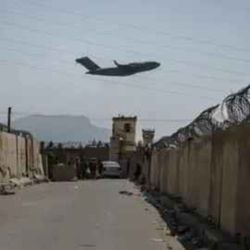
17:42|The United States spent twenty years in Afghanistan and about fifteen days leaving. Documentary filmmaker Michael Pack joins Keith Conrad to discuss his new Wall Street Journal film, The Path to Zero, which traces the decisions that turned a planned withdrawal into the chaos of August 2021. Those decisions include a Doha agreement the Taliban had already broken, military advice that went unheeded, the abandonment of Bagram Air Base, and an evacuation announced far too late. Pack explains why the blame belongs to more than one administration, what "moral injury" means for the Marines who worked the Kabul airport gates, and why the belief in a reformed "Taliban 2.0" may be repeating itself in the war with Iran. Enemies usually tell you who they are. The hard part is believing them.
The Man Who Single-Handedly Stopped World War III
08:41|Just after midnight on September 26, 1983, a Soviet early-warning system reported that nuclear war had begun. One officer had minutes to decide whether to believe it. What he chose — and why — may be the most consequential individual decision of the Cold War. This episode of Sidequests tells the full story of that night: what was actually happening in the world that made the moment so dangerous, what the officer saw and how he reasoned through it, what had actually gone wrong with the system, and why the version of this story that made him famous gets the most important detail wrong — in a way that makes the truth considerably more interesting.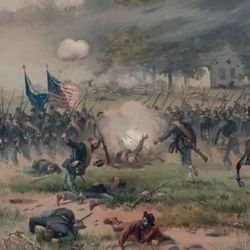
Antietam: The Bloodiest Day in American History
09:31|On September 17, 1862, the Battle of Antietam produced nearly 23,000 casualties in a single day — the bloodiest in American military history — and ended in a military stalemate. Lee retreated. McClellan didn't pursue. But Lincoln interpreted the Confederate withdrawal as a Union victory and used it to issue the preliminary Emancipation Proclamation five days later, transforming the Civil War from a fight to preserve the Union into a fight to end slavery. This episode of Sidequests covers Antietam: the lost Confederate orders that should have given McClellan a decisive advantage, the brutal fighting at the Cornfield and Bloody Lane, and how a bloody draw on the battlefield became one of the most consequential political moments in American history.
The Mold That Changed Medicine Forever
09:10|In September 1928, Alexander Fleming returned from vacation to find a contaminated culture plate — a mold had grown on it, and in a ring around the mold, all the bacteria were dead. Most scientists would have thrown it away. Fleming looked more closely, recognized what he was seeing, and named the substance penicillin. This episode of Sidequests covers the discovery, the decade-long stall before anyone could make it work, how World War II created the urgency that finally drove Florey and Chain to solve the stability problem, and why the story of the first antibiotic is really a story about accident, observation, and the gap between scientific discovery and practical medicine.
The Day the Pope Deleted Ten Days From the Calendar
12:27|On October 4, 1582, Catholic Europe went to bed and woke up ten days later. Pope Gregory XIII had ordered the deletion of October 5-14 to correct 1,600 years of accumulated drift in the Julian Calendar — a drift of just 11 minutes per year that had compounded into an 11-day error in the date of the spring equinox. This episode of Sidequests covers the Julian-to-Gregorian calendar shift: the elegant mathematics behind the fix, the legal and commercial chaos the deleted days created, why Protestant countries refused to adopt a Catholic calendar innovation for over a century, and why it took nearly 400 years — until Greece switched in 1923 — for the entire world to finally agree on what day it was.
The False Flag That Started World War II
10:35|On August 31, 1939, German commandos dressed in Polish uniforms staged a fake attack on a radio station near the Polish border, broadcast a fabricated message in Polish, and left behind a murdered prisoner to serve as evidence. The next morning, Hitler used the incident as justification for invading Poland. Within days, World War II had begun. This episode of Sidequests covers the Gleiwitz Incident — the false flag operation that started the deadliest conflict in human history, how it was planned and executed in a matter of hours, why the lie worked well enough to serve its purpose, and what investigators discovered after the war when they pieced together exactly what had happened.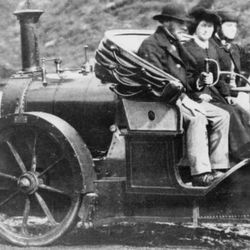
The First Person Ever Killed by a Car
08:52|On August 31, 1869, a 62-year-old Irish woman named Mary Ward was thrown from a steam-powered automobile and killed when the rear wheel ran over her — becoming the first recorded automotive fatality in history. The newspapers barely covered it. No safety investigation followed. Society moved on. This episode of Sidequests marks the anniversary of her death and examines what the lack of reaction reveals about how we actually adopt new technology: not carefully, not cautiously, but by accepting casualties as the cost of progress and building systems around the deaths rather than stopping. Mary Ward's story was forgotten for over a century, then rediscovered by historians — significant in retrospect, invisible at the time.
Why Everyone Is Suddenly Freaking Out About the Bond Market
12:53|Last week, 30-year Treasury yields hit their highest level since 2007. The Treasury Department tried bond buybacks to calm things down. It worked for about a day. Then yields climbed back up. This episode of Sidequests is the plain-language explainer: what bonds and yields actually are, why investors are getting nervous about lending to a government carrying $40 trillion in debt, why the Treasury's short-term fixes didn't hold, and why a problem in a financial market most people never think about eventually shows up in mortgage rates, car loans, and credit cards. The bond market isn't exciting — but it's where the price of money gets established, and right now the price of money is going up.