Share

Sick Sad Lit
Eliza Clark on True Crime, Female Rage, and Writing the Uncomfortable Truth
In this episode of Sick Sad Lit, I sit down with one of the most provocative and fearless voices in contemporary fiction: Eliza Clark. Author of Boy Parts, Penance, and She’s Always Hungry, Clark writes with scalpel-like precision about modern alienation. Nobody captures the digital grotesque quite like her.
We talk about the ethics of obsession, the cultural hunger for true crime, and how fiction can humanise—or implicate—those we call monstrous. Eliza shares her thoughts on revenge narratives, power fantasies, and the moral tension at the heart of storytelling. We also discuss how fan fiction and digital spaces shaped her creative evolution, the blurred line between empathy and horror, and what it means to write characters who do unspeakable things.
If you love unhinged narrators, moral ambiguity, literary horror, or stories that leave you slightly unnerved, then this episode is for you. 🖤
LET'S CONNECT:
Join the conversation on our Sick Sad Friends Discord.
Visit the Sick Sad Lit website for essays, author outtakes and more.
Follow Sick Sad Lit on Instagram.
More episodes
View all episodes
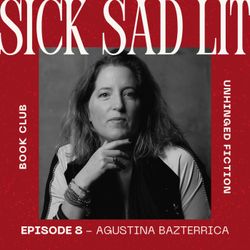
8. Agustina Bazterrica on Culture, Craft, and Confronting Violence Through Fiction
01:35:03||Season 2, Ep. 8In the Season 2 finale of Sick Sad Lit, I sit down with Agustina Bazterrica, the internationally bestselling author of Tender Is the Flesh. This conversation didn’t just stay with me...it fundamentally changed how I read books.Together, we explore the cultural landscape of Argentina and how violence, patriarchy, and political history shape Agustina’s work. She walks me through her writing process and the structural precision behind her novels: the scaffolding, the silences, and the emotional engineering that make her fiction so unforgettable.We talk about the importance of research, the responsibility of writing violence ethically, and the role literature can play in understanding societal cruelty. Agustina also shares her thoughts on reader engagement, the challenges of being a writer in a volatile world, and why books still hold transformative power.This episode slowed me down. It taught me to look at craft with more intention. It made me a better reader.If you’re interested in literary horror, cultural critique, or the deeper mechanics of storytelling, this finale is for you.Join the ConversationIf this episode resonated, share it with someone who might need it, and leave us a review to help more listeners find the show. 🖤Join the conversation on our Sick Sad Friends Discord for monthly book club meetups, community chats and more.Visit the Sick Sad Lit website for essays, author outtakes and more.Follow Sick Sad Lit on Instagram.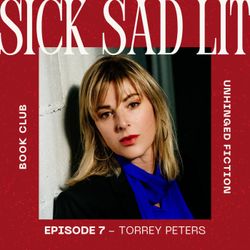
7. Torrey Peters on Writing While the World Burns
01:18:14||Season 2, Ep. 7In this episode of Sick Sad Lit, I sit down with Torrey Peters, acclaimed author of Detransition, Baby and Stag Dance, for a deeply honest conversation about the realities of the modern writing life.Torrey opens up about the emotional labour of touring, the pressures of book marketing, and how societal change shapes creative expression. Together, we discuss desire, identity, and transformation—recurring themes in Torrey’s work—and explore what it means to create art that resists categorisation while inviting empathy and confrontation in equal measure.From the burnout of promotion to the beauty of connection, Torrey reflects on the messy, necessary work of making meaning in a world that often wants neat narratives. It’s a conversation about honesty, risk, and the courage to keep writing, even when everything feels like it’s falling apart.Join the ConversationIf this episode resonated, share it with someone who might need it, and leave us a review to help more listeners find the show. 🖤Join the conversation on our Sick Sad Friends Discord for monthly book club meetups, community chats and more.Visit the Sick Sad Lit website for essays, author outtakes and more.Follow Sick Sad Lit on Instagram.Photo Credit: Hunter Abrams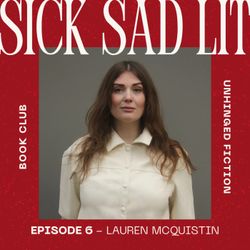
6. Lauren McQuistin on Sobriety, Self-Reinvention, and No Lost Causes Club
01:31:41||Season 2, Ep. 6In this deeply honest and hopeful episode, I sit down with writer, musician, and creator Lauren McQuistin—author of No Lost Causes Club and the voice behind @brutalrecovery—to talk about getting sober young, building emotional muscles from scratch, and what it really means to reclaim your life when alcohol stops serving you.We explore sobriety as self-respect, the discomfort and beauty of feeling your feelings fully, and the weird, tender limbo of recovering before anyone expects you to need to. Lauren shares the realities of early recovery, from navigating parties and friendships without numbing through them, to rewriting the story of who you think you are and who you’re allowed to become.This is a conversation about agency, grace, and second chances; about learning that you don’t need to destroy yourself to be interesting, and that healing isn’t boring, it’s radical, difficult, and sometimes hilarious.If you’ve ever wondered whether there’s another way to live (one grounded in self-trust, community, and staying soft in a world that rewards collapse) this episode is for you.Join the ConversationIf this episode resonated, share it with someone who might need it, and leave us a review to help more listeners find the show. 🖤Follow Lauren on Instagram @brutalrecovery.Join the conversation on our Sick Sad Friends Discord for monthly book club meetups, community chats and more.Visit the Sick Sad Lit website for essays, author outtakes and more.Follow Sick Sad Lit on Instagram.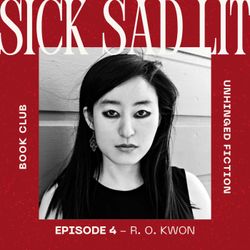
4. R. O. Kwon on Writing What Terrifies You
01:26:52||Season 2, Ep. 4In this episode of Sick Sad Lit, I sit down with R. O. Kwon, author of The Incendiaries, Exhibit, and co-editor of Kink, to talk about the emotional labor of writing, the role of fear in creativity, and what it means to tell stories that demand vulnerability.We explore how desire, identity, and ancestral trauma shape Kwon’s work, and how embracing discomfort can lead to deeper truth on the page. Kwon reflects on her journey through the publishing world, the slow and deliberate process of crafting fiction, and the liberation that comes from writing toward one’s own longing.It’s a conversation about art as survival, about the fears that fuel us, and about finding freedom in the act of creation.Join the conversation on our Sick Sad Friends Discord.Visit the Sick Sad Lit website for essays, author outtakes and more.Follow Sick Sad Lit on Instagram.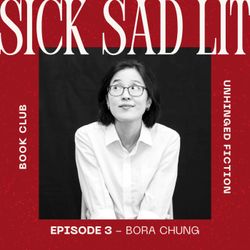
3. Bora Chung on horror, revenge, and writing ghost stories for a broken world
01:10:24||Season 2, Ep. 3In this episode of Sick Sad Lit, I sit down with acclaimed South Korean author Bora Chung: the brilliant mind behind Cursed Bunny and her haunting new collection, Midnight Timetable. Known for blending horror, humour, and political satire, Bora’s stories blur the line between the grotesque and the profound, using the supernatural to explore the most human of emotions.We talk about her journey from university lecturer to internationally celebrated writer, how Cursed Bunny changed her life after being shortlisted for the International Booker Prize, and why she believes horror can be an act of empathy - a way of writing ghost stories for a broken world.Bora shares the inspirations behind Midnight Timetable, from Polish and Russian literature to Korean folklore, and reflects on the intersections of revenge, grief, and survival in her fiction. We discuss the challenges of translation, the politics of horror, and the strange comfort of stories that look directly at fear, and still find hope inside it.If you love literary horror, speculative fiction, or beautifully strange stories that linger long after you’ve finished reading, this episode is the perfect listen for spooky season. 👻Join the conversation on our Sick Sad Friends Discord.Visit the Sick Sad Lit website for essays, author outtakes and more.Follow Sick Sad Lit on Instagram.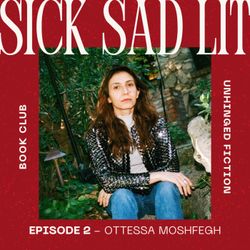
2. Inside the Mind of Ottessa Moshfegh: Alienation, Obsession, and Writing the Unlikeable
01:15:35||Season 2, Ep. 2In this episode of Sick Sad Lit, I sit down with acclaimed author Ottessa Moshfegh to dive deep into her writing process, the evolution of her style, and the themes that haunt her fiction. From McGlue and Eileen to My Year of Rest and Relaxation, Death in Her Hands, and Lapvona, Moshfegh’s novels consistently interrogate the limits of identity, the grotesque and sublime aspects of embodiment, and the ways confinement—physical, psychological, and societal—shapes human existence.We talk about the impact of the pandemic on the writing of Lapvona, her fascination with characters trapped by obsession and circumstance, and her insistence on writing what scares her most. She reflects on aging, self-discovery, and what it means to measure a life in books, all while navigating the tension between private creation and public literary identity.Whether you’re drawn to her unflinching portraits of isolation, her ability to make the grotesque beautiful, or her sharp insights into the contradictions of being human, this candid conversation offers a rare glimpse into the mind of one of today’s most compelling writers.Visit and subscribe to Ottessa's Substack. (It's well worth it, trust me!)Join the conversation on our Sick Sad Friends Discord.Visit the Sick Sad Lit website for essays, author outtakes and more.Follow Sick Sad Lit on Instagram.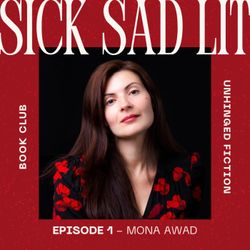
1. Mona Awad Returns to the Bunny-Verse: On Fairy Tales, Transformation, and the Power of Storytelling
01:32:46||Season 2, Ep. 1In this episode of Sick Sad Lit, I sit down with bestselling author Mona Awad to talk about her highly anticipated new novel, We Love You, Bunny (out today!). A dazzling return to the world of her cult classic Bunny, it blends fairy-tale horror, satire, and dark academia into a story about creation, obsession, and the power of storytelling.Mona and I explore the evolution of her writing - from sharp realism to feverish surrealism - and the recurring themes that define her work: transformation, body image, identity, and the complexities of the female experience. We also dig into the psychological depth of her characters, the role of humour and satire in her prose, and how fairy tales continue to shape her literary imagination.Mona reflects on her creative process, the influence of her academic background, and the way music fuels her writing routine. Mona also shares insights into the power of love, friendship, and marginalised voices in literature, offering a rare glimpse into her evolving journey as a writer.If you’re drawn to fiction that’s grotesque and beautiful, hilarious and haunting, this conversation is for you.Visit Mona's website for links to order your copy of We Love You Bunny wherever you are in the world.Follow Mona on Instagram.Join the conversation on our Sick Sad Friends Discord.Visit the Sick Sad Lit website for essays, author outtakes and more.Follow Sick Sad Lit on Instagram.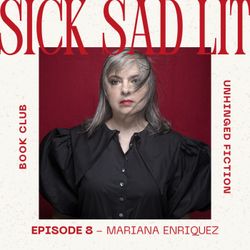
8. Mariana Enriquez on The Ghosts of Buenos Aires, Horror, History & Rebellion
01:17:21||Season 1, Ep. 8Internationally acclaimed writer Mariana Enriquez, author of Our Share of Night, Things We Lost in the Fire, and The Dangers of Smoking in Bed, joins Sick Sad Lit to talk about horror that doesn’t chill - it burns. In this visceral and wide-ranging conversation, she and I explore how the oppressive heat of Buenos Aires fuels her fiction, how music shapes her creative process, and how journalism gave her the tools to interrogate the darkest corners of society. We dive into folklore, rebellion, class, and the ghosts—both real and metaphorical—that linger in her stories. With sharp reflections on urban horror, cultural memory, and the power of place, this episode is a must-listen for fans of literary horror, gothic fiction, and boundary-pushing storytelling.Follow Mariana on Instagram.Join the conversation with Sick Sad Lit on Substack and Instagram.