Share

SHOP TALK WITH WRITERS
the story behind the book
Recommended episode

1. Ep.26: EDEN McKENZIE-GODDARD
48:20||Season 3, Ep. 1SHOW NOTESHost Elena Lappin in conversation with novelist Eden Mckenzie-Goddard about his debut novel SMALLIE - a powerful love story and a multigenerational tale of family, loss, and identity. The novel intertwines personal heritage with the political realities faced by Caribbean immigrants in Britain. In this episode, Eden McKenzie-Goddard shares insights into his writing process, the significance of the novel’s title, and the emotional depths of his characters’ journeys.Copyright: Elena LappinOriginal theme music score copyright: Tom PooleyNavigating multi-generational stories that reflect the complexities of immigration and identityHow language, music, and personal experiences shape McKenzie-Goddard's storytellingThe role of empathy and emotional truth in portraying characters' inner worldsThe significance of the Windrush scandal in shaping the novel’s political and social themesWriting in multiple first-person voices to deepen character developmentThe creative process and how music influences the author's writing rhythmChallenges of balancing political themes with human storiesTimestamps00:00 - Introduction to Eden Mackenzie Goddard and Smalley01:33 - Eden reads from his novel, exploring themes of discomfort and language05:54 - Discussing the book’s connection with the Windrush scandal and its multi-generational scope08:48 - Film rights and themes of love and anger in the story11:40 - Personal stories of long-distance love and migration13:19 - The novel’s portrayal of unspoken responsibilities and internal conflicts14:17 - Exploring multiple narrative voices and character depth in Smalley17:35 - The importance of empathy in storytelling and understanding family pain20:12 - The immigrant experience and feeling of abandonment within families22:10 - Character complexity, especially Lucinda, and her struggles with language and identity24:46 - The theme of rebellion and the search for freedom through Lucinda’s journey26:08 - The impact of language and how it shapes self-perception and authenticity33:00 - The theme of aloneness and isolation within immigrant narratives36:05 - Addressing political issues through human stories, focusing on the Windrush scandal42:16 - The evolution of the story and Mc-Kenzie-Goddard's creative process over years44:14 - The creative milestone of writing the final scene and the story’s life force46:00 - Vision of SMALLIE adapted to film, highlighting visual storytellingResources & LinksSMALLIE by Eden Mackenzie Goddard (search for latest links)Nancy Wilson - Guess Who I Saw TodayConnect with Eden Mackenzie GoddardTwitterInstagramOfficial WebsiteAdditional NotesThe significance of language and identity in multicultural and immigrant experiences is central to Eden’s storytelling. His personal insights and musical influences enrich the narrative depth of SMALLIE.The episode emphasizes storytelling as a vehicle for empathy, highlighting individual human stories amidst political upheavals.
More episodes
View all episodes
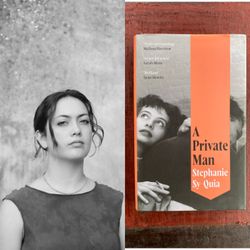
7. Ep.32: STEPHANIE SY QUIA
33:40||Season 3, Ep. 7A Private Man with Stephanie Sy QuiaStephanie Sy Quia talks to host Elena Lappin about her debut novel, A Private Man, and the personal history that shaped it. The conversation moves between family memory, Catholicism, generational trauma, dementia, and the challenge of writing fiction that feels emotionally precise without becoming extractive.We discuss how she turned a real family lineage into art, why she wrote from the public edges of family history rather than interrogating relatives directly, and how teaching Shakespeare fed back into her novel writing. She also reflects on care work, the aging of the baby boomer generation, and why she writes about the hard-to-categorize parts of life.Key topicsA Private Man as a novel shaped by family history, Catholicism, and forbidden loveWriting about relatives without being extractive or forcing personal testimonyThe emotional and ethical tension of claiming a family story as your ownThe Notre Dame fire as an influence on a key scene in the novelHow generational trauma and family memory can belong to more than one personThe contrast between poetry and prose, and how she keeps every sentence purposefulMargaret and David as characters shaped by community, institution, and sexual restraintVatican II, Catholic reform, and the disappointment of unrealized hopeWriting historically specific male sexuality through institutional life, boarding school, and warDementia, care, and the intimacy of witnessing the end of a lifeHow teaching Antony and Cleopatra informed her sense of romantic and emotional dynamicsWhy she is drawn to slippery, hard-to-label identities and experiencesTimestamps(00:00) Family history, generational trauma, and why not to be extractive (01:15) Introduction to Stephanie Sy Quia and A Private Man (02:24) Notre Dame fire inspiration and a scene between grandson and grandmother (06:39) Cathedral restoration, sacred materials, and the idea of stone “singing” (08:05) Reading from the novel ends and the interview begins (09:07) Her family background: priest grandfather, theologian grandmother, and exile (11:27) Writing from public family history instead of interrogating relatives (13:52) Poetry versus prose and making every word earn its place (15:21) Margaret and David: community, desire, and different relationships to Catholicism (18:05) Hope, cynicism, and the failure of Vatican II to deliver change (20:16) Writing a male character through institutional British masculinity (22:42) Sex, war, and the high stakes of intimacy in an earlier era (23:39) Writing her grandmother through memory, truth, and preemptive grief (25:41) Teaching Antony and Cleopatra and bringing its energy into the novel (27:05) Food, passion, and why the novel makes the reader feel hungry (28:25) Aging, caregiving, and the demographic burden on younger generations (30:54) Why she writes: slippery identities, care, and frankness about declineNotable quotesCopy“I was very keen not to be too extractive about how I gathered family information.”Copy“Family history both does and does not belong to you.”Copy“I wanted to write about the process of caring for someone at the end of their life.”
6. Ep.31: DJAMEL WHITE
35:54||Season 3, Ep. 6Irish debut novelist Djamel White joins host Elena Lappin to discuss his soulful novel All Them Dogs, a Booker Prize longlisted book set in contemporary West Dublin gangland. The conversation covers the author's love of reading, the raw voice and momentum of the novel, and the social and emotional forces shaping his vulnerable and violent young protagonist, Tony Ward.Quote: “The only thing he knows what to do with a bad feeling is to turn it into anger.”Key topicsDjamel White reads from All Them Dogs, introducing Tony Ward and the gritty, immediate voice that drives the novel.White reacts to the Booker Prize longlisting, describing the experience as exciting, overwhelming, and stomach turning.He talks about growing up without books in the house, and how school first introduced him to reading and stories.The novel’s structure comes from Tony’s voice, with White explaining how the extended monologue creates an “all gas, no brakes” momentum.White describes writing while managing a tattoo shop and finishing college, balancing a full degree with work after COVID.Tony Ward returns to Dublin after five years away, trying to re-enter a criminal world that has moved on without him.The discussion explores the collapse of moral codes in modern Dublin crime, and how capitalism, money, and survival have replaced older gangland loyalties.White reflects on the housing crisis and young adult frustration in Ireland, noting how Tony’s instability mirrors a wider generational experience.Motherhood and fatherhood are central themes, especially the different maternal figures in the book and the damaging absence of fathers.White explains Tony’s anger, vulnerability, and arrested development, showing how fear, shame, and desire for belonging drive him forward.Image, taste, and identity matter throughout the novel, from clothes and watches to music and aesthetic self-awareness.White discusses literary influences, including Enda O’Brien, Joyce Carol Oates, and Carson McCullers.Timestamps00:00 - Is “Pray I’ll Be a Failure” a real song?02:27 - Reading from All Them Dogs and the voice of Tony Ward05:55 - Booker Prize longlisting and the emotional fallout06:25 - Discovering books as the first reader in his family08:18 - Writing a novel that feels like watching a movie09:46 - Working in a tattoo shop while writing11:00 - Tony Ward returns to a gangland that has moved on14:28 - Dublin crime, old moral codes, and their collapse16:24 - The housing crisis and a generation with little to show16:51 - Tony’s narrow choices and emotional vulnerability18:34 - Why Tony is in arrested development19:30 - Anger as Tony’s engine and survival tool21:05 - The mothers in the novel and what they reveal22:43 - Fathers, absence, and family damage24:27 - Grooming, mentorship, and boys drawn into crime25:56 - Clothes, watches, and Tony’s aesthetic instincts27:54 - Tony’s taste, identity, and the image-obsessed world29:16 - Chekhov’s gun and why the book uses a policeman instead31:16 - Books on the shelf: Enda O’Brien, Joyce Carol Oates, Carson McCullers32:41 - Why Carson McCullers matters to White
5. Ep.30: ELI ZUZOVSKY
42:12||Season 3, Ep. 5Exploring Identity and Conflict in Eli Zuzovsky's Searing Debut Novel MAZELTOVHost Elena Lappin speaks with writer and director Eli Zuzovsky about his novel Mazeltov, a queer coming of age story set in Israel against the backdrop of war and collective trauma. The conversation focuses on how conflict, family, religion, and language shape identity, and why Zuzovsky chose to tell a a personal story through an ensemble of voices.In this episode, Zuzovsky shares how the novel grew from his dislike of the lone-voice coming of age tradition into a more expansive, multi-perspective story. He also reads a passage from the book and discusses brokenness, diaspora, and queerness in a culture of masculinity.MAZELTOV is published by Footnote Press, an imprint of Bonnier Books.https://elizuzovsky.comhttps://footnotepress.com/books/mazeltov/Key topicsEli Zuzovsky introduces Mazeltov as a debut novel set at a bar mitzvah party in Tel Aviv, against the onset of warThe book’s structure is built around multiple perspectives, including the grandmother Mémé, the protagonist Adam, and the Palestinian poet Khalil.Zuzovsky reads from the chapter “The Shiksa,” narrated by Mémé, which captures the book’s mix of humour, fear of war, and emotional vulnerability.The novel as an ensemble portrait rather than a single-boy narrative, with each character helping form Adam’s story.Why the coming of age genre felt too narrow to Zuzovsky, and how he wanted a more communal, expansive model of selfhood.War as background and texture, not just plot, with Zuzovsky describing it as unavoidable in Israeli and Palestinian life.Adam’s relationship to diaspora and exile, including the tension between romanticising leaving and the ethical cost of staying.Queerness and masculinity in Israel, and how Adam’s discomfort with national expectations mirrors Zuzovsky’s own experience.Language as identity and escape, especially the differences between Hebrew, English, Arabic, and French.Religion and Kabbalah as inherited cultural material, even for a secular writer, especially through ideas like brokenness and tzimtzum.Quotes:“Selfhood is not a one person show. It’s always an ensemble show.”“What I can do as an artist is to try to interrogate what they do to the human psyche.”“Brokenness is all around us, so we might as well start seeing the light and the beauty in it.”
4. Ep.29: CLAIRE FULLER
46:55||Season 3, Ep. 4Hunger & Thirst: An Exploration of Art, Memory, and the ParanormalHost Elena Lappin in conversation with novelist CLAIRE FULLER about her latest novel Hunger & Thirst, weaving themes of art, memory, and the supernatural, in a 1980s setting. Claire Fuller shares insights into her creative process, her fascination with horror, and how her background as a sculptor influences her writing.Key topics:Claire Fuller’s transition from artist to novelist at age 40The significance of physical books and the joy of making something tangibleHow her novel explores the link between art and perception, especially through sculptureThe symbolism of the lithopedian—a calcified fetus—and its relevance to themes of trauma and the bodyThe importance of self-contained readings and moments that can stand alone from the main narrativeThe influence of horror films like Rosemary’s Baby, The Shining, and The Stepford Wives on her storytellingHow visual detail shapes her prose and enhances storytellingThe role of domestic spaces and traces of the past in shaping identity and memoryHer approach to writing horror and the necessity of foreshadowing and buildupThemes of interconnectedness, ghosts, and historical echoes in her characters’ livesHer inspiration from place, notably Winchester and her childhood home—a bungalowThe emotional significance of personal memorabilia and the act of holding onto objectsHer advocacy for other writers through social media and her Substack newsletterThe enduring joy of creating physical books and the unique experience of writing in physical formTimestamps:00:00 - The magic of making and sharing books across the world00:34 - Claire Fuller introduces Hunger and Thirst and reads a fragment of her novel01:34 - The significance of a standalone scene and its thematic relevance06:23 - Why Hunger and Thirst encapsulates the novel’s themes and character development08:08 - The symbolism of medical conditions like the lithopedian in her narrative09:11 - The narrative layer of contemplating mortality and the question of being "ever gone"10:15 - Visual storytelling and the influence of her artistic background11:48 - Observing the world through a detailed, almost forensic lens12:49 - The "Hamlet" space of ambiguity in her storytelling and horror influences13:27 - The horror films Rosemary’s Baby, The Shining, and The Stepford Wives and their thematic significance15:09 - The appeal of domestic horror and slow-building tension in her work16:38 - Character profiles: Ursula’s background and psychological makeup17:46 - The relationship between memorabilia, memory, and storytelling19:27 - The balance between inspiration and clutter in an artist’s physical environment20:07 - The ethical and emotional considerations of reading private family letters21:29 - How old photographs and ephemera inspire her writing and prompts22:22 - The ghosts of strangers and the idea of collective memory—reflections from W. G. Sebald23:47 - The role of horror in her storytelling and why it’s essential to her artistic expression26:40 - How characters’ obsession with horror films serves as a reflection of their fears and anxieties28:35 - The setting of the former crime scene house and the traces of the past in our environments29:21 - Personal memories of living in a house full of history and its influence on her writinghttps://clairefuller.co.uk32:54 - Comparing her experience as a sculptor and novelist: the physicality of creation34:22 - The flow state in sculpture versus writing—overcoming self-imposed barriers36:26 - The surprising journey to becoming a published author and her early art-based roots37:16 - The inspiration behind her depiction of Winchester and her use of place in storytelling38:39 - The mysterious Vince character and the significance of early connections among characters40:42 - Themes of lineage, traces, and the past’s influence on present identity44:50 - Why Claire Fuller writes: a desire to create and make tangible objects in storytelling
3. Ep. 28: LUCY CALDWELL
55:52||Season 3, Ep. 3SummaryIn this episode, acclaimed novelist and short story writer Lucy Caldwell speaks to host Elena Lappin about her new short story collection DEVOTIONS, exploring themes of love, death, spirituality, and the power of storytelling. She shares insights into her writing process, influences, and the deep connection between music, memory, and narrative.keywordsLucy Caldwell, Devotions, short stories, Irish literature, storytelling, writing process, themes of love and death, spirituality, music in stories key topicsThemes of love, death, and spirituality in 'Devotions'The influence of Irish culture and history on Caldwell's workThe role of music and memory in storytellingThe evolution of Caldwell's writing from plays to fictionThe importance of collaboration and editing in her processThe interconnectedness of stories and the concept of life and death guest nameLucy CaldwellTitlesThe Power of Stories: Lucy Caldwell on 'Devotions'Exploring Love and Death in Lucy Caldwell's Short Stories sound bites"Stories are a technology of time travel, of immortality.""Every story is a magnetizing force that makes useless parts of us rise.""Music is a window onto the soul, connecting us across time."Chapters00:00 The Magnetizing Force of Storytelling08:02 Exploring the Depths of Devotions15:55 The Evolution of a Writer23:46 Stripping Characters Bare27:55 Musicality in Storytelling28:56 Exploring Narrative Depth and Perspective31:03 The Influence of James Joyce on Modern Storytelling34:45 Themes of Parenthood and Continuation in Stories37:54 The Immortality of Stories and Their Impact42:21 The Nature of Time and Storytelling46:43 The Evolution of Irish Literature and Personal Narratives52:24 The Purpose of Writing and Personal Revelations resourcesLucy Caldwell - Official Website - https://lucycaldwell.com/Devotions by Lucy Caldwell - https://www.faber.co.uk/9780571366074-devotions/James Joyce's 'The Dead' - https://www.gutenberg.org/ebooks/38480 guest linksWebsite - https://lucycaldwell.com/Twitter - https://twitter.com/lucycaldwellInstagram - @peopleearthskystars
2. Ep. 27: LILY KING
37:45||Season 3, Ep. 2Discover how acclaimed novelist Lily King uses emotional journeys and present tense to craft authentic, compelling stories. In this episode, Lily King discusses her writing process, the emotional core of her novels, and her reflections on love, life, and how her experiences shape her storytelling.Main Topics:How Lily King channels emotion into her novels, using her personal hospital experiences as inspirationThe significance of writing in present tense to capture immediacy and raw feelingsThe relationship between life events and her fictional worlds, especially in Heart the Lover and Writers and LoversThe depiction of love as a multifaceted and ongoing journey beyond traditional notionsLily’s unique writing process, using spiral notebooks, timelines, and revisionsThe impact of technology, especially the absence of phones in earlier stories, on character interactions and storytellingTimestamps: 00:00 - Lily King shares her approach to capturing emotion in her stories 00:27 - The purpose of creating emotional vessels within her novels 0:43 - Introduction to Lily King and her acclaimed works 1:40 - Reading from Heart the Lover and the novel’s emotional backdrop 2:09 - The scene of a writer’s professional and personal intrusion 2:38 - Lily’s portrayal of her character’s emotional breakdown during a lecture 3:07 - The relationship with Ray Hart and the power of unexpected praise 4:32 - The significance of past trauma, vulnerability, and crying in her writing 5:27 - Front-stage versus backstage emotional management in her novels 6:28 - Reflection on her visit to London and the hotel’s history 8:15 - The honor of being shortlisted for the Women’s Prize 9:16 - The intertwining of writing and life in Heart the Lover 10:16 - Balancing life’s challenges with the act of writing 11:47 - How characters’ emotional reactions reveal deeper themes and gender differences 12:24 - The emotional processing styles of male versus female writers 14:46 - The recurring theme of recovery and internalization in her protagonists 15:42 - The stylistic choice of present tense and its emotional impact 17:19 - The role of emotion in the initial inspiration for her novels 19:04 - Surprising character connections and their influence on her storytelling 20:18 - Reading Writers and Lovers after Heart the Lover – insights into narrative freedom 22:20 - The emotional toll of her writing process, especially in the final scene 23:55 - Creating realistic characters and complex love relationships 26:02 - Broader definitions of love and its continuance through different relationships 27:43 - Her relationship with readers and the importance of honesty 29:49 - Lily’s writing routine, notebook notes, and revision process 31:07 - Visual aids like sketches and timelines helping her craft stories 32:38 - Transition from handwritten notes to typed drafts, intensive editing process 34:23 - How technological shifts from the 1980s to today affect storytelling and communication 35:50 - Why Lily King writes: to explore and express her feelings 36:32 - Closing thoughts and where to find more from Lily KingResources & Links:Heart the Lover (check for latest edition)Writers and Lovers (check for latest edition)Women’s Prize for FictionLily King - Official WebsiteConnect with Lily King:TwitterInstagram
12. Ep.25: SHARON GLESS
36:12||Season 2, Ep. 12Summary:Award-winning American actress Sharon Gless (Cagney&Lacey co-star) in conversation with host Elena Lappin about her powerful memoir APPARENTLY THERE WERE COMPLAINTS (Simon&Schuster)..Key topics:Sharon Gless’s childhood experiences and the impact of her parents’ divorceHow acting served as a form of self-preservation and identityThe motivation behind her memoir and its themes of honesty and humourDifferences between acting roles and writing about her own lifeThe significance of her role in pioneering TV roles for women in the 70s and 80sInsights into her process of developing characters and backstoriesThe importance of active listening, both in acting and lifePersonal reflections on feeling like an outsider and the power of self-acceptanceBehind-the-scenes stories from "Cagney and Lacey," including collaboration on scriptsHer experiences living and working in London and her love for the cityThe dynamic relationship with her co-star Tyne Daly and their off-screen bondThe influence of her grandmother and family on her life and careerHer thoughts on the evolution of television storytelling and female representationHer outlook on the future and embracing new roles and identitiesTimestamps: 00:00 - Intro and Sharon Gless’s childhood struggles 00:44 - The role of acting as emotional self-defense 02:12 - Reading from her autobiography "Apparently There Were Complaints" 02:38 - Making wishes during storms and unexpected life changes 03:07 - How a CBS meeting led to her memoir 04:07 - Challenges of writing and self-reflection 05:06 - Feelings of not belonging and the comfort of acting 05:35 - Her loyalty to acting as her lifelong love 06:34 - Her approach to character development and authenticity 07:02 - Memorable performances and moments of belonging 07:31 - Universal Studios memories and her career beginnings 09:58 - Influences from her childhood and important figures like Monique James 10:18 - The power of her chapter reading and audience reactions 10:59 - Comparing past TV storytelling with today’s content 11:30 - The honesty and rawness of classic TV stories 12:47 - The material and brilliance behind "Cagney and Lacey" 13:25 - Contributing to scripts and character development 14:17 - Playing Cagney’s struggle with alcoholism and her real-life journey 15:26 - Differences between acting and writing her personal experiences 17:29 - Childhood family dynamics and influential figures 19:14 - The emotional muscles she developed to survive early trauma 20:17 - The significance of feeling dead inside and acting as a safety mechanism 21:19 - Celebrating her portrayal of diverse characters across roles 22:34 - Her acting technique of backstory development 23:21 - Using imagination and research to embody characters 24:11 - Her stage work in London and productions in the West End 25:01 - Her love for London and its cultural resonance 26:11 - Fascinating women in her memoir, like her grandmother and Monique James 27:33 - Lessons learned from her mentor about listening and authentic expression 29:23 - The importance of connection and understanding others in storytelling 30:03 - Her brother Michael’s inspiring story and personal struggles 31:09 - Imagining a film about her family and life stories 31:30 - The on-screen and off-screen relationship with Tyne Daly 32:44 - Her love for her career and early studio life 33:39 - The unique idea of quotes on her book’s back cover 35:37 - Final gratitude and appreciation for her candid storytellingResources & Links:Apparently There Were Complaints by Sharon GlessSharon Gless - IMDbUniversal Studios Official SiteAudible - Apparently There Were ComplaintsstagramOfficial Website
11. Ep: 24: MARGARET BUSBY
01:12:13||Season 2, Ep. 11Elena Lappin explores the remarkable life and work of Margaret Busby, in conversation with the pioneering publisher, editor, and author, through her personal stories, insights on publishing, and reflections on music and culture. A celebration of the publication of Margaret Busby's new book PART OF THE STORY: WRITINGS FROM HALF A CENURY (Hamish Hamilton).The episode is dedicated to Margaret Busby"s favourite music charity, TOMORROW's WARRIORS. keywordsMargaret Busby, publishing, black writers, literature, music, autobiography, Daughters of Africa, Tomorrow's Warriors, black culture, literary history key topicsMargaret Busby's early life and education in Ghana and EnglandFounding of Alison and Busby publishing housePublishing influential black writers and anthologiesReflections on her personal writings and memoirHer passion for music and support for Tomorrow's Warriors guest nameMargaret Busby key frameworksChronological organization of writingsPassing knowledge and passing it on action itemsExplore Margaret Busby's writings and anthologiesSupport Tomorrow's Warriors and similar initiativesReflect on the importance of passing on cultural knowledgeTitlesMargaret Busby: A Life in Publishing and MusicFrom Ghana to the World: The Margaret Busby Story sound bites"Not a day passes without my mother being in my thoughts.""Putting together this book was like my life’s work.""Music is serious; I believe it’s as serious as your life."Chapters00:00 Introduction and Margaret Busby's Background01:20 Her Publishing Career and Notable Authors02:20 Her Passion for Music and Tomorrow's Warriors03:10 Reading from 'Part of the Story' - Personal Reflections23:41 Assembling the Book: Challenges and Process26:49 Reflections on Publishing and Personal Life44:28 Key Writings and Influences in Her Career52:36 Titles and Themes of the Book Sections01:07:51 Why Margaret Writes and Publishes01:11:49 Legacy, Inspiration, and Closing Remarks resourcesTomorrow's Warriors - https://www.tomorrowswarriors.org/Daughters of Africa (Book) - https://www.amazon.com/s?k=Daughters+of+AfricaMargaret Busby on Twitter - https://twitter.com/MargaretBusby guest linksTwitter - https://twitter.com/MargaretBusbyOfficial Website - https://www.hamishhamilton.co.uk/authors/margaret-busby