Share
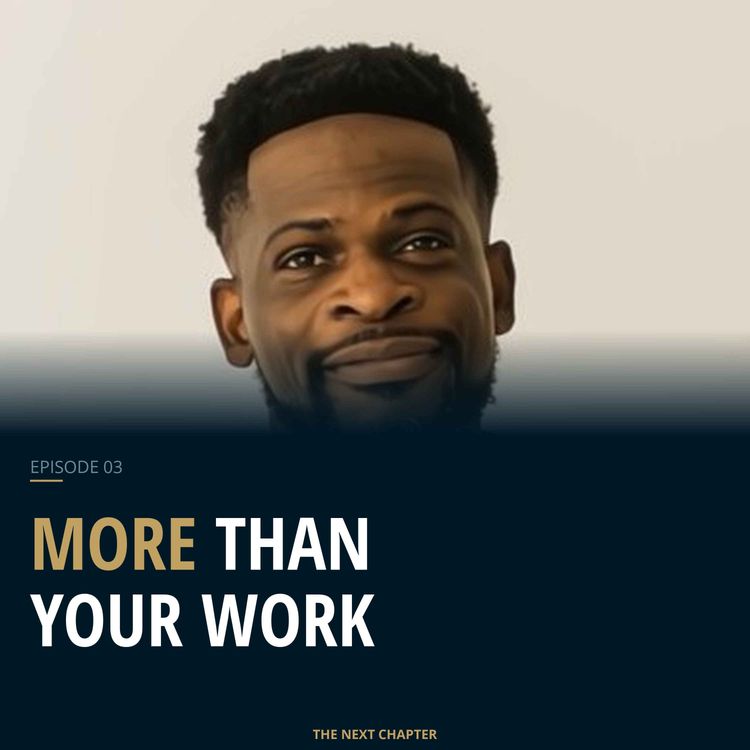
The Next Chapter with Seun Adeyemi
Ep. 03: You Are More Than Your Work — Faith, Identity & the Pressure Every Man Feels
Who are you?
Not what you do.
Not the roles you carry.
Not the titles you’ve been given.
In this episode, we explore why many of the struggles men face—confusion, comparison, striving, and even crisis—can often be traced back to a misplaced understanding of identity.
Drawing directly from Scripture and a helpful framework from The Titus 10 Men by Josh Smith, this conversation reframes identity not around assignments or performance, but around who God says we are in Christ.
We walk through four gospel-rooted identities that form a foundation for godly manhood:
- Servant — settling the question of ownership and surrender
- Son — resting in adoption, security, and belonging
- Friend — living in honesty, vulnerability, and intimacy with God
- Lover — cultivating affection for Christ that fuels obedience and love for others
Rather than defining ourselves by what we do—provider, leader, husband, father—we’re invited to rediscover who we are before those roles. Scripture, not culture or comparison, must be the source of our identity.
This episode is an invitation to pause, examine, and allow God’s Word to define who you are—so you can live out your calling from a place of clarity, freedom, and wholeness.
Chapters
00:00 Exploring Identity: Who Are You?
02:01 The Foundation of Identity in Christ
04:15 Understanding Our Identity as Servants
06:28 Embracing Our Identity as Sons
08:37 The Friendship with God
10:53 Loving God and Others
12:29 Reframing Identity: Servants, Sons, Friends, Lovers
14:26 The Crisis of Identity in Men
16:54 Rediscovering Our True Identity
More episodes
View all episodes
10. Ep 10: Why Willpower Won't Free You | When the Word of God Killed My Appetite for Pornography
35:42||Season 1, Ep. 10This is Part 2 of The Next Chapter series on pornography and purity. If you haven't listened to Part 1 — Why Willpower Won't Free You — start there first.Part 1 laid out the theology: why willpower never works, what you're actually hungry for, and what the spiritual disciplines do to fan your affection for Christ. This episode is the testimony.Justin is a brother Seun does life with. For ten to twelve years, he was in what he describes as a steady relationship with pornography addiction. College. Moving back into his parents' house. His own apartment. Marriage. The struggle followed him everywhere. He tried everything — put the phone in another room, told himself no, counted the days. None of it lasted longer than a week.Then his wife had a miscarriage at five months. That loss brought him low — and brought him back to the God he'd acknowledged publicly but never really pursued. He started reading the Bible chronologically for the first time in his life. And when he got to Abraham's willingness to sacrifice his son, something broke open. He saw the gospel. And the appetite for pornography — a ten-year appetite — just left.This conversation covers:Justin's full testimony: twelve years of addiction, the miscarriage, and the moment everything turnedWhy putting the phone outside the bedroom never workedWhat meeting with God intentionally actually looked like in practiceHow pornography was just the tip of the iceberg — and what the Word revealed underneath itWhat to say to the brother who is doing everything right and still strugglingThe disciplines as the meal and the boundaries as the accoutrementsWhy obedience without emotion is not legalism — it's faithfulnessKey Scriptures: Romans 8:1-4 | 1 Corinthians 10:13 | John 15:4-5 | Romans 12:2 | Psalm 37:4 | 2 Corinthians 1:3-4 | Philippians 1:6Connect with Seun:Instagram: @SeunAdeyemiCFPLinkedIn: Seun AdeyemiCHAPTERS00:00 Cold Open — "I Would Look at Porn Every Day. I Don't Have an Appetite for This Anymore." 01:05 Introducing Justin 01:44 Growing Up in Church, College, and When Pornography Took Hold 02:50 A Ten to Twelve Year Steady Relationship With Pornography 03:13 The Miscarriage That Brought Him Low and Brought Him Back to God 04:30 Reading the Bible Chronologically — The Bible Recap Plan 05:10 The Moment Abraham's Sacrifice Changed Everything 05:40 This Is Disgusting. I Don't Have an Appetite for This Anymore. 06:47 How Pornography Fulfilled Every Role — Anger, Boredom, a Bad Day 07:34 What He Tried to Do to Stop — And Why Nothing Lasted 09:18 I Was the Biggest Hypocrite — His Relationship With God During the Struggle 10:06 Listening to Part 1 — What Resonated? 10:35 Being Intentional About Meeting With God — The God Shot 12:00 Pornography Was Just the Tip of the Iceberg 13:36 Romans 12:2 — Renewing the Mind 14:18 You Stopped Nibbling and Started Feasting — Seun Reflects 15:45 Romans 8 — Is It Possible Not to Sin? 17:06 Pornography as One Expression of Idolatry 18:54 What to Say to the Brother Who Is Doing Everything Right and Still Struggling 21:19 Our Salvation Is Not Based on Perfect Execution 21:42 Be Faithful on a Daily Basis — Prayer Without Ceasing 23:58 Psalm 37:4 — Delight Yourself in the Lord 25:58 The Election Night That Revealed Another Idol 27:00 Be in Fellowship — The Walk Was Not Meant to Be Done Alone 27:45 Practical Boundaries: Accountability Software, Social Media, the Gym 29:01 The Disciplines Are the Meal. The Boundaries Are the Accoutrements. 30:10 Don't Hang Out in the Bar If You're Trying Not to Drink 32:12 Nothing Wrong With Obeying the Lord Even When You Don't Feel Like It 33:46 Be Faithful Even When You Forget What You Read 34:55 Closing — Steward This Chapter Faithfully
9. Ep 09: Why Willpower Won't Free You | Pornography, Purity & the Glory of Christ for Christian Men
42:38||Season 1, Ep. 9It's late. The house is quiet. Your wife is asleep.And something in you — you already know what it is — reaches for the phone.This episode is for that man. Not to shame him. Not to give him another accountability app or a list of rules that haven't worked yet. But to tell him the truth about what he's actually hungry for — and where that hunger was always supposed to go.The problem is not that you desire pleasure. You were made for it. Moses stood at the edge of a mountain after seeing the Red Sea part, after seeing God do more miracles than almost any man alive, and his one request was: Show me your glory. David had wealth, power, women, armies — every earthly pleasure available to a king — and he sat down and wrote: One thing have I desired.Same hunger. Thousands of years apart.Pornography is just the wrong address for a legitimate hunger.In this episode, Seun works through what that hunger actually is, why willpower has never been the answer, how Satan's strategy is not primarily to make you sin but to veil you from the glory of Christ, and what the spiritual disciplines actually do — not as rules, but as ways of fanning the flame of affection for Christ so that lesser things lose their grip.The question is not: how do I stop?The question is: am I abiding?Books referenced:Spiritual Disciplines for the Christian Life — Donald WhitneyGod Is the Gospel — John PiperKey Scriptures: Exodus 33:18 | Psalm 16:11 | Psalm 27:4 | Psalm 63:1 | Psalm 119 | Hebrews 1:2-3 | 2 Corinthians 4:4-6 | Philippians 3:8 | John 15:4-5 | Romans 8:5-6 | 1 Peter 5:8 | Colossians 3:1-2Connect with Seun:Instagram: @SeunAdeyemiCFPLinkedIn: Seun AdeyemiCHAPTERS00:00 Intro — The Late Night Scene01:29 Pursuing Purity: Fighting for What Actually Satisfies02:20 Pornography Is the Wrong Address for Legitimate Hunger02:30 Moses: Show Me Your Glory (Exodus 33:18)03:20 David: One Thing Have I Desired (Psalm 27:4)03:56 My Flesh Feigns for You — Psalm 63:105:00 In Your Presence There Is Fullness of Joy — Psalm 16:1106:21 Christ Is the Radiance of the Glory of God (Hebrews 1:2-3)08:44 Satan Blinds, God Illuminates — 2 Corinthians 409:30 Every Time You Open That Tab — Satan Has Won a Debate10:00 Paul Didn't White-Knuckle — He Had Vision (Philippians 3:8)11:11 Every Blessing of Christ Points You Back to Beholding God12:00 You Are Not a Renovation Project — You're a Creation Project13:36 How Do You Begin to Behold Christ? (Romans 8:5-6)13:57 Spiritual Disciplines for the Christian Life — Donald Whitney15:00 Discipline 1: Feasting on God's Word16:28 How Sweet Are Your Words to My Taste — Psalm 119:10318:52 A Person Who Has Been with God Will Find It Harder to Betray Him21:17 Blessed Is the Man — Psalm 1 and the Vine (John 15)22:10 Discipline 2: Prayer23:44 Discipline 3: Worship — Every Part of Life as Glory to God24:15 Discipline 4: Serving and Stewardship24:35 Discipline 5: Fasting27:05 No Muscle Memory for Resistance28:31 I Discipline My Body — 1 Corinthians 9:2729:35 Discipline 6: Silence and Solitude32:05 Search Me O God — Psalm 13933:15 Be Sober Minded — You Are Being Hunted (1 Peter 5:8)34:30 Abide in Me — John 15:4-535:41 Purity Is the Fruit of Abiding36:30 The Question Is Not How Do You Stop — Are You Abiding?38:05 The Same Power That Raised Christ Is Available to You Now39:30 Fix Your Eyes on Jesus — Colossians 3:1-240:31 Closing Prayer
8. Ep 08: That Ain't the Spirit — That's the Smoke Machine | What a Biblical Church Actually Looks Like | The Next Chapter Roundtable Pt. 2
47:36||Season 1, Ep. 8Most men know they need the church. Fewer know what kind of church they actually need.Part 1 made the case that you can't follow Jesus alone. Part 2 answers the harder question — if you're going to commit to a local church, what does a healthy one actually look like? And how do you know if what you're currently in is building you up or slowly making you weaker?In this second half of the roundtable, Seun and the brothers get into the theology underneath the church — why expositional preaching produces a different kind of Christian than topical preaching does, what Paul actually meant when he said be filled with the Holy Spirit (hint: it's not the smoke machine), and why 25 out of 27 New Testament books address false teaching, even though most churches never preach on it.One of the brothers shares the story of walking into a charismatic church where his pastor told him to put the Bible down. You're reading too much. Just feel the spirit. That moment — and what came after — is one of the most honest things you'll hear on this episode.They also get into what true discipleship looks like outside of a formal curriculum, why church membership isn't just signing your name on a wall, and why church discipline — one of the most avoided topics in modern Christianity — is actually one of the most loving things a body can do for one of its own.Watch Part 1 — You Can't Follow Jesus Alone — first.Topics covered:The death of strong biblical churches — and what's replacing themWhat spirit-filled actually means (it's not the smoke machine)"Put the Bible down and just feel the spirit" — the charismatic church moment that changed everythingWhy expositional preaching produces a different kind of Christian"I can do all things through Christ" — what Paul actually meantThe man who preached God's word from a hospital bed while dying of cancer25 out of 27 New Testament books address false teachingWhat true discipleship actually looks likeChurch membership: what it means to be part of a bodyChurch discipline: a rescue mission, not a punishmentBook recommended: Nine Marks of a Healthy Church — Mark DeverKey Scriptures: Ephesians 5:18-19 | Colossians 3:16 | Philippians 4:13 | Matthew 18 | 1 Peter | 1 Timothy 3 | Matthew 7:21CHAPTERS00:00 Intro — The Death of Strong Biblical Churches01:35 What Does a Biblical Church Actually Look Like?04:39 That Ain't the Spirit — That's the Smoke Machine09:15 Put the Bible Down — My Charismatic Church Story13:27 Why Expositional Preaching Matters14:53 I Can Do All Things Through Christ — In Context18:36 25 Out of 27 NT Books Address False Teaching20:36 Stanley Wilson: The Man Who Preached From His Deathbed26:28 Marks of a Healthy Church31:31 What True Discipleship Actually Looks Like34:54 Church Membership: Body Dynamics40:50 Church Discipline: A Rescue Mission (Matthew 18)48:29 Closing: Nine Marks of a Healthy Church — Mark Dever
7. Ep 07: You Can't Follow Jesus Alone | Brotherhood, Community & Why the Local Church Is Not Optional | The Next Chapter Roundtable Pt. 1
34:52||Season 1, Ep. 7You can't follow Jesus alone. And yet, millions of Christian men are trying to do exactly that.In Part 1 of this roundtable, Seun sits down with three brothers he does life with — James, Craig, and Justin — for an honest conversation about why men disconnect from the local church, what it costs them when they do, and what it actually looks like when the body of Christ shows up.This is Part 1 of 2. Part 2 — Is Your Church Healthy? — drops June 8. Subscribe so you don't miss it.Topics covered:The three types of men who aren't really in the church: the consumer, the critic, and the online attendeeJames: losing his mom to cancer — and how the local church found himWhy most men drift from church: it's a teaching problem, not a commitment problemYour theology dictates your methodologyDigital disciples — and why they give the brothers a side eyeThe lowest point of sanctification: what happens when you leave the church pridefullyRugged individualism — the cultural poison keeping men isolatedWhat real community looks like: meals, phone calls, being knownProverbs 18:1 — whoever isolates himself seeks his own desireWhat if Christ treated you the way you treat the church?Key Scriptures: Hebrews 10:25 | John 13:35 | Proverbs 18:1 | 1 Corinthians 12 | Romans 8:18CHAPTERS00:00 Intro — Seun Recaps Episode 5: The Three Types of Men 01:35 The Three Portraits: Consumer, Critic, Online Attendee 03:25 Roundtable Begins: When Did Church Become Important? 04:20 James: Losing His Mom — How the Church Found Him 07:33 A Theology of the Church: What Scripture Actually Says 09:49 From Mega Church to Reformed: The Turning Point 11:46 Digital Disciples Give Me a Side Eye 14:01 Your Theology Dictates Your Methodology 18:24 Rugged Individualism: The Cultural Poison in the Church 21:00 You Need Men Who Know What's Going On in Your Life 24:58 The Lowest Point of Sanctification: Pridefully Apart 27:00 What Real Community Looks Like 28:28 I Called You Craig — The Body Showing Up in Crisis 30:10 Proverbs 18:1 — Whoever Isolates Himself 31:17 What If Christ Treated You Like You Treat the Church? 33:00 Idolatry of Preferences: The Real Reason Men Stay Away 34:24 End of Part 1 — Part 2 drops June 8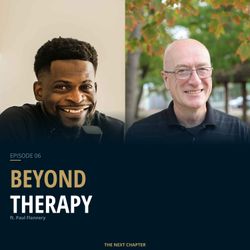
6. Ep. 06: Biblical Counseling vs. Therapy: Heart Transformation, Identity & What Scripture Uniquely Heals
56:39||Season 1, Ep. 6In this episode, Seun Adeyemi shares his personal journey through depression and how biblical counseling — not secular therapy — led him to the root of what he was experiencing: an identity crisis rooted in misplaced worship. Joined by Paul Flannery, a certified biblical counselor and trainer with the Association of Biblical Counselors (ABC), Seun unpacks why Scripture is sufficient to address the deep heart issues that secular therapy and behavior modification simply cannot reach.What you'll learn in this episode:Biblical counseling vs. secular therapy — Paul explains the core distinction: secular therapy locates the problem as external, leading to behavior modification. Biblical counseling locates the problem internally — in the heart — leading to genuine repentance, transformation, and lasting change. One puts a bandage on the wound. The other cleans it.Why labels can become traps — When secular therapy labels someone a narcissist, that label can become an identity and a crutch. Scripture cuts deeper: it calls that behavior pride, names it as sin, and calls the person to repentance. You cannot repent of something that has no name in your framework.The three questions therapy cannot answer — Using the framework of biblical anthropology, hamartiology, and soteriology, Seun articulates what Scripture uniquely provides: Who is man? What is wrong with man? What actually fixes man? Secular therapy can only partially address the second question — and even then without seeing the root.How biblical counseling actually works — Paul walks through the practical process: intake forms, exploratory sessions, identifying heart postures (rebellion, deception, fear, discouragement, unbelief), Scripture-based homework, and slow, relational transformation — not a prescription handed across a desk.Trauma, past hurt, and the hard question of forgiveness — The episode tackles one of the most sensitive topics in counseling: how a person heals when they've been genuinely hurt — including abuse victims — and what forgiveness looks like when the person who caused the harm is unrepentant.Biblical counseling is intensified discipleship — Not a service reserved for credentialed professionals. It is the body of Christ functioning at its deepest level, walking alongside one another with the Word of God, pointing each other back to Christ.Resources mentioned:ABC (Association of Biblical Counselors) — christiancounseling.comACBC (Association of Certified Biblical Counselors) — biblicalcounseling.comKey figures: Jay Adams, David Powlison, Ed Welch, Jeremy Lelek, Darby Strickland, Chris MolesKey scripture references: 2 Peter 1:3, Romans 15:14, Romans 12:9–21, Matthew 6:14–15, Hebrews 4:12, Psalm 16:11, 2 Corinthians 5:17
5. Ep 05: Christ Died for the Church. Do You Even Like Her? | What Church Commitment Reveals About You
37:55||Season 1, Ep. 5Most Christian men don't have an attendance problem with church. They have a love problem. In this episode of The Next Chapter, Seun Adeyemi makes the case that the men who've drifted from the local church — the one who shows up but never invests, the one who left with legitimate grievances, the one watching online from the comfort of home — aren't dealing with a commitment problem. They're dealing with a self-centered faith that God has already named: idolatry.Using John 21, Ephesians 5, 1 Corinthians 12, and Proverbs 27, Seun builds the argument that love for Christ is always revealed in how you love God's people — and that the local church is not optional, not replaceable by a screen, and not secondary to your preferences.Chapters00:00 — Introduction00:10 — The Three Men: Consumer, Critic, Digital Attendee02:00 — The Diagnosis: This Is a Love Problem03:15 — God Has a Name for It: Idolatry and Pride05:23 — The Costless Cross: Matthew 16:2406:44 — The Question Jesus Actually Asked: John 21:15–1709:36 — Love for Christ Is Always People-Shaped09:49 — Robbing the Body: 1 Corinthians 12:2112:05 — The Bride Argument: Ephesians 5:25–27 13:15 — The Husband Illustration15:42 — The Man Who Attends But Never Sees16:20 — What the Screen Cannot Give18:16 — The Real Reason Men Choose the Screen19:30 — The Beauty of the Broken Church21:00 — God Is Not Finished: Philippians 1:6 & 2 Corinthians 3:18 22:39 — The Exchange: What These Men Have Traded23:00 — What Genuine Community Actually Looks Like24:50 — The Hardest Love: Proverbs 27:626:07 — You Can Only Wound a Brother29:46 — The Bride Named Specifically: Four People32:35 — Your Testimony to the World: John 13:3534:41 — The Bride Landing 35:15 — Two Closing Questions36:09 — If the Answer Is No
4. Ep. 04: How Much Is Enough? What the Bible Says About Money, Ambition & Contentment
35:39||Season 1, Ep. 4You've been chasing a number. And when you got there, the number moved.Researchers have a name for it — the hedonic treadmill. Within about a year of reaching a new level of success or income, the feeling fades and the goalpost shifts. Solomon described it in Ecclesiastes thousands of years earlier: all is vanity and a striving after the wind.In this episode, Seun Adeyemi asks the question most men have been quietly avoiding: how much is enough? And more importantly — who decided what your scorecard says?Because if you haven't answered that consciously, something else already has.In this episode:Why the ceiling of comparison is so high that no one will ever reach it — and the only way to stop runningWhat researchers call comparison, the Bible calls covetousness — and why it hides behind words like ambition, drive, and visionRajat Gupta, Bernie Madoff, and David: three men whose desire for more cost everythingMoney as tool, test, and testimony — and what your bank statement reveals about your heartFive principles of faithful financial stewardshipThe four uses of money (Live, Give, Owe, Grow) — and why the order matters more than the amountWhy giving is the foundation, not the afterthought — and what it actually does to money's hold on youThree things most people miss from the Parable of the TalentsWhat it means to reclaim the word "enough" — not as settling, but as freedom"The man who is always chasing the next number is perpetually half-present in every place that actually matters."Key Scriptures: Ecclesiastes 1–2 · Hebrews 13:5 · Philippians 4:11–13 · 1 Timothy 6:6–8 · Matthew 25 (Parable of the Talents)Referenced:The Psychology of Money — Morgan HouselNever Enough? 3 Keys to Financial Contentment - Ron Blue📩 Subscribe to Reflections on The Next Chapter — a biweekly newsletter at the intersection of faith, family, and finance: links.seunadeyemi.ca/reflections🎙️ The Next Chapter is for men who have built something — and are starting to ask what it was for.CHAPTERS00:00 The goalpost that never stops moving01:20 The hedonic treadmill — research confirms the trap01:57 Morgan Housel: the hardest financial skill to master03:58 Solomon got there first — Ecclesiastes and vanity04:48 Covetousness: the sin hiding behind ambition05:54 Even the disciples weren't immune06:42 Rajat Gupta, Bernie Madoff, and David10:46 Saul and the compromise that looked like worship12:45 Compromise is never justified — the means never justify the end13:18 Money as tool, test, and testimony15:03 Hebrews 13:5 — contentment anchored in a promise15:45 Five principles of faithful stewardship17:09 Why giving is the foundation, not the afterthought18:40 The four uses of money: Live, Give, Owe, Grow21:13 What giving actually does to money's hold on you23:50 Philippians 4:11 — what contentment actually means24:48 The Parable of the Talents: three things most people miss30:01 How much is enough?31:22 Reclaiming the word "enough"33:14 Lifestyle creep: the silent goalpost mover34:49 The question to carry with you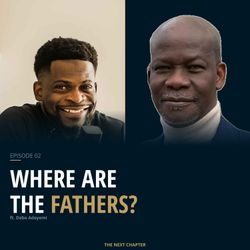
2. Ep. 02: Where Are the Fathers? — Faith, Presence & the Legacy Every Man Is Building
01:00:08||Season 1, Ep. 2Most fathers and leaders overlook a vital truth: true disciple-making begins at home. In this powerful episode, Seun Adeyemi sits down with his father—a man whose life exemplifies how intentional sacrifice, rooted in faith, transforms generations. By sharing his journey from a wild, irresponsible youth to a spiritual father dedicated to discipling his children, he reveals timeless principles of fatherhood that challenge modern passive approaches.Discover the pivotal moments that shifted a life—like a near-death encounter that led to over 40 years walking with Christ—and learn how these experiences shaped a legacy of intentionality, prayer, and sacrificial love. You'll uncover:The vital role of fathers as spiritual leaders who set the spiritual temperature of their homes.How biblical principles, from prayer to community accountability, can turn shallow faith into a deep, resilient foundation for children.Practical strategies for cultivating deliberate conversations about faith and character development amid today’s digital distractions.Why sacrificing ego and embracing vulnerability are powerful tools for modeling Christlike character, especially in the face of hardship and personal failure.The importance of community, accountability partnerships, and lifelong sacrifice in raising the next generation of faith-filled leaders.This episode highlights that the stakes are higher than they seem—what we ignore today by shortcutting discipleship, we pay for in the next generation's faith and integrity. If you're a parent, mentor, or believer longing to leave a lasting, faith-driven impact on your children, this conversation offers clarity, conviction, and practical wisdom.With heartfelt honesty, a legacy of sacrifice is shared—not just for the benefit of children, but as a blueprint for all believers committed to living out the Gospel in every facet of life. Perfect for fathers, spiritual leaders, and anyone serious about strategic, faith-centered parenting—it’s a call to action that could redefine the future of your family.Chapters:00:00 - Why young people are leaving the church immediately after college02:09 - The responsibility of fathers in discipling children beyond Sunday school04:08 - How salvation radically redefines parenting purpose06:55 - The story of a life-changing encounter with God in 198608:22 - Building a spiritual foundation through prayer and intentional parenting10:09 - The role of prayer and dependence on God's guidance in raising children12:27 - Living by example: sacrifice, humility, and vulnerability in parenthood14:36 - Legacy and the importance of moral and spiritual consistency across generations16:44 - The influence of family conversations and deliberate example during teenage rebellion18:01 - The significance of accountability groups and community among men20:00 - The historical legacy of faith within the family lineage22:27 - Practical parenting: making God's Word relevant and applicable daily25:24 - The shift from rigid old school to flexible, love-centered parenting26:50 - Sacrifices made moving from Nigeria to Canada to secure a future30:06 - Navigating family storms and conflicts with faith and humility37:57 - The importance of being physically present and involved in children’s lives42:18 - Addressing mistakes, mistakes, and the power of continuous sacrifice44:37 - Teaching through example: practical sacrifices and understanding children’s unique needs50:13 - Reflecting on work, presence, and intentional sacrifices in fatherhood52:44 - The call for strategic, prayerful, and intentional parenting regardless of past struggles53:26 - Final encouragement: Decide to be a deliberate, sacrificial father55:01 - The importance of crushing ego and embracing vulnerability in leadership56:43 - The ongoing journey of faith, community, and legacy building58:36 - Closing thoughts: Hope, reconciliation, and trusting God's planResources & Links:Watch on YoutubeFollow on Instagram