Share
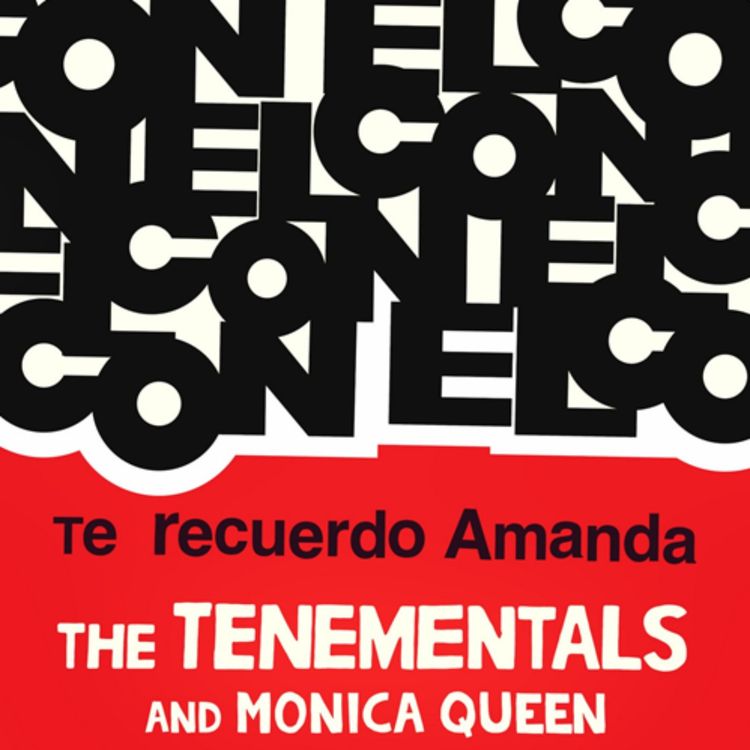
Serious Feather with Brett Gregory
Interview: Prof. David Archibald (Glasgow University) discusses Scotland, Spain, and Santiago
Season 2, Ep. 8
•
Brett Gregory speaks with David Archibald, founding member and frontman of The Tenamentals, a group of academics, artists and musicians who are developing a series of songs which recount a history of Glasgow, and breathing new life into some old protest songs in innovative covers. Here, Archibald talks about some of their recent releases, which cover songs related to Spain, Scotland and Santiago, and the band’s debut album, Glasgow: A History (Vol. I of VI) which is released on Strength in Numbers Records in November.
Spotify:
https://open.spotify.com/artist/10S0JCoRJ7tFjX4j33IcSD?si=Dx3VEdLfQUu2iI1Xa43h9w&nd=1&dlsi=1a546069d4524166
Socials: @tenementals
More episodes
View all episodes
13. Interview: The Radical Film Network with Steve Presence and Matthias Kispert
28:45||Season 2, Ep. 13The Radical Film Network is the largest network for activist and experimental film in the world. Free to join and run by and for its members, the RFN supports progressive film culture in all its forms across the globe. If you’re interested in radical film – as a maker, teacher, critic, curator or even just a viewer – the RFN is for you.The Radical Film Network was founded in the UK in 2013 when a group of activists, academics and filmmakers met to discuss the ways in which they could support the development, growth and sustainability of radical film culture. Since then, the RFN has grown rapidly, and now consists of over two hundred affiliated organisations from more than thirty countries around the world. Organisations range from artists’ collectives and production companies to archives, co-ops, distributors, film festivals and exhibition venues, as well as a host of other less easily categorised groups. The membership also includes several hundred individuals, including academics, curators, filmmakers, programmers, researchers and writers.For further information visit: https://radicalfilmnetwork.com/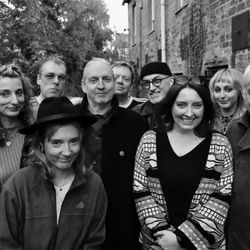
12. Interview: Prof. David Archibald reflects upon The Tenementals debut album 'Glasgow: A History (Vol. I of VI)'
37:21||Season 2, Ep. 12Glasgow: A History (Vol. I of VI) available at:https://strengthinnumbersrecords.bandcamp.com/album/glasgow-a-history-volume-i-of-viThe Tenementals socials:https://www.instagram.com/tenementals/https://www.facebook.com/tenementalshttps://bsky.app/profile/tenementals.bsky.socialhttps://x.com/tenementals
11. Album Review: 'Glasgow: A History (Vol. I of VI)' by The Tenementals
11:57||Season 2, Ep. 11Full hyperlinked transcript available at:https://www.seriousfeather.com/music.html#glasgowhistoryalbumGlasgow A History (Vol. I of VI) available at:https://strengthinnumbersrecords.bandcamp.com/album/glasgow-a-history-volume-i-of-viThe Tenementals socials:https://x.com/tenementalshttps://www.instagram.com/tenementals/https://www.facebook.com/tenementalshttps://bsky.app/profile/tenementals.bsky.social
10. Interview: Dr Laura Minor discusses her book 'Reclaiming Female Authorship in Contemporary UK Television Comedy'
30:33||Season 2, Ep. 10This text examines how British female comedy authors have flourished in the contemporary televisual landscape- Examines key female writers/performers creating UK television comedy- Updates Kathleen Rowe’s conception of the ‘unruly woman’ to account for changes in contemporary comedy- Identifies trends in the comedy genre (with a focus on dramedy, sitcoms, and semi-autobiographical/confessional comedy)- Explores the complex connection between creator/craft/context, that is, female comedians’ intentions and background (creator), writing and/or performance style (craft), as well as the social, political, and cultural conditions in which their series were made (context)This book explores female authorship in UK television comedy, with a focus on British and Northern Irish writers/performers. More specifically, it examines comedy texts produced between 2010 and 2020, a period marked by a proliferation of female-centric and female-created comedy. In the following order, comedians Julia Davis, Phoebe Waller-Bridge, Caitlin/Caroline Moran, Michaela Coel and Sharon Horgan will be analysed as key case studies.Drawing from these case studies, the book has two objectives. First, it seeks to update Kathleen Rowe's concept of the 'unruly' woman, shifting the emphasis from visibility and performance to the labour and contexts behind on-screen portrayals. Building on Rowe’s existing scholarship, the book introduces the term ‘fastidious’ to describe how comedians display delicacy, precision, and control over their carefully crafted TV series. Secondly, the book aims to extend this concept to British and Northern Irish TV writers/performers who have been either overlooked or examined within broader transnational projects. In doing so, it ‘reclaims’ the authorship of women from the UK.For further information visit: https://tinyurl.com/mr2sd7ak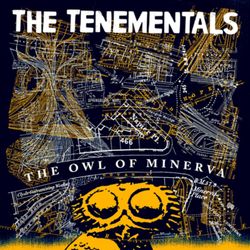
9. Single Review: 'The Owl of Minerva' by The Tenementals
09:54||Season 2, Ep. 9Full hyperlinked transcript available athttps://www.seriousfeather.com/music.html#owlofminervahttps://strengthinnumbersrecords.bandcamp.com/album/glasgow-a-history-volume-i-of-viThe Tenementals socials:https://x.com/tenementalshttps://www.instagram.com/tenementals/https://www.facebook.com/tenementals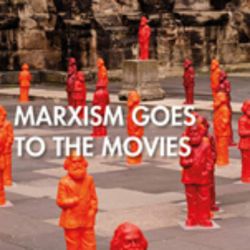
7. Interview: Prof. Mike Wayne (Brunel University) discusses his book 'Marxism Goes to the Movies'
20:58||Season 2, Ep. 7Full video and hyperlinked transcript available at www.seriousfeather.comOverviewIntroducing the key concepts and thinkers within the Marxist tradition, Marxism Goes to the Movies demonstrates their relevance to film theory and practice past and present.Author Mike Wayne argues that Marxist filmmaking has engaged with and transformed this popular medium, developing its potential for stimulating revolutionary consciousness. As the crisis of capitalism deepens, this history and these resources are vital for a better future. Marxism is one of the few approaches that can bring together political, economic, formal and cultural analysis into a unified approach of studying film, and how films in turn can help us understand and even critically interrogate these forces. The book examines how filmmakers, who have been influenced by Marxism, have made some of the most significant contributions to film culture globally, and provides historical perspective on the development of Marxism and film. Each chapter covers a broad theme that is broken down into sections that are cross-referenced throughout, providing helpful navigation of the material.Clear and concise in its arguments, this is an ideal introduction for students of Marxism and film, inviting readers to deepen their knowledge and understanding of the subject.For more information: https://tinyurl.com/3sf9j762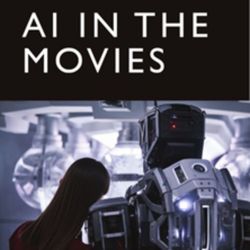
6. Interview: Dr. Paula Murphy (Dublin City University) discusses her new book 'AI in the Movies'
24:28||Season 2, Ep. 6Full video and hyperlinked transcript available at www.seriousfeather.comOverview'AI in the Movies' analyses film representations of artificial intelligence, from their first emergence in the 1950s up to 2020. These strong or general artificial intelligences take different forms: some are digital AIs, some robot AIs, some move between material and digital forms. Some are indistinguishable from humans, and some have no material existence at all.Analysis of these representations demonstrates filmmakers eroding the division between human and AI, by presenting character doubles, narrative parallels and eventually, identities in which the biological and artificial overlap and intersect in new hybrid forms.The book identifies the aspects of AI science that fascinate filmmakers and outlines the key themes and tropes in AI film, including parent-child relationships, the female robot, human-AI doubles, parallels and hybrids, and AI death and mortality.For more information: https://edinburghuniversitypress.com/book-ai-in-the-movies.html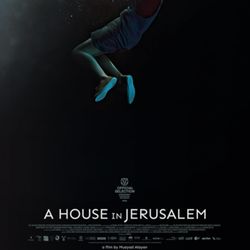
5. Interview: Director Muayad Alayan discusses his new film, 'A House in Jerusalem'
51:59||Season 2, Ep. 5Young Rebecca is forced to move with her father from the UK to Jerusalem, in the hopes that a new beginning can help her heal from her mother’s sudden death. Soon after settling into an old house in a neighbourhood known as the Valley of the Ghosts, a series of mysterious events begin and Rebecca is blamed. Diving deep into the mystery of the house and the mystical city of Jerusalem, Rebecca sets out on an enigmatic journey to discover what hides in the shadows of the house.Crafted by the talented duo Muayad and Rami Alayan, A HOUSE IN JERUSALEM is an eerily suspenseful and touching story told through the eyes of a young girl, exploring the strength of memory and the power of love.For more information: https://wellingtonfilms.co.uk/a-house-in-jerusalem