Share
Secret Life of Books
James Joyce 3: Ulysses
Ulysses is a vast novel - over a quarter of a million words. Yet it follows the action of less than 24 hours. To be fair, Joyce packs a lot into that 24 hours. Although our old friend Stephen Daedalus and Leopold Bloom dominate the action, there are over 200 named characters. And, as ever, the most important character is Dublin itself.
The story and structure is loosely modelled on The Odyssey with the different chapters named after episodes in Homer’s poem. The first section follows Stephen Daedalus, just as The Odyssey begins with Odysseus’ son Telemachus. Then Leopold Bloom, a 38 year old Jewish advertising canvasser, takes centre stage with Odysseus’ various adventures given modern-day, satirical equivalents. At the climax, Leopold and Stephen are united and return home, where Molly Bloom - the Penelope of the story - has the final word. The word is ‘yes’, although this is one of the rare occasions where one hearkens after a curmudgeonly ‘no’.
So… like Odysseus finally reaching Ithaca, we have finally reached Ulysses after referring to it, usually in disparaging terms, over the life of this podcast. And the question is, how are we going to approach it? Are we going to fall to our knees and kiss the shores? Or will we grab bow and arrow and lay waste to the palace?
And if you’re concerned we’re sounding just a little too flip, it’s worth remembering that Joyce himself said that Ulysses ‘is fundamentally a humorous work’, filled with word-play, toilet humour and irreverence.
Become a subscriber by signing up at Apple: http://apple.co/slob
Or join our Patreon community here: https://www.patreon.com/c/secretlifeofbookspodcast
Hosted on Acast. See acast.com/privacy for more information
More episodes
View all episodes
189. Classic Australia 5: An Imaginary Life by David Malouf
01:02:02||Ep. 189David Malouf, one of Australia’s most loved and respected novelists and poets, died this year. We revisit his writing life and his celebrated novella An Imaginary Life, about the poet Ovid’s life in exile from Rome, after writing his own most celebrated poetry. In David Malouf’s own words, An Imaginary Life solved the problem of the “difficult second novel” by getting as far away from his successful first novel Johnno, a vivid depiction of friendship and growing up in Malouf’s hometown, Brisbane, in the late 50s and 60s.Malouf pivoted away from tropical Australia to Romania under the Caesars. He called it “part prose poem, part speculative essay, part dramatic monologue.” But Malouf – in an audacious repackage – describes An Imaginary Life as being as just Australian as Johnno and his other novels and poems set in Queensland. We’re going to put that claim to the test today, and take a close look at how and why Malouf tackles Ovid, classical writing and exile to write a very unexpected Australian classic.
188. Classic Australia 4: The Slap by (and with) Christo Tsiolkas
49:39||Ep. 188Plenty of novels entertain and move us, but only a few become cultural landmarks in their own right: capturing the state of a nation at a particular moment in time, and sparking conversations and arguments that continue long after their publication. Christos Tsiolkas’s The Slap is one of them. When it was published in 2008 it scandalized, delighted, outraged and sent shock reverberations literally across the world. The Slap upturned lazy stereotypes about who and what Australia is as a nation. At the Sydney Writers’ Festival Homegrown program in August 2026, Sophie and Jonty interviewed Christos about writing a novel that was destined to become a touchstone for Australian identity, worldwide.The inciting incident of the book is, of course, the slap itself. It’s delivered by Harry, a self-made businessman of Greek heritage, against a four-year-old boy, at a barbeque in suburban Melbourne. Harry’s split-second transgression changes the lives of everyone present, and exposes faultlines that divide generations, race and gender, and reveal the lie of Australian egalitarianism. The Slap was Christos’ fourth novel. It was longlisted for the Booker Prize, shortlisted for the Miles Franklin Award, won the Commonwealth Writers Prize and has been adapted for the screen twice - once by the ABC, and then by NBC in the USA. What made The Slap both iconically Australian, and a daring – erm - slap in the face to prevailing Aussie stereotypes.
186. Classic Australia 3: The Transit of Venus by Shirley Hazzard
01:18:11||Ep. 186At the 2003 USA National Book Awards, the horror writer Stephen King gave an impassioned speech criticizing the assembled great and good of the literary world for its critical neglect of popular writers.Next up a 72 year old Australian woman took to the stage to receive an award and found herself arguing with King and defending High Art. Today’s episode is about that woman - Shirley Hazzard - and her masterpiece The Transit of Venus. It’s about two Australian sisters as they navigate life and love in Britain, from the austerity years after WW2 to the 1970s. Shirley Hazzard is something of an outlier in this Classic Australia season. She was not an egalitarian like Miles Franklin and Ruth Park, wanting to knock the stuffing out of the literary Establishment and its cultural subservience to European taste-makers. She adored the European classics and the Old World and happily turned her back on Australia. When an interviewer once asked her to describe the Sydney of her youth, she described it as ‘provincialissimo’, which is pseudo-Italian for the most provincial place on Earth. In this episode we’re following the transit of Shirley as tracks a fiery course across the literary firmament, from humble beginnings in Sydney to a glamorous jet-setting life in-between New York and the Italian island of Capri.
185. Classic Australia 2: The Harp in the South by Ruth Park
01:07:16||Ep. 185Ruth Park’s debut novel, The Harp in the South, was first serialized in the Sydney Morning Herald in 1947, provoking angry letters from outraged readers. The book was destined to become an Australian classic. The story follows an Irish Catholic immigrant family - the Darcys - living in the inner-city slum of Surry Hills, as they navigate domestic violence, child prostitution, racism, backstreet abortions, abduction, and alcoholism. Some readers objected to Park’s frank depiction of these social ills. Others claimed her story was exaggerated. And there was general outrage that an outsider - a blow-in from New Zealand, no less - should assume the right to air Sydney’s dirty laundry for all to see. But The Harp in the South is not a judgmental or moralizing novel. Park, who was living in Surry Hills at the time, simply depicted the world around her. There is no traditional plot to the story. We simply join the Darcys for around three years of their lives and grow to love them despite their flaws. Park finds beauty in the everyday and her prose is often most beautiful when describing unbelievable squalor. Her descriptions of rubbish and dirt are second to none.In this second episode in our Classic Australia season, we take a leap from Miles Franklin’s charming, sometimes naive, turn-of-the-century rural bildungsroman to Ruth Park’s urban, immigration story that became a template for many of the great Australian novels of the last fifty years, including Christos Tsiolkas’ The Slap (more on that in a few weeks) and Tim Winton’s Cloud Street.
183. From Pemberly With Love. SLOB picks the next James Bond.
10:56||Ep. 183In breaking, literary-adjacent news, Hollywood is about to do the final screen tests to choose the next James Bond. They’ve narrowed it down to just four actors, according to today’s Guardian. But what’s a tough decision for the motion picture studios is a simple decision for SLOB. We’ve cracked the Bond code.Each of these four rumored finalists has played at least one major role in recent adaptations of literary classics. So, Sophie and Jonty have put their classics know-how to the (screen) test, to ask which of these nineteenth-century literary heroes fits the bill for our post-Daniel Craig 007. Want a hint? The name’s Darcy. Fitzwilliam Darcy.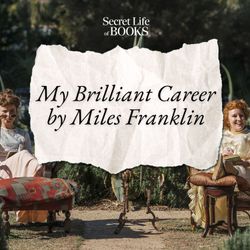
182. Classic Australia 1: My Brilliant Career by Miles Franklin
01:11:29||Ep. 182In 1901, six self-governing British colonies in the Southern Hemisphere came together to form a single nation - Australia. In that same year, a 21-year-old woman from rural New South Wales published a book which gave voice to that new nation. The woman is the great Miels Franklin, and the book is My Brilliant Career. The novel’s heroine Sybylla Melvin, immortalized in the 1979 film by Judy Davis, is ebullient, clever, defiant, funny and brave. It’s a gripping story of her farming childhood, her family’s descent into poverty, her romance with a handsome jackaroo called Harry Beacham and - most of all - her determination to forge a career as an independent artist. The story is essentially Pride and Prejudice in Blundstones, which perhaps accounts for its enduring success. Sybylla herself is a proud atheist, socialist and feminist. This was not an image Australia necessarily wanted to project at the time, with one critic denouncing Sybylla as ‘distinctly unpleasant’. But The Bulletin celebrated it as ‘a book full of sunlight’, and pronounced it ‘the very first Australian novel to be published’. Most of all, young women around Australia found - at last - an author who spoke to their experience and Franklin spent a large part of the following years replying to the many letters of gratitude and appreciation that flooded in. This episode is the first in a series devoted to Australian classics. Today we’re asking just what it was that makes Sybylla Melvin such a compelling and evergreen heroine.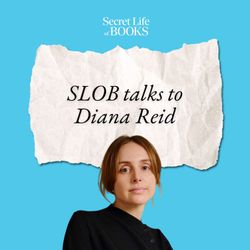
181. SLoB & SLoBability: Diana Reid on adapting Austen's masterpiece for the screen
44:58||Ep. 181Diana Reid is the hottest young screen adaptation-writer of the hour, and she wrote the screenplay for the delightful new Sense and Sensibility film with Daisy Edgar-Jones and Esme Creed-Miles. Today she's joining us on SLOB to talk rom-coms, wild hair, muslins, ribbons, and learning self-restraint.The story of how we got Diana on our show is almost as meet-cute as the story of how she came to write the screenplay. You'll hear the whole story, and we'll go in deep on how Diana went from being a novelist to screenwriter almost overnight, and how Jane Austen herself taught her how to write the beats of a gripping story about two sisters who seem to be opposites and learn how to be more like one another. This version of Sense and Sensibility is true to the original and also windblown and yearningly impassioned, as any good modern rom-com should be. Hear about how Diana, along with the producer, director and actors made the magic happen as a team, over several months of shooting on location in the UK.Diana now lives in London, but grew up in Sydney, and indeed seems to have led a shadow life to Sophie. Diana's first novel, Love and Virtue, is set on the campus of Sydney University, and reminded Sophie not a little of her own heady days as an undergraduate. We talk about how novel-writing prepared Diana for screen-writing, and about how she managed to write three such different, accomplished, page-turning novels and a successful screenplay all before her 30th birthday!
180. Small-talk emergency kit: who the heck is Anne Carson?
20:46||Ep. 180If you're wondering who this Anne Carson person is who just won the Nobel Prize, then SLoB is here to help. In this punchy 20-minute primer, we give you all the vital statistics and some choice extracts from Carson's poetry so you can sparkle and shine when her name comes up - as it surely must - at the weekend dinner table/pub/supermarket queue.
179. Factory settings: Elizabeth Gaskell's North & South
01:24:42||Ep. 179Elizabeth Gaskell might be the most underrated novelist of the 19th century. North and South was first published by Charles Dickens in Household Words from 1854-55. But Dickens and Gaskell came to blows over his heavy-handed editing style and misguided ending change. Manchester-based novelist Gaskell fought back against Dickens’ way of telling stories, to make the industrial working classes properly visible for the first time in literary history. She didn’t tell the Establishment what it wanted to hear, and she was considered a nuisance. Even The Leader - a radical newspaper that should have supported her - condemned North and South, saying that a woman could not ‘understand industrial problems’ and therefore had ’no right to add to the confusion by writing about it.’By the 1950s, Gaskell was regarded as a minor novelist who, according to male critics, lacked the ‘masculinity’ to tackle poverty and social reform. But now, in the 21st Century, she has resumed her rightful place alongside Charles Dickens and George Eliot as one of the greatest Victorian writers. No one else - including Dickens and Eliot - understood what was going on in the great industrial cities better than Gaskell, nor what tactics might be necessary to heal the divisions in British society. All of which is unsurprising when we learn that Gaskell was from a radical dissenting family, and that she spent her adult life in Manchester not just writing novels and raising children, but participating daily in work to address the problems of poverty, hygiene and lack of education in Britain’s fastest growing city.