Share
Secret Life of Books
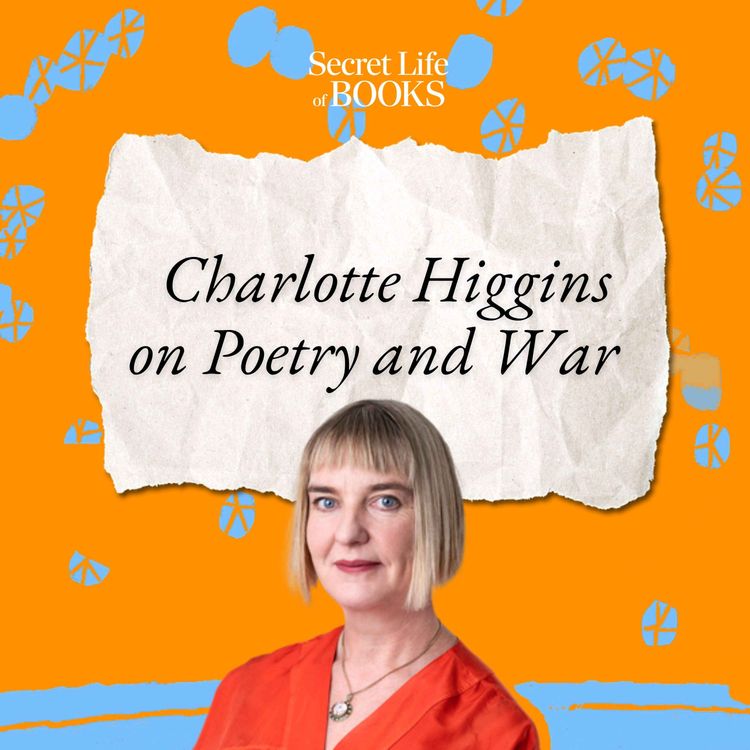
Charlotte Higgins on Ukrainian Lessons: Art in a Time of War
Charlotte Higgins talks to Jonty about her new book, Ukrainian Lessons, which recounts her experiences the last four years reporting on the cultural life of a nation at war. Culture is never far from the front-line in time of conflict, but rarely more so than in Ukraine. Part of Putin’s attempts to legitimise the war lies in an age-old argument that Ukraine is simply an extension, or part of, Russia itself. He has personally written essays explaining his view that Ukrainian language and culture is simply part of a Greater Russia story. Not surprisingly, Ukrainians are proving him wrong with the current flourishing of poetry, writing and art that speaks to the uniqueness and separateness of their culture.
Charlotte talks about how she went to Ukraine, what she found and why her belief in the power of poetry and art has never been greater.
Charlotte is Chief Culture Writer for The Guardian, a classicist and host of Instant Classics podcast.
Content warning: as you might expect from an episode about a contemporary war, some of the stories and experiences that Charlotte recounts are confronting.
Become a subscriber by signing up at Apple: http://apple.co/slob
Or join our Patreon community here: https://www.patreon.com/c/secretlifeofbookspodcast
Hosted on Acast. See acast.com/privacy for more information
More episodes
View all episodes
183. From Pemberly With Love. SLOB picks the next James Bond.
10:56||Ep. 183In breaking, literary-adjacent news, Hollywood is about to do the final screen tests to choose the next James Bond. They’ve narrowed it down to just four actors, according to today’s Guardian. But what’s a tough decision for the motion picture studios is a simple decision for SLOB. We’ve cracked the Bond code.Each of these four rumored finalists has played at least one major role in recent adaptations of literary classics. So, Sophie and Jonty have put their classics know-how to the (screen) test, to ask which of these nineteenth-century literary heroes fits the bill for our post-Daniel Craig 007. Want a hint? The name’s Darcy. Fitzwilliam Darcy.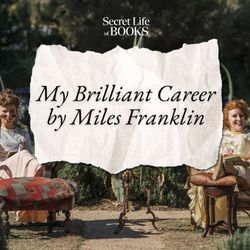
182. Classic Australia 1: My Brilliant Career by Miles Franklin
01:11:29||Ep. 182In 1901, six self-governing British colonies in the Southern Hemisphere came together to form a single nation - Australia. In that same year, a 21-year-old woman from rural New South Wales published a book which gave voice to that new nation. The woman is the great Miels Franklin, and the book is My Brilliant Career. The novel’s heroine Sybylla Melvin, immortalized in the 1979 film by Judy Davis, is ebullient, clever, defiant, funny and brave. It’s a gripping story of her farming childhood, her family’s descent into poverty, her romance with a handsome jackaroo called Harry Beacham and - most of all - her determination to forge a career as an independent artist. The story is essentially Pride and Prejudice in Blundstones, which perhaps accounts for its enduring success. Sybylla herself is a proud atheist, socialist and feminist. This was not an image Australia necessarily wanted to project at the time, with one critic denouncing Sybylla as ‘distinctly unpleasant’. But The Bulletin celebrated it as ‘a book full of sunlight’, and pronounced it ‘the very first Australian novel to be published’. Most of all, young women around Australia found - at last - an author who spoke to their experience and Franklin spent a large part of the following years replying to the many letters of gratitude and appreciation that flooded in. This episode is the first in a series devoted to Australian classics. Today we’re asking just what it was that makes Sybylla Melvin such a compelling and evergreen heroine.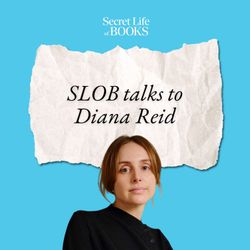
181. SLoB & SLoBability: Diana Reid on adapting Austen's masterpiece for the screen
44:58||Ep. 181Diana Reid is the hottest young screen adaptation-writer of the hour, and she wrote the screenplay for the delightful new Sense and Sensibility film with Daisy Edgar-Jones and Esme Creed-Miles. Today she's joining us on SLOB to talk rom-coms, wild hair, muslins, ribbons, and learning self-restraint.The story of how we got Diana on our show is almost as meet-cute as the story of how she came to write the screenplay. You'll hear the whole story, and we'll go in deep on how Diana went from being a novelist to screenwriter almost overnight, and how Jane Austen herself taught her how to write the beats of a gripping story about two sisters who seem to be opposites and learn how to be more like one another. This version of Sense and Sensibility is true to the original and also windblown and yearningly impassioned, as any good modern rom-com should be. Hear about how Diana, along with the producer, director and actors made the magic happen as a team, over several months of shooting on location in the UK.Diana now lives in London, but grew up in Sydney, and indeed seems to have led a shadow life to Sophie. Diana's first novel, Love and Virtue, is set on the campus of Sydney University, and reminded Sophie not a little of her own heady days as an undergraduate. We talk about how novel-writing prepared Diana for screen-writing, and about how she managed to write three such different, accomplished, page-turning novels and a successful screenplay all before her 30th birthday!
180. Small-talk emergency kit: who the heck is Anne Carson?
20:46||Ep. 180If you're wondering who this Anne Carson person is who just won the Nobel Prize, then SLoB is here to help. In this punchy 20-minute primer, we give you all the vital statistics and some choice extracts from Carson's poetry so you can sparkle and shine when her name comes up - as it surely must - at the weekend dinner table/pub/supermarket queue.
179. Factory settings: Elizabeth Gaskell's North & South
01:24:42||Ep. 179Elizabeth Gaskell might be the most underrated novelist of the 19th century. North and South was first published by Charles Dickens in Household Words from 1854-55. But Dickens and Gaskell came to blows over his heavy-handed editing style and misguided ending change. Manchester-based novelist Gaskell fought back against Dickens’ way of telling stories, to make the industrial working classes properly visible for the first time in literary history. She didn’t tell the Establishment what it wanted to hear, and she was considered a nuisance. Even The Leader - a radical newspaper that should have supported her - condemned North and South, saying that a woman could not ‘understand industrial problems’ and therefore had ’no right to add to the confusion by writing about it.’By the 1950s, Gaskell was regarded as a minor novelist who, according to male critics, lacked the ‘masculinity’ to tackle poverty and social reform. But now, in the 21st Century, she has resumed her rightful place alongside Charles Dickens and George Eliot as one of the greatest Victorian writers. No one else - including Dickens and Eliot - understood what was going on in the great industrial cities better than Gaskell, nor what tactics might be necessary to heal the divisions in British society. All of which is unsurprising when we learn that Gaskell was from a radical dissenting family, and that she spent her adult life in Manchester not just writing novels and raising children, but participating daily in work to address the problems of poverty, hygiene and lack of education in Britain’s fastest growing city.
178. Gothic horror in the age of AI: Alma Katsu on her new novel Incarnate
31:04||Ep. 178What do you get when you cross an NSA and CIA analyst with a bestselling horror writer? You get Alma Katsu, who talks to Sophie and Jonty about publishing her new novel Incarnate at the exact moment when the threats and unregulated dangers of A.I become horrifyingly real.In this special bonus episode, we talk about about horror and its contemporary manifestations in fiction and real life. What makes horror such an important and enduring literary form, one that tells urgent stories about our present as well as looking backwards into the literary past? Frankenstein and The Picture of Dorian Gray, two SLOB stalwarts, are major influences on Alma’s Incarnate. It's pretty weird that long before the advent of today’s technology, fears of deep fakes and artificial humans were already keeping novelists up at night. Why our some of our most iconic literary myths about tech that was only imaginary when these classics were first written? And how can Mary Shelley and Oscar Wilde’s visions — especially as they're transformed by Katsu’s brilliant modern horror — help us navigate A.I. with deeper understanding? And there's a gripping few minutes in which Alma reflects on how and why 20 years ago, working in the CIA as an analyst, she and her team “failed to warn” about the threats and imminent dangers of social media. She talks about why that was, and how we might guard against repeated mistakes.
177. Trashing Up Troy: Shakespeare's Troilus and Cressida
01:13:15||Ep. 177Last month we left listeners with the tantalizing question: what happened next in literary history after Chaucer wrote Troilus and Criseyde? This was a serious cliffhanger, and it’s unforgivable that instead of returning the following week with answers, Sophie and Jonty took off on a literary jaunt to the UK. But now we’re back. Shakespeare’s Troilus and Cressida, written sometime around 1602, might be the Bard’s most underrated play. He takes Chacuer’s Troilus and Criseyde story and smashes it together with the Iliad, recently translated into English by George Chapman. Then he adds his own special sauce to hold it all together. Outcome: Shakespeare trashes the two biggest literary movements in 2000 years of European writing, Homeric epic and medieval Courtly Love. In Shakespeare’s telling, Troilus and Cressida’s tryst becomes a random(ish) hook up, while Achilles and Hector - the two great heroes of the Trojan war - are vain and cowardly. The play ends in a series of squalid skirmishes and an overpowering sense that, contrary to what Homer and the courtly poets tell us, there is nothing noble about war. Or, for that matter, love.
175. Secret Life of Planes
34:36||Ep. 175Every aircraft is different. That's why we're asking you to listen to the following romp through some of our favorite flight-scenes in literature.Recorded from Heathrow Terminal 3, and then in the air, shortly after takeoff on QF2 from London to Sydney at the end of SLOB's Tour Through the Whole Island of Great Britain (as Daniel Defoe would say). Many of the least appealing sounds in the world are in this episode, from the clanging of the in-flight kitchen to the sucking of the toilet flush to the announcement of the inevitable chicken or beef for dinner. If you're going to travel vicariously, travel in discomfort. Join Sophie and Jonty down the back of the Airbus A380 for a last hurrah before they claim their baggage and get back to the lush sonic surrounds of the Sydney studios.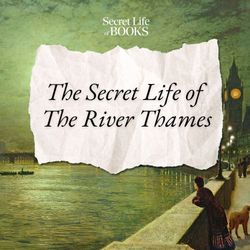
174. Secret Life of the River Thames
01:07:56||Ep. 174Sophie and Jonty, coming to you live from London, on the front lines of classic literature. They’re sitting on some steps leading down to the River Thames, right next to the Globe Theatre, on Southbank. True, they stop short of plunging headlong into that mighty stream, as many London writers have done before them. But this is London literature ground zero, the river that Chaucer, Shakespeare, Pepys, Swift, Wordsworth, Dickens, Conrad, Woolf and literally countless others described as the main artery of literary London. Join Sophie and Jonty on a journey through the high and low (tides) of England’s #1 cultural thoroughfare.With thanks to the Ponder & See Foundation for their support.Become a subscriber by signing up at Apple: http://apple.co/slobOr join our Patreon community here: https://www.patreon.com/c/secretlifeofbookspodcastHosted on Acast. See acast.com/privacy for more information