Share
Science Fare
Physics and Machine Learning in Building Temperature Control with Jan Drgona
Please click below to fill out the survey for this episode:
Science Fare Podcast Feedback Form
Our guest today is Jan Drgona, who joins us today from Johns Hopkins University.
Jan is an associate professor in the department of civil and systems engineering, and is also at the Ralph S O’Connor Sustainable Energy Institute.
Jan’s research focuses on energy management in buildings and he’s working on developing scientific machine learning methods to model energy management which turns out is very complex. In this mini episode, I ask Jan about what makes a building complicated to heat and cool, and describes the various factors that make temperature control a challenge, and hints at how physics and machine learning can help. Tune in next week for the full-length interview when Jan talks about making energy use in buildings sustainable and how scientific machine learning and problem solving with an engineering approach and mindset can help.
More episodes
View all episodes
12. The National Aquarium’s Thomas Studer on Life as an Aquarist and a Student’s Essay on Tilly the Octopus.
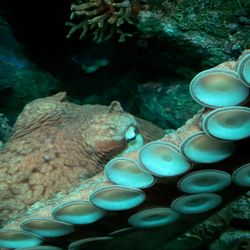
34:17||Season 5, Ep. 12Thomas Studer is an aquarist at the National Aquarium in Baltimore. In this episode, he tells us about how he chose to be an aquarist rather than a marine biologist, and he describes what a typical day is like for him at the aquarium. One of the animals under his care is the aquarium's Giant Pacific Octopus, Tilly. Thom tells us about how he used solubility and acid-base chemistry to fix a copper-contaminated tank, and what it is like training and interacting with Tilly. We also hear an essay about Tilly written by a student who was part of the Writers in Baltimore Schools summer program. Finally, Thom shares his advice for high school students interested in a career as an aquarist.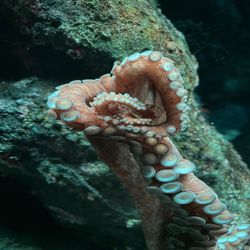
11. Solubility to the Rescue: How Acid (and 550 Pounds of Baking Soda) Saved an Octopus Enclosure from Copper with National Aquarium Aquarist Thomas Studer
06:46||Season 5, Ep. 11In this mini episode, National Aquarium aquarist Thomas Studer tells us how he used chemistry to solve a copper contamination problem in the octopus enclosure. Tune in next week for the full-length interview.
10. Daniel Colón-Ramos, Ph.D., on Curiosity, Community, and Neuroscience
43:19||Season 5, Ep. 10Daniel Colón-Ramos, Ph.D., is a professor of neuroscience and cell biology at Yale University. His research focuses on the biology of neuronal synapses, and specifically how connections between brain cells are created during development and modified during learning and memory. In addition to running his lab, Daniel teaches neuroscience and biology, leads Yale's Center for Neurodevelopment and Plasticity, and works to expand scientific opportunities for students in Puerto Rico. In this episode, Daniel talks about how his curiosity about animal behavior led him to a career in neuroscience, how a tiny worm (C. elegans) can teach us much about neurons and synapses, and how a big part of science is feeling comfortable with not knowing the answer. He concludes with advice for high school students interested in science: Don't stop asking questions!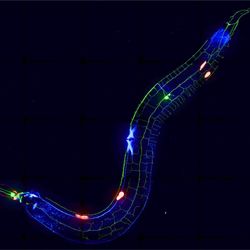
9. Don't Underestimate the Worm: C. elegans as a Model System for Neurons and Synapses with Daniel Colón-Ramos, Ph.D.
05:18||Season 5, Ep. 9In this mini episode, Dr. Daniel Colón-Ramos explains why a worm called C. elegans is an excellent model system for studying neurons and synapses. Tune in next week for the full-length interview.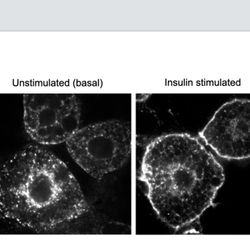
8. Jonathan Bogan, M.D., on Glucose Transport, Insulin Resistance, and Unexpected Connections
37:17||Season 5, Ep. 8Our guest today is Dr. Jonathan Bogan. Jonathan is a professor of Medicine and of Cell Biology at Yale University. He directs the Cell Biology Core of the Yale Diabetes Research Center and he is the attending physician in Internal Medicine and Endocrinology at Yale-New Haven Hospital. Jonathan's research centers on how insulin triggers cells to pull glucose out of the blood, and what happens when things go wrong in this process.In this episode, Jonathan talks about how studying engineering as an undergrad evolved to a focus on biology, his discovery of the TUG protein and it's role in moving GLUT 4 transporters to the cell membrane and other aspects of physiology, surprising aspects of this discovery along with surprising connections between glucose transport and blood pressure, the thermic effect of food, and insulin resistance, and his advice to high school students interested in science.Related resources:Nature communications article (full text access): TUG protein acts through a disordered region to organize the early secretory pathwayBiorxiv preprint on diet and insulin resistance in mice Essay on The Importance of Stupidity in Scientific Research by Martin A. Schwartz appearing in the Journal of Cell Science
7. TUG Makes It Look Easy: The Hidden Work Behind Facilitated Diffusion, with Jonathan Bogan, M.D.
04:02||Season 5, Ep. 7In this mini episode, Dr. Jonathan Bogan explains how insulin triggers the TUG protein to help move GLUT 4 transporter proteins from inside the cell to the cell membrane. There, they transport glucose from the bloodstream into the cell using facilitated diffusion. Tune in next week for the full-length interview.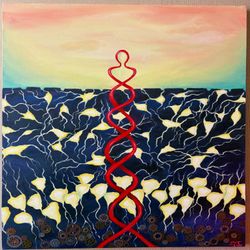
6. Dina Simkin, Ph.D., on Ion Channels, Epilepsy, and Thinking Small to Understand the Brain
37:43||Season 5, Ep. 6Dr. Dina Simkin is an Research Assistant Professor at Northwestern University's Feinberg School of Medicine whose research mainly focuses on how on how mutations in ion channel proteins contribute to pediatric epilepsy and neurodevelopmental disorders. Dr. Simkin earned her BS in Biochemistry, and then proceeded to earn PhDs in Neuroscience, Biophysics, and in Cellular and Molecular Pharmacology. She additionally completed post-graduate training in both the neurophysiology of aging and stem cell-derived neuronal models of epileptic channelopathy. In this episode, Dr. Simkin tells us about her early interest in science, how she came to focus on ion channel gene mutations linked to epilepsy and neurodevelopment disorders, what ion channels are and why they are so important, and how she and her lab team study them. She also shares advice for high school students.Related resources:Untangling Cellular Changes in Pediatric EpilepsyPaper on unexpected results involving M current and homeostasisBiorxiv paper on functional phenotypes in epilepsy
5. CRISPR Beyond the Headlines with Dina Simkin, Ph.D.
06:24||Season 5, Ep. 5In this mini episode, Dr. Dina Simkin tells us how she uses CRISPR to do more elegant experiments for her work on ion channels. Tune in next week for the full-length interview.4. Lydia Pecker, M.D., on the Science and Reality of Sickle Cell Disease
42:37||Season 5, Ep. 4Lydia Pecker, M.D., is a pediatric hematologist and director of research and advocacy at the Sickle Cell Center for Adults at Johns Hopkins University. She previously served as the founding director of the Center's Young Adult Clinic, which was built to support young people transitioning from pediatric to adult care systems. She received her undergraduate degree in Africana studies from Brown University, earned her M.D. at the University of Pennsylvania School of Medicine, and received a Master's degree in Health Sciences from the Bloomberg School of Public Health. In this episode, Lydia talks about her path to becoming a physician working with sickle cell patients, tells us what sickle cell disease is and what it's like for patients, and talks about the treatment landscape, including a need for more sickle cell healthcare providers and more blood donation to support transfusions, a key part of sickle cell treatment. Resources mentioned in the episode:National Geographic article on sickle cell gene therapy (PDF from author Linda Marsa's webpage)National Alliance of Sickle Cell CentersAmerican Red Cross Blood Services