Share
Science Fare
Elizabeth Benham on the Metric System and Measurement
Please click below to fill out the survey for this episode:
Science Fare Podcast Feedback Form
Elizabeth is the leader of the Metric Program at the National Institute of Standards and Technology, also known as NIST, in Gaithersburg, Maryland. In this role, Elizabeth serves as the national advocate for the International System of Units, known as the SI, in the United States.
Our timing could also not be better, as this episode will air during Metric Week in the United States! October 5 - 11.
Links to resources or topics mentioned in this episode:
National Institute of Standards and Technology (NIST)
Kibble balance including video
Top 10 Tips for Teaching the Metric System
US Metric Association Science Fair Award Program
US Metric Association National Metric Awards
NIST Summer Undergraduate Research Fellowship (SURF)
NIST Professional Research Experience Program (PREP)
NIST International and Academic Affairs Office
Highlights of the episode:
*Susan introduces Elizabeth and today’s topic [1:43];
*What led Elizabeth to pursue a career in metrology [3:06];
*Origins of the metric system [12:15];
*Metric system prefixes over the last 150 years [15:12];
*Structure of the metric system — the units, constants, and prefixes [17:26];
*Replacing the final physical objects of the metric system in 2018 [19:24];
*Conventional versus the Kibble balance and impact on measurement accuracy [21:33];
*The Metric Program and everything Elizabeth does as leader [26:55];
*Metric system misconceptions [30:09];
*Examples of the metric system in everyday life [33:40];
*Visualizing volume with the metric system [37:27];
*Science literacy and the metric system [39:08];
*Importance of standardization in science and measurement [41:30];
*Resources for students and teachers [43:50];
*US Metric Association awards [48:56];
*NIST internships and professional development programs for middle school teachers [51:30]
More episodes
View all episodes
7. TUG Makes It Look Easy: The Hidden Work Behind Facilitated Diffusion, with Jonathan Bogan, M.D., Ph.D.
04:02||Season 5, Ep. 7In this mini episode, Dr. Jonathan Bogan explains how insulin triggers the TUG protein to help move GLUT 4 transporter proteins from inside the cell to the cell membrane. There, they transport glucose from the bloodstream into the cell using facilitated diffusion. Tune in next week for the full-length interview.
6. Dina Simkin, Ph.D., on Ion Channels, Epilepsy, and Thinking Small to Understand the Brain
37:43||Season 5, Ep. 6Dr. Dina Simkin is an Research Assistant Professor at Northwestern University's Feinberg School of Medicine whose research mainly focuses on how on how mutations in ion channel proteins contribute to pediatric epilepsy and neurodevelopmental disorders. Dr. Simkin earned her BS in Biochemistry, and then proceeded to earn PhDs in Neuroscience, Biophysics, and in Cellular and Molecular Pharmacology. She additionally completed post-graduate training in both the neurophysiology of aging and stem cell-derived neuronal models of epileptic channelopathy. In this episode, Dr. Simkin tells us about her early interest in science, how she came to focus on ion channel gene mutations linked to epilepsy and neurodevelopment disorders, what ion channels are and why they are so important, and how she and her lab team study them. She also shares advice for high school students.Related resources:Untangling Cellular Changes in Pediatric EpilepsyPaper on unexpected results involving M current and homeostasisBiorxiv paper on functional phenotypes in epilepsy
5. CRISPR Beyond the Headlines with Dina Simkin, Ph.D.
06:24||Season 5, Ep. 5In this mini episode, Dr. Dina Simkin tells us how she uses CRISPR to do more elegant experiments for her work on ion channels. Tune in next week for the full-length interview.4. Lydia Pecker, M.D., on the Science and Reality of Sickle Cell Disease
42:37||Season 5, Ep. 4Lydia Pecker, M.D., is a pediatric hematologist and director of research and advocacy at the Sickle Cell Center for Adults at Johns Hopkins University. She previously served as the founding director of the Center's Young Adult Clinic, which was built to support young people transitioning from pediatric to adult care systems. She received her undergraduate degree in Africana studies from Brown University, earned her M.D. at the University of Pennsylvania School of Medicine, and received a Master's degree in Health Sciences from the Bloomberg School of Public Health. In this episode, Lydia talks about her path to becoming a physician working with sickle cell patients, tells us what sickle cell disease is and what it's like for patients, and talks about the treatment landscape, including a need for more sickle cell healthcare providers and more blood donation to support transfusions, a key part of sickle cell treatment. Resources mentioned in the episode:National Geographic article on sickle cell gene therapy (PDF from author Linda Marsa's webpage)National Alliance of Sickle Cell CentersAmerican Red Cross Blood Services3. It's Not That Simple: Sickle Cell Beyond the Punnett Square with Lydia Pecker
04:36||Season 5, Ep. 3In this mini episode, Dr. Lydia Pecker explains the complexity in real-life sickle cell inheritance patterns. Tune in next week for the full-length interview.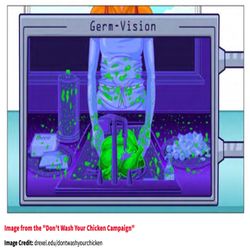
2. Shauna Henley on the Science of Keeping Food Safe
50:13||Season 5, Ep. 2Dr. Shauna Henley is a Family and Consumer Sciences Educator with the University of Maryland Extension working in Northern Maryland. She delivers programs that center on nutrition, food safety, and physical activity. She holds a Ph.D. in Biology with a concentration in Human Nutrition from Drexel University, a M.S. in Nutrition and Food Science from the University of Vermont, and a B.S. in Biology from Muhlenberg College.In this episode, Shauna talks about her path into food science and safety, common misconceptions about food safety, the Don't Wash Your Chicken campaign, canning, and the important legislation in the Food Safety Modernization Act (FSMA). She also gives advice to students interested in food science and safety. Resources mentioned in the episode:Don't Wash Your Chicken Germ Vision 14-Second Animation Buzzfeed Home Economics Trivia Quiz Produce Trainer Food Safety ToolkitNational Center for Home Food Preservation1. Low Acid, High Stakes: Canning and pH with Shauna Henley
06:33||Season 5, Ep. 1In this mini episode, Dr. Shauna Henley tells us about the importance of pH in canning food. Tune in next week for the full-length interview.Welcome to Science Fare Season 5
01:42|Welcome to the Science Fare podcast! On the Science Fare podcast, I bring you conversations with scientists doing fascinating, cutting-edge work on all kinds of interesting phenomena, ranging from physics to chemistry to biology and even the nature of science itself. In the conversation, I help draw connections between the scientist's research and part of the high school science curriculum. In Season 5, new episodes come out every Wednesday, featuring a mini episode that focuses on the high school science connection and then the following week, the full-length interview. Please subscribe and leave a review -- it helps others find the podcast!16. Carla Guarraia on Integrating Research into High School Science Teaching
50:31||Season 4, Ep. 16Science teacher extraordinaire Carla Guarraia,who teaches at The Park School of Baltimore and is also the chair of the Upper School Science Department, tells us about her path to pursuing science and then science teaching, the way she integrates research into her teaching, and gives advice to students interested in pursuing science. Resources mentioned in this episode:Carla’s Park School faculty page The Shape of Wonder by Alan Lightman book The Plastics Paradox by Chris DeArmitt book Precious Plastics Manor Mill Science Friday podcast episode about plastics contamination Please click below to fill out the survey for this episode:Science Fare Podcast Feedback FormScience Fare Podcast website Highlights of the episode:*Opening quote by Carla on appreciating that learning should feel hard[0:01];*Susan introduces Park School of Baltimore science teacher and upper school department chair Carla Guarraia and they thank Manor Mill for letting them record in the space [1:08]; *Carla talks about her path to studying science and becoming a science teacher [3:43];*What Carla joins most about her job as a high school science teacher [18:30];*How Carla integrates research into her teaching with a focus on two classes — plastics and integrative medicine [22:05];*Deeper dive into Carla’s work on the International Student-led Arctic Monitoring and Research (ISAMR) program [35:33];*Carla’s advice for high school students interested in science [47:48]