Share

School Shorts
Online Schools? How Crimson Global Education is Disrupting the Traditional Model
Season 1, Ep. 60
•
Online Schools and Alpha Schools have had a massive spike in interest but who do they work for and is this a long-term disruptor in education?
In this episode, we explore the future of education with Penelope Barton, CEO of Crimson Global Education. Penelope shares what Crimson is working on in innovative models of schooling and whether it is more suited to catering for learners with different learning needs. Penelope Barton also looks at the role of AI in education and how she sees the relationship between education and technology working to prepare students for a rapidly changing world.
More episodes
View all episodes
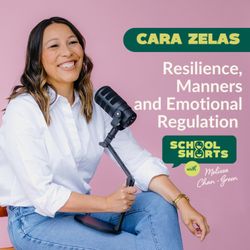
75. Resilience, Manners and Emotional Regulation with Cara Zelas
45:18||Season 1, Ep. 75Cara Zelas is a U.S-based early childhood educator who speaks at conferences and in classrooms around the world about her work with 'Big World of Little Dude'. She shares how parents can build essential life skills at home, including resilience, manners, and emotional regulation. She also unpacks how technology is currently used in classrooms and why she believes digital apps should never replace face-to-face interaction. This is NOT a discussion to try and make parents feel guilty about screen-time or devices. No-one here is pretending we are perfect parents! What it IS is a discussion around bringing in human connection skills that set kids up for the world in which they will operate with artificial intelligence very much embedded in their lives.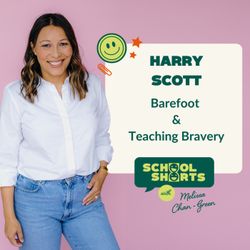
74. Barefoot and Teaching Bravery with Harry Scott
45:15||Season 1, Ep. 74Harry Scott believes a cornerstone of childhood fun and experience is at risk. He is the founder of Barefooted and teaches outdoor education by giving school students and hosting community events so that kids get to experience all the things they might usually learn on school camp on a more regular basis. Harry believes outdoor play is vital for childhood development and for reconnecting kids with nature in an increasingly digital world. He shares his ideas for parents about how to help with building confidence, safety skills and creativity with simple, and mostly completely free activities ..even when it's raining!
73. What Happened When This Principal Prioritised School-Parent Communication, with Blair Dravitski
39:14||Season 1, Ep. 73Hear from the Principal of Lemonwood Grove, among the biggest primary schools by roll in New Zealand. The area has had its fair share of major local traumas like the Christchurch earthquakes and mosque attacks as well as covid. These experiences reminded Blair Dravitski of just how important schools are as part of the community in managing anxiety not just for students but for their extended families too. On top of navigating those crises, the school has had explosive growth and has a wonderful diversity with families representing 47 different countries. Blair explains how he came to dislike the words 'difficult, challenging or hard' when it comes to communication. He expects staff to send direct, positive emails to families every week to build genuine relationships and communication. His insights are useful for any parent or educator wanting to help build positive relationships with the school and home.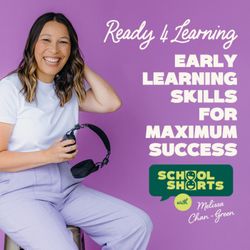
72. Early Learning Skills for Maximum Success: Ande Ford and Carolynne Masson
38:45||Season 1, Ep. 72Children starting school without the skills needed for learning, are more likely to start on the back foot when it comes to the reading, writing and other skills that are assessed in the curriculum. Andrea Ford and Carolynne Masson work with families and communities to strengthen all those foundation skills through Ready 4 Learning. With backgrounds in teaching and school leadership, they discuss their thoughts on learning through play and structured literacy expertise. Ande and Carlolynne have lots of tips for parents about the best ways to develop language, movement and emotional wellbeing. We also discuss the impact of Covid - did it cause or accelerate certain challenges? or were those challenges already apparent in early education?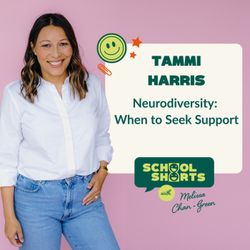
71. Understanding Neurodiversity and When to Seek Support with Tami Harris
33:08||Season 1, Ep. 71Tami Harris is the CEO of Acorn Neurodiversity and a passionate advocate of better support for children and young people who are neurodivergent. This episode is especially useful if you are a parent overwhelmed or unsure of the diagnosis process, a teacher pondering strategies for diverse learners or anyone who wants to better understand the terms neurodiversity v neurodivergent thinking.Tami talks about why a multi-disciplinary approach is so often needed, combining speech therapy, occupational therapy, behavioural science, and mental health.The discussion covers specific strategies to advocate for your child, navigate long waitlists, and interpret early signs before school age.
70. Harnessing AI: The Brain Hacks to Teach Kids with Author Mohan Nair
42:08||Season 1, Ep. 70Mohan Nair has written what he calls 'the nutrition label for AI'. Rather than a 'warning label', this is just saying here are all the ingredients we need to be aware of so that we can use AI in a way that benefits our health rather than the other way around. More specifically in this episode we are looking at the ways in which children and young people an prepare to become 'Unreachable'. This is the title of Mohan's book. After much research in the corporate world where he has worked with innovators from companies across the spectrum, Mohan has analysed what that world will want from its future workforce and the real, practical advice he would offer to families who want to prepare their children to be AI-enabled, rather than AI-afraid or AI-obsessed.
69. The Ladder of Reading and Writing with Nancy Young
35:29||Season 1, Ep. 69Nancy Young is the creator of the infographic the Ladder of Reading and Writing which explains reading skills as a continuim. Nancy is also the Co-Editor of the 2024 book 'Climbing the Ladder of Reading and Writing: Meeting the Needs of All Learners' Here she also talks about exceptionalities that can co-occur alongside dyslexia, including ADHD, DLD and giftedness.
68. Large School Resource v Small School Connection: Principal Steve McCracken
29:00||Season 1, Ep. 68Principal Steve McCracken doesn't want a student to be able to go through a day at school and not have a teacher or school leader say their name or greet them for a chat. It is one of the things he fears losing with growing school rolls as the Principal of Whangaparāoa College in Auckland, New Zealand. While there are many benefits of growth and the resource and specialisation it can offer. The school is looking at innovative strategies to give students the same experience they might get at a smaller school where the relationship with teachers is a benefit because of much time they are able to get to spend with a student to get to know them. Is returning to a homeroom style class more beneficial than going to a range of specialist teachers? The school is on a mission to find out.
67. Listen to this and the Teen Brain Will All Make Sense! with Kathryn Berkett
40:10||Season 1, Ep. 67There are so many things that happen with behaviour and attitude when hormones start changing in the teen years that it can be a bit of a mystery what is going on in the brain. After this conversation with Kathryn Berkett so much made sense. Kathryn has written many books translating neuroscience research in to practical insights for parents and her latest book is called 'What's Going on In There?'. There is so much focus on the first 1000 days that we can sometimes forget there is also a big neurological and hormonal change that comes later and just how important these years are in development too. Understanding what is going on in the adolescent brain could definitely help to avoid a lot of the pitfalls and arguments that might come along with it.