Share
Savvy Psychologist
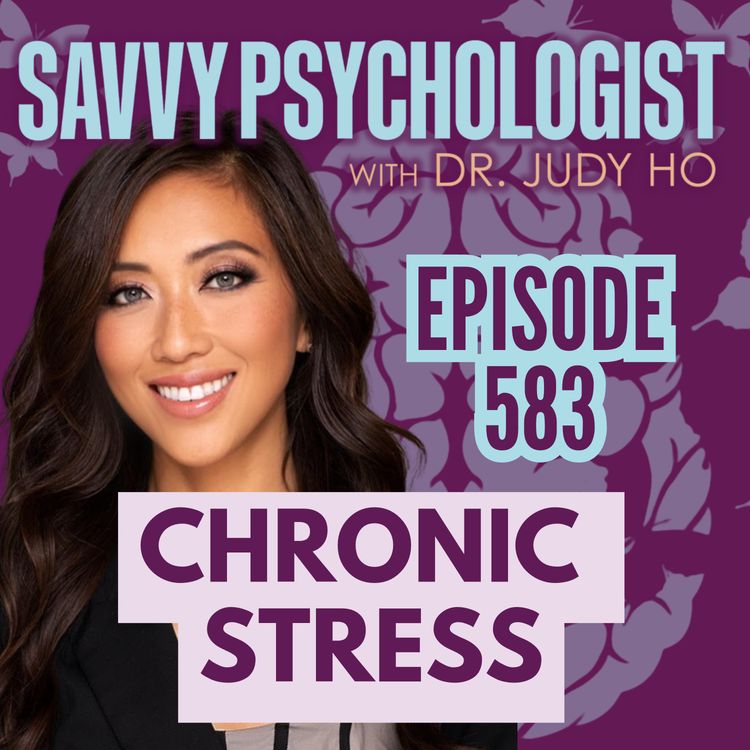
Is chronic stress shrinking your brain?
583. You already know chronic stress is bad for you. But "bad for you" is abstract. Here's what's actually happening: sustained stress physically changes the structure of your brain — shrinking regions that handle memory and decision-making while amplifying the part that's always scanning for threats. This week Dr. Judy Ho breaks down the neuroscience of what chronic stress does to brain architecture, why it makes the people around you seem more hostile than they actually are, and three evidence-based tools for reversing the damage.
Have a mental health question? Email Dr. Judy's team at psychologist@quickanddirtytips.com
Find Savvy Psychologist on Facebook, LinkedIn, and subscribe to the newsletter for more psychology tips.
Watch on YouTube: www.youtube.com/@SavvyPsychologist
More from Dr. Ho on her other channels:
Dr. Ho's website, Substack, LinkedIn.
Savvy Psychologist is a part of Quick and Dirty Tips. Find a transcript at QuickandDirtyTips.com.
More episodes
View all episodes
582. Why you turn into a teenager around your family (And what to do about it)
18:37||Ep. 582582. You are a capable, self-aware adult. You have a career, a mortgage, a whole life. And every year, sometime between pulling into your parents’ driveway and sitting down for dinner, something shifts. You get defensive over nothing. You pick a fight you swore you wouldn’t pick. You feel fourteen. It’s not that you don’t love your family. It’s that family systems activate something old in the brain — something that ran a lot of your early emotional life — and under stress, the brain defaults to what it learned first. This week Dr. Judy Ho explains why holiday regression is a neurological pattern, not a character flaw, and gives you three concrete tools: one for before you walk in the door, one for the moment things start going sideways, and one for after you’ve already said the thing you regret.Have a mental health question? Email Dr. Judy's team at psychologist@quickanddirtytips.comFind Savvy Psychologist on Facebook and subscribe to the newsletter for more psychology tips.Watch on YouTube: www.youtube.com/@SavvyPsychologistMore from Dr. Ho on her other channels:Dr. Ho's website, Substack, LinkedIn.Savvy Psychologist is a part of Quick and Dirty Tips. Find a transcript at QuickandDirtyTips.com.
581. Can ultra-processed food make my depression worse?
18:16||Ep. 581581. Feeling low and wondering whether your diet could be part of it is more common than you might think. A new study out of UC San Francisco found that cutting ultra-processed food for four weeks produced moderate to large improvements in depression symptoms. Not a little better. Measurably, significantly better. This week, Dr. Judy Ho breaks down the evidence-based psychology behind the gut-brain connection, why these results make sense once you understand it, and three practical ways to shift your diet in ways your brain will notice.Have a mental health question? Email Dr. Judy's team at psychologist@quickanddirtytips.comFind Savvy Psychologist on Facebook and subscribe to the newsletter for more psychology tips.Watch on YouTube: www.youtube.com/@SavvyPsychologistMore from Dr. Ho on her other channels:Dr. Ho's website, Substack, LinkedIn.Savvy Psychologist is a part of Quick and Dirty Tips. Find a transcript at QuickandDirtyTips.com.
580. Is it normal to feel grief after a friendship breakup?
15:56||Ep. 580580. The end of a close friendship can hurt just as much as a romantic breakup — and in some ways, more. This week Dr. Judy Ho unpacks the psychology of friendship loss: why it’s so hard to grieve, what makes it different from other kinds of endings, and three evidence-based ways to actually move through it.Have a mental health question? Email Dr. Judy's team at psychologist@quickanddirtytips.comFind Savvy Psychologist on Facebook and subscribe to the newsletter for more psychology tips.Watch on YouTube: www.youtube.com/@SavvyPsychologistMore from Dr. Ho on her other channels:Dr. Ho's website, Substack, LinkedIn.Savvy Psychologist is a part of Quick and Dirty Tips. Find a transcript at QuickandDirtyTips.com.
579. ‘The Diplomat’ and how you can be great at work and lost at home
15:21||Ep. 579579. Some people can calm a room full of hostile foreign ministers and still go quiet at their own dinner table. On “The Diplomat,” Kate Wyler is that person, and the pattern is more common than it looks. Dr. Judy Ho explains why people who are excellent at reading others often struggle with closeness at home, how emotional labor uses up the same self-regulation that intimacy needs, and why this is a depletion pattern rather than a lack of caring. Then she shares three short, actionable, evidence-based tools: a transition ritual, practicing emotional disclosure on purpose, and catching yourself when you start strategizing with your partner instead of asking a real question.Have a mental health question? Email Dr. Judy's team at psychologist@quickanddirtytips.comFind Savvy Psychologist on Facebook and subscribe to the newsletter for more psychology tips.Watch on YouTube: www.youtube.com/@SavvyPsychologistMore from Dr. Ho on her other channels:Dr. Ho's website, Substack, LinkedIn.Savvy Psychologist is a part of Quick and Dirty Tips. Find a transcript at QuickandDirtyTips.com.
578. Why high achievers struggle to focus
15:44||Ep. 578578. You've built something. You've achieved things. And you still can't seem to sit down and focus on one task without your brain bouncing off the walls. This week Dr. Judy Ho explores what ADHD actually looks like in high achievers — the patterns that hide behind success, the strengths that almost never get named, and three tools for working with this brain rather than fighting it.Have a mental health question? Email Dr. Judy's team at psychologist@quickanddirtytips.comFind Savvy Psychologist on Facebook and subscribe to the newsletter for more psychology tips.Watch on YouTube: www.youtube.com/@SavvyPsychologistMore from Dr. Ho on her other channels:Dr. Ho's website, Substack, LinkedIn.Savvy Psychologist is a part of Quick and Dirty Tips. Find a transcript at QuickandDirtyTips.com.
577. Beyond the screens: Regulating your emotions when the world feels heavy
16:31||Ep. 577577. You know doomscrolling is bad for you. You do it anyway. And if you're honest — in the moment, it kind of feels like it's helping. Today Dr. Judy Ho explains why that feeling is real, why it's also making everything worse, and three genuinely practical ways to interrupt the cycle that have nothing to do with deleting your apps.Have a mental health question? Email Dr. Judy's team at psychologist@quickanddirtytips.comFind Savvy Psychologist on Facebook and subscribe to the newsletter for more psychology tips.Watch on YouTube: www.youtube.com/@SavvyPsychologistMore from Dr. Ho on her other channels:Dr. Ho's website, Substack, LinkedIn.Savvy Psychologist is a part of Quick and Dirty Tips. Find a transcript at QuickandDirtyTips.com.
576. Brain rot is real. What scrolling is actually doing to your brain
11:48||Ep. 576576. You pick up your phone to check one thing and 45 minutes disappear. You try to read a book and can't get through a page. You sit in a meeting and your mind keeps reaching for something it can't name. Brain rot isn't just a meme — it's Oxford's 2024 Word of the Year and a now well-documented neurological phenomenon. This week Dr. Judy Ho breaks down what scrolling is actually doing to your brain, why the usual advice doesn't work, and three genuinely surprising ways to retrain your attention.Have a mental health question? Email Dr. Judy's team at psychologist@quickanddirtytips.comFind Savvy Psychologist on Facebook and subscribe to the newsletter for more psychology tips.Watch on YouTube: www.youtube.com/@SavvyPsychologistMore from Dr. Ho on her other channels:Dr. Ho's website, Substack, LinkedIn.Savvy Psychologist is a part of Quick and Dirty Tips. Find a transcript at QuickandDirtyTips.com.
575. Existential Depression: Why do I feel empty when nothing is wrong?
18:59||Ep. 575575. You’re functioning. You’re achieving. Nothing has gone dramatically wrong. And you wake up one morning and realize you genuinely can’t remember the last time something felt worth doing. A lot of people describe this as a feeling of emptiness. This week Dr. Judy Ho unpacks existential depression — the kind with no obvious cause, rooted in the collision with life’s biggest questions — what it is, why it hits the most thoughtful and high-achieving people hardest, and three ACT-based tools for moving toward meaning even when meaning feels absent.Have a mental health question? Email Dr. Judy's team at psychologist@quickanddirtytips.comFind Savvy Psychologist on Facebook and subscribe to the newsletter for more psychology tips.Watch on YouTube: www.youtube.com/@SavvyPsychologistMore from Dr. Ho on her other channels:Dr. Ho's website, Substack, LinkedIn.Savvy Psychologist is a part of Quick and Dirty Tips. Find a transcript at QuickandDirtyTips.com.