Share
Roundtable
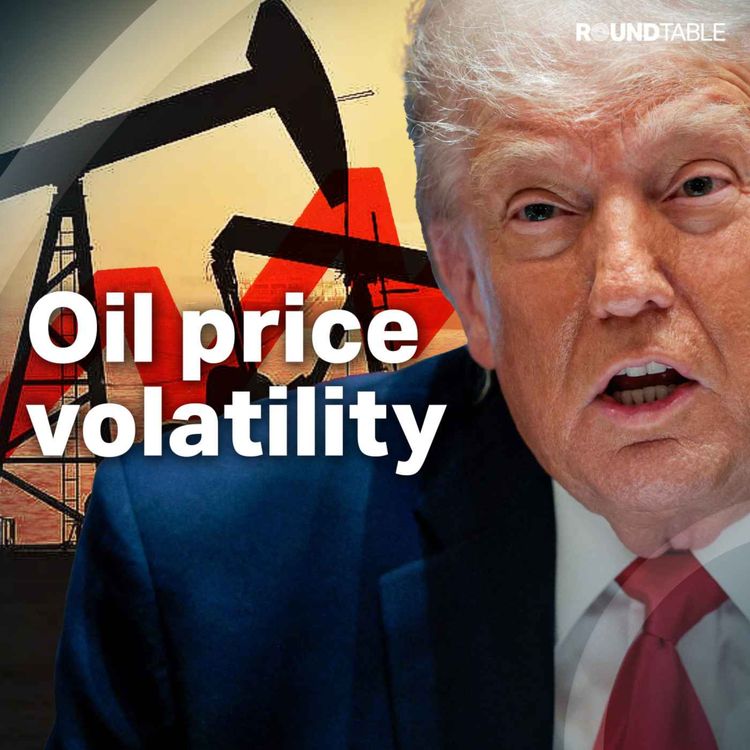
Is the global oil crisis hitting the 'point of NO return'?
Oil prices have been fluctuating since start of the US-Israeli war on Iran three months ago, hitting a four-year high of $126 in April. How long before prices return to normal or are they at the 'point of no return'?
The partial closure of the Strait of Hormuz due to the conflict in the middle east has severely disrupted global oil and gas supplies.
Governments are burning through emergency reserves at a 'record pace', according to the International Energy Agency. High oil prices are expected soon as supplies dwindle.
As peace talks between Iran and the US stall, what impact is the oil crisis having on global economies - and will prices ever go back to normal?
Joining Enda Brady for this discussion:
Gaurav Sharma
Energy Market Analyst
Patrizio Donati
Co-founder and Director of Renewable Energy Company Terrawatt
Chris Weafer
CEO of Macro Advisory
To access the back catalogue of Roundtable discussions https://www.youtube.com/@RoundtableTRTWorld
More episodes
View all episodes
36. Is Finland's economy emerging from a two-decade rut?
24:01||Season 1, Ep. 36Finland's economy has lagged behind other EU countries in recent years weighed down by high unemployment, a housing downturn and rising public debt.Real GDP has still not fully recovered from the 2008 financial crisis with further setbacks from the COVID-19 pandemic and war in Ukraine.But the first quarter of this year has seen signs of its economy improving. Could Finland now be emerging from decades of stagnation?Joining Enda Brady for this discussion:Teivo TeivainenChair of Finnish National Commission for UNESCOSakari LahdemakiDoctor of Economics at ETLA Economic ResearchDaniel KralLead Economist at Oxford EconomicsFollow the podcast to keep up to date and access the back catalogue of Roundtable discussions at https://www.youtube.com/@RoundtableTRTWorld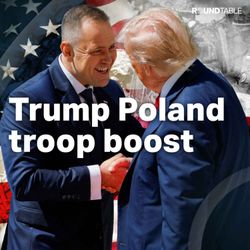
35. Is Poland’s Nawrocki Trump’s new ‘man in Europe’?
23:23||Season 1, Ep. 35The United States is sending an additional 5,000 troops to Poland after President Trump overruled the Pentagon and his Defense Secretary Pete Hegseth who had announced plans to ditch the deployment.President Trump cited his strong relationship with the Polish President Karol Nawrocki who he endorsed when he ran for office last May.The move to send more troops to Poland comes as the US reduces its military presence in Germany, pulling out 5,000 troops after Chancellor Merz angered Trump over the Iran war.It highlights Poland’s growing role as a key US ally, driven by its strong defence spending, alignment with Trump policies, and increasingly strained relations between Washington and other European partners.But the country’s pro-EU and left-liberal PM, Donald Tusk, is playing the other side of the transatlantic alliance, by pushing for further defence cooperation with the EU.Can Poland have its cake and eat it?Joining Enda Brady for this discussion:Frank RoseFormer US Deputy Assistant Secretary of StateLiliana SmiechInternational Affairs Director at Ludovika UniversityJan Nowina-WitkowskiPolitical JournalistFollow the podcast to keep up to date and access the back catalogue of Roundtable discussions at https://www.youtube.com/@RoundtableTRTWorld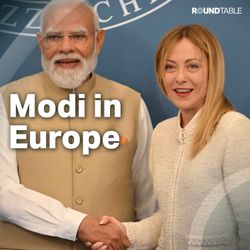
33. Why is India strengthening ties with Europe?
22:40||Season 1, Ep. 33Indian Prime Minister Narendra Modi has been wooing his European counterparts to expand trade and economic ties with the West.The six-day tour comes a few months after the EU and India penned a free trade agreement, lifting tariffs on a large amount of exports. This time the green transition, technology, and energy security were at the centre of discussions.Modi’s visit began in the Netherlands, where he signed 17 pacts ranging from semi-conductor chips and critical materials to migration and renewable energy.Other stops on the tour included Sweden, Norway and Italy, where Modi met Italian PM Meloni. A viral video circulated of the pair, dubbed ‘Melodi’ as they spent time together in Rome.So, why is Prime Minister Modi forging new partnerships in Europe and how successful was the trip?Joining Enda Brady for this discussion:Zubair AhmedJournalistSwaran SinghProfessor of International RelationsRajnish SinghMedia Outreach Executive at the European Policy CentreTo access the back catalogue of Roundtable discussions https://www.youtube.com/@RoundtableTRTWorld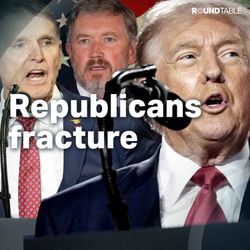
32. Why the Kentucky Republican primary was the most expensive ever
23:22||Season 1, Ep. 32The Kentucky Republican primary was the most expensive in US political history, with around $32 million spent, much of it backed by pro-Israel lobbying organisations.Congressman Thomas Massie was defeated by Trump ally Ed Gallrein as the race evolved beyond a local political contest into a broader struggle over the direction and identity of the Republican Party.Massie had openly opposed military action against Iran, repeatedly voted against US aid to Israel, and supported the release of the Epstein files positions that reportedly put him at odds with Donald Trump.The outcome has sparked controversy and renewed debate over the extent of Israeli influence in American politics.So, is the US president transforming the Republican Party into a political movement centred on personal loyalty? And to what extent do pro-Israel lobbying groups influence American politics?Joining Enda Brady for this discussion:Greg SwensonCo-Founder of The Hamilton SocietyRina ShahRepublican StrategistHenry OlsenHost of Beyond the Polls podcastErol MorkocSpokesperson for Republicans OverseasTo access the back catalogue of Roundtable discussions https://www.youtube.com/@RoundtableTRTWorld
31. Is the UK becoming ungovernable?
24:56||Season 1, Ep. 31The UK has had six leaders in the past ten years and now Keir Starmer's position is looking untenable after disastrous local election results and many of his own MPs calling for him to step down with rival circling.Why has there been such a high turnover of Prime Minister's after several long-term leaders serving our more than their five-year terms.In a country once seen as a model of political stability, is it now becoming ungovernable?Joining Enda Brady for this discussion:James Lyons, Former Director of Strategic Communications in the Keir Starmer ministryCindy Yu, Columnist at The Times and The Sunday TimesFreddy Gray, Deputy Editor of The SpectatorTo access the back catalogue of Roundtable discussions https://www.youtube.com/@RoundtableTRTWorld
30. Are EU sanctions on Israeli settlers just symbolic?
23:40||Season 1, Ep. 30The European Union has announced sanctions on illegal Israeli settlers in the occupied West Bank - but do the measures go far enough or are they merely symbolic?Expansion has increased since Benjamin Netanyahu returned to power as the head of a pro-settler right-wing government.But with the UN documenting about 1,800 settler attacks in 2025 alone, will these sanctions make any difference?Joining Enda Brady for this discussion:Gideon LevyJournalistJane KinninmontChief Executive Officer at the United Nations AssociationNimer SultanyReader in Public law at SOAS University of LondonYousef AlhelouPolitical AnalystTo access the back catalogue of Roundtable discussions https://www.youtube.com/@RoundtableTRTWorld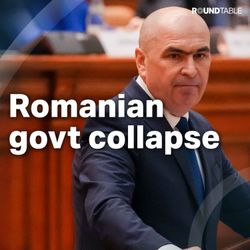
29. Romanian Prime Minister ousted amid far-right rise
23:37||Season 1, Ep. 29Romania’s government has fallen. Parliament voted overwhelmingly to remove Prime Minister Ilie Bolojan.The vote exposed a stunning political split. The Social Democrats, once central to Bolojan’s coalition, joined forces with the far-right nationalist AUR party to bring down the government.Their shared target was the government’s austerity programme, which critics say has deepened economic hardship and fuelled public anger.Polls show the far-right AUR party are leading in the polls.AUR leader George Simion accused the government of creating a recession and deepening hardship for ordinary Romanians.President Nicusor Dan is now racing to appoint a new prime minister. Chronic political instability has plagued Romania since its 2012 constitutional crisis.Joining Enda Brady for this discussion:Eusebiu SlavitescuFormer Romanian Diplomat and Political AnalystAna Otilia NutuPolicy Analyst for the Expert ForumRadu MagdinFormer Prime Ministerial Adviser in Romania and Moldovaand Global AnalystTo access the back catalogue of Roundtable discussions https://www.youtube.com/@RoundtableTRTWorld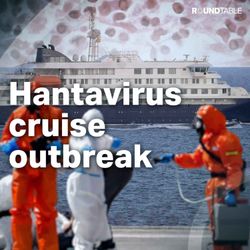
28. Could the Hantavirus become the next pandemic?
24:02||Season 1, Ep. 28The World Health Organization has warned global cases of the Hantavirus will probably rise.The virus has already killed at least three people on the MV Hondius cruise ship at the centre of the outbreak.The rare Andes strain of Hantavirus, found mainly in the Americas, is the only known variant capable of human-to-human transmission.The incident has renewed fears over how quickly rare zoonotic diseases can spread through international travel and whether the world is prepared for the next global pandemic.Joining Enda Brady for this discussion:Dr Margaret Harris, Former World Health Organization SpokespersonMuhammad Munir, VirologistSouwie Buis, JournalistTo access the back catalogue of Roundtable discussions https://www.youtube.com/@RoundtableTRTWorld