Share
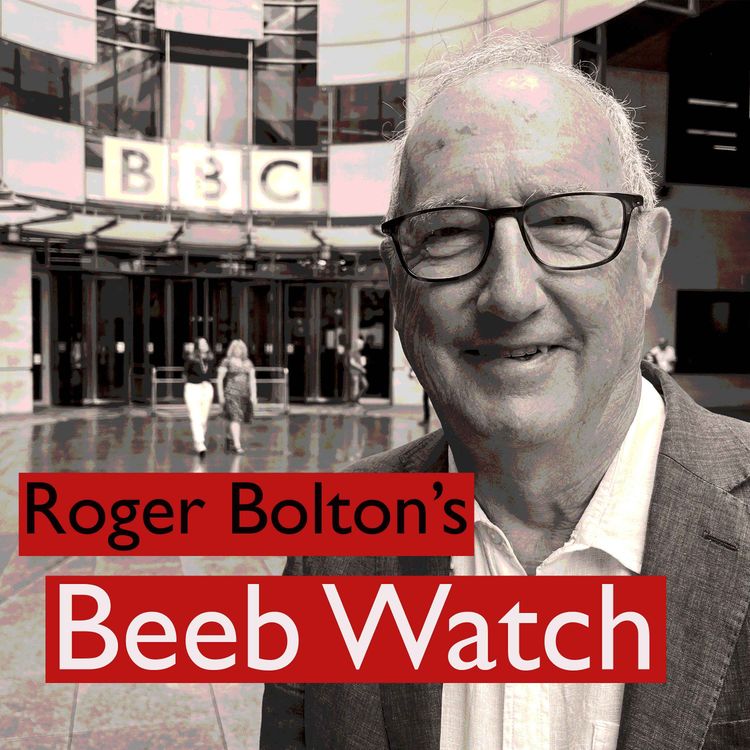
Roger Bolton's Beeb Watch
Anna McNamee, Sandford St Martin Trust on the Media Bill, religious literacy, commissioning and accessible broadcasting
Anna McNamee, an award-winning Canadian journalist and writer with a background in BBC radio, is the Executive Director of the Sandford St Martin Trust, dedicated to promoting excellence in religious broadcasting. We discuss the new Media Bill, the importance of religious literacy, the decline in programming on religion and ethics, commissioning practices, and the critical need to ensure public access to broadcasting.
“This is legislation, which is made for commercial broadcasters, it has commerciality at its heart, it's about leaving enough, not even a little bit of wriggle room, but loads of space so that broadcasters can respond and do whatever they want.”
Sign up now for £1.99 per month to support our journalism: www.patreon.com/BeebWatch/membership
@BeebRoger
email: roger@rogerboltonsbeebwatch.com
More episodes
View all episodes

9. Peter Horrocks, ex-BBC and Ofcom, on a regulator that has “lost its intellectual confidence”
38:01||Season 13, Ep. 9Peter Horrocks, former editor of Panorama and Newsnight and former director of the BBC World Service, stepped down from Ofcom’s Content Board at the end of October after six years. We discuss the fallout from Russell Brand’s sentencing and whether Ofcom should play a bigger role in policing workplace culture in broadcasting.A former BBC editor turned regulator, he reflects on what it was like working inside Ofcom, whether it has lost its “intellectual confidence”, and whether its new chair understands the broadcasting code. He gives his view on GB News and impartiality, whether the BBC is capable of scrutinising itself, and whether Ofcom is overloaded, or even conflicted, in its role. He also floats a radical alternative way of managing public service media.We then explore the government’s Watch This Space green paper and the idea of giving prominence to trusted news on online platforms. Finally, we turn to BBC funding and priorities, and the future of the World Service.To support our journalism and receive a weekly blog sign up now for £1.99 per month www.patreon.com/BeebWatch/membership @beebwatch.bsky.social@BeebRogerInstagram: rogerboltonsbeebwatchLinkedIn: Roger Bolton's Beeb Watch8. David Lloyd, radio consultant: BBC cuts, future of local radio, Ofcom’s oversight
26:52||Season 13, Ep. 8David Lloyd, broadcasting consultant, former regulator and co-founder of Boom Radio, discusses the government’s £6 million local journalism fund and the difference targeted support can make to small local projects. He also considers why further BBC local radio cuts have reignited questions about local voices and community connection, possible ways to support local audio, and Ofcom’s role in overseeing BBC local radio.To support our journalism and receive a weekly blog sign up now for £1.99 per month www.patreon.com/BeebWatch/membership @beebwatch.bsky.social@BeebRogerInstagram: rogerboltonsbeebwatchLinkedIn: Roger Bolton's Beeb Watch7. Alan Rusbridger: Who’s Fighting the BBC’s Corner?
30:05||Season 13, Ep. 7Alan Rusbridger, former editor-in-chief of The Guardian and former editor of Prospect, discusses the BBC’s funding crisis, the government’s response and why reliable information matters as a public good. We examine BBC governance: who sits on its board and editorial committees, whether journalism is properly represented, and what that means for independence, accountability and the BBC’s response to its critics.Alan also reflects on The Guardian’s digital transformation, the mistakes made along the way, and why bringing staff and audiences with you matters as much as the strategy itself.To support our journalism and receive a weekly blog sign up now for £1.99 per month www.patreon.com/BeebWatch/membership @beebwatch.bsky.social@BeebRogerInstagram: rogerboltonsbeebwatchLinkedIn: Roger Bolton's Beeb Watch6. Stephen Sackur: journalism, impartiality and Hard Truth
31:48||Season 13, Ep. 6Stephen Sackur, former presenter of BBC HARDtalk and a BBC journalist for nearly four decades, discusses his book Hard Truth, why he wrote it, and what the careers of ten very different reporters can tell us about journalism today.We explore impartiality across different political systems, and how it relates to the work of reporters like Anna Politkovskaya and Daphne Caruana Galizia. We also discuss how broadcasters are dealing with a hostile Trump White House, the legacy of HARDtalk, and how BBC funding pressures and digital strategy affect analysis and investigative reporting. Stephen also explains where he looks for information himself, and how audiences navigate today’s information landscape.To support our journalism and receive a weekly blog sign up now for £1.99 per month www.patreon.com/BeebWatch/membership @beebwatch.bsky.social@BeebRogerInstagram: rogerboltonsbeebwatchLinkedIn: Roger Bolton's Beeb Watch5. Jake Kanter, 'Deadline', on Rachel Jupp, BBC cuts, Channel 4 and Lisa Nandy
26:48||Season 13, Ep. 5Jake Kanter, investigations editor at Deadline, discusses the BBC’s appointment of Rachel Jupp as director of news and the challenges facing the broadcaster, from finances and proposed cuts to its shift towards digital. He also examines the pressures facing Channel 4, and reflects on Culture Secretary Lisa Nandy's comments on broadcasting as the BBC's Royal Charter renewal approaches.To support our journalism and receive a weekly blog sign up now for £1.99 per month www.patreon.com/BeebWatch/membership @beebwatch.bsky.social@BeebRogerInstagram: rogerboltonsbeebwatchLinkedIn: Roger Bolton's Beeb Watch4. Roger Mosey on BBC Cuts, Priorities and the Lack of Vision
31:29||Season 13, Ep. 4Roger Mosey, former editor of The Today Programme, Head of BBC Television News, Director of BBC Sport and the BBC’s Director for London 2012, discusses Matt Brittin’s interview with Laura Kuenssberg, the widening cuts to BBC news and sport, and what he believes is missing from the Corporation’s case for its own future.We explore whether the BBC has a clear enough vision of what it wants to be; how financial pressures and editorial choices are shaping cuts to programmes such as Today and local news; and what the retreat from live sport says about the BBC’s broader strategy. Roger also sets out what the BBC and government need to do to avoid repeating the problems of past Charter renewals and what kind of funding settlement could put the Corporation on a stronger footing.To support our journalism and receive a weekly blog sign up now for £1.99 per month www.patreon.com/BeebWatch/membership @beebwatch.bsky.social@BeebRogerInstagram: rogerboltonsbeebwatchLinkedIn: Roger Bolton's Beeb Watch3. Dr Tom Chivers: “A Real Moment of Reckoning”
32:01||Season 13, Ep. 3Dr Tom Chivers, whose PhD examined the last BBC Charter Review and who now serves as Vice Chair of the Media Reform Coalition, discusses the government’s reluctance to hold meaningful public consultations on the next Charter, the growing financial crisis at the BBC, and the threat posed by hyper-concentrated media ownership and new partisan channels.We explore how public service content can remain visible in a digital world dominated by global tech platforms, whether there is a role for stronger regulation, and whether the BBC’s current governance structure is fit for purpose. Dr Chivers also sets out how a more democratic, publicly accountable BBC - moving from corporation to cooperative - might be achieved.To support our journalism and receive a weekly blog sign up now for £1.99 per month www.patreon.com/BeebWatch/membership @beebwatch.bsky.social@BeebRogerInstagram: rogerboltonsbeebwatchLinkedIn: Roger Bolton's Beeb Watch2. Sir John Whittingdale: The BBC Charter and the Dangers of Long Grass Politics
31:43||Season 13, Ep. 2Sir John Whittingdale is one of the most experienced UK parliamentarians on BBC governance, having negotiated the current BBC Charter as Culture Secretary and later steered the Media Act 2024 as Minister of State. In this episode, he explains how the current BBC Charter renewal process differs from the last one, the growing financial pressures on the corporation, and why he believes the BBC should be smaller and more focused.We also delve into alternative funding models, the implications of proposals to label “trusted news providers” in an era of streaming and algorithmic distribution, the rise of GB News and other partisan outlets, the power of billionaire media owners, and how far governments can – and should – influence the BBC through appointments, funding decisions, and the Charter itself.To support our journalism and receive a weekly blog sign up now for £1.99 per month www.patreon.com/BeebWatch/membership @beebwatch.bsky.social@BeebRogerInstagram: rogerboltonsbeebwatchLinkedIn: Roger Bolton's Beeb Watch1. Matt Deegan’s Radical Plan: “Blow Up the BBC”
30:42||Season 13, Ep. 1Matt Deegan is a media entrepreneur, radio executive and podcast maker who’s recently written a provocative piece for Broadcast arguing that the only way to save the BBC might be to “blow it up” – by breaking it into five interdependent parts and radically rethinking how we fund public service content.We discuss why he believes the BBC faces an existential crisis, why serious public debate has been so lacking in the crucial months before the government’s white paper, and explore his proposals to separate out news, nations and local, culture and kids, entertainment and the World Service – and whether a mix of endowments, levies and subscription could secure the future of public service media in a world of Netflix, Disney and YouTube.To support our journalism and receive a weekly blog sign up now for £1.99 per month www.patreon.com/BeebWatch/membership @beebwatch.bsky.social@BeebRogerInstagram: rogerboltonsbeebwatchLinkedIn: Roger Bolton's Beeb Watch