Share
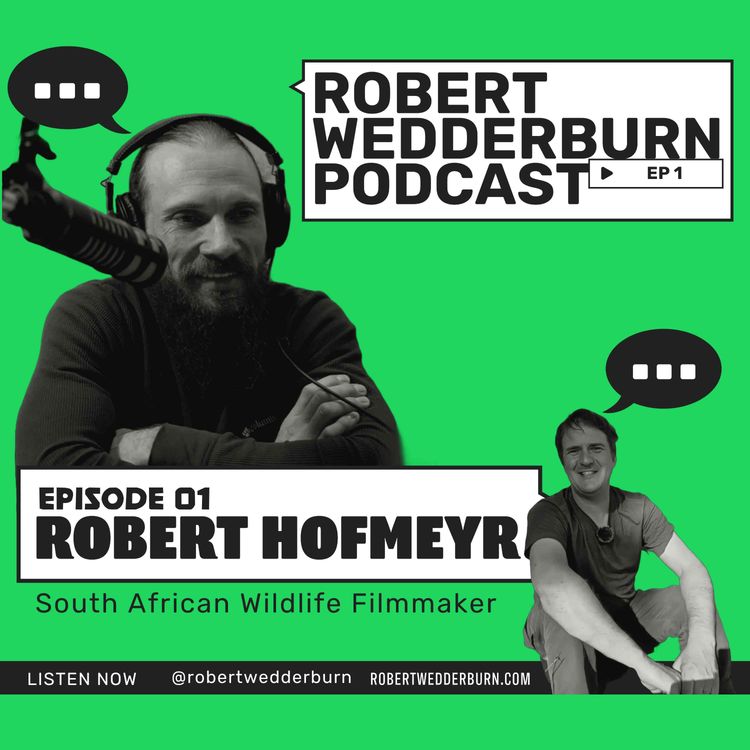
Robert Wedderburn Podcast
Robert Wedderburn Podcast Ep 1: Robert Hofmeyr
Ep. 1
•
In this episode, I chat about African wildlife filmmaking with the talented Robert Hofmeyr from South Africa while he is busy filming wildlife in South Luangwa National Park, Zambia.
Watch the video version of this podcast on YouTube:
https://www.youtube.com/watch?v=lYPBpSf6Mvg
Follow Robert Hofmeyr (Moving Pictures Africa) on:
YouTube: https://www.youtube.com/@movingpicturesafrica
Facebook: https://www.facebook.com/movingpicturesafrica/
Instagram: instagram.com/movingpicturesafrica
Website: http://www.movingpictures.africa/
Support my Wildlife documentaries by joining me on Patreon:
https://www.patreon.com/RobertWedderburn
Follow me on Instagram:
https://www.instagram.com/robertwedderburn/
More episodes
View all episodes
6. Ep 6: Gunjan Menon - Robert Wedderburn Podcast
47:16||Season 1, Ep. 6Ep 6: Gunjan Menon - Robert Wedderburn Podcast
5. Robert Wedderburn Podcast Ep 5: Alex Sletten
01:09:25||Ep. 5SummaryAlex shares his journey into wildlife filmmaking, starting with his background in biology and his passion for photography and filming. He talks about his experiences studying chimpanzees in the Congo and winning an award for a photo he took. He then discusses how he transitioned into wildlife filmmaking and the challenges and rewards of the field. Alex also provides advice for aspiring wildlife filmmakers, including the importance of developing a unique skill or niche and building relationships with networks and production companies. In this conversation, Alex and Robert discuss the skills and gear needed to become a wildlife filmmaker. They emphasize the importance of understanding how to use the gear and recommend gaining hands-on experience through rental houses. They also discuss the balance between factual content and entertainment in wildlife films and the changing landscape of the industry with the rise of YouTube and streaming platforms. They highlight the need to offer something unique and different in order to stand out in the industry.
4. Robert Wedderburn Podcast Ep 4: Stella Ditt
01:26:39||Ep. 4Diving into the World of Underwater Wildlife Filmmaking with Stella DittStella Ditt is a wildlife filmmaker who specializes in underwater filmmaking. She started her career at a young age and was influenced by mentors and friends who showed her that it was possible to work in this field. Stella has a passion for marine animals, particularly dolphins and whales. She has had incredible experiences filming underwater, including encounters with dolphins, pilot whales, and macro marine life. Stella emphasizes the importance of being a competent diver and having good buoyancy when filming underwater. She also discusses the challenges of lighting and sound in underwater cinematography. Stella Ditt shares her experiences as an underwater wildlife filmmaker, including the challenges and preparations involved in filming underwater. She emphasizes the importance of practice and preparation to avoid complications while diving. Stella also discusses some of her favourite filming locations, such as Fernando de Noronha in Brazil and Bahia Magdalena in Mexico. She recounts memorable moments, including filming moray eels hunting crabs and witnessing a Mara giving birth. Stella encourages aspiring wildlife filmmakers, especially women, to believe in themselves and not listen to negative opinions. Stella Ditt's Instagram: https://www.instagram.com/stella.ditt/Stella Ditt's Website: https://stelladitt.weebly.com/Stella Ditt's 2024 Showreel: https://vimeo.com/906606261Join this channel to get access to perks:https://www.youtube.com/channel/UC4tR5ntxMRUvbyb5UX8X2yw/joinSupport my Wildlife documentaries by joining me on Patreon:https://www.patreon.com/RobertWedderburnFollow me on Instagram:https://www.instagram.com/robertwedderburn/
3. Robert Wedderburn Podcast Ep 3: Jonas Stenstrom
01:23:38||Ep. 3In this episode of the Robert Wedderburn Podcast, I chat with Jonas Stenstrom, a talented and knowledgeable biologist and wildlife filmmaker from Sweden. Summary:In this conversation, Robert Wedderburn interviews Jonas, a wildlife filmmaker, about his journey and the importance of communicating science and nature to the public. Jonas shares how he was inspired by his upbringing in a nature-oriented family and his passion for storytelling. He discusses the need to bridge the gap between the science world and the public, and the value of incorporating communication and media into scientific research. Jonas also provides insights into the challenges and rewards of being a YouTuber and emphasizes the importance of creating quality content with an educational purpose. In this conversation, Jonas shares his insights on wildlife filmmaking and the importance of balancing education and entertainment. He emphasizes the need to stay true to your purpose and passion, rather than constantly trying to top previous videos. Jonas also discusses the different styles and formats of filmmaking, highlighting the importance of starting with a hook and compressing content to maintain audience attention. He shares his experiences working with scientists and the value of using videos to make an impact. Jonas also talks about the role of physical fitness and adventure in his work, as well as the importance of gear selection and being conscious of the environmental impact of travel.keywordswildlife filmmaking, science communication, nature, YouTube, storytelling, wildlife filmmaking, education, entertainment, purpose, passion, video formats, audience attention, impact, scientists, physical fitness, adventure, gear selection, environmental impacttakeawaysBridging the gap between the science world and the public is crucial for creating awareness and understanding of important topics like biodiversity and climate change.Scientists should consider incorporating communication and media components into their research to reach a wider audience and create a greater impact.Building a successful YouTube channel takes time, consistency, and the ability to adapt to changing platforms and audience preferences.Success on YouTube should be measured not just by the number of views, but also by the impact and engagement with the right audience.Nature and wildlife filmmakers have the opportunity to share stories and educate the public about the natural world, helping to reconnect people with nature. Stay true to your purpose and passion in wildlife filmmaking.Balance education and entertainment in your videos.Start with a hook and compress content to maintain audience attention.Use videos to make an impact and create change.Physical fitness and adventure can enhance the filmmaking experience.Choose gear that suits your needs and be conscious of the environmental impact of travel.
2. Robert Wedderburn Podcast Ep 2: Alan Lacy
01:33:44||Ep. 2In this episode of the Robert Wedderburn Podcast, I chat with Alan Lacy, a wildlife filmmaker who specializes in filming and producing wildlife documentaries about endangered and threatened species. Alan Lacy, founder of Reel Earth Films, shares his journey as a wildlife filmmaker and the challenges of raising funds for his projects. He discusses his passion for wildlife, particularly coyotes and wolves, and how a childhood encounter with a coyote sparked his interest in nature. Lacy explains the differences between a nonprofit film company and a traditional for-profit production company, and why he chose the nonprofit route. He emphasizes the importance of storytelling and creating impact through his films, as well as supporting organizations and researchers in the field. Reel Earth Films aims to allocate 50% of its energy to making films and 50% to making an impact and a difference for wildlife. Their business model involves raising funds for projects and allocating a portion of the budget to both film production and marketing and impact campaigns. They strive to raise enough funds to have a 50-50 split between film and impact, with all impact donations going directly to the conservation of the species. They also aim to create a million-dollar budget per year to produce films and campaigns that can change the world and empower a new generation of wildlife enthusiasts. YouTube has been a valuable platform for Reel Earth Films to share their stories and engage with audiences. They believe in the power of authentic storytelling and capturing real moments in nature. They emphasize the importance of honing storytelling skills and connecting with viewers through compelling narratives. Alan Lacy, founder of Reel Earth Films, shares his passion for wildlife filmmaking and his mission to protect endangered species and habitats. He discusses the importance of telling positive stories that inspire hope and action, rather than focusing solely on doom and gloom. Lacy emphasizes the power of film in giving a voice to endangered species and educating local communities about conservation. He also highlights the significance of connecting children to nature through storytelling and creating a new generation of wildlife stewards. Lacy offers advice for aspiring wildlife filmmakers, encouraging them to get out and start telling stories, connect with others in the industry, and be true to themselves.